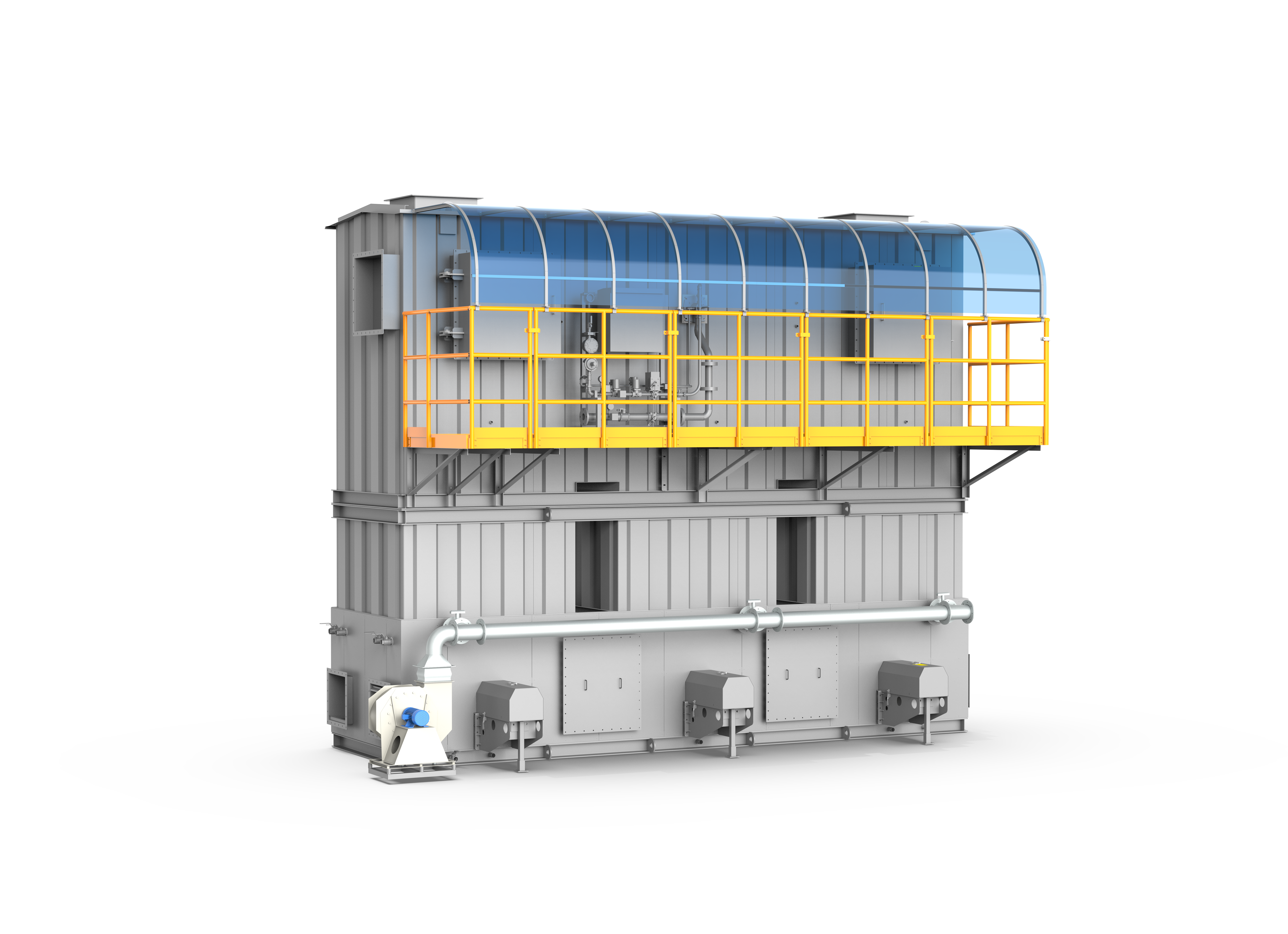
RTO Thermal Oxidizer
Regenerative thermal oxidizers for medium-to-high VOCs loads with high thermal efficiency and stable long-term operation.
Where RTO fits
FluxFine RTO systems oxidize organic exhaust in a high-temperature chamber while recovering heat through ceramic media beds. They are built for continuous industrial duty where solvent mixes change and long-term compliance cannot depend on fragile catalyst beds alone.
Medium–high concentration VOCs, complex solvent mixes, heat recovery duty
Catalog reference; project-specific
Typical RTO design target
Medium-to-high VOC load
How the system works
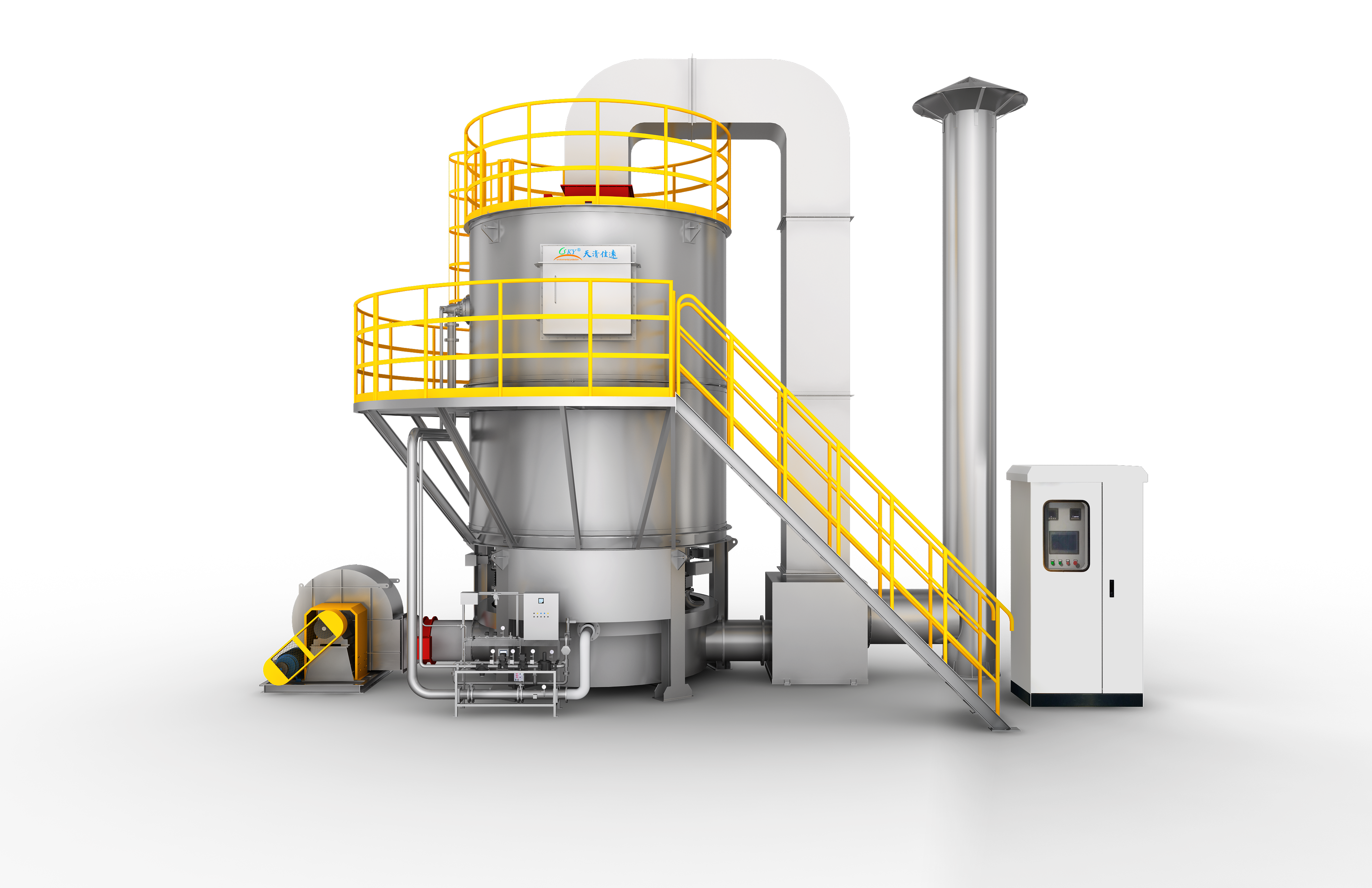
Process gas cycles through regenerative chambers: one bed preheats inlet air, the combustion chamber destroys VOCs, and another bed recovers heat before stack discharge. Valve sequencing (poppet or rotary) keeps thermal efficiency high and outlet temperatures controlled.
- 01Pre-filter and condition the process exhaust as required.
- 02Ceramic media preheats the incoming gas using recovered energy.
- 03The oxidation chamber converts VOCs to carbon dioxide and water.
- 04A second media bed recovers heat before compliant stack discharge.
Choose by process conditions
| Configuration | Description | Best fit | Source metric |
|---|---|---|---|
| Three-Bed RTO | Three regenerative chambers with sequenced valves for stable continuous treatment and low purge loss. | Large continuous lines, complex solvent mixtures, and stringent removal duty. | Catalog reference: >=98% purification, >=95% heat recovery |
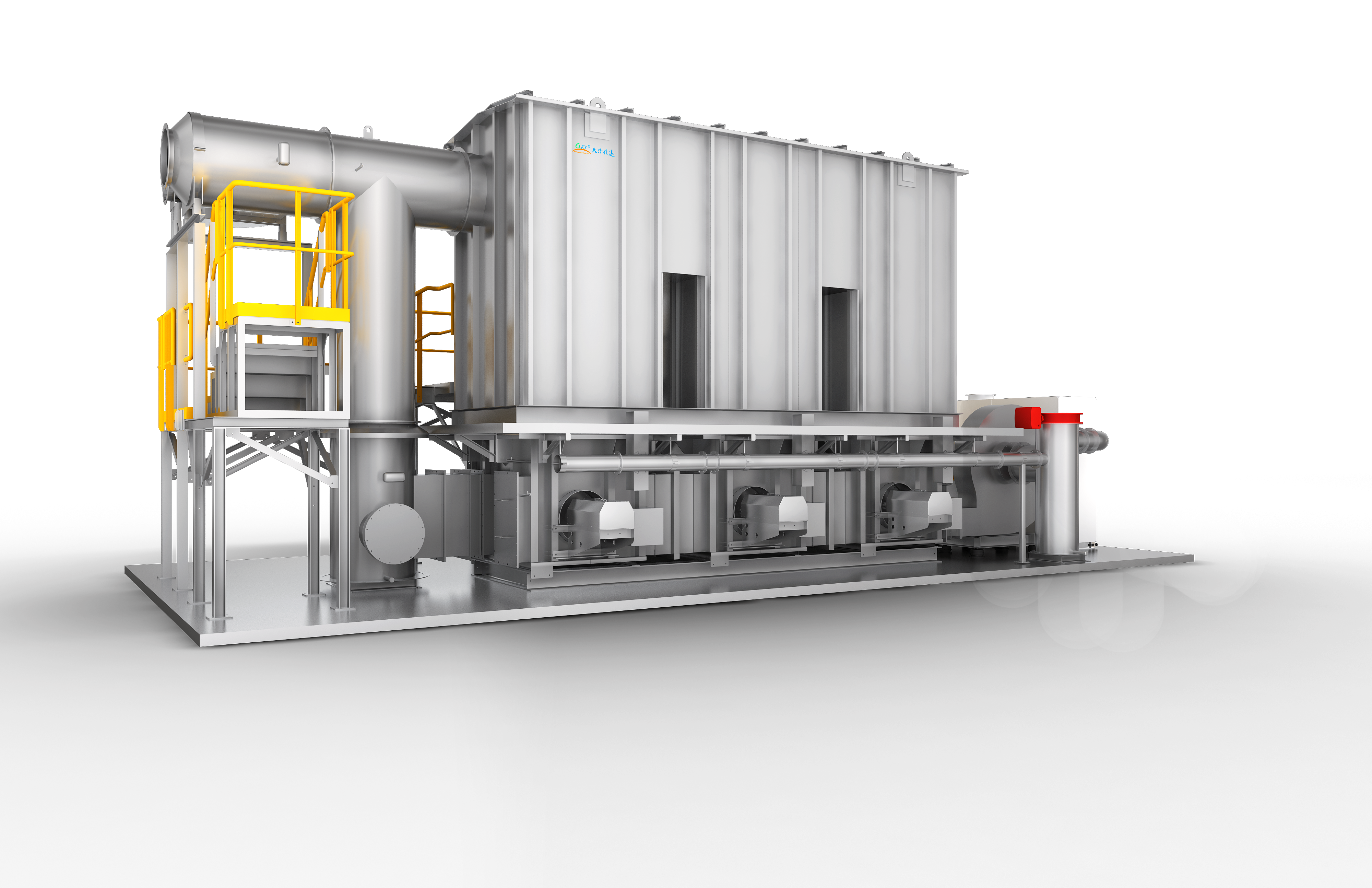
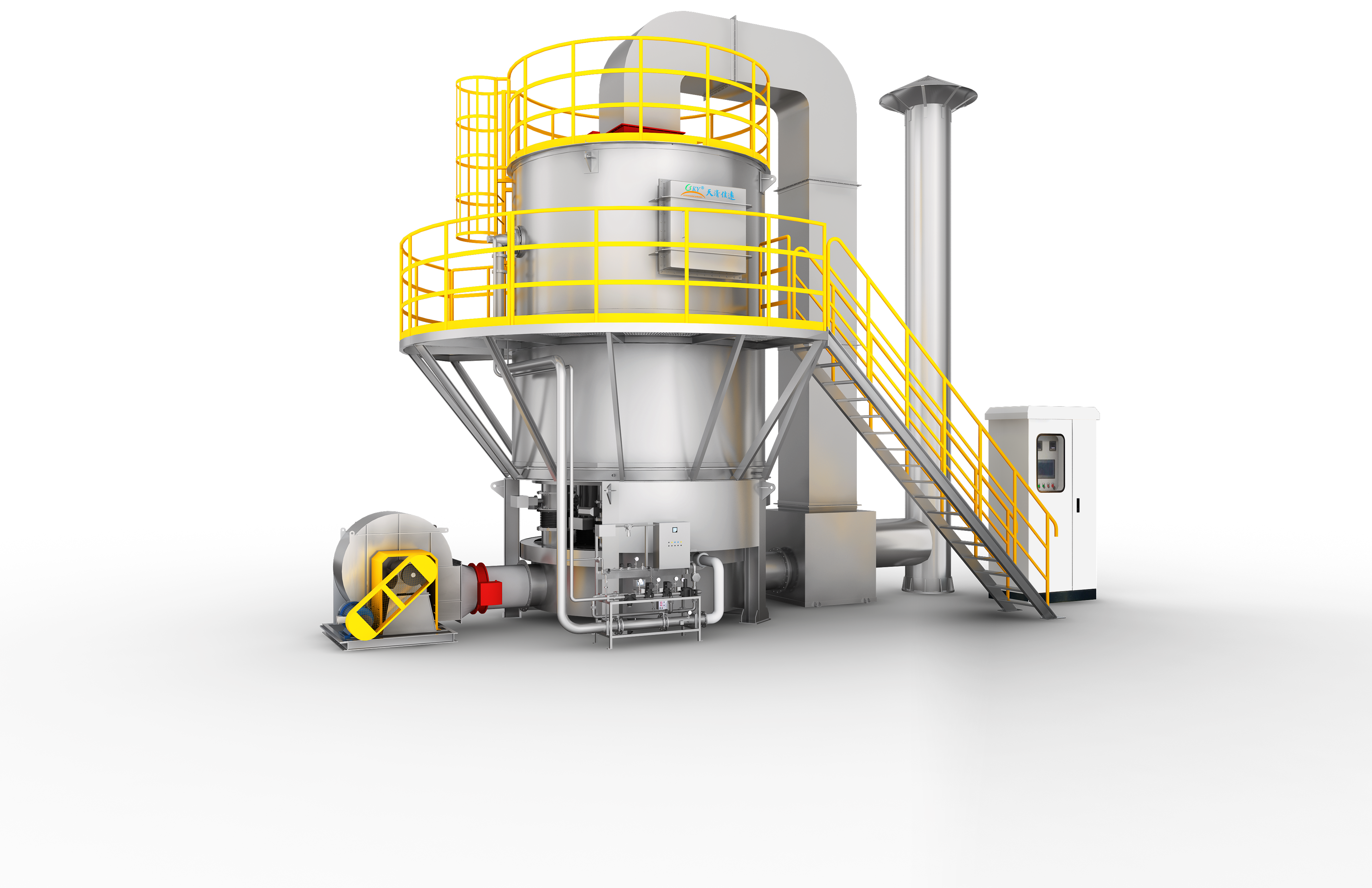
| Rotary RTO | A compact circular regenerator with rotary gas distribution instead of multiple poppet valves. | Sites that need a compact footprint and broad airflow flexibility. | Project-specific |
| Zeolite Rotor + RTO | Concentrates large-volume dilute exhaust before thermal oxidation to reduce oxidizer size and fuel demand. | Coating, printing, electronics, and other high-airflow low-concentration processes. | Catalog reference: >=98% combined-system purification |
Typical pollutants
- Alkanes and olefins
- Alcohols and ketones
- Ethers and esters
- Aromatics and mixed solvents
Engineering features
- Combustion, equipment, and ductwork safety interlocks
- Poppet-valve or rotary distribution options
- PLC monitoring, alarms, and fault diagnostics
- Secondary hot-air, hot-water, or heat-transfer-oil recovery options
- Integrated control with coating, printing, and drying lines
Selection cautions
- Final sizing depends on solvent chemistry, LEL margin, temperature, and concentration variability.
- Chlorinated, sulfur-bearing, silicon-bearing, or highly corrosive streams require dedicated review and pretreatment.
Products using this technology
Three-Bed RTO
A high-heat-recovery oxidizer for continuous treatment of medium-to-high VOC loads and changing solvent mixtures.
Rotary RTO
A compact RTO configuration using a rotary gas-distribution valve for broad airflow flexibility and continuous VOC oxidation.
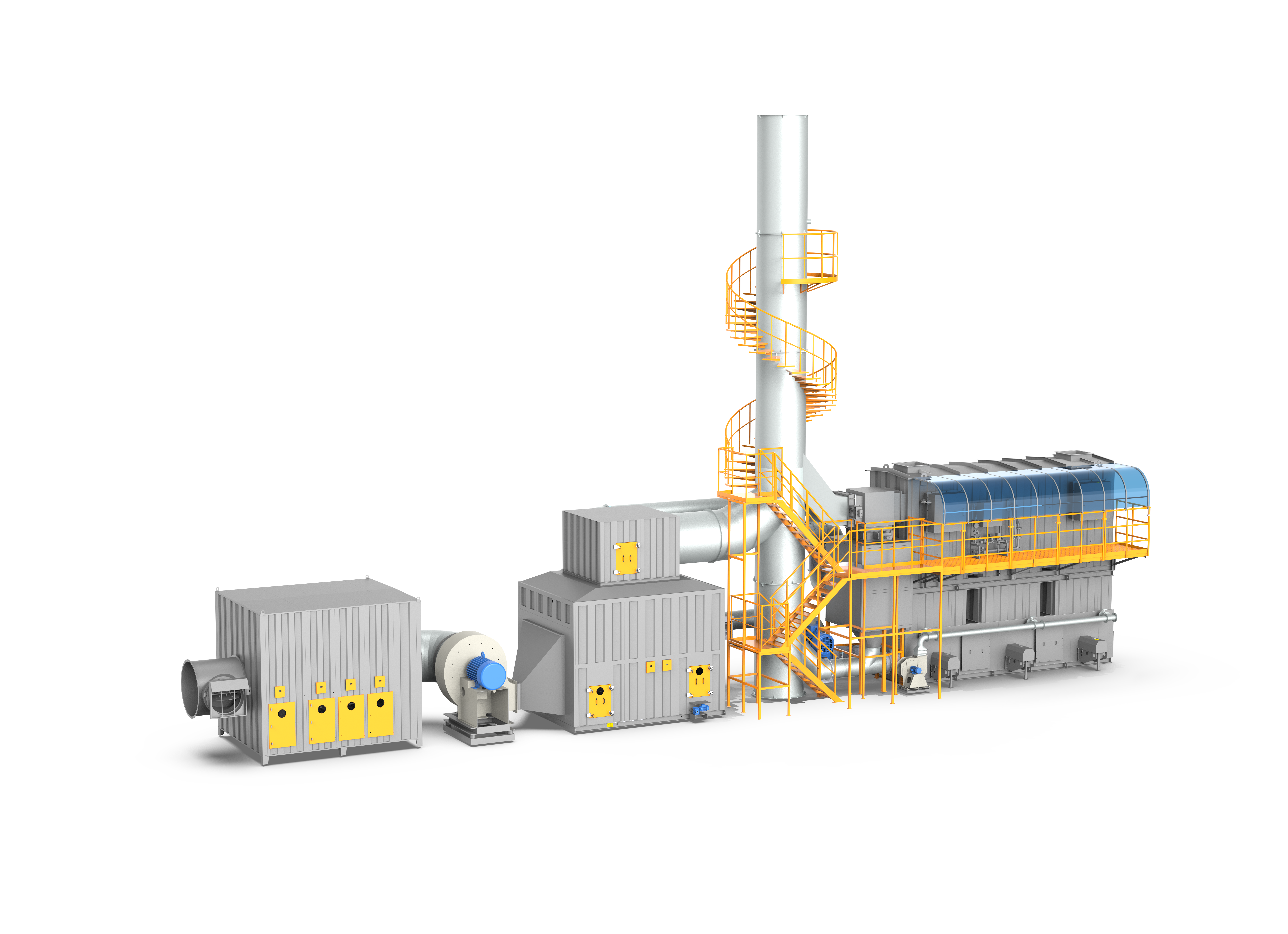
Zeolite + Three-Bed RTO
A complete train for large-volume dilute VOC exhaust with concentration, thermal oxidation and optional process heat recovery.
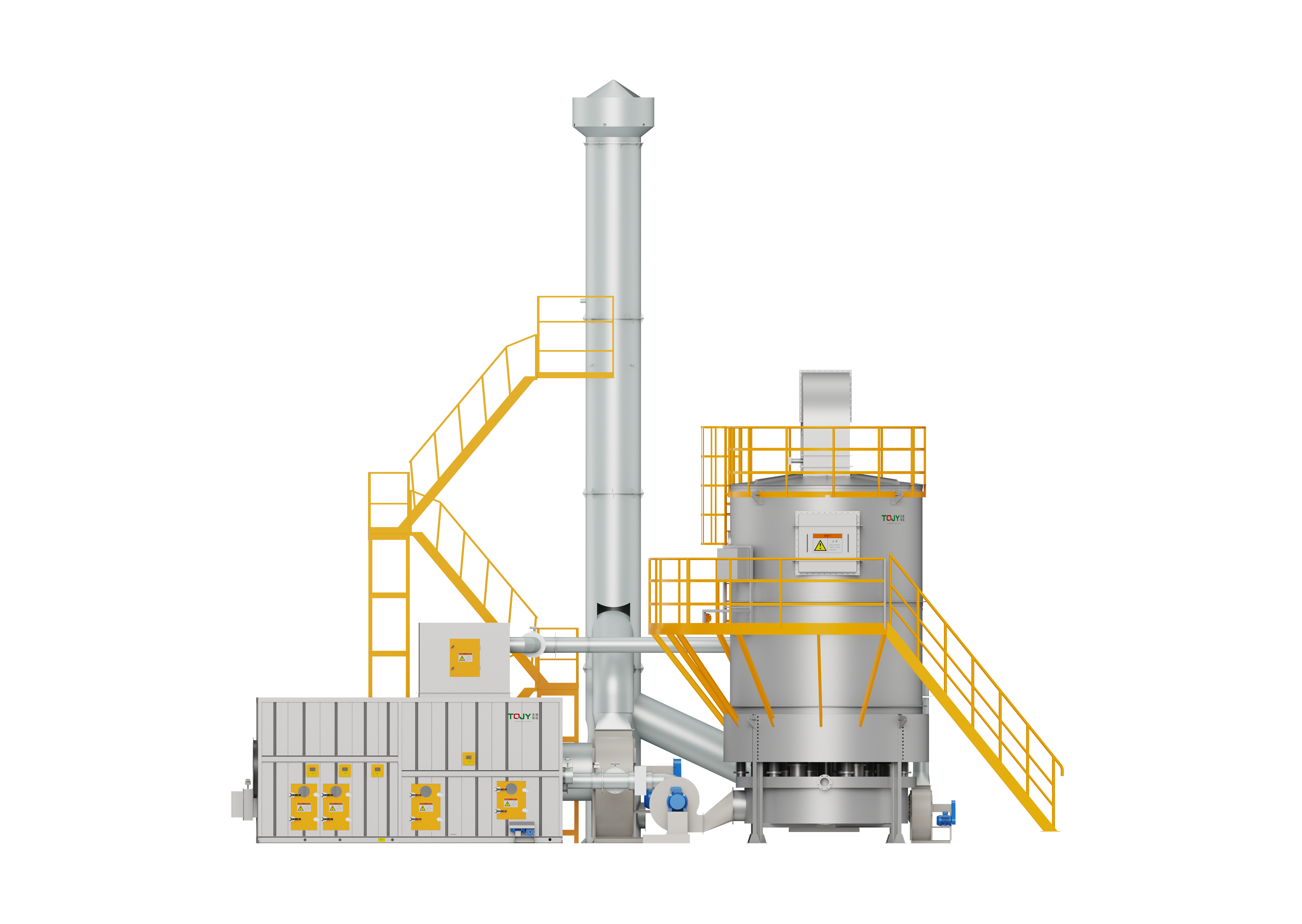
Zeolite + Rotary RTO
A compact concentration and rotary oxidation train for large-airflow VOC sources with fluctuating recipes or concentration.
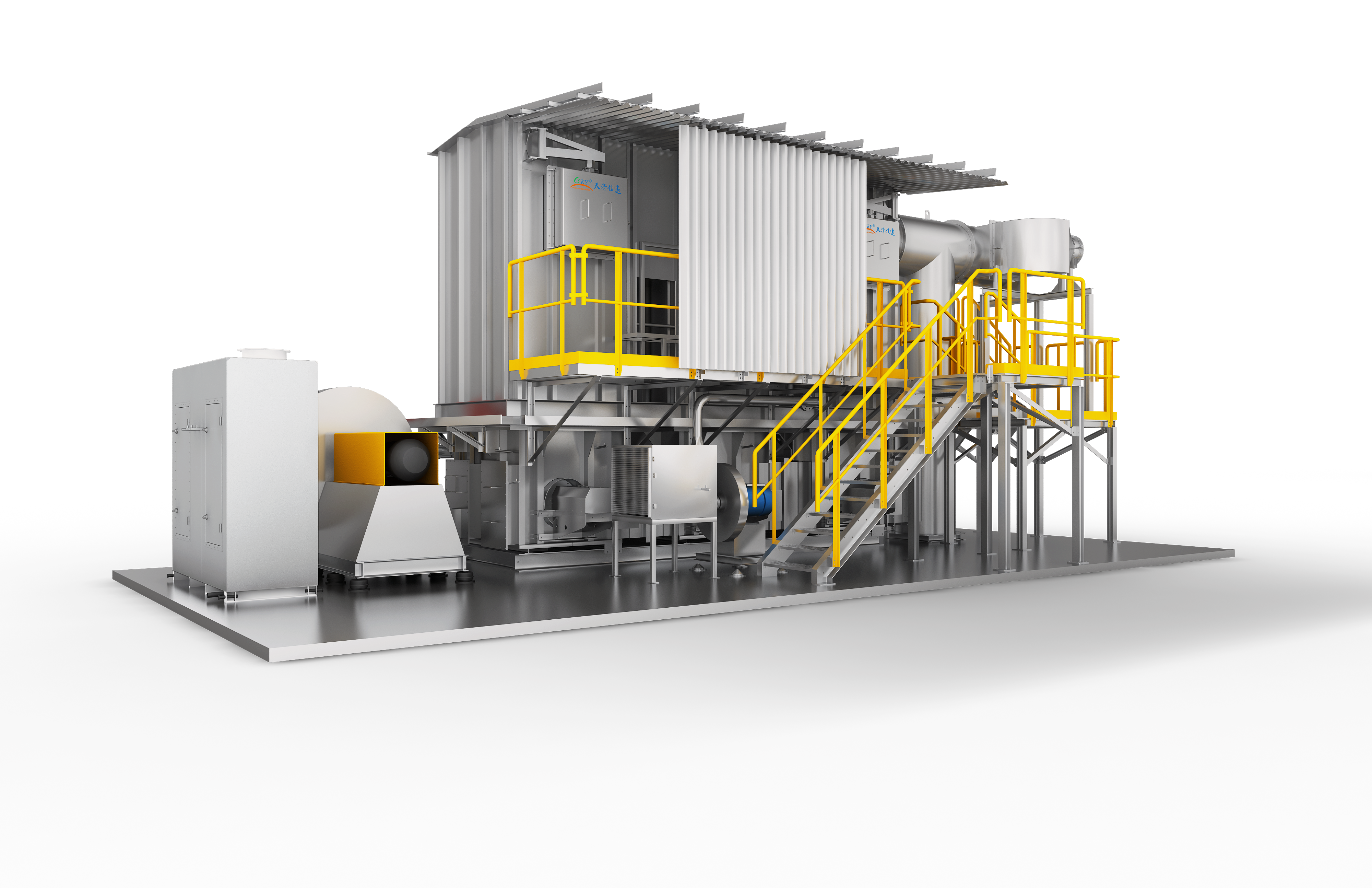
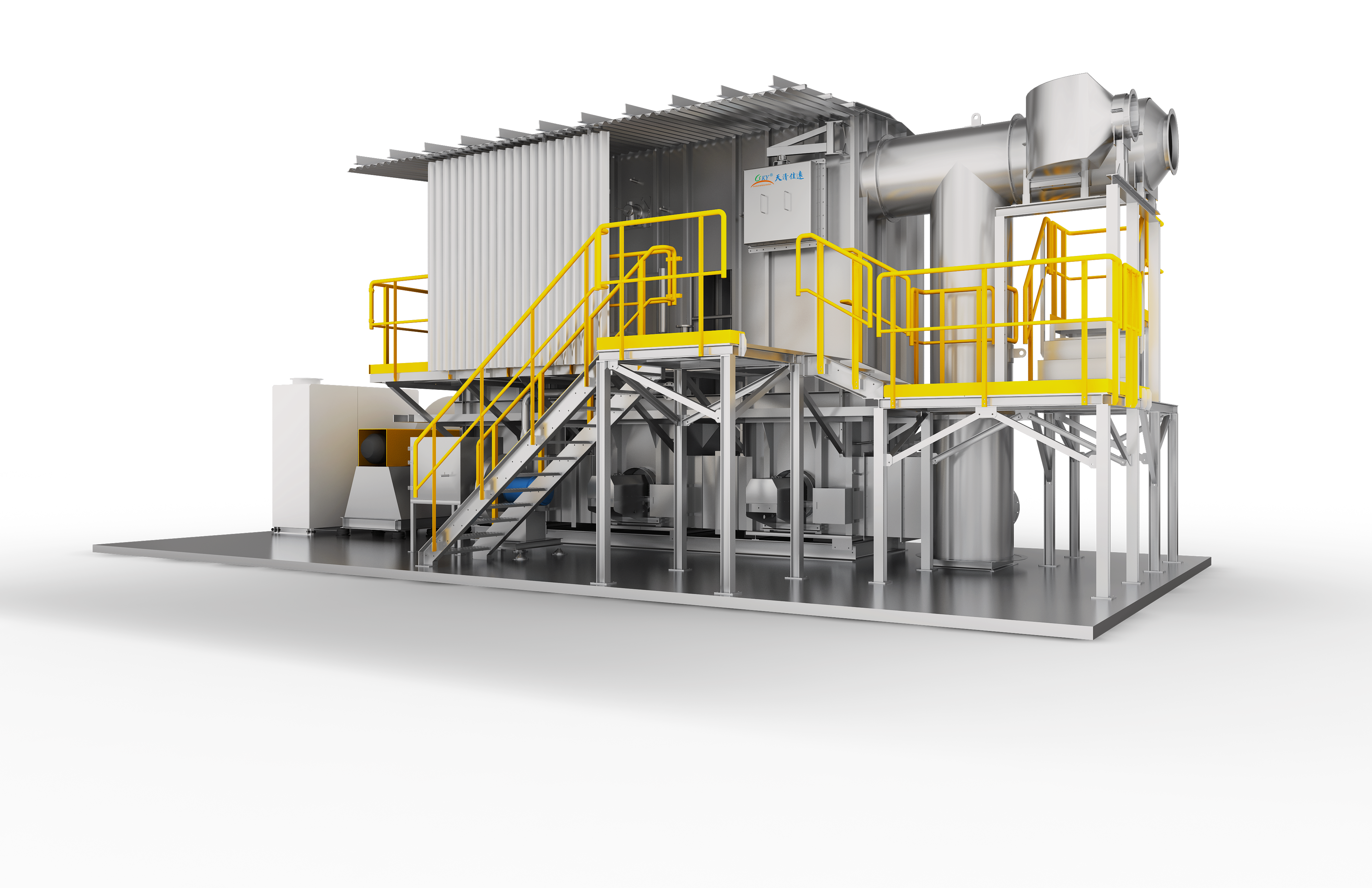
Equipment views
Specify RTO for your plant
Performance depends on actual gas composition, inlet load, temperature and operating schedule. Share process data for a configuration review.