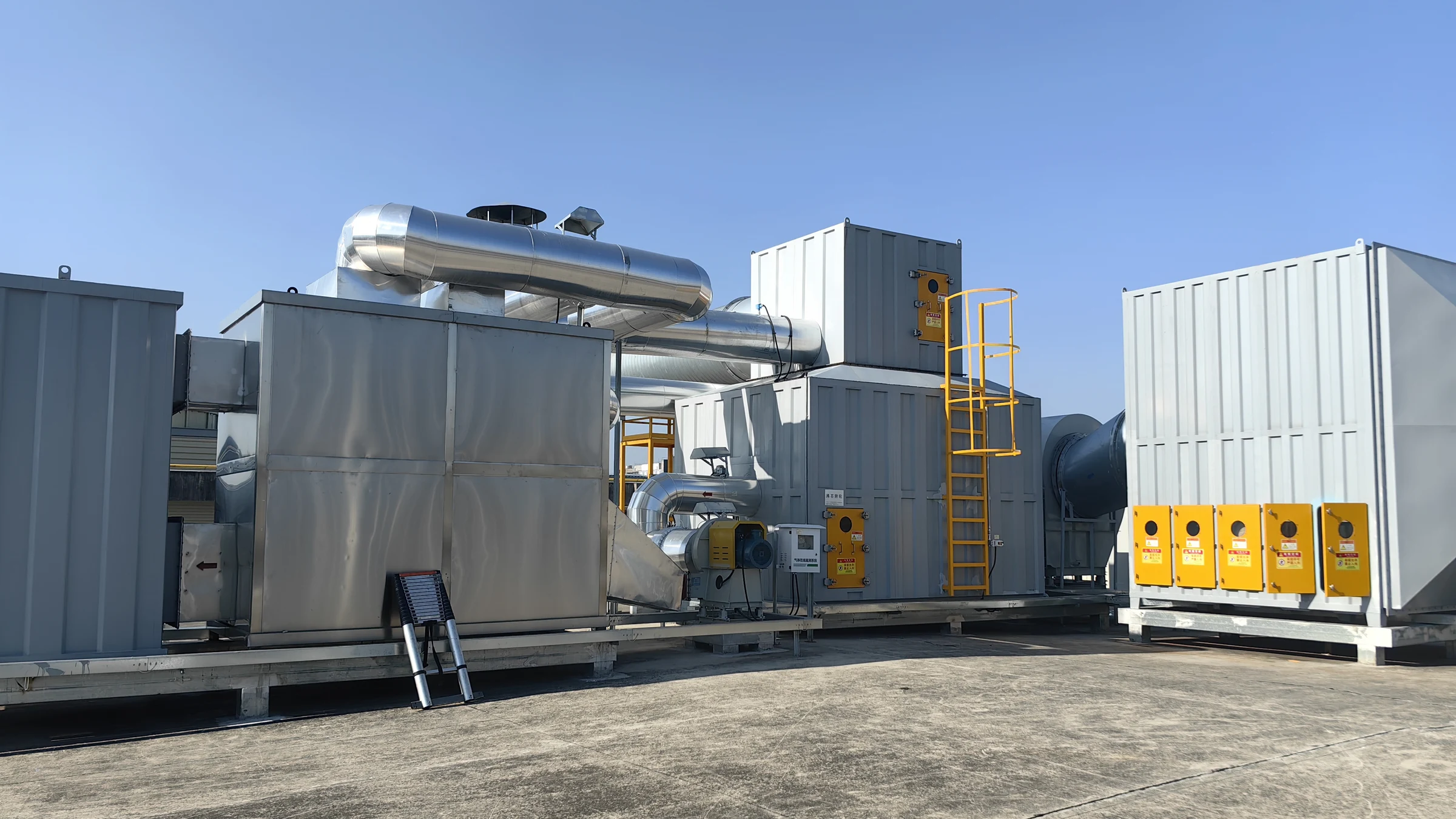
Engineering a Phased 170,000 m³/h VOC Abatement System
Guangdong Yunzhicai Glass Craft Products | Glass Spray-Painting and Silk-Screening
System Installation & Operation
Concentrator-to-Destruction Architecture
Guangdong Yunzhicai Glass Craft Products Co., Ltd. expanded production across two manufacturing facilities, focusing on silk-screening and multi-line spray painting. The combined process exhaust generated a high-volume, dilute airstream containing complex organic compounds.
FluxFine engineered and integrated a VOC abatement system with a concentrator-to-destruction architecture, designed to handle up to 170,000 m³/h of continuous exhaust. The zeolite rotor concentrates organic solvents by 30x, delivering a concentrated stream (> 6 g/m³) to a catalytic oxidizer (CO).
The system achieves a VOC destruction removal efficiency (DRE) of >= 97% in the CO unit. Under design conditions, it maintains auto-thermal operation, minimizing auxiliary fuel consumption.
Mixed Solvents & Fluctuating Loads
The production lines emit complex organic solvents during different manufacturing shifts, including esters (Butyl Acetate, Ethyl Acetate), ketones (Cyclohexanone), glycol ethers (PM, PMA), and sticky aerosols like UV paint resins.
- Strict Paint Mist Limits: Zeolite molecular sieves are susceptible to clogging. Inlet paint mist required reduction to < 5 mg/m³.
- Stringent Emission Limits: Local regulations limit NMHC to < 80 mg/m³ and Total VOCs to < 90 mg/m³.
- Phased Integration: Phase 1 required 120,000 m³/h while pre-engineering the structural footprint to integrate a 50,000 m³/h UV line later without stopping production.
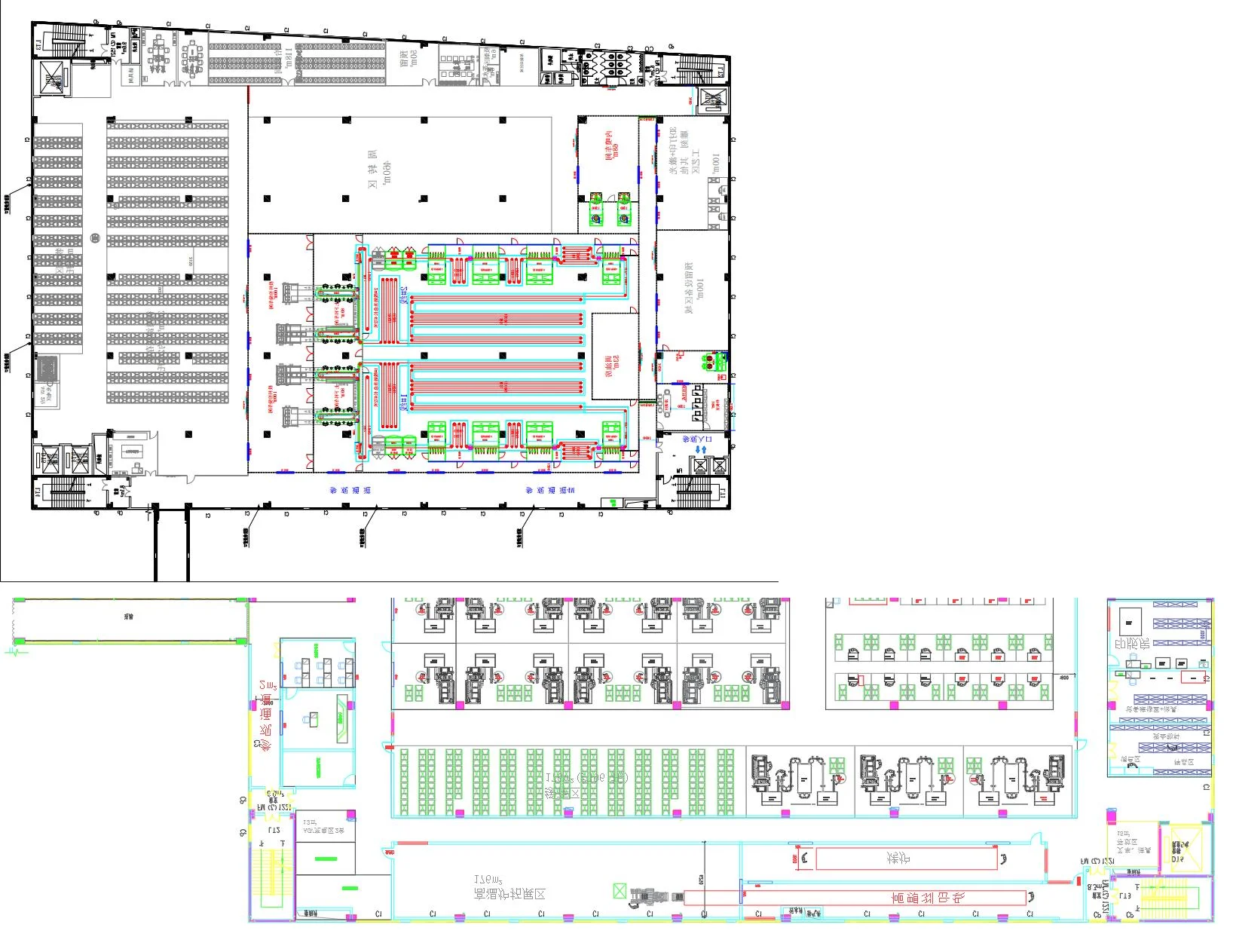
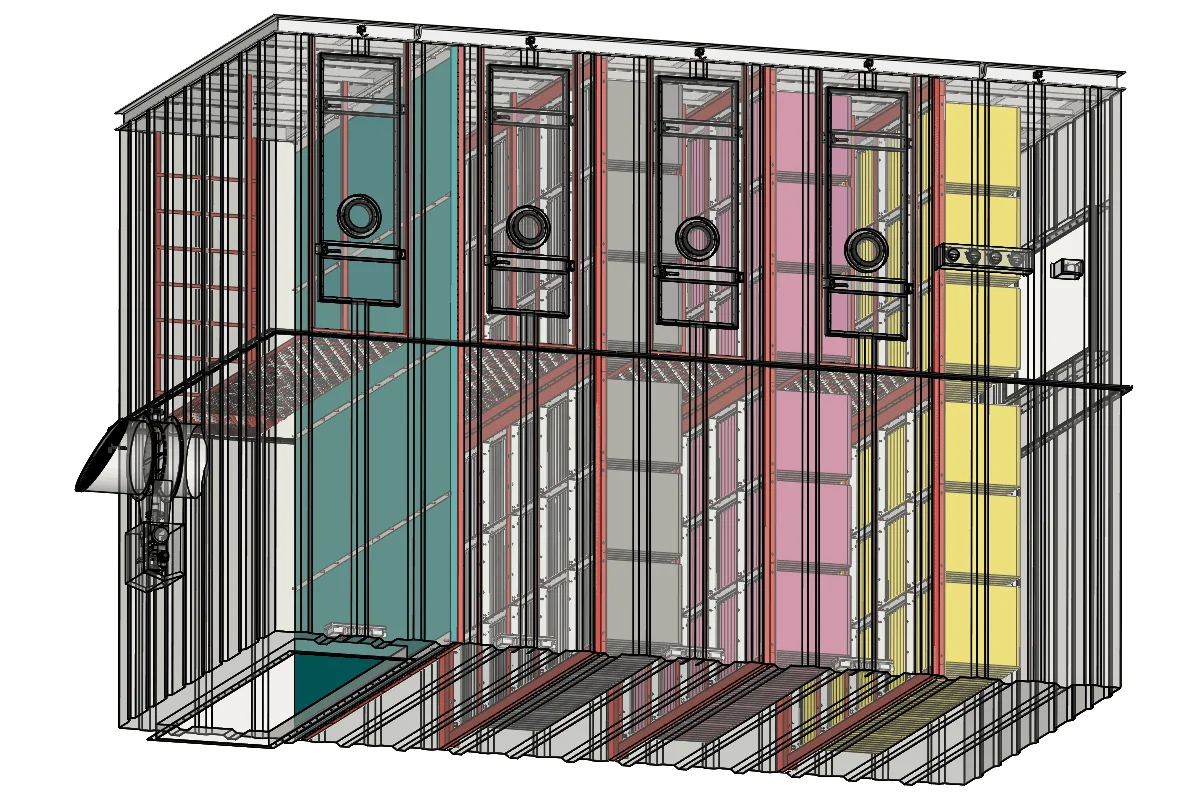
CAD layout of Silk-screening and Spray-Painting workshops
Process Flow & Architecture
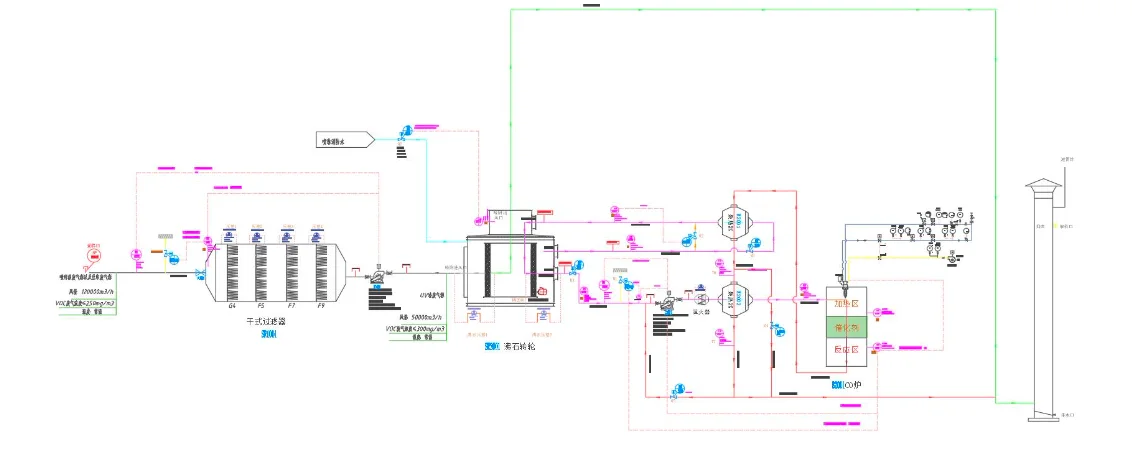
1. Multi-Stage Pre-Filtration
Raw exhaust is drawn into a high-capacity G4+F5+F7+F9 dry filtration box. This removes sticky aerosols and fine particulates down to < 0.5 μm, protecting downstream zeolite pores.
2. Continuous Rotor Adsorption
The clean, ambient VOC-laden gas is pulled through the TQGFST-170X Cylinder Zeolite Rotor. Hydrophobic molecular sieves trap solvents, discharging clean air.
3. Thermal Desorption
Heated air (180–220°C) back-sweeps the rotating saturated sector, desorbing trapped VOCs into a concentrated, low-volume stream (up to 30.9x concentration).
4. Catalytic Combustion (CO)
The rich stream enters the TQJY-FSZT-5.5K Catalytic Oxidizer. Passing through a Pt/Pd-loaded honeycomb bed at 250–350°C, VOCs are cleanly oxidized with >=97% DRE.
Thermodynamic & Mechanical Innovations
Zero-Fuel Auto-Thermal Operation
If the inlet VOC concentration to the CO unit reaches >= 6 g/m³, the energy released from the exothermic destruction is sufficient to maintain 300°C reaction temperature without burner assistance.
The auxiliary natural gas burner operates for 15–30 minutes during cold startup. This auto-thermal capability avoids approximately 378,000 kWh of equivalent heating energy annually compared to continuous firing.
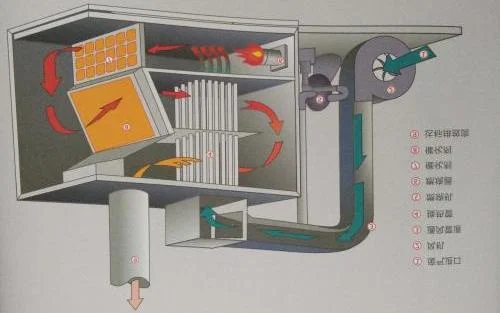
4-Stage Precision Filtration Matrix
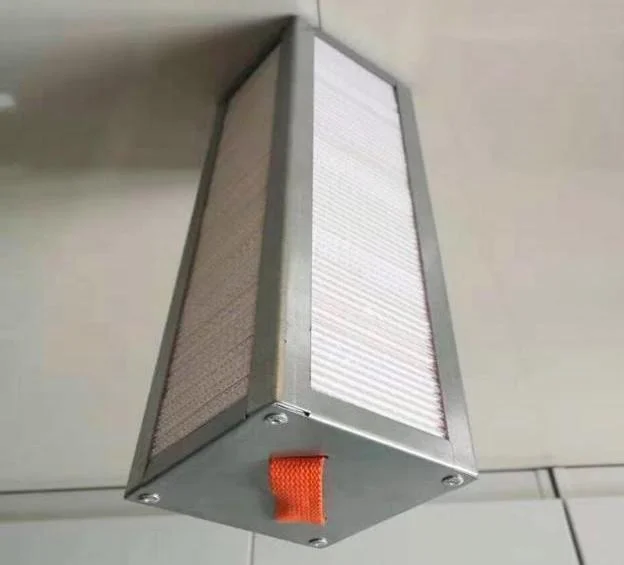
To ensure the 10-year design life of the system and prevent zeolite deactivation, a bespoke dry filter bank was constructed, protected by real-time differential pressure interlocks.
| Stage | Focus | Cutoff | Efficiency |
|---|---|---|---|
| G4 Primary | Paint flakes, dust | > 5.0 μm | > 95% |
| F5 Medium | Medium paint mist | > 3.0 μm | > 90% |
| F7 Medium | Fine solvent aerosols | > 3.0 μm | > 90% |
| F9 HEPA | Sub-micron mist | > 0.5 μm | > 99% |
Cylindrical Zeolite Rotor Geometry
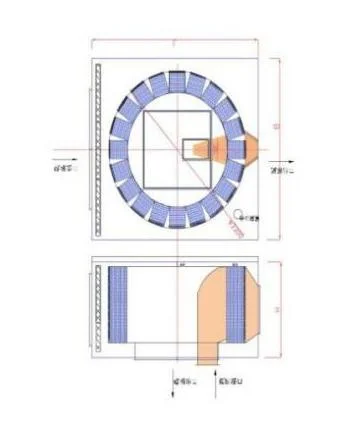
Instead of standard flat-disc rotors, this project utilized our advanced Cylindrical Zeolite Rotor (TQGFST-170X):
- Larger Active Area: Parallel-in, vertical-out geometry allows a low face velocity of 2.2 m/s.
- Specialized Media: High Si/Al ratio aluminosilicates with 75% active zeolite loading.
- Integrated Filter: Outer skeleton glass fiber filter cleans dust via thermal back-flushing.
Mass Balance & Emissions
Calculated parameters across Phase 1 (120,000 m³/h) and Phase 2 (170,000 m³/h) loads.
| Parameter | Unit | Phase 1 | Phase 2 |
|---|---|---|---|
| Raw Process Airflow | m³/h | 120,000 | 170,000 |
| Inlet VOC Mass | kg/h | 30.00 | 42.50 |
| Zeolite Concentration Ratio | - | 26.67x | 30.91x |
| CO Inlet Concentration | mg/m³ | 5,826.67 | 6,753.64 |
| CO Destruction Efficiency | % | 97.0% | 97.0% |
| Combined Outlet Concentration | mg/m³ | 25.60 | 25.72 |
| Guangdong Emission Limit | mg/m³ | < 80.00 | < 80.00 |
| Total Abatement Efficiency | % | 89.38% | 89.38% |
Auto-Thermal Energy Balance & Control
The system integrates dynamic VFD controls and exothermic auto-thermal balance. Once operating temperatures are reached, the 30.9x concentrated VOC stream sustains catalytic oxidation purely from solvent enthalpy, completely eliminating auxiliary fuel consumption during continuous painting shifts and saving over 378,000 kWh equivalent thermal energy annually.
5-Layer Safety Architecture
- Explosion Isolation: Wave-mesh stainless steel flame arrestors at intakes.
- LEL Safeguards: Online monitoring triggers automated dilution if >25% LEL.
- 3-Tier Thermal Cascade: Progressive cooling and bypass logic from 350°C to 450°C.
- Fire Suppression: Integrated nitrogen/water suppression in the adsorber box.
- Anti-Static Grounding: Full structural grounding to < 4 Ohms.
Equipment in This Project
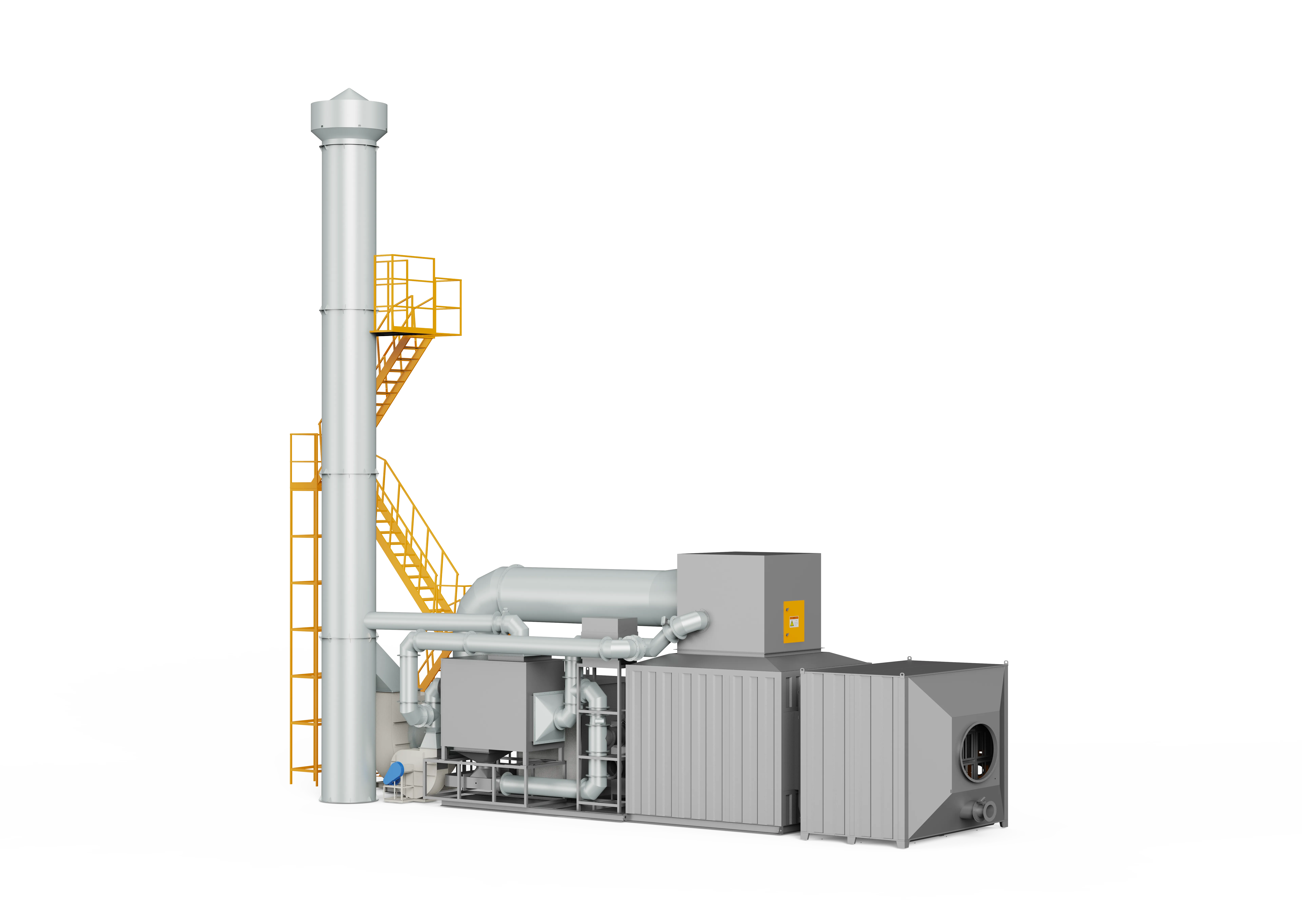
Zeolite Rotor
A high-efficiency VOC pre-treatment and concentration system utilizing advanced hydrophobic zeolite molecular sieves to continuously adsorb, desorb, and enrich large-airflow, low-concentration organic exhaust gases, reducing downstream thermal destruction energy consumption by 40% to over 50%.
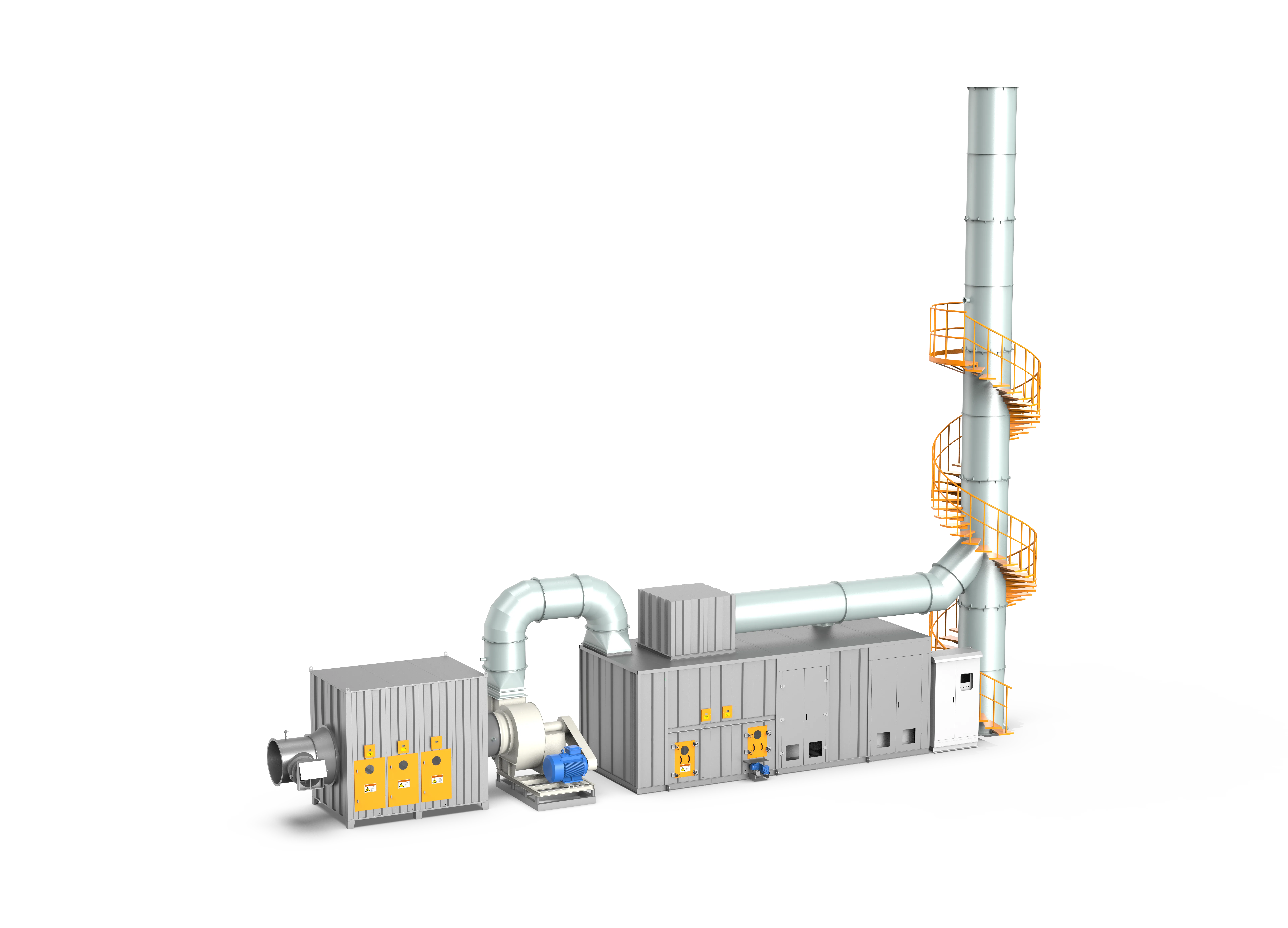
Zeolite Rotor + CO
A modular, highly compact VOC abatement system integrating zeolite molecular sieve concentration with low-temperature catalytic oxidation (CO) at 250-350°C, delivering energy savings of up to 20%+ and zero fire risk for small-to-medium airflow setups.
Partner with FluxFine for High-Capacity VOC Abatement
The Guangzhou Yunzhicai project provides a documented reference for managing high-volume, complex emissions through integrated concentration and oxidation.