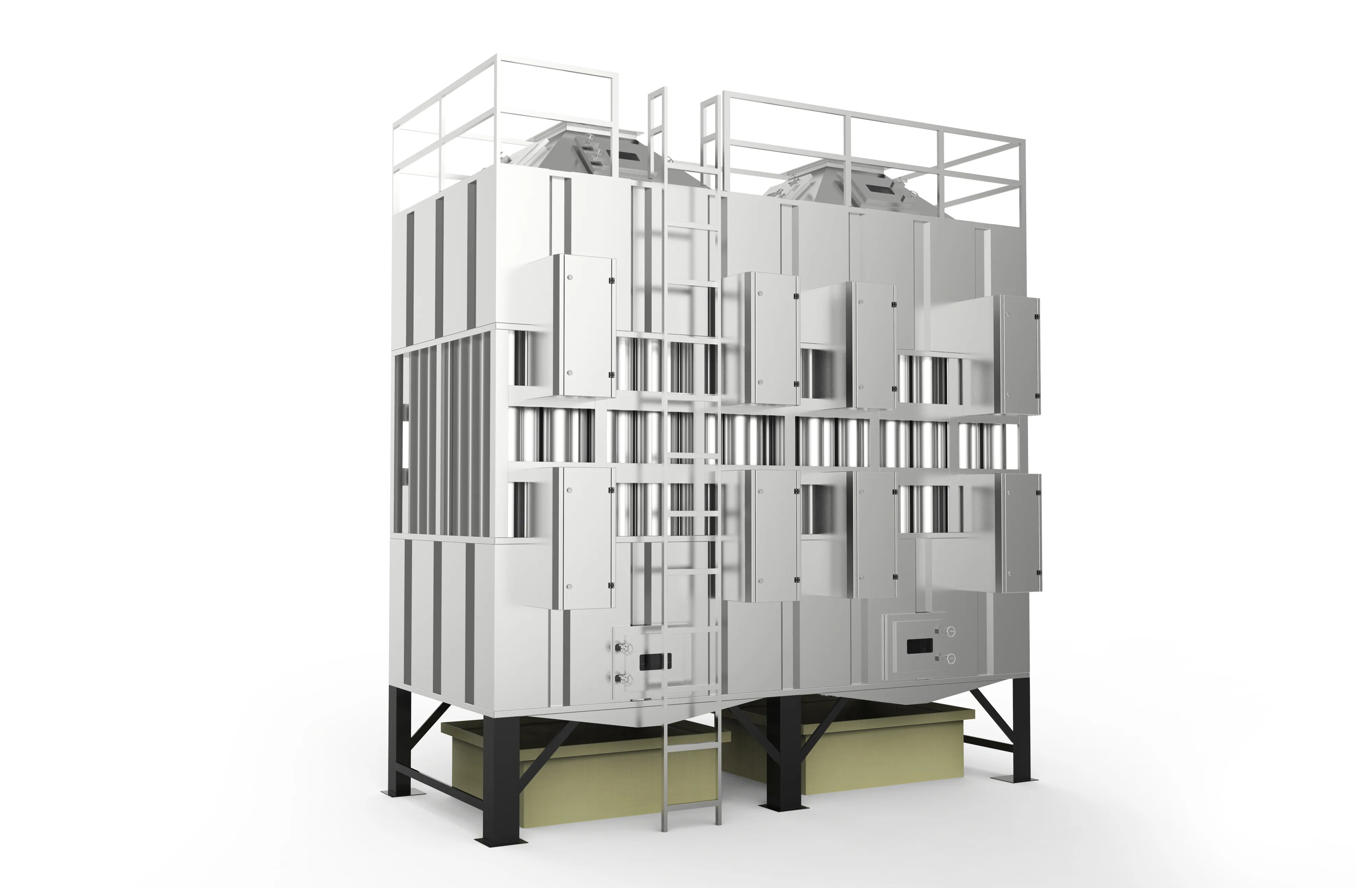
Wet Electrostatic Precipitator (WESP)
An elite wet-process electrostatic particulate removal system designed to capture sub-micron particles, PM2.5, acid mists, oil aerosols, and heavy metal condensates, achieving purification efficiencies of >=99% and emission concentrations of <30 mg/m³.
Designed around actual process conditions
For industrial processes releasing fine aerosols, tar mists, acid gases, and sub-micron particulates that bypass dry baghouses, the FluxFine Wet Electrostatic Precipitator (WESP) represents the definitive collection technology. Operating on high-voltage electrostatic ionization and leveraging continuous water-film washing on corrosion-resistant collector tubes, the system eliminates back-corona issues and secondary dust re-entrainment. Constructed with premium stainless steel internals, it offers an exceptionally long service life of 25-30 years, delivering stable compliance with the most stringent industrial stack emission limits.
Wet Electrostatic Air Cleaner / WESP System / Industrial Wet ESP / Aerosol Precipitator
Extremely effective for fine PM2.5, aerosols, and liquid droplets.
Achieves highly transparent exhaust plumes, satisfying international emission regulations.
Premium alloy construction ensures unmatched durability in corrosive acid environments.
Operating references and configuration choices
These reference values and modules clarify the scope we evaluate. They are not a substitute for a process-data review or final proposal.
| Engineering reference | Value | How to read it |
|---|---|---|
| Target pollutants | Fine aerosol / mist / tar / acid mist | Selection depends on actual particle and gas characteristics. |
| Source outlet reference | <30 mg/m³ | Not universal; publish only with pollutant, inlet and test basis. |
| Wetted materials | Corrosion-selected | Source references stainless wetted components; final material follows chemistry. |
Typical modules considered
- Inlet cooling, scrubbing or desulfurization where required
- High-voltage electrostatic collection chamber
- Washdown/spray, drainage and recirculation system
- High-frequency power supply and local control cabinet
- Mist management and wastewater interface
Project-specific selection notes
- Identify aerosol particle size, stickiness, inlet dust and gas temperature.
- Check acid-dew-point/corrosion potential and chemical compatibility of every wetted component.
- Define wastewater treatment and maintenance access before selecting the equipment footprint.
WESP vs. dry filtration
WESP is commonly selected for fine, sticky or oily aerosol that is difficult to clean from dry filters. Baghouse or cartridge collection may be more appropriate for dry particulate. The source, dust characteristics and maintenance strategy determine the choice.
- The catalogue positions wet electrostatic equipment for industrial flue gas and fine aerosol control, with applications spanning oil mist, food, textile, rubber/plastics and thermal processes.
- Any collection-efficiency or outlet statement must be retained as a qualified project reference.
What we review before specifying WESP
A product name is a starting point, not a final design. These inputs define pretreatment, materials, controls, equipment size and scope boundaries.
Project data to provide
- Aerosol type and particle-size distribution
- Inlet loading, gas temperature and moisture content
- Acid mist, SO₃/corrosion potential and upstream scrubbing
- Water supply, wastewater route and site materials requirements
- Maintenance access and electrical safety requirements
Typical engineered scope
- Collection duct and inlet conditioning
- Electrostatic collection section and high-voltage power supply
- Washdown/spray system and mist separation
- Drainage, recirculation and wastewater interface
- Local controls, interlocks and inspection access
Safety and controls
- High-voltage isolation, power-supply protection and safe access are part of the engineered scope.
- Acid-dew-point and corrosion assessment determines materials and upstream conditioning.
- WESP is selected around particle/aerosol characteristics; it does not replace VOC oxidation for high organic gas loads.
- Outlet targets must cite the pollutant, inlet condition and applicable test/design basis.
How it works
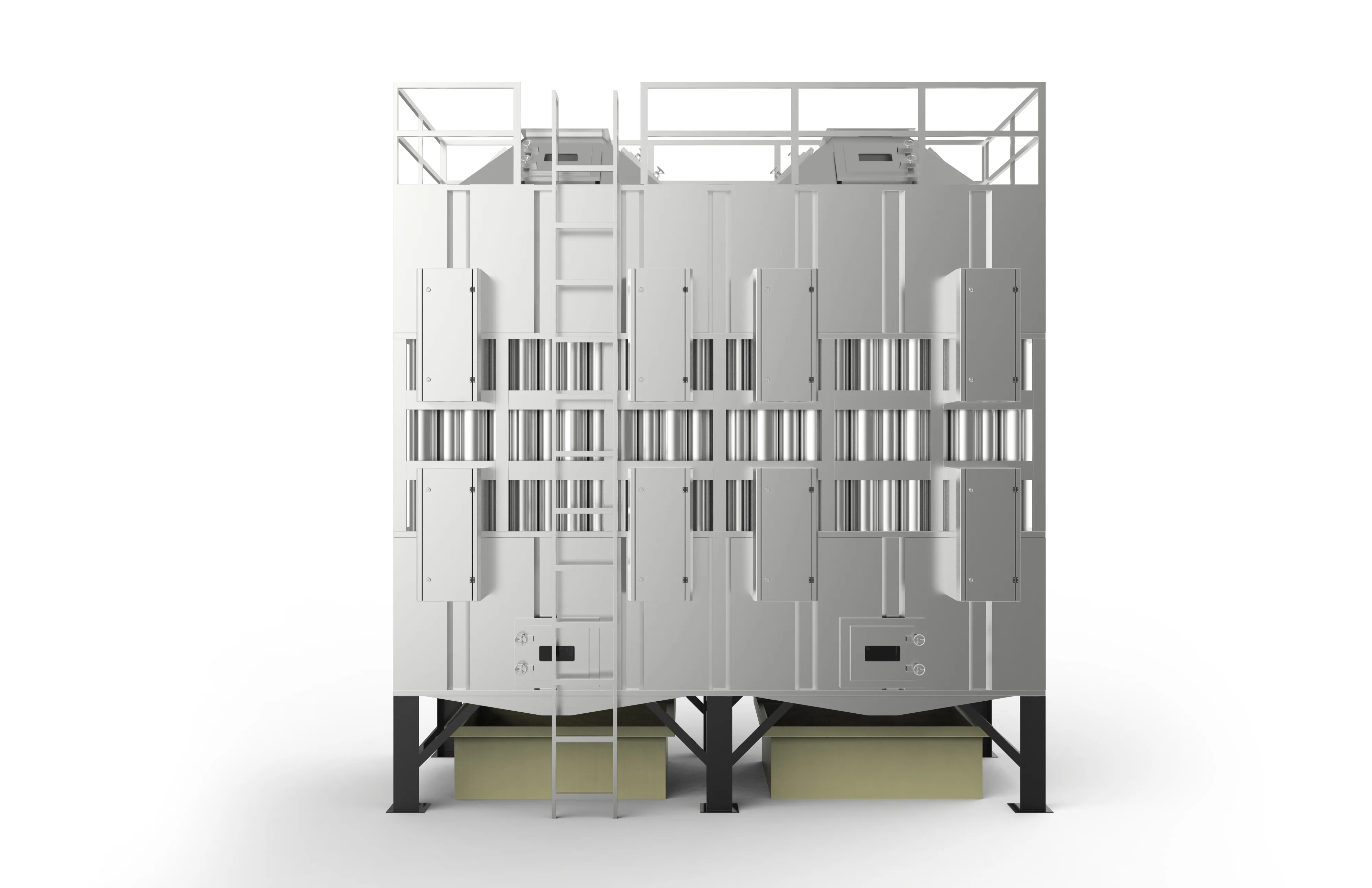
Process gas enters the WESP conditioning chamber, where it is pre-saturated and cooled. The gas then flows vertically through high-voltage ionization cells. High-voltage cathode wires generate a strong corona discharge, ionizing the passing gas molecules. As sub-micron particulates, oil droplets, and acid mists collide with these gas ions, they acquire a strong negative charge. Driven by the intense electrostatic field, these charged particles migrate to the grounded anode collector tubes (positive electrode) and deposit on their inner surfaces. A continuous gravity water film or periodic spray system washes the captured pollutants down into the lower collection sump as slurry, keeping the collector plates clean and ensuring continuous, non-stop performance.
- 01Inlet gas cooling and water-saturation pre-treatment to condense volatile heavy metals and optimize electrical conductivity.
- 02Vertical distribution of conditioned process gas into the honeycomb collector tube assembly.
- 03High-voltage corona ionization, imparting strong negative charges onto passing sub-micron dusts, aerosols, and mists.
- 04Electrostatic migration of charged particulates to the grounded collector anodes.
- 05Continuous or automated periodic spray washing to flush deposited particulates from collector walls.
- 06Discharge of captured pollutants as wet slurry to the plant's water treatment facility.
- 07Emission of highly transparent, compliant flue gas with particulate levels of <30 mg/m³ (and zero visible smoke).
- Deep purification of fine particulates, tar aerosols, acid mists, and heavy metal fumes from industrial boilers, glass furnaces, or chemical processes.
- Pre-treatment and protection for downstream VOC adsorption wheels in textile setting, rubber vulcanization, and plastic pelletizing industries.
- High-humidity flue gas treatment where conventional dry bag filters cannot operate due to moisture blinding.
- Facilities seeking zero visible plume ('blue smoke' or 'white mist') from their exhaust stacks.
- Process stream SO3 concentration must be monitored; high sulfur levels increase acid dew-point temperatures, necessitating strict alloy selection (e.g., 316L/2205) to prevent high-temperature corrosion.
- Inlet dust concentrations must be pre-conditioned; excessive dust loads will lead to electrode space-charging and compromise precipitator efficiency.
- Requires consistent water supply and water treatment integration to handle the recirculating flush slurry.
- Operator adjustment of high-voltage and current profiles must be tailored based on gas composition changes to avoid continuous spark-overs.
Typical pollutants
- PM2.5 / PM10 Particulates
- Soot and Fly Ash
- Sulfuric Acid Mist (H2SO4)
- Hydrochloric Acid Mist (HCl)
- Plasticizer Aerosols (DOP, DBP)
- Coal and Oil Tar
- Heavy Metal Fumes (Lead, Cadmium)
- Sub-micron Siliceous Dusts
Engineering features
- High Collection Efficiency: Effortlessly achieves particulate and aerosol purification rates of >=99%, reducing stack emission concentrations to <30 mg/m³.
- Zero Re-entrainment: Wet wash design completely eliminates the mechanical rapping and secondary dust re-entrainment common in dry precipitators.
- High-Frequency High-Voltage Power: Advanced power modules supply 60-70 kV with only 1200W of consumption, featuring spark detection and short-circuit protection.
- Elite Materials & Lifecycle: Heavy-duty stainless steel (304, 316L, or titanium-stabilized) tube bundles offer superior acid resistance, ensuring a 25-30 year lifespan.
- Integrated Smart Controls: Automated PLC system dynamically tracks differential pressure and water-recycle loops, managing flush intervals for optimized water conservation.
- Stack Compliance: Surpasses US EPA MACT (Maximum Achievable Control Technology) standards and EN 13284 testing protocols for zero visible plume.
Available options
- Vertical honeycomb tube configurations or horizontal plate designs.
- High-alloy stainless steel or carbon-fiber composite collector tube bundles.
- Closed-loop water recirculation and pH-neutralization treatment skids.
- Combined electrostatic wet precipitator + scrubbing tower integrated packages.
Relevant industries
General technology selection
These answers explain the selection path. Final performance, safety scope and dimensions follow the approved project design.
What does a WESP capture well?
It is commonly evaluated for fine, sticky or oily aerosols, acid mist, tar and other particulate that is difficult to polish with mechanical filtration alone.
Does a WESP require water management?
Yes. Spray/washdown water, drainage, recirculation and wastewater treatment need to be included in the project scope.
Source basis: VOCs equipment source and 2026 catalogue. Any outlet concentration or collection-efficiency value is project-specific.
Specific product Q&A
What is the best way to remove DOP plasticizer aerosols and oil smoke in PVC factories?
For highly viscous and sticky emissions like DOP aerosols from PVC calendering or artificial leather manufacturing, a Wet Electrostatic Precipitator (WESP) is the premier choice. The continuous water film flushing prevents the sticky oil smoke from accumulating and fouling the collection plates, ensuring stable long-term operation without the severe maintenance downtime associated with dry filters or dry ESPs.
How does a wet electrostatic precipitator prevent secondary dust re-entrainment?
Unlike dry ESPs which rely on mechanical rapping mechanisms to knock dust off the plates (causing temporary dust plumes), a WESP utilizes a continuous or intermittent uniform water film to wash the captured particulate and aerosols downwards into a collection sump. This liquid encapsulation completely eliminates dry dust re-entrainment.
How to protect zeolite molecular sieve rotors from paint mist and aerosols?
Paint mist and fine aerosols will rapidly blind the microscopic pores of a zeolite rotor, rendering it useless. Installing a WESP as a final pretreatment polishing stage directly upstream of the rotor guarantees removal of sub-micron aerosols (PM2.5) down to <1mg/m³, vastly extending the lifespan and ensuring the continuous high adsorption efficiency of the expensive molecular sieve media.
Equipment views
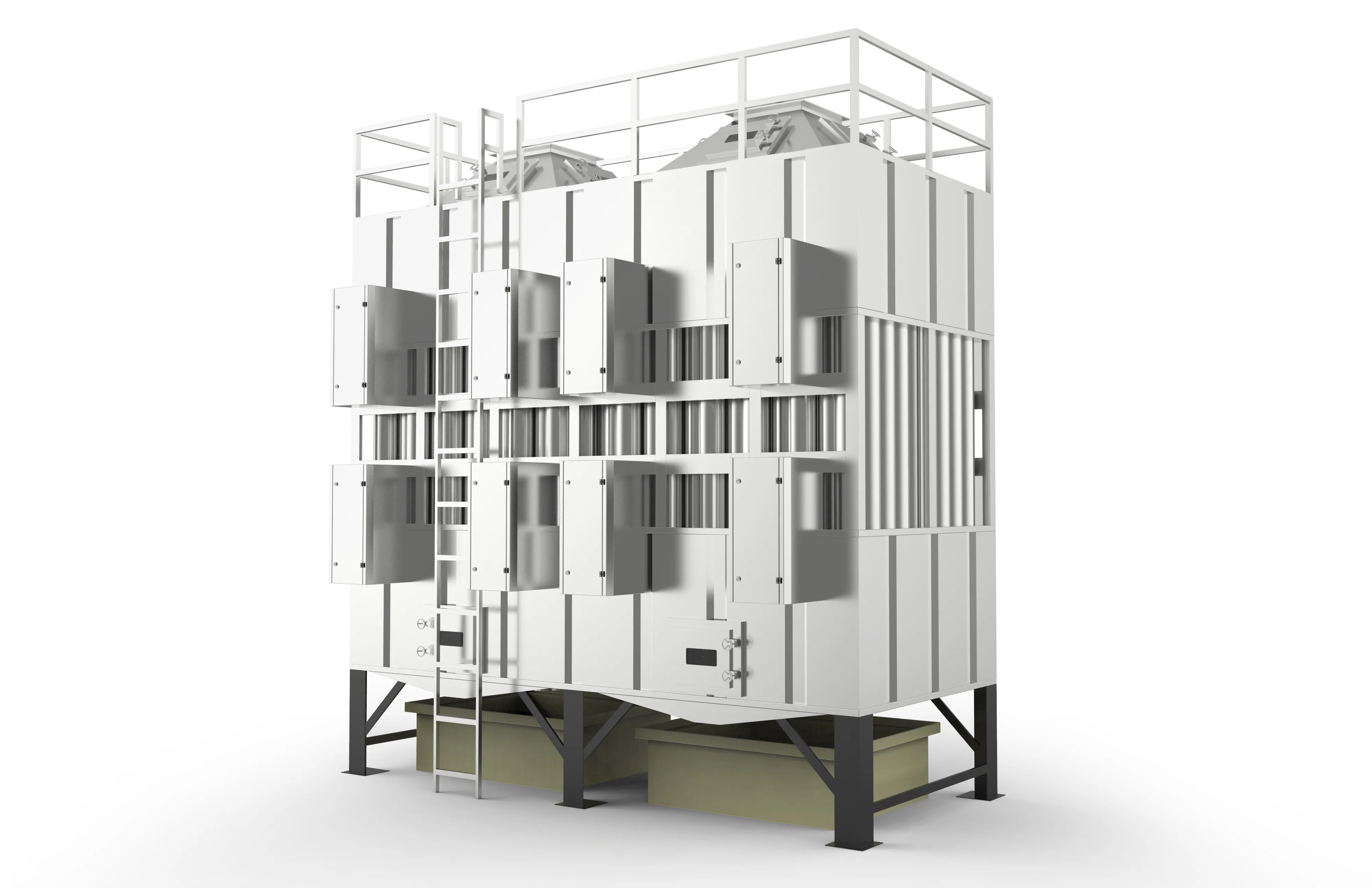
Product images show representative FluxFine configurations. Final dimensions, materials and interfaces follow the approved project design.
Configure WESP for your plant
Share measured process data so the engineering team can confirm suitability, pretreatment, equipment size and scope boundaries.
Source basis: Published values are selection references, not a project guarantee.