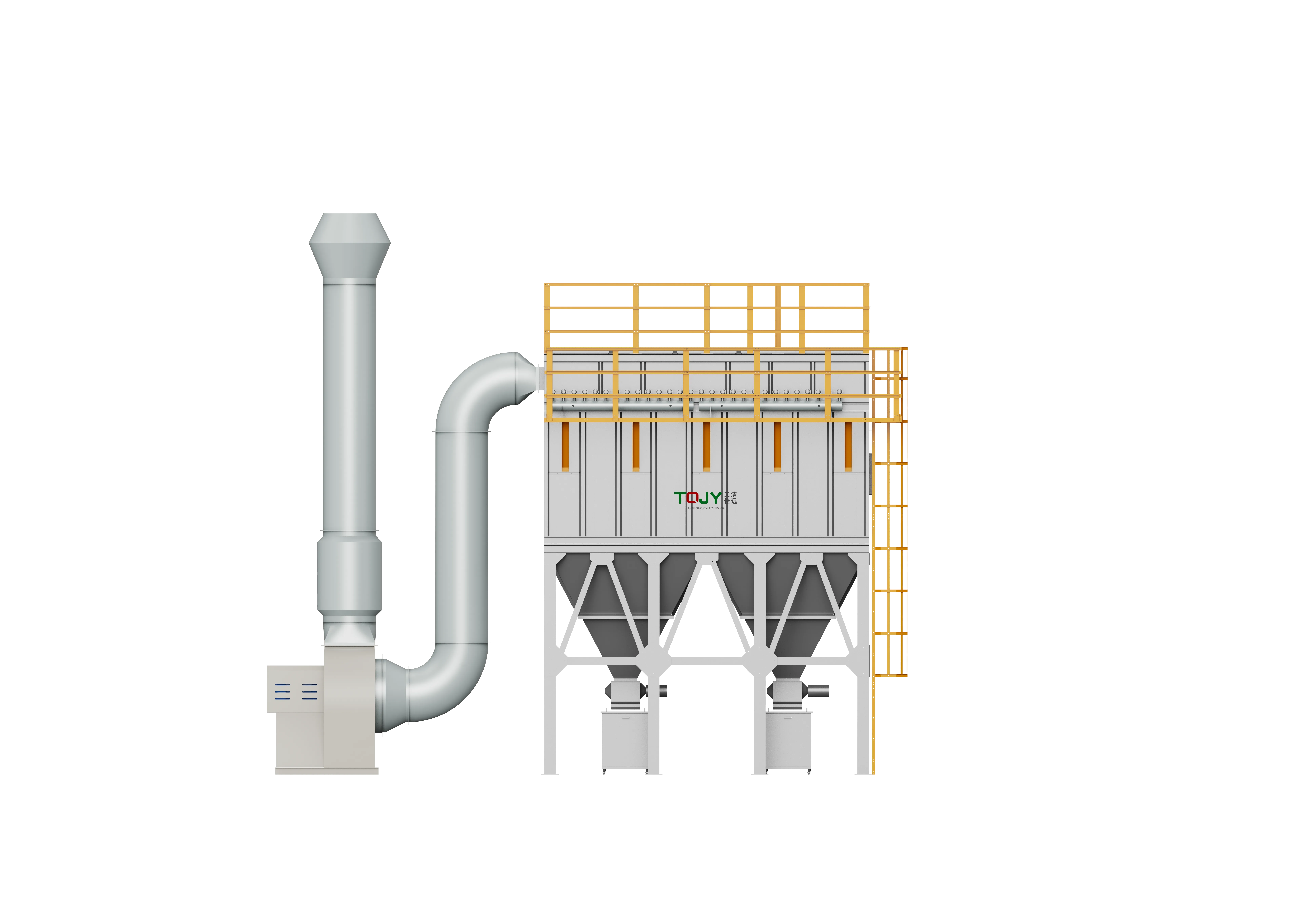
Pulse-Jet Baghouse Dust Collector
A dry dust collector with pulse cleaning for process particulate from handling, cutting, grinding and production operations.
Designed around actual process conditions
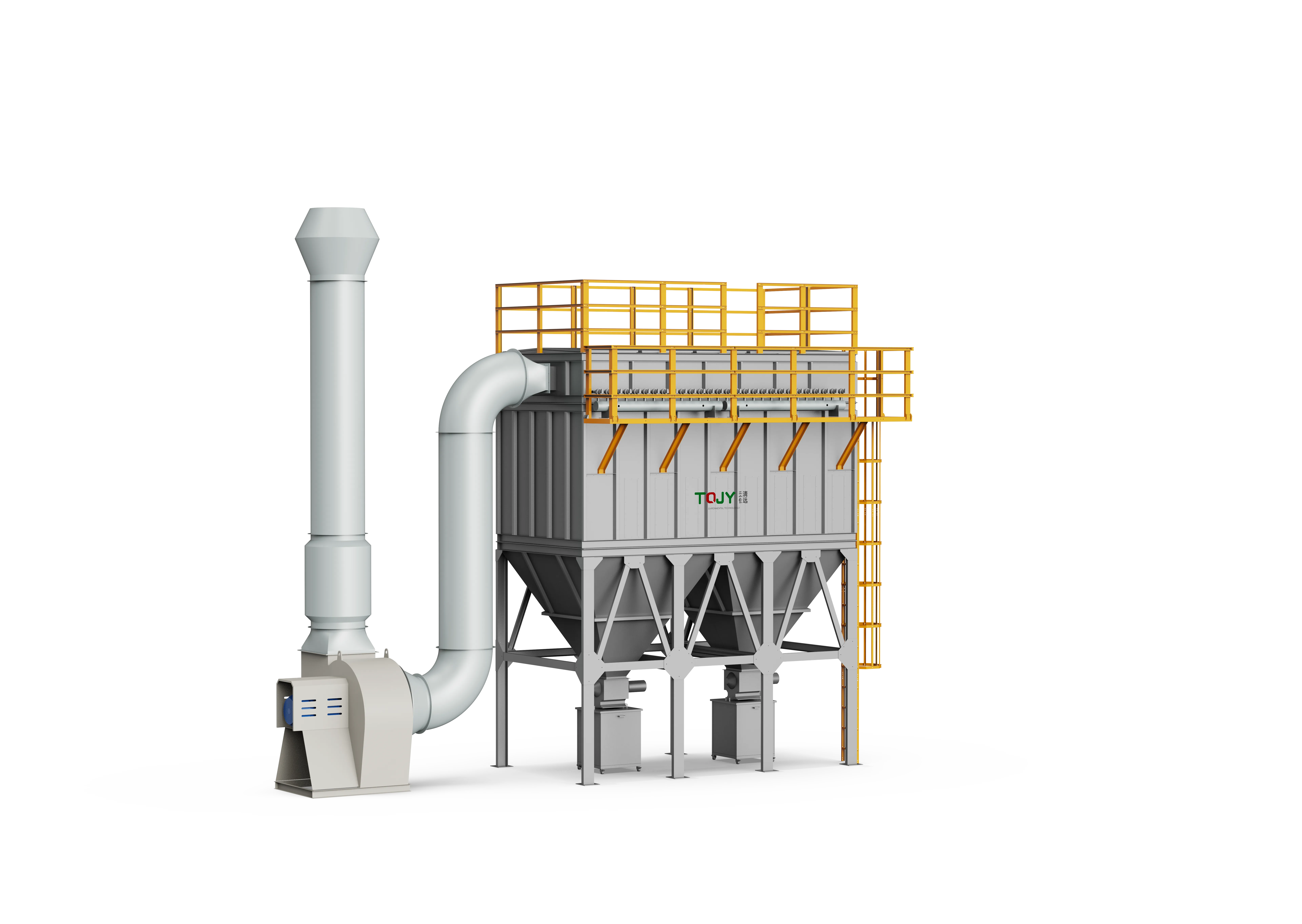
Dust is captured on filter bags while automatic compressed-air pulses restore permeability. Hopper and discharge arrangements are matched to dust loading and handling requirements.
Industrial Bag Filter
Legacy catalog reference; application-dependent
Legacy catalog capture statement
Automatic PLC control
Operating references and configuration choices
These reference values and modules clarify the scope we evaluate. They are not a substitute for a process-data review or final proposal.
| Engineering reference | Value | How to read it |
|---|---|---|
| Application scope | Dry industrial particulate collection | A selection reference only; final capacity and materials follow the project design basis. |
| Configuration | Project-specific | Confirmed from process data, site constraints and the required treatment objective. |
| Performance basis | Process-dependent | No generic removal, safety or compliance promise is made without the stated pollutant and operating conditions. |
Typical modules considered
- Inlet/baffle and hopper arrangement
- Filter bags and pulse-jet cleaning system
- Differential-pressure monitoring and compressed-air interface
- Dust discharge, access doors and fan/duct connection
Project-specific selection notes
- Identify dust particle size, moisture, temperature, abrasiveness and any combustible-dust characteristics.
- Select filter media, discharge equipment and cleaning controls from the actual dust and duty cycle.
- Wet or sticky dust requires separate conditioning or another collection approach.
How to use this product information
A baghouse is intended for dry particulate. Oil mist, condensable fume and corrosive gas require a separate treatment assessment.
- The supplied catalog and legacy product record support pulse-jet baghouse use for industrial dry-dust collection.
- The published description is a selection starting point. Process data, utilities, materials, safety requirements and acceptance criteria remain subject to engineering review.
What we review before specifying Pulse Baghouse
A product name is a starting point, not a final design. These inputs define pretreatment, materials, controls, equipment size and scope boundaries.
Project data to provide
- Dust composition, particle size and loading
- Airflow, temperature, humidity and sticky/condensable fraction
- Combustibility data, Kst/Pmax where applicable, and zoning
- Filter-media compatibility and cleaning-air availability
- Dust discharge, disposal and maintenance access
Typical engineered scope
- Collection hood/duct and inlet separation
- Bag or cartridge filter media matched to duty
- Pulse-cleaning, hopper and discharge device
- Differential-pressure monitoring and control panel
- Explosion protection/isolation where the dust hazard assessment requires it
Safety and controls
- Combustible-dust applications need a dedicated hazard assessment and local-code-compliant protection concept.
- Wet, sticky or high-temperature dust may need special media, cooling or a different collector.
- Filter cleaning is controlled by differential pressure or an approved duty cycle.
- Avoid generic ATEX/NFPA claims unless the supplied configuration and installed country scope have been verified.
How it works
Dust-laden air passes through filter media; particulate remains on the surface and periodic pulse jets release the cake into the hopper.
- 01Capture dust at the source
- 02Filter through bag media
- 03Pulse-clean the filter surface
- 04Collect and discharge hopper solids
- Dry process dust
- Wood, stone and building materials
- Metallurgy and foundry applications
- Recoverable powder
- Combustibility and explosion risk must be assessed before selection.
- Temperature, moisture and dust characteristics determine filter media.
Typical pollutants
- Dry particulate
- Grinding dust
- Powder-handling emissions
- Process fines
Engineering features
- Automatic pulse cleaning
- Differential-pressure monitoring
- High-efficiency dry filtration
- Material-recovery potential
Available options
- Filter-media selection
- 304 stainless construction
- Rotary valve or screw discharge
- Explosion-protection package
Relevant industries
Chemical Industry
Resins, coatings, waterproofing, and specialty chemicals.
Pharmaceutical & Medical
Solvent exhaust from synthesis, coating, and finishing.
New Materials & New Energy
Battery materials, functional films, composites and advanced material production.
Heavy Machinery & Shipbuilding
Large booth coating and high-airflow paint shops.
General technology selection
These answers explain the selection path. Final performance, safety scope and dimensions follow the approved project design.
Baghouse or cartridge collector: which is better?
The choice follows dust loading, particle characteristics, temperature, footprint, cleaning method and combustible-dust risk. Neither is universally better.
Can a standard dust collector be used for combustible dust?
Only after a dust-hazard assessment and engineered explosion-protection/isolation design. This cannot be selected from a product photo or airflow alone.
Source basis: 2026 catalogue and legacy product material. Final filter media and safety scope are project-specific.
Specific product Q&A
What is the optimal air-to-cloth ratio for a metallurgy pulse baghouse?
For metallurgy and foundry applications involving fine, abrasive dust, the air-to-cloth ratio must be kept extremely conservative, typically between 1.0 to 1.5 m/min. Higher velocities will cause the abrasive dust to penetrate deeply into the filter media, permanently blinding the bags and leading to premature failure and high pressure drops.
How does compressed air pressure affect pulse-jet cleaning efficiency?
Pulse-jet cleaning relies on a sudden burst of compressed air (typically 0.4-0.6 MPa) to create a shockwave that expands the filter bag, cracking and dislodging the dust cake. If the pressure is too low, the dust cake won't dislodge. If it's too high, excessive mechanical stress will rapidly tear the filter media. FluxFine incorporates precision pressure regulators and sequential PLC timing to optimize this balance.
When should PTFE membrane filter bags be used in a dust collector?
Standard polyester bags are excellent for general dry dust. However, if the process dust is extremely fine (sub-micron), highly abrasive, or has slight moisture/stickiness, PTFE (Teflon) membrane laminated bags are required. The microporous PTFE membrane prevents surface penetration, ensuring the dust cake easily releases during pulse cleaning and maintaining a stable pressure drop over a longer lifespan.
Equipment views
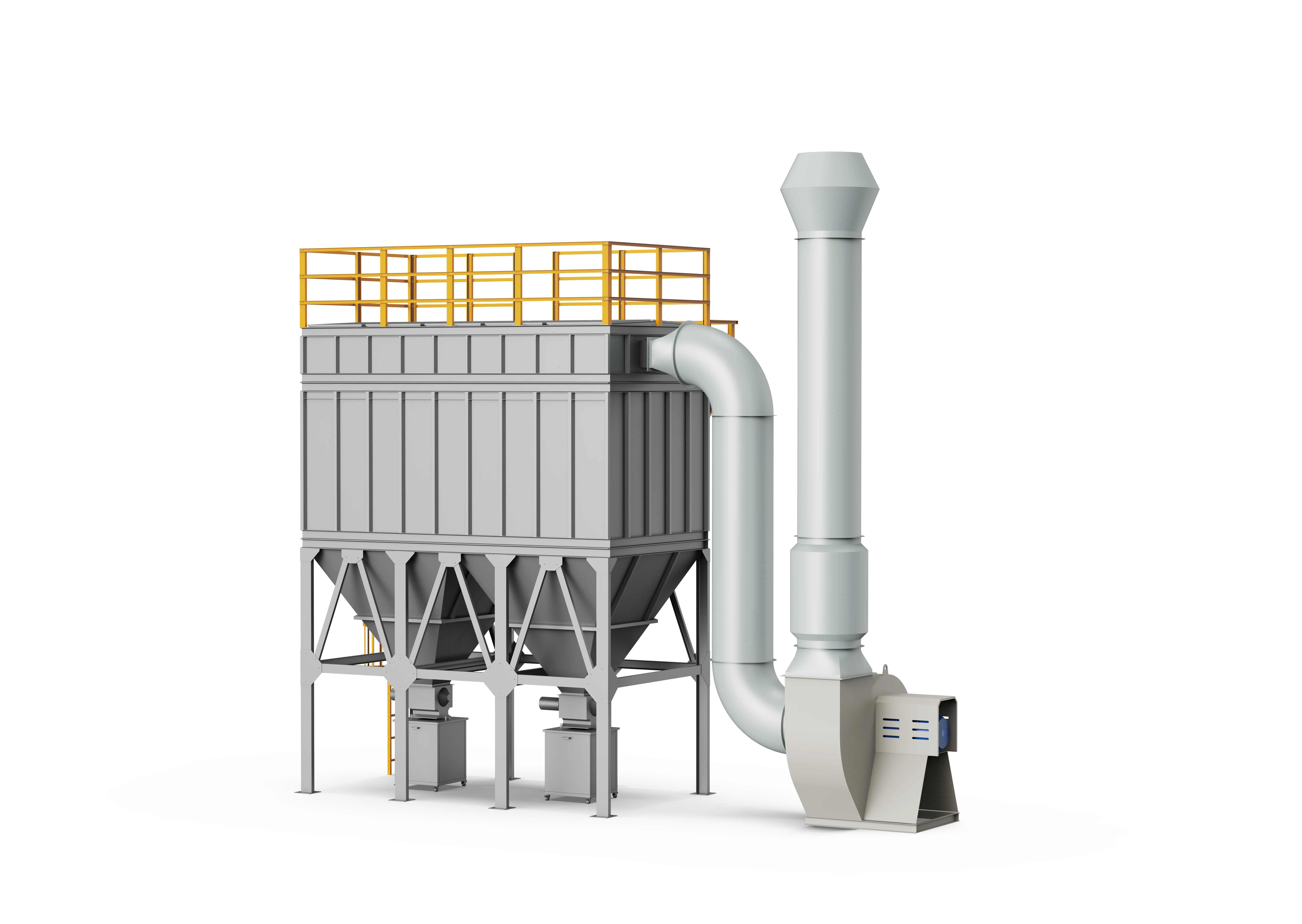
Product images show representative FluxFine configurations. Final dimensions, materials and interfaces follow the approved project design.
Configure Pulse Baghouse for your plant
Share measured process data so the engineering team can confirm suitability, pretreatment, equipment size and scope boundaries.
Source basis: Bilingual legacy product record and current product image set. Published values are selection references, not a project guarantee.