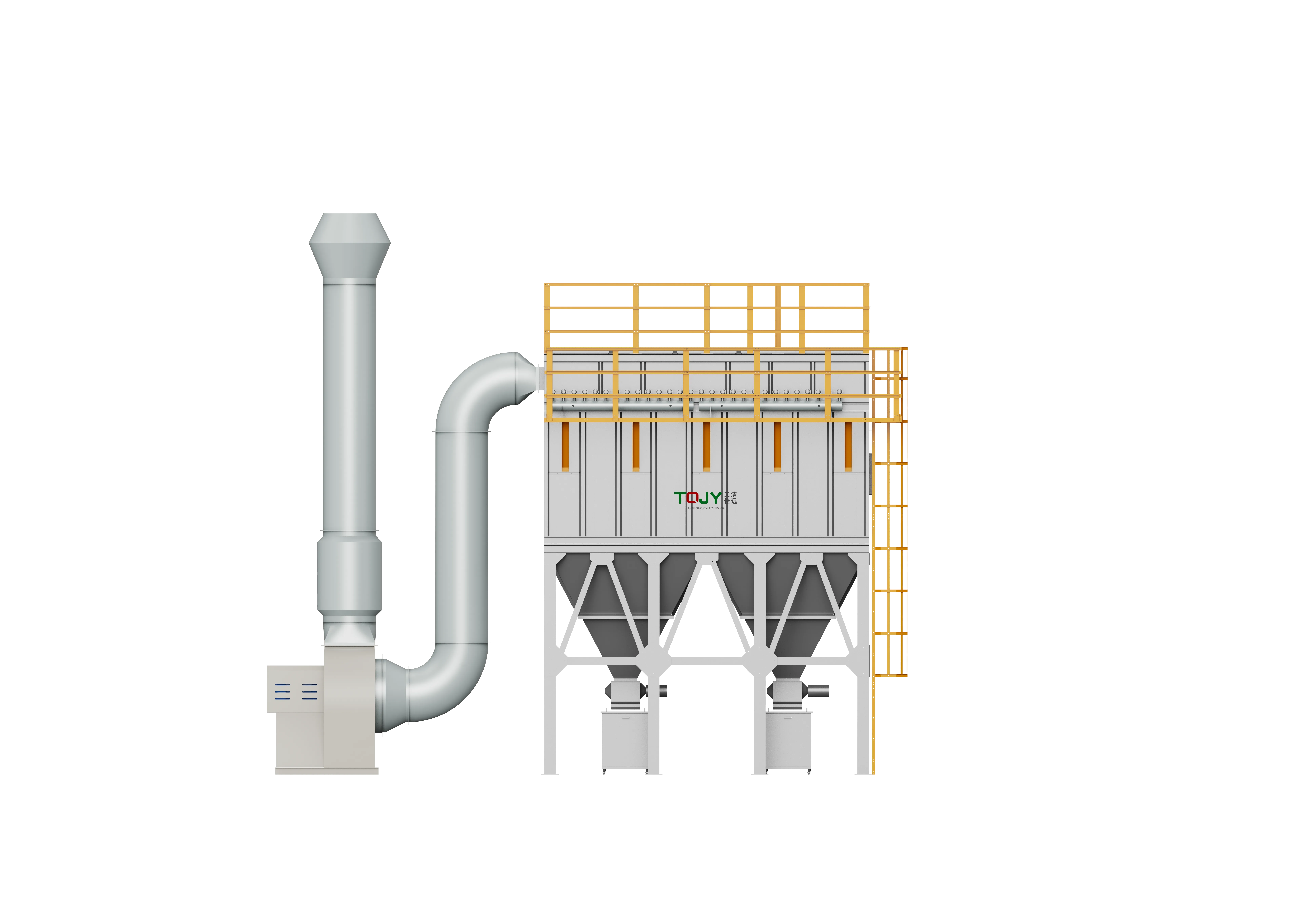
Dust Collection
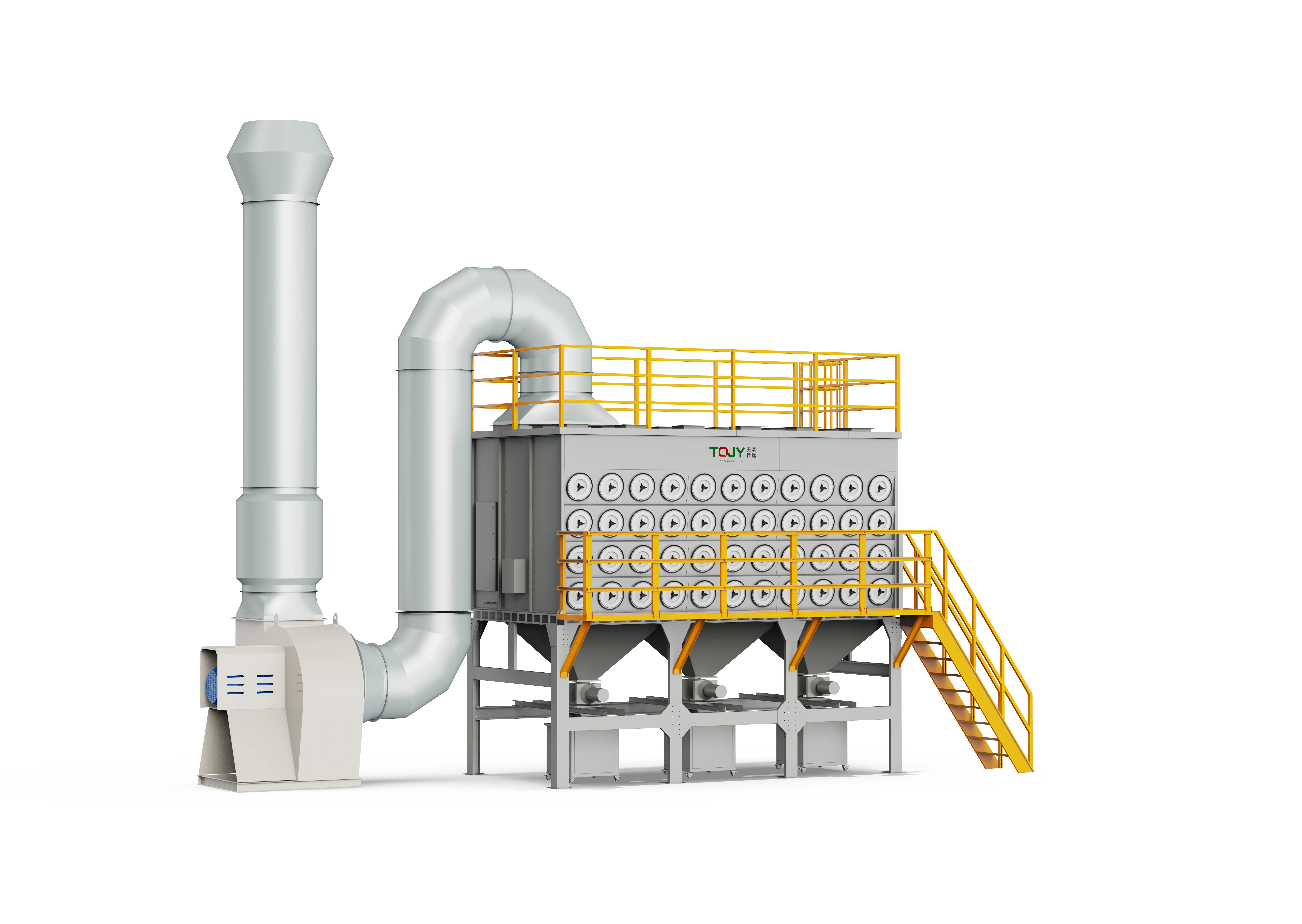
Baghouse and explosion-proof cartridge collectors for dry particulate from process and finishing operations.
Where Dust Collection fits
Pulse baghouse and cartridge collectors remove dry dust from grinding, cutting, conveying, and powder handling. Explosion-proof designs address combustible dust duties in chemical and metal processing.
Dry dust, welding/grinding fume, explosion-risk powders
Catalog reference; media dependent
Baghouse catalog statement
Automatic differential-pressure control
How the system works
Dust-laden air enters the collector; filters capture particulate while cleaned air exits. Pulse-jet cleaning regenerates filter media under PLC control with differential-pressure monitoring.
- 01Dust-laden air enters the separation chamber.
- 02Filter bags or cartridges capture particulate.
- 03Pulse-jet cleaning releases the dust cake.
- 04Collected material falls to a hopper for safe discharge.
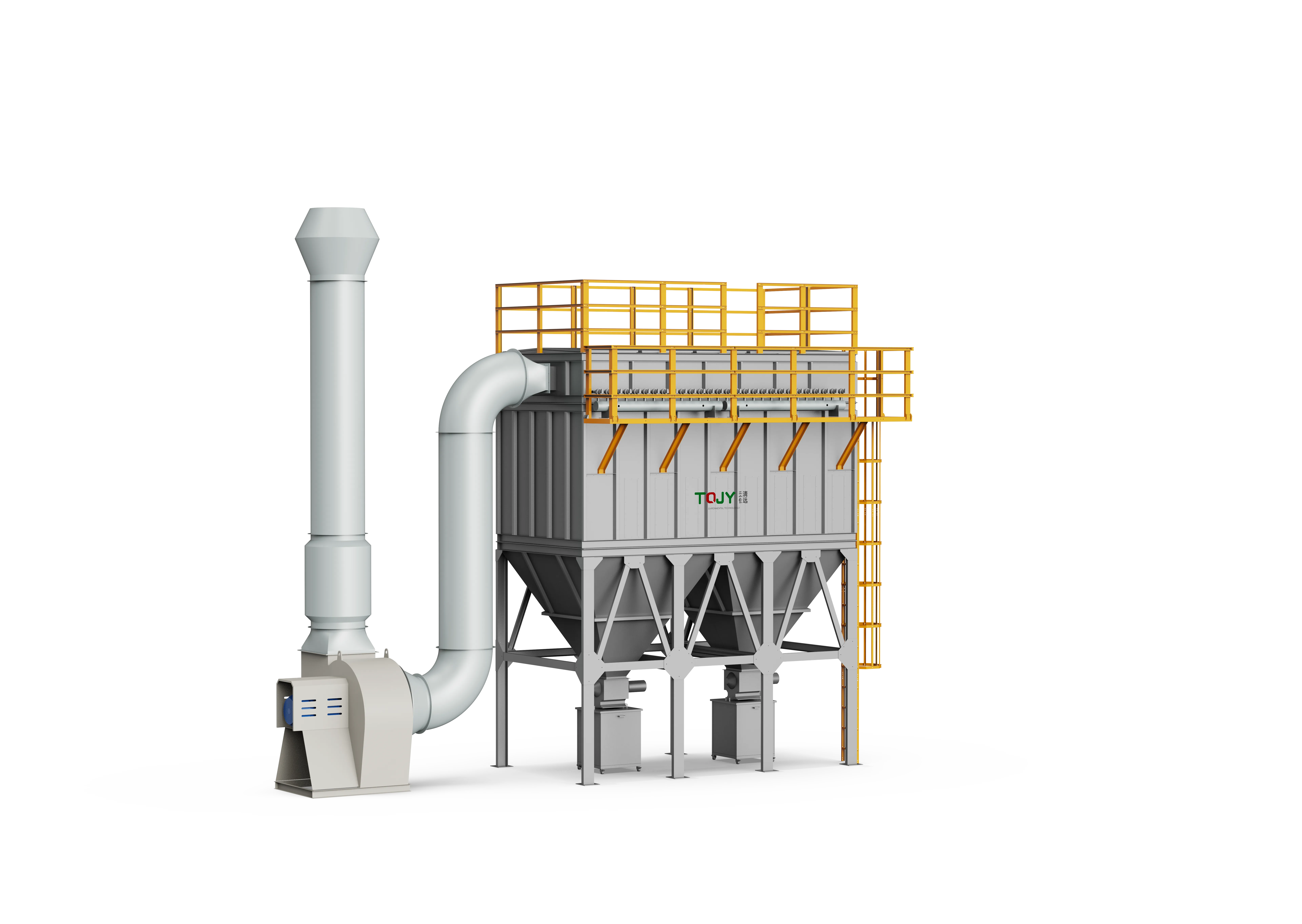
Choose by process conditions
| Configuration | Description | Best fit | Source metric |
|---|---|---|---|
| Pulse Baghouse | Large filter area and robust bags for heavy, high-temperature, or larger-particle duty. | Chemical, metallurgy, wood, building materials, foundry, and bulk solids. | Project-specific |
| Explosion-Proof Cartridge Collector | Compact cartridge filtration with pulse cleaning and explosion-risk engineering. | Chemical, pharmaceutical, coating, ink, and metal-processing combustible dust. | Project-specific |
Typical pollutants
- Dry process dust
- Welding and cutting fume
- Grinding particulate
- Combustible powders
Engineering features
- Differential-pressure monitoring
- PLC pulse cleaning
- Explosion venting or isolation by risk study
- Hopper discharge options
- Stainless or coated construction
Selection cautions
- Combustible dust requires a formal hazard assessment and appropriate venting, isolation, and grounding.
- Moist or sticky dust can blind dry filter media.
What determines the final treatment train
Technology selection begins with process data. The same technology can require different pretreatment, materials, controls and maintenance provisions from one plant to another.
Information to confirm
- Dust composition, particle size and loading
- Airflow, temperature, humidity and sticky/condensable fraction
- Combustibility data, Kst/Pmax where applicable, and zoning
- Filter-media compatibility and cleaning-air availability
- Dust discharge, disposal and maintenance access
Typical system scope
- Collection hood/duct and inlet separation
- Bag or cartridge filter media matched to duty
- Pulse-cleaning, hopper and discharge device
- Differential-pressure monitoring and control panel
- Explosion protection/isolation where the dust hazard assessment requires it
Selection boundaries
- Combustible-dust applications need a dedicated hazard assessment and local-code-compliant protection concept.
- Wet, sticky or high-temperature dust may need special media, cooling or a different collector.
- Filter cleaning is controlled by differential pressure or an approved duty cycle.
- Avoid generic ATEX/NFPA claims unless the supplied configuration and installed country scope have been verified.
Source basis: 2026 catalogue and legacy product material. Final filter media and safety scope are project-specific.
Products using this technology
Pulse Baghouse
A dry dust collector with pulse cleaning for process particulate from handling, cutting, grinding and production operations.
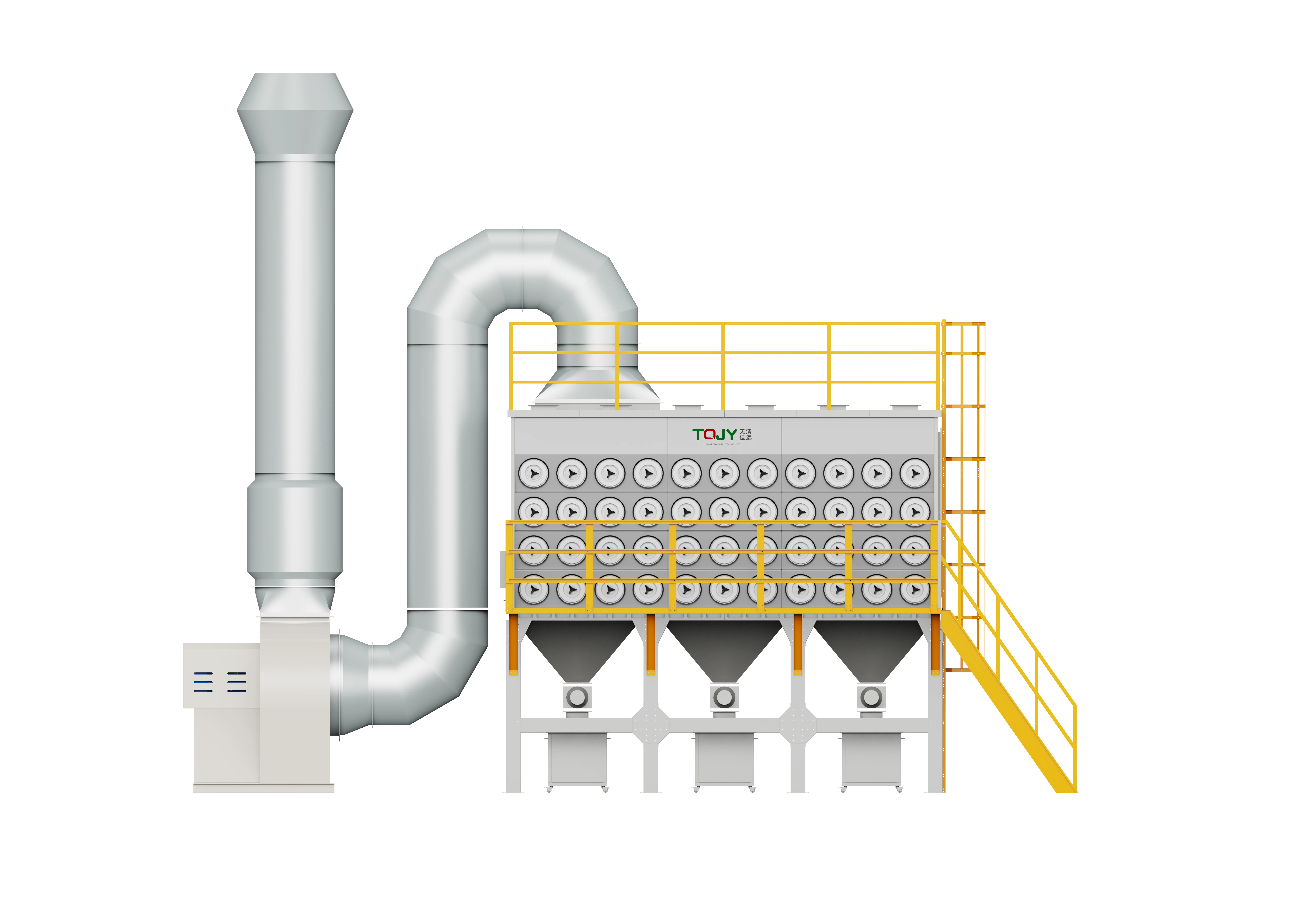
Explosion-Proof Cartridge Collector
Compact pulse-cleaned cartridge filtration for fine process dust and duties requiring a documented combustible-dust safety review.
304 SS Pulse Baghouse
High-capacity 304 stainless steel pulse-jet baghouse for >99% efficiency dry dust collection.
ATEX Cartridge Collector
Specialized cartridge dust collector engineered with explosion vents and static grounding for combustible industrial dusts.
Selection questions
Baghouse or cartridge collector: which is better?
The choice follows dust loading, particle characteristics, temperature, footprint, cleaning method and combustible-dust risk. Neither is universally better.
Can a standard dust collector be used for combustible dust?
Only after a dust-hazard assessment and engineered explosion-protection/isolation design. This cannot be selected from a product photo or airflow alone.
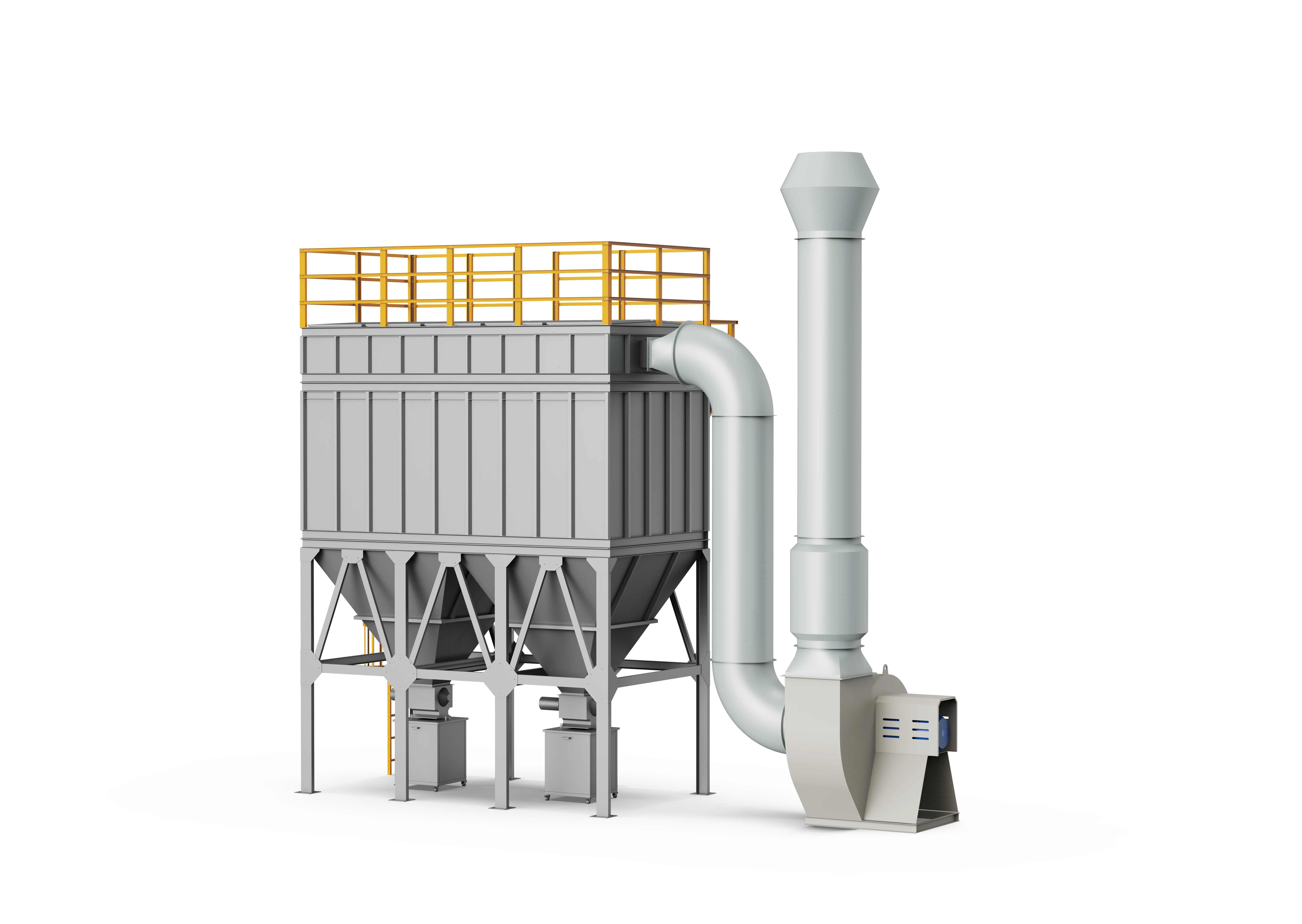
Equipment views
Specify Dust Collection for your plant
Performance depends on actual gas composition, inlet load, temperature and operating schedule. Share process data for a configuration review.