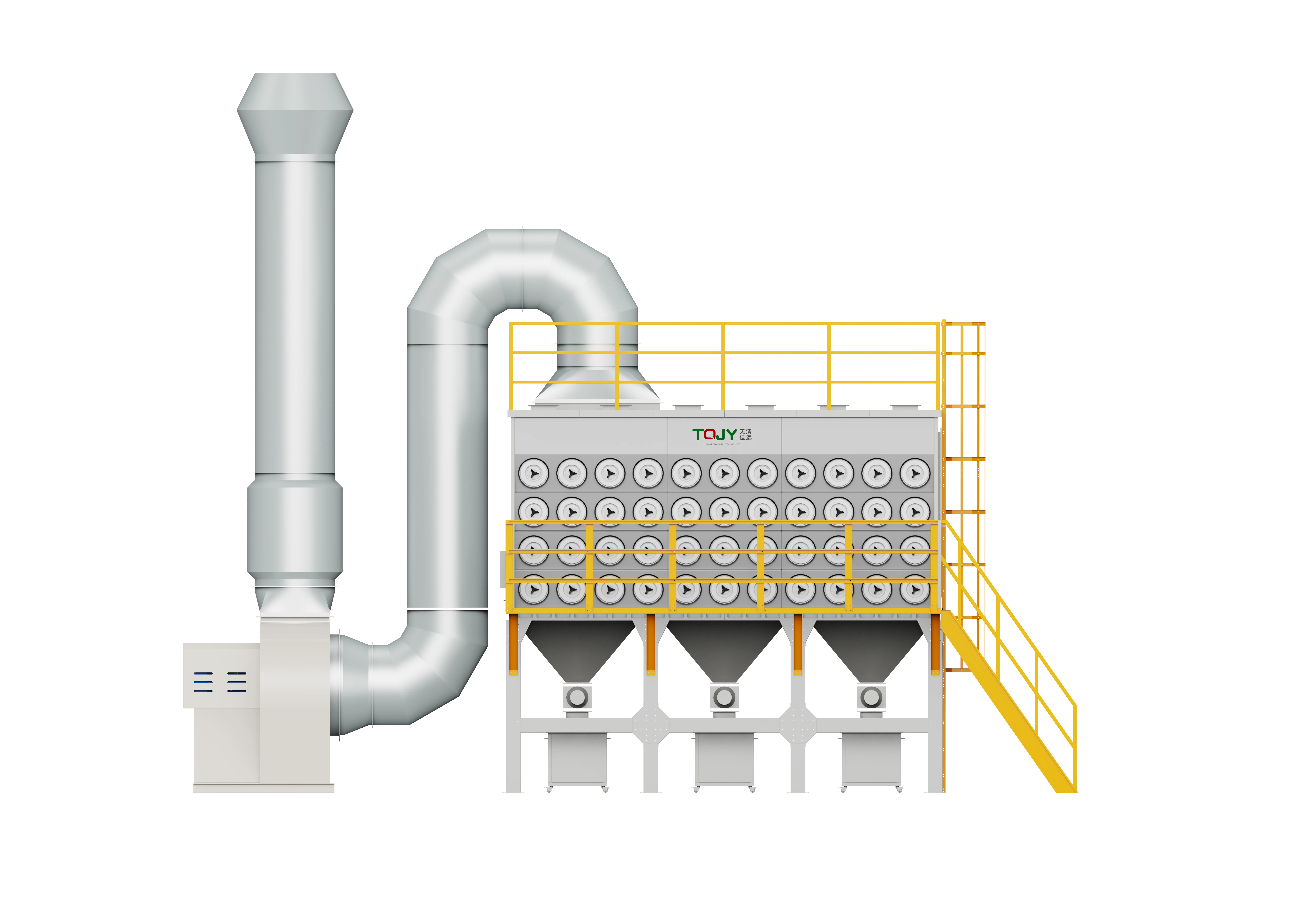
Explosion-Proof Cartridge Dust Collector
Compact pulse-cleaned cartridge filtration for fine process dust and duties requiring a documented combustible-dust safety review.
Designed around actual process conditions
Pleated cartridges provide high filtration area in a compact housing. Explosion-protection provisions are selected from dust properties, process risk and applicable project requirements.
Pulse Cartridge Dust Collector
For fine, dry particulate
High surface area in compact footprint
Automatic PLC control
Operating references and configuration choices
These reference values and modules clarify the scope we evaluate. They are not a substitute for a process-data review or final proposal.
| Engineering reference | Value | How to read it |
|---|---|---|
| Application scope | Fine dry-dust collection where cartridge geometry fits the duty | A selection reference only; final capacity and materials follow the project design basis. |
| Configuration | Project-specific | Confirmed from process data, site constraints and the required treatment objective. |
| Performance basis | Process-dependent | No generic removal, safety or compliance promise is made without the stated pollutant and operating conditions. |
Typical modules considered
- Pleated cartridge filters and pulse-cleaning controls
- Inlet pre-separation and hopper/bin interface
- Differential-pressure monitoring
- Dust discharge and maintenance-access provisions
Project-specific selection notes
- Confirm dust loading, particle behavior, temperature and cleaning-cycle requirements before selecting cartridges.
- Assess combustible-dust risk and applicable local requirements separately from generic product content.
- Do not use cartridge equipment as a default solution for wet, sticky or oil-laden streams.
How to use this product information
Cartridge collectors are compared with baghouses by dust loading, particle characteristics, footprint, cleaning strategy and maintenance access—not only filtration area.
- The bilingual product set identifies industrial cartridge collection as a dry-dust equipment family.
- The published description is a selection starting point. Process data, utilities, materials, safety requirements and acceptance criteria remain subject to engineering review.
What we review before specifying Explosion-Proof Cartridge Collector
A product name is a starting point, not a final design. These inputs define pretreatment, materials, controls, equipment size and scope boundaries.
Project data to provide
- Dust composition, particle size and loading
- Airflow, temperature, humidity and sticky/condensable fraction
- Combustibility data, Kst/Pmax where applicable, and zoning
- Filter-media compatibility and cleaning-air availability
- Dust discharge, disposal and maintenance access
Typical engineered scope
- Collection hood/duct and inlet separation
- Bag or cartridge filter media matched to duty
- Pulse-cleaning, hopper and discharge device
- Differential-pressure monitoring and control panel
- Explosion protection/isolation where the dust hazard assessment requires it
Safety and controls
- Combustible-dust applications need a dedicated hazard assessment and local-code-compliant protection concept.
- Wet, sticky or high-temperature dust may need special media, cooling or a different collector.
- Filter cleaning is controlled by differential pressure or an approved duty cycle.
- Avoid generic ATEX/NFPA claims unless the supplied configuration and installed country scope have been verified.
How it works
Cartridge media captures fine particulate while PLC-controlled pulse cleaning releases accumulated dust into the hopper.
- 01Capture dust at the process
- 02Filter through pleated cartridges
- 03Monitor differential pressure
- 04Pulse-clean and safely discharge dust
- Welding, cutting and grinding
- Chemical and coating powders
- Metal processing
- Compact automated lines
- The term explosion-proof does not replace a dust hazard analysis.
- Venting, isolation, suppression and electrical classification are project-specific.
Typical pollutants
- Fine dry dust
- Welding and cutting fume
- Combustible powders
- Metalworking particulate
Engineering features
- Compact high-area cartridges
- Automatic pulse cleaning
- PLC fault monitoring
- Configurable explosion protection
Available options
- Explosion venting or suppression interface
- Spark detection
- Isolation device
- Antistatic filter media
Relevant industries
New Materials & New Energy
Battery materials, functional films, composites and advanced material production.
Chemical Industry
Resins, coatings, waterproofing, and specialty chemicals.
Pharmaceutical & Medical
Solvent exhaust from synthesis, coating, and finishing.
Heavy Machinery & Shipbuilding
Large booth coating and high-airflow paint shops.
General technology selection
These answers explain the selection path. Final performance, safety scope and dimensions follow the approved project design.
Baghouse or cartridge collector: which is better?
The choice follows dust loading, particle characteristics, temperature, footprint, cleaning method and combustible-dust risk. Neither is universally better.
Can a standard dust collector be used for combustible dust?
Only after a dust-hazard assessment and engineered explosion-protection/isolation design. This cannot be selected from a product photo or airflow alone.
Source basis: 2026 catalogue and legacy product material. Final filter media and safety scope are project-specific.
Specific product Q&A
Why choose a cartridge dust collector over a traditional baghouse?
Cartridge collectors offer significantly higher filtration surface area in a much smaller footprint due to the pleated media design. This makes them ideal for indoor installations or facilities with strict space constraints. Additionally, cartridge filters provide higher filtration efficiency for very fine, sub-micron particulates (like welding fumes or powder coating dust) compared to standard felt bags.
How does pulse-jet cleaning work on pleated filter cartridges?
An internal cone or venturi nozzle directs a high-velocity pulse of compressed air down the center of the cartridge. This creates a shockwave that travels outward, flexing the pleats slightly and dislodging the accumulated dust cake into the hopper below. Proper pleat spacing (wide pleats) is critical; if the pleats are too tight, the dust will bridge and fail to pulse off, leading to rapid blinding.
Can a standard cartridge collector handle hot, sticky or oily dust?
Generally, no. Standard cartridge media is designed for dry, free-flowing, ambient-temperature dust. Sticky or oily aerosols will instantly plug the tight pleats, and hot gas can melt the standard synthetic media or the potting compound holding the pleats. For these challenging applications, a wet scrubber or specialized high-temperature baghouse is the correct engineering choice.
Equipment views
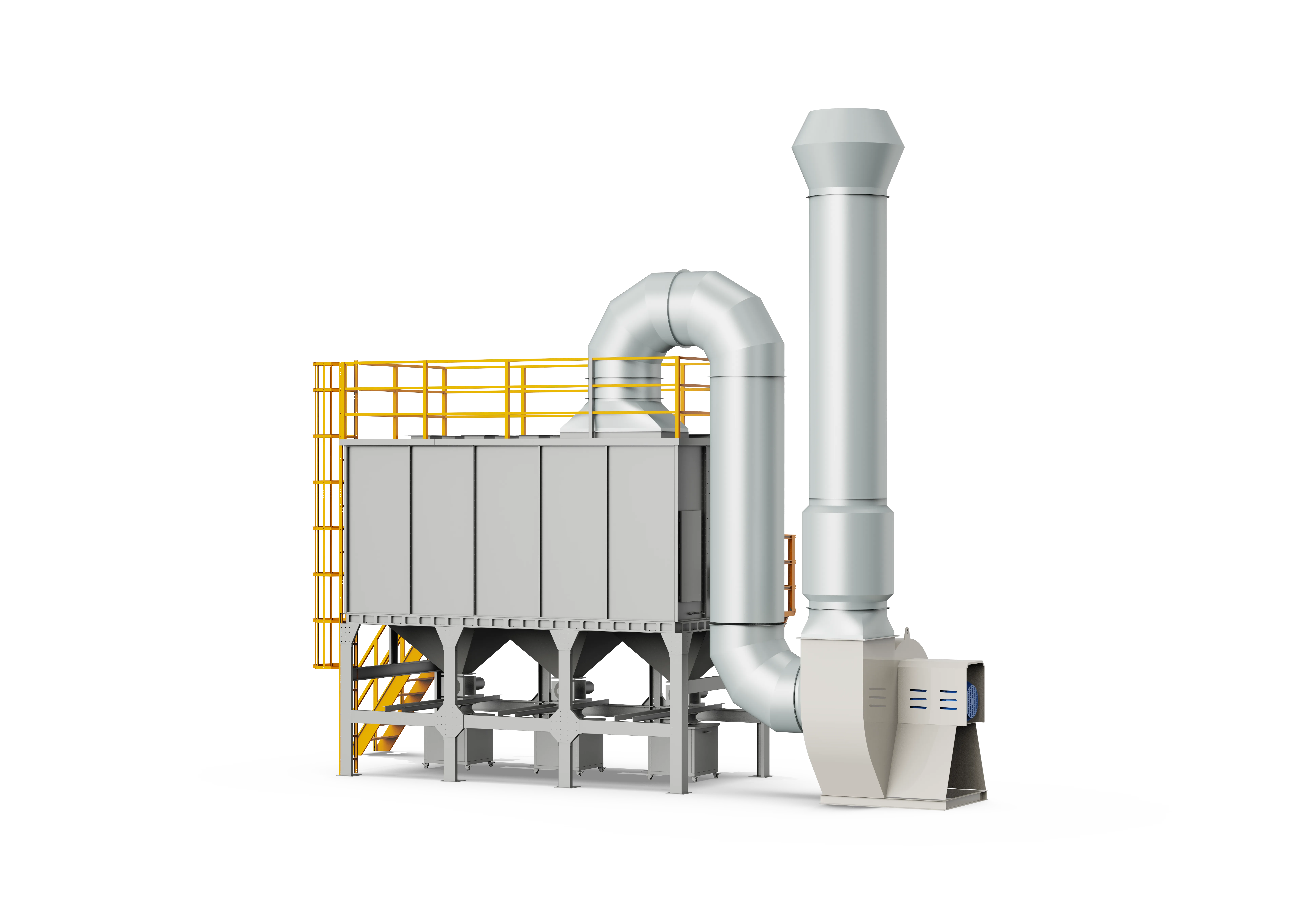
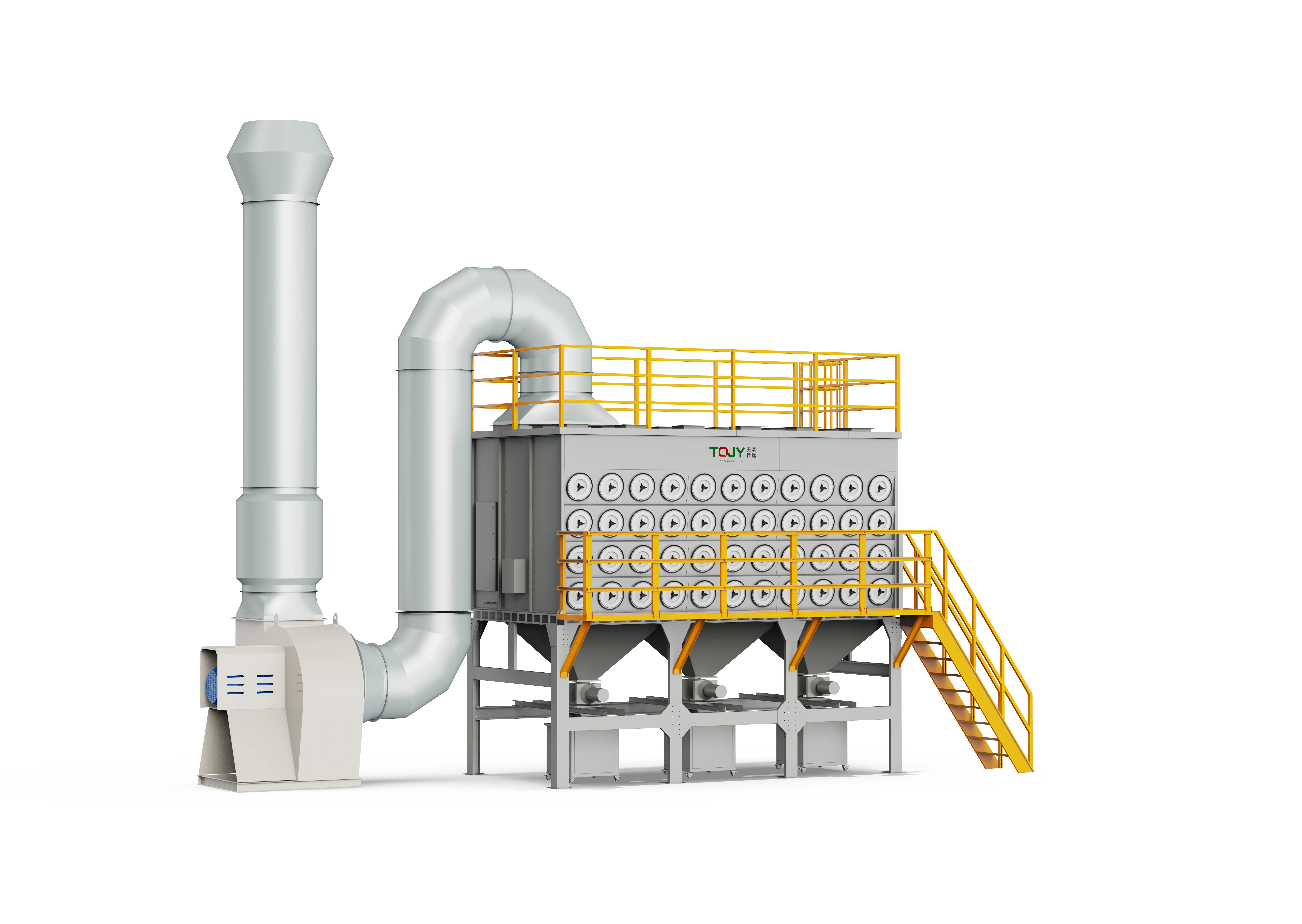
Product images show representative FluxFine configurations. Final dimensions, materials and interfaces follow the approved project design.
Proven Explosion-Proof Cartridge Collector installations
Review documented treatment trains featuring Explosion-Proof Cartridge Collector technology across various industrial processes.
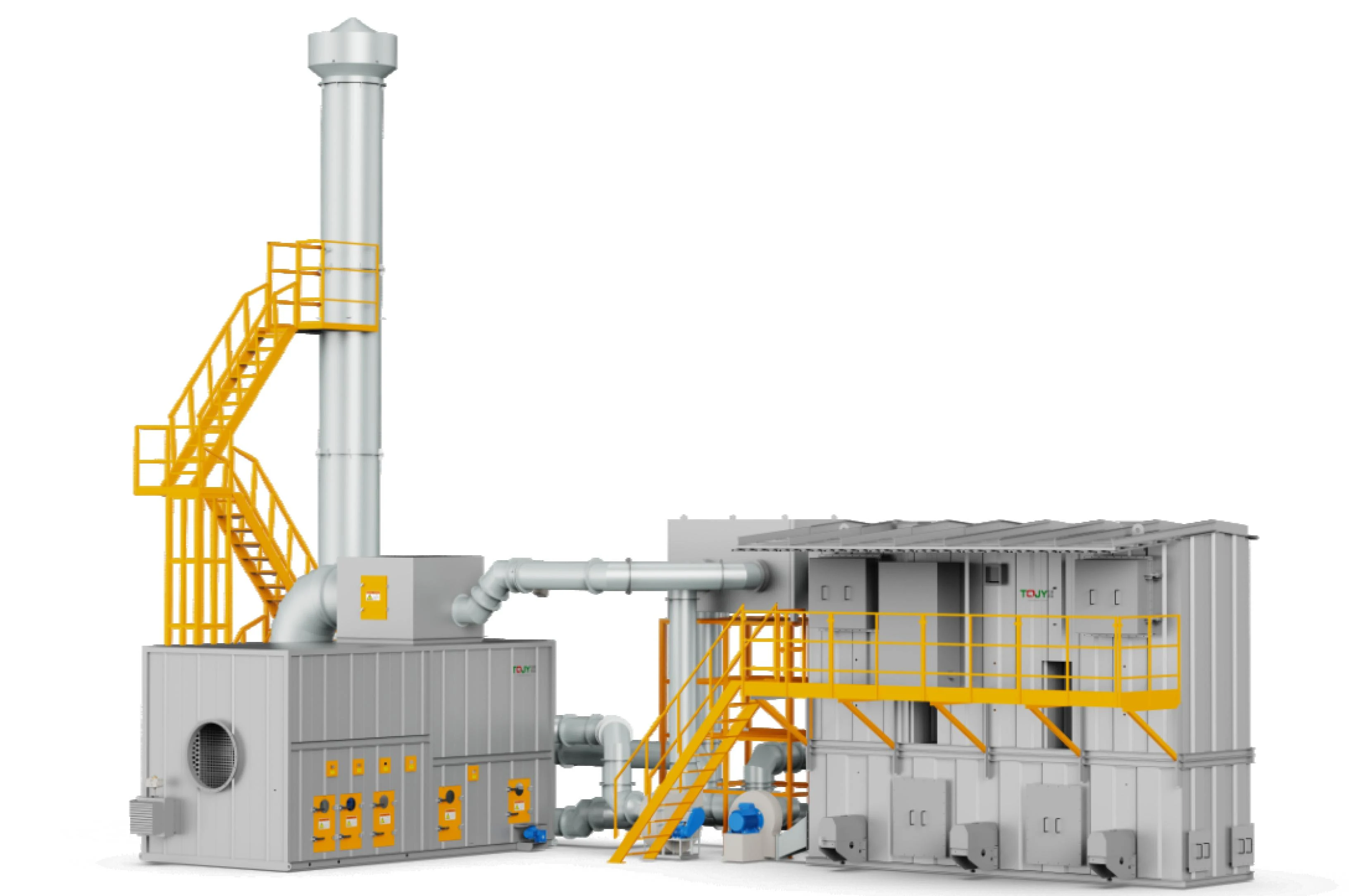
504,000 m³/h (296,600 CFM) · Offshore mega-module fabrication, FCAW & SAW heavy plate welding
504,000 m³/h Stratified Displacement Ventilation & Automated ESP Purification for COSCO SHIPPING Heavy Industry
Stratified Displacement Ventilation ("Air Lake") + 28-Unit Automated ESP Array + Automated CIP Clarifier
Read project reference →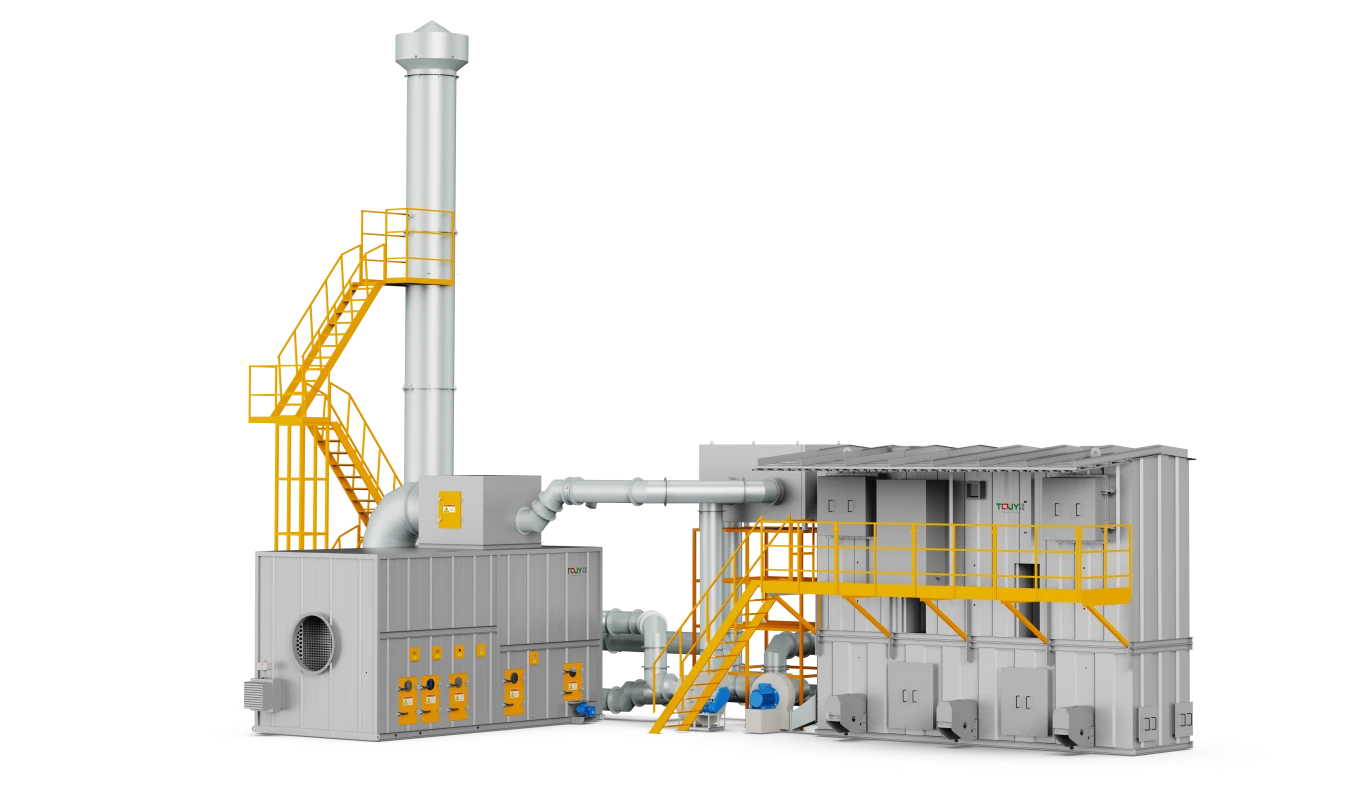
395,000 m³/h (232,400 CFM) across 5 production divisions · Automotive exterior protection components, 4WD accessories, chassis mounts & robotic/manual welding lines
395,000 m³/h Centralized Welding Fume & Metal Dust Extraction System for Dongjian Auto
Spot-Cooling Fresh Air Supply + Robotic On-Arm Tracking Hoses + 3D Hover Extraction Arms + Workstation Enclosures + Central Pulse-Jet Cartridge Dust Collectors
Read project reference →Configure Explosion-Proof Cartridge Collector for your plant
Share measured process data so the engineering team can confirm suitability, pretreatment, equipment size and scope boundaries.
Source basis: Bilingual legacy product record and current product image set. Published values are selection references, not a project guarantee.