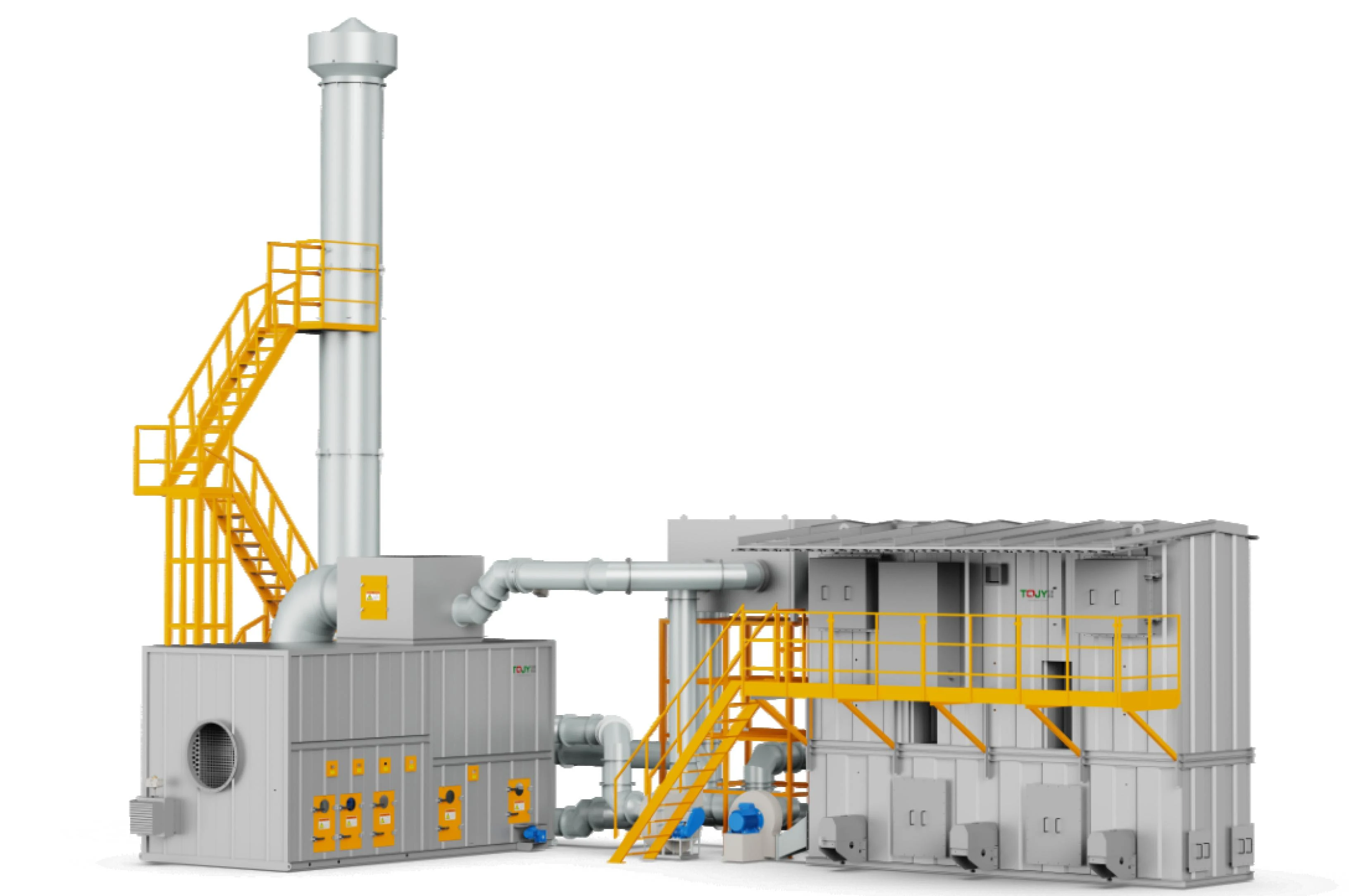
504,000 m³/h High-Bay Stratified Displacement Ventilation & Automated ESP System
COSCO SHIPPING Heavy Industry (Qidong) Co., Ltd. | Mega Offshore Module Fabrication Bay
Sub-Micron Welding Fumes in a 28-Meter High-Bay — Tamed with Stratified Displacement Ventilation & Zero-Consumable ESP
At the world-class deepwater offshore construction yard of COSCO SHIPPING Heavy Industry (Qidong), heavy cylindrical offshore drilling hulls, floating production storage and offloading (FPSO) modules, and mega wind-turbine installation vessels are built inside an expansive steel structure workshop measuring 90 m wide × 200 m long × 28 m high(total building air envelope of 504,000 m³). Continuous multi-pass flux-cored arc welding (FCAW) and submerged arc welding (SAW) generate dense plumes of respirable metallic aerosols (Fe₂O₃, MnO, SiO₂) and primer decomposition gases.
Because welding stations shift dynamically across 1,000-ton offshore structural blocks, localized capture arms are unworkable, while heavy overhead bridge cranes operating at 22 m elevation prevent the installation of rigid low-hanging duct systems. Furthermore, standard dilution ventilation would require over 1,600,000 m³/h airflow, creating high-speed cross drafts (>1.0 m/s) that blow away FCAW shielding gas, leading to fatal weld porosity and failure of strict DNV-GL non-destructive testing (NDT).
FluxFine designed and delivered a turnkey 504,000 m³/h (296,600 CFM) Stratified Displacement Ventilation System coupled with a distributed 28-unit automated Wet/Washable Electrostatic Precipitator (ESP) array. By delivering conditioned clean air at ground level at laminar velocity (v ≤ 0.3 m/s), an unpolluted "air lake" is established across the entire 0–3 m operator breathing zone. The natural thermal buoyancy of welding arcs drives contaminated smoke upward into high-level capture registers, reducing ventilation capacity requirements by68.5%. Integrated with an automated sequential clean-in-place (CIP) washdown cycle, the system completely eliminates recurring filter media replacement and hazardous solid waste disposal while ensuring permanent 24/7 continuous unmanned operation.
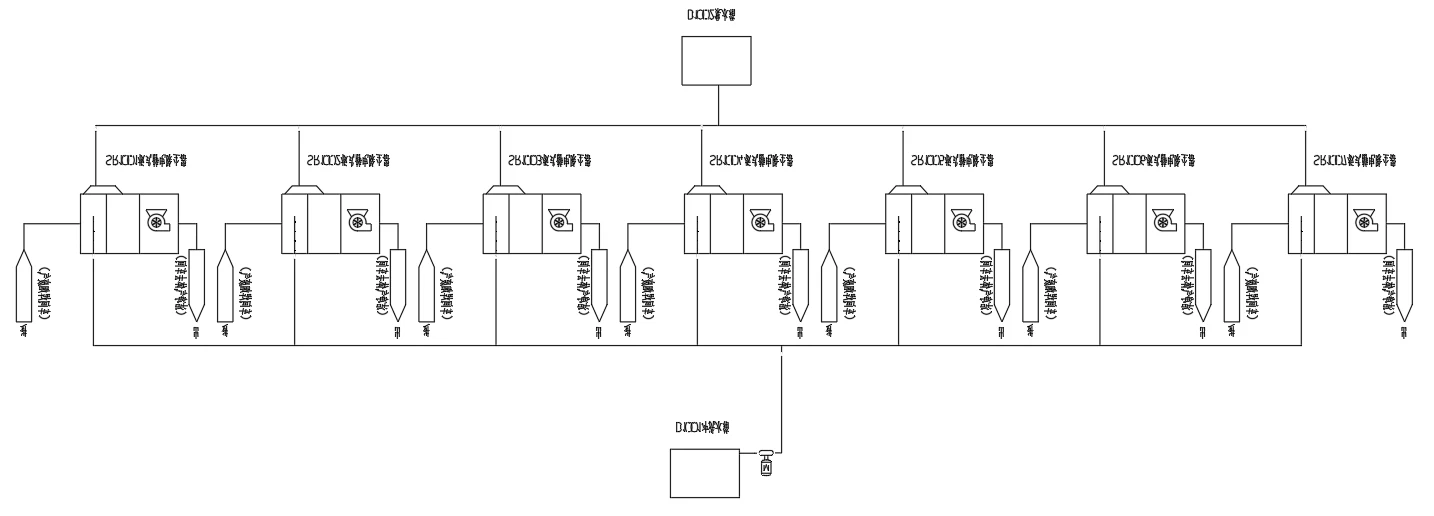
Distributed across 28 synchronized 18,000 m³/h modular purification units feeding laminar floor displacement diffusers.
Breathing zone dust kept at ≤2.8 mg/m³ (far below the 4.0 mg/m³ statutory ceiling of China GBZ 2.1-2019 and OSHA limits).
Harnesses natural thermal lift in a 28 m bay, replacing 1.6M m³/h mixing ventilation with 504,000 m³/h displacement air.
100% washable SUS304 electrostatic cells with automated CIP washdown eliminate disposable cartridge landfills and hazardous waste handling.
Three Severe Bottlenecks in Offshore Mega-Structure Welding
Offshore module fabrication is fundamentally different from conventional manufacturing. High-bay dimensions, mobile arc positions, and ultra-strict maritime welding defect tolerances rule out off-the-shelf ventilation designs.
Uncontrolled Thermal Plume Diffusion in a 28 m High Bay
COSCO’s fabrication hall spans 90 meters wide, 200 meters long, with an unobstructed 28-meter ceiling height. Under manual and robotic FCAW welding, hot welding fumes ascend rapidly by buoyancy. Conventional ceiling extraction requires over 1.6 million m³/h of forced dilution, creating chaotic turbulence that forces toxic particulates back down into worker breathing zones before reaching exhaust louvers.
Shielding Gas Stripping vs. Capture Velocity Paradox
Flux-cored arc welding (FCAW) of offshore high-tensile steel (EH36/DH36) relies on an external shielding gas blanket (80% Ar / 20% CO₂). If ambient air cross-draft velocity exceeds 1.0 m/s, the shielding gas envelope is blown away, causing severe nitrogen porosity and fatal radiographic inspection failures. Fume capture air currents must therefore remain strictly below 0.3 m/s in the arc zone.
Sub-Micron Blinding & Cartridge Disposal Overhead
Welding fumes from marine-grade steel contain sub-micron particles (0.01–1.0 μm) blended with oily organic shop primer aerosols. When treated with standard cartridge dust collectors, filter pores blind within 90–120 days, causing differential pressure to surge past 1,800 Pa. For a 500,000 m³/h installation, replacing hundreds of pleated cartridges quarterly would inflict heavy recurring maintenance shutdowns, continuous consumable replacement costs, and severe hazardous solid waste disposal burdens.
Stratified Displacement Air Dynamics & ESP Array
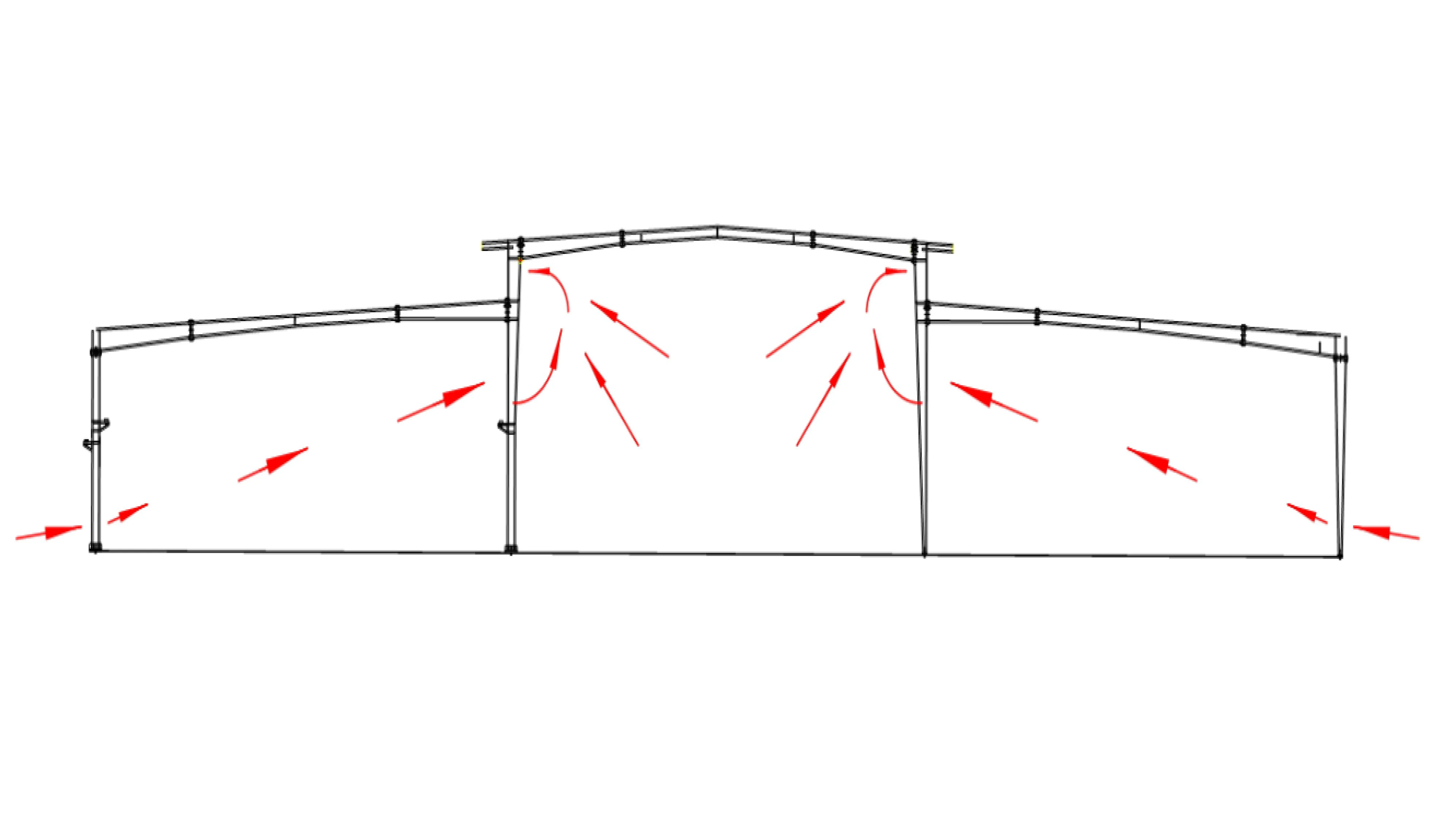
Instead of battling the laws of thermodynamics with brute-force mixing, FluxFine harnessed the natural thermal plume of welding arcs to create a self-stratifying, unidirectional vertical air turnover.
Displacement Principles in Action
- 1Low-Velocity "Air Lake" Supply:Fresh, filtered air is released through 56 perimeter and column-mounted displacement diffusers at low velocity (0.2–0.3 m/s) and a slight negative thermal delta (ΔT = 2–4°C). Being denser, it spreads horizontally across the floor like water, filling the working zone up to 2.5 meters.
- 2Thermal Plume Piston Lift:Welding arcs release concentrated heat (thermal buoyant plumes reaching 45–60°C). This thermal energy entrains smoke and fumes into a columnar updraft, lifting contaminants vertically toward the roof trusses (14–20 m) without lateral dispersion across the workshop floor.
- 3High-Level Suction & ESP Collection:Air registers located at 16–18 m elevation draw the stratified smoky air into 28 distributed 18,000 m³/h ESP modules. Sub-micron metal particulates are captured with ≥98% DRE. Clean air is recirculated back to the lower zone in a closed, balanced energy loop.
System Performance Comparison
Four-Dimensional Performance & Operational Boundaries
Rigorous engineering quantification across design boundary conditions, guaranteed compliance, energy economics, and fail-safe hardware metallurgy.
Inlet Operating Conditions & Design Boundaries
- Total Design Exhaust Airflow
- 504,000 m³/h (296,600 CFM)
- Inlet Particulate Load (Welding Fume)
- 80 – 250 mg/m³ (Peak shift operations)
- Dominant Chemical Speciation
- Fe₂O₃ (72%), MnO (9%), SiO₂ (5%), Primer Volatiles
- Particle Size Distribution
- 0.01 – 1.0 μm (respirable welding aerosols)
- Ambient Temperature & Marine RH
- 10°C – 38°C | RH 45% – 85% (Yangtze Delta)
Guaranteed Performance & Compliance
- Particulate Destruction & Removal (DRE)
- ≥ 98.0% across 0.01–50 μm
- Breathing Zone Dust Concentration
- ≤ 2.8 mg/m³ (Limit ≤ 4.0 mg/m³)
- Displacement Air Draft Velocity
- ≤ 0.28 m/s (Zero FCAW arc blow-out)
- Applicable Safety & Health Standards
- China GBZ 2.1-2019, GB16297-1996
- International Alignment
- Exceeds OSHA 1910.1000 & ACGIH TLV
Aerodynamic Efficiency & Zero-Waste Operation
- System Flow Reduction Factor
- 68.5% volumetric saving vs. mixing mode
- System Static Pressure Loss
- ≤ 180 Pa (vs. 1,400+ Pa in baghouses)
- Filter Consumables Overhead
- Zero (100% Washable SUS304 Cells)
- Cleaning & Regeneration Cycle
- Automated sequential CIP jet-washing
- Continuous Unattended Operation
- 24/7 Automated PLC tracking & sludge recycling
Hardware Metallurgy & Safety Interlocks
- Collection Cell Material
- SUS304 Stainless Steel (Corrosion Resistant)
- Spark Detection & Micro-Arc Quenching
- Hardware microsecond solid-state shutoff (< 10 μs)
- Automation Controller
- Siemens S7-1500 PLC + 12″ HMI Touchscreen
- Ingress Protection Standard
- IP65 sealed control cabinets (Marine grade)
- Enclosure Structural Rating
- Class 1 Div 2 / ATEX Zone 2 ready design
Stratified Thermal Displacement vs. Dilution Mixing
Why floor-level stratified displacement airflow succeeds where traditional overhead mixing systems fail.
Laminar Displacement Supply (v ≤ 0.3 m/s)
Clean, purified air is introduced near floor level through specialized displacement diffusers along column bases. Delivered at 1–2°C cooler than ambient, the fresh air spreads across the floor by gravity, forming an expansive "clean air lake" from 0 to 3 meters elevation. Operators breathe fresh air directly from this zone before it mixes with welding smoke.
- Face supply velocity strictly ≤ 0.3 m/s (zero draft sensation)
- Protects 100% of workers regardless of mobile welding locations
Buoyant Crown Capture at +16 m Elevation
Heat generated by arc welding naturally heats the surrounding smoke, creating a powerful upward thermal plume. Contaminants ascend into the upper layer by natural buoyancy without turbulent dispersion. High-level capture louvers located above crane rails continuously evacuate the contaminated layer into the 28 modular ESP units for purification.
- Eliminates all flexible arms and localized overhead hoods
- Natural thermal buoyancy provides 80% of upward transport energy
Proven Engineering Performance & Client Challenge Solutions
How FluxFine’s displacement airflow organization and washable electrostatic architecture definitively solved the harsh operational bottlenecks of heavy offshore welding fabrication at COSCO SHIPPING.
| Engineering Parameter | Conventional Cartridge / Baghouse | FluxFine Stratified ESP Array |
|---|---|---|
| Airflow Organization | Chaotic full-bay dilution (~1,600,000 m³/h) | Thermal-lift displacement (504,000 m³/h, 68.5% cut) |
| System Pressure Drop | 1,200 – 1,600 Pa (high fan power) | ≤ 180 Pa (ultra-low resistance) |
| Oily Fume / Primer Tolerance | Rapid pore blinding within 60–90 days | Immune to pore blinding; dual-zone ionization |
| Consumables & Landfill | Hundreds of disposable cartridges / year | Zero consumables; 10+ year SUS304 cells |
| Maintenance Regimen | Frequent manual bag change in dusty space | Automated Clean-in-Place (CIP) washdown |
| Breathing Zone Dust | > 5.0 mg/m³ (stagnant fume pockets) | ≤ 2.8 mg/m³ (surpasses GBZ & OSHA) |
Zero Shielding Gas Stripping
Laminar displacement supply velocity is held strictly below 0.3 m/s in the operator zone. FCAW shielding gas envelopes (80% Ar / 20% CO₂) remain completely undisturbed, ensuring zero weld porosity defects during 100% radiographic ultrasonic testing.
Zero Bridge Crane Collision Hazards
By avoiding hanging hoods and descending drop-ducts, the entire 28-meter vertical clearance remains 100% unobstructed. Multiple 100-ton overhead travelling cranes operate freely without collision risks or restricted work envelopes.
Marine Coastal Salt-Spray Resilience
Engineered specifically for coastal shipyard atmospheres: all 28 purifier chassis, internal ionization pins, and collection plates are fabricated from marine-grade SUS304 stainless steel with IP65 spark-quenched electronics, preventing rust degradation.
Equipment in This Project
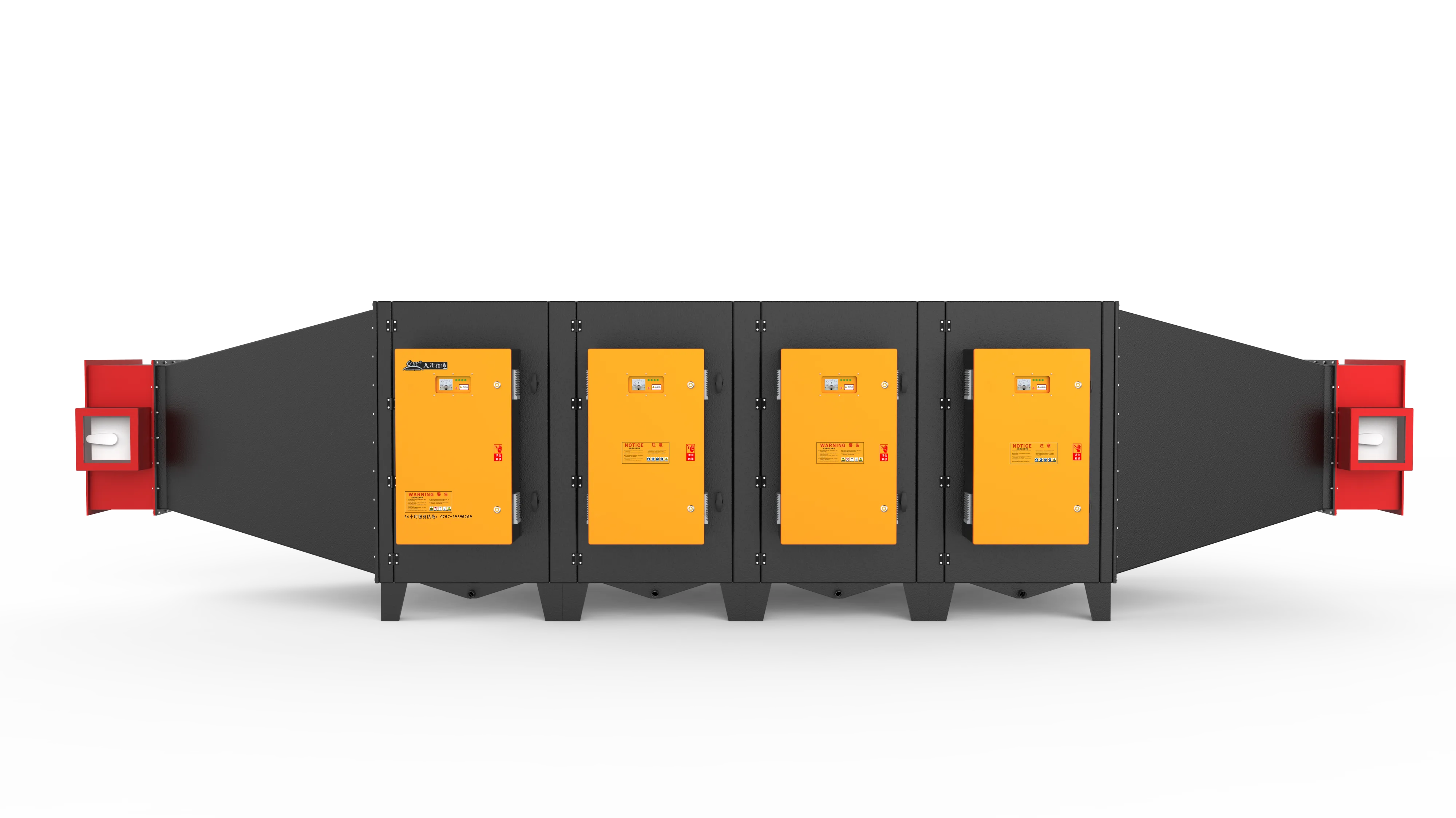
Electrostatic Fume Purifier
A dry or low-water electrostatic collection unit for industrial oil fume and fine process aerosol.
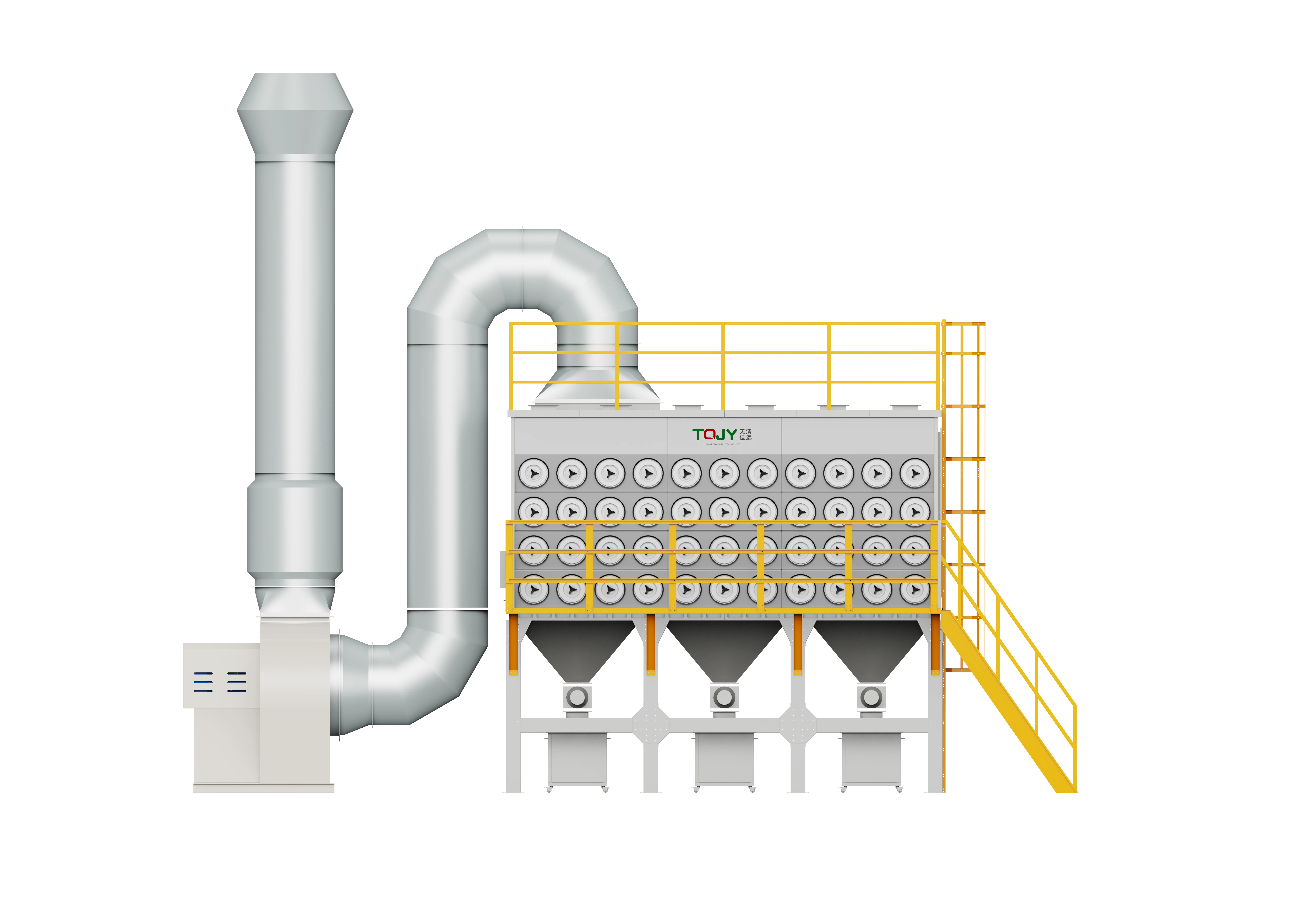
Explosion-Proof Cartridge Collector
Compact pulse-cleaned cartridge filtration for fine process dust and duties requiring a documented combustible-dust safety review.
Industrial ESP Fume Unit
Industrial-grade electrostatic precipitation for heavy oil fumes from PVC, rubber, and metal processing.
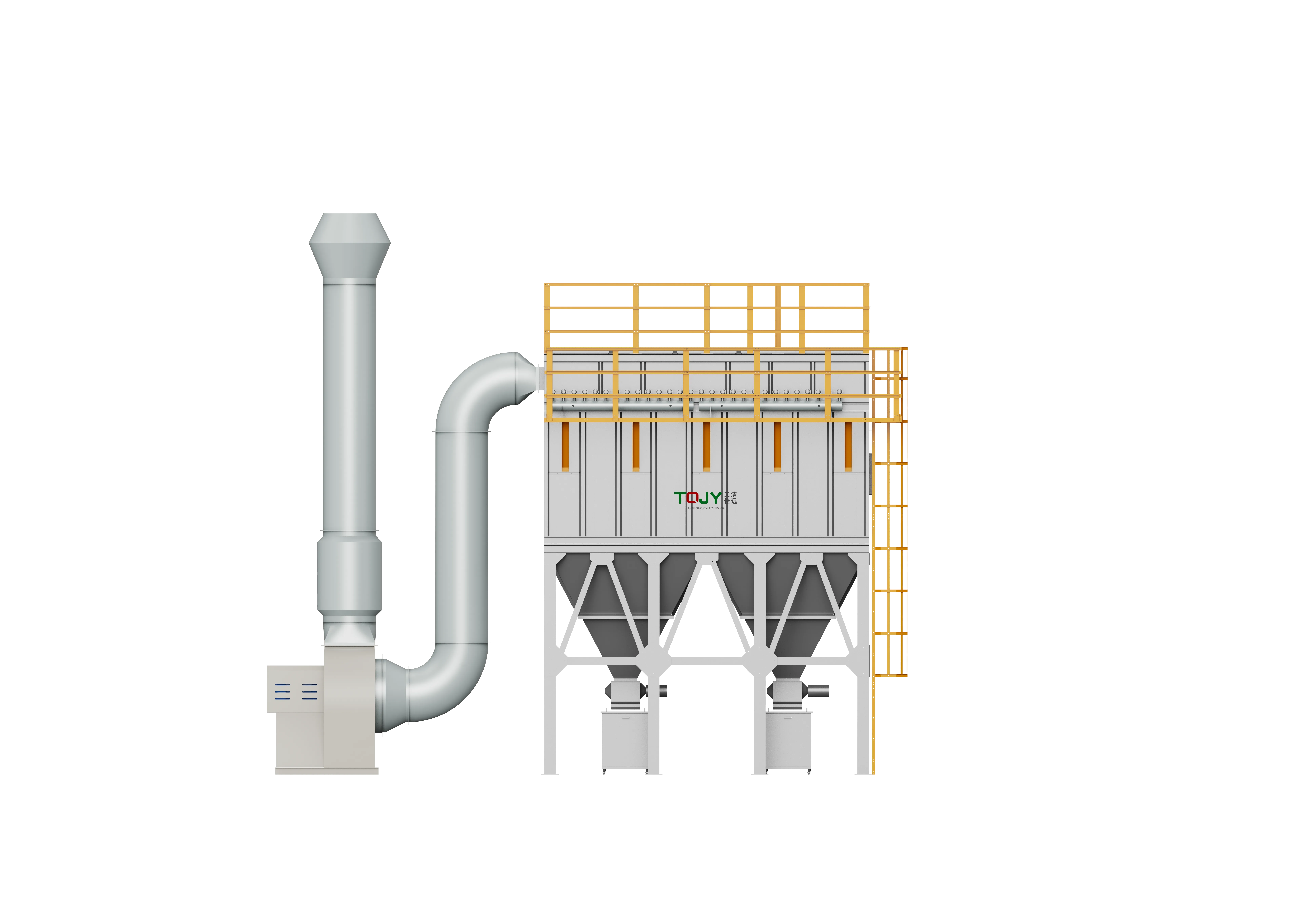
304 SS Pulse Baghouse
High-capacity 304 stainless steel pulse-jet baghouse for >99% efficiency dry dust collection.
Ready to Solve Welding Smoke & Industrial Dust in Your Mega Facility?
Speak directly with our technical director. Receive a customized displacement airflow CFD review, equipment sizing calculation, and guaranteed compliance quotation within 24 hours.