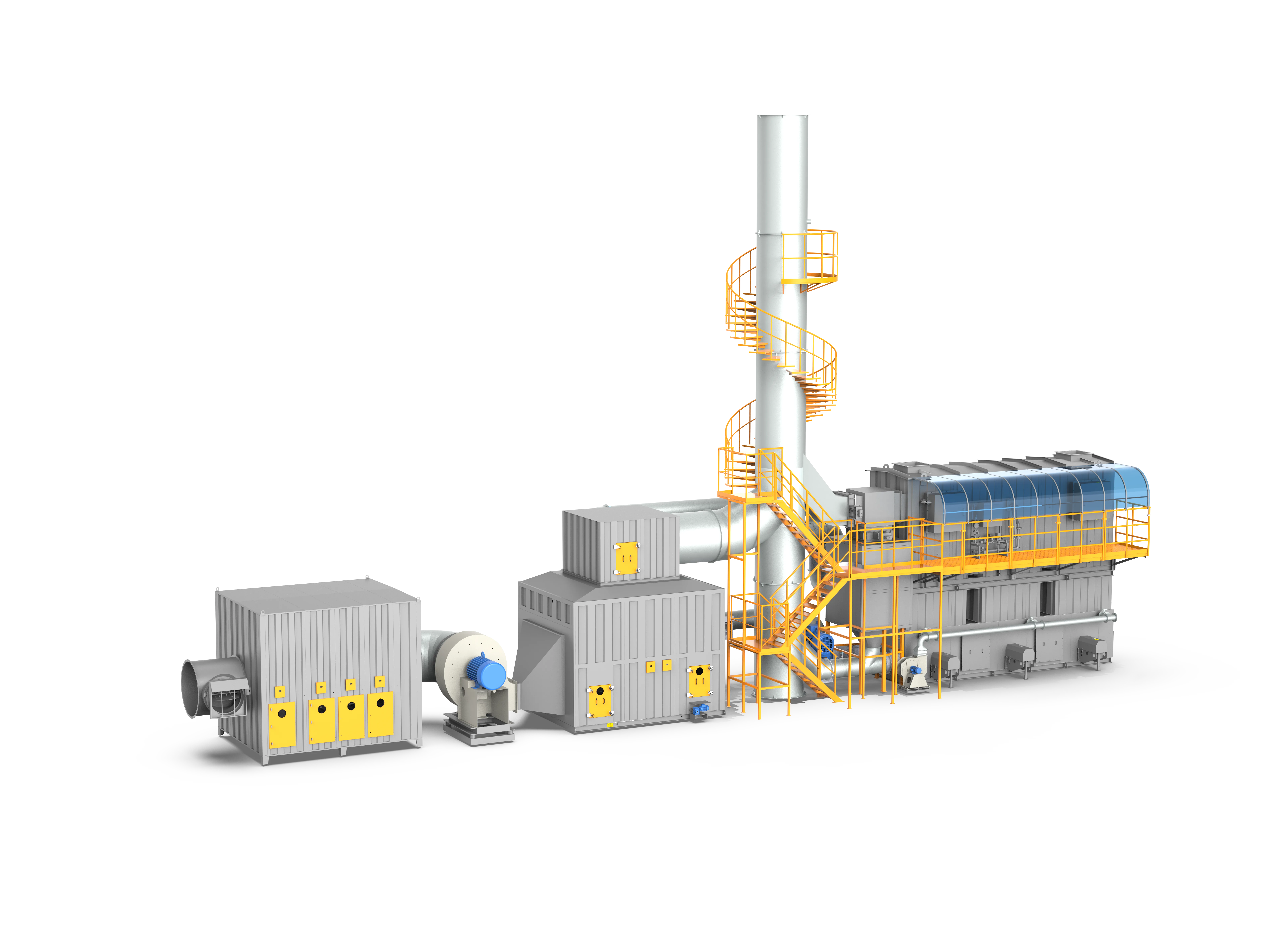
Zeolite Rotor + Three-Tower RTO Integrated System
The premier system for large-airflow, low-concentration VOC emissions, combining a hydrophobic zeolite rotor for 10-40x gas enrichment with a mature three-tower RTO for complete destructive oxidation, cutting energy costs by 40%-60%.
Designed around actual process conditions
Engineering large-volume industrial VOC emissions often presents a major energy challenge, as direct incineration of high-airflow, low-concentration gas is prohibitively expensive. The FluxFine Zeolite Rotor + Three-Tower RTO Integrated System solves this pain point through a 'concentrate and destroy' design. By capturing VOCs on a rotating hydrophobic molecular sieve and desorbing them into a highly concentrated, low-volume stream, the system downsizes the downstream thermal oxidizer. The three-tower RTO then incinerates the enriched stream with zero bypass leakage, delivering complete compliance with the most stringent global emission limits while maintaining low energy consumption.
Zeolite Concentrator with 3-Bed RTO / Rotor-RTO Abatement Skid / Concentrator-Oxidizer Integrated System
Combined performance of high-ratio zeolite concentration and three-tower RTO thermal oxidation.
Compared to direct RTO treatment of the raw high-airflow waste gas stream.
Dedicated three-tower purging cycle ensures zero raw gas leakage during bed transitions.
Operating references and configuration choices
These reference values and modules clarify the scope we evaluate. They are not a substitute for a process-data review or final proposal.
| Engineering reference | Value | How to read it |
|---|---|---|
| Best-fit pattern | High airflow / low VOC load | Subject to media compatibility and concentration profile. |
| Concentration reference | 10–40x | Source reference at the rotor; actual result varies by duty. |
| Combined removal reference | ≥99.5% | Catalog claim; project-specific and subject to design basis. |
Typical modules considered
- Source capture and staged filtration
- Zeolite concentration rotor and desorption-air package
- Three-bed RTO with purge and combustion controls
- Integrated heat recovery for desorption and/or process use
- Linked PLC, concentration/temperature monitoring and safety system
Project-specific selection notes
- Model the rotor-desorption load and RTO heat balance together.
- Do not send sticky mist, high sulfur/chlorine gas or unreviewed high-boiling compounds into the train.
- Use stream segregation where an incompatible exhaust header would contaminate a compatible rotor stream.
Concentrate first or oxidize directly?
Concentration is evaluated to reduce the gas volume handled by the RTO. Direct RTO may be more appropriate when the VOC load and heat value are already favorable. Compare full life-cycle energy, pretreatment, space and operational variability.
- The 2026 catalogue shows large-airflow applications in coating, printing, PCB, chemical and new-energy-related industries.
- Energy-reduction figures in the source are references and must be supported by a project energy balance.
What we review before specifying Rotor + 3-Tower RTO
A product name is a starting point, not a final design. These inputs define pretreatment, materials, controls, equipment size and scope boundaries.
Project data to provide
- VOC species, heat value and LEL assessment
- Normal, minimum and peak airflow/concentration
- Inlet temperature, humidity, dust and condensable material
- Operating schedule, available fuel and heat-reuse demand
- Required emission limit, layout and shutdown window
Typical engineered scope
- Process collection and balancing review
- Pretreatment where dust, mist or corrosive components are present
- Regenerative chambers, combustion system and exhaust stack
- PLC, temperature monitoring, gas-concentration and safety interlocks
- Optional hot-air, hot-water or thermal-oil heat recovery
Safety and controls
- Pre-purge, automatic ignition and flame supervision are selected as part of the combustion package.
- LEL monitoring, emergency exhaust/isolation, fire protection and pressure relief are engineered from the gas risk assessment.
- Chamber temperature, fan status, valve/rotor position and permissives should be visible in the control sequence.
- Final alarm and shutdown setpoints are project-specific; they are not universal website specifications.
How it works
The raw, large-airflow, low-concentration VOC exhaust is first thoroughly pre-filtered of dust and moisture, then passed through the adsorption zone of the zeolite rotor. The purified bulk gas is discharged directly up the stack. Saturated rotor sectors continuously rotate into the desorption zone, where a small, high-temperature hot air stream (180-220°C) desorbs the captured VOCs. This converts the gas into a 10-40x concentrated, small-airflow stream. This enriched stream is directed to the three-tower RTO system. Through a coordinated three-bed cycle (inlet/preheating, outlet/heat-recovery, and clean air purging), the RTO destroys the VOCs at >= 800°C. Clean thermal energy from the RTO is recycled back to provide hot air for rotor desorption, completing a self-sustaining, energy-closed loop.
- 01Bulk gas filtration through multi-stage primary and secondary dry dust filters (G4+F7+F9).
- 02Adsorption of low-concentration VOCs at ambient temperature on the rotating hydrophobic zeolite media.
- 03Discharge of the purified clean air stream directly into the atmosphere.
- 04Thermal desorption of captured VOCs on the saturated zeolite sector using hot air (180-220°C) to achieve a 10-40x concentration ratio.
- 05Introduction of the highly concentrated, low-volume VOC gas stream into the three-tower RTO.
- 06Destructive oxidation of VOCs in the RTO combustion chamber at >= 800°C, achieving >= 99.5% overall purification.
- 07Coordinated purge cycling of the three ceramic beds to prevent raw exhaust bypass leakage during valve switching.
- 08Recycling of RTO flue gas heat to generate hot desorption air, minimizing external heating utilities.
- Large-airflow (>30,000 m³/h), low-concentration (<500 mg/m³) industrial VOC exhaust treatment.
- Plants requiring zero bypass emissions and extremely stable performance under highly fluctuating workloads.
- Industrial sectors such as automotive manufacturing, flexible packaging printing, semiconductor cleanrooms, and chemical processing plants.
- Large coating and laminating lines running multi-shift continuous operations.
- Multi-stage high-efficiency pre-filtration is mandatory; any dust or paint mist (>1 mg/m³ for dust; >0.1 mg/m³ for paint mist) will clog the molecular sieve.
- Strictly prohibit the introduction of high-sulfur, high-chlorine, silicone-containing, or highly sticky compounds that may poison the zeolite or ceramic media.
- Rotary and RTO linkage parameters must be carefully balanced; mismatch in desorption airflow and RTO burner load can lead to system temperature instability.
- Inlet relative humidity must be controlled below 80% to maintain stable adsorption kinetics on the zeolite.
Typical pollutants
- Toluene
- Xylene
- Ethyl Acetate
- Butyl Acetate
- Cyclohexanone
- N-Methyl-2-pyrrolidone (NMP)
- Alcohols
- Esters
- Ethers
- Complex Solvent Blends
Engineering features
- Synergistic Energy Optimization: Concentrating the exhaust downsizes the downstream RTO by up to 90%, cutting overall fuel consumption by 40%-60%.
- Zero-Bypass Purging: The three-tower RTO design continuously purges the ceramic beds, completely eliminating raw gas leakage during valve transitions.
- Ultra-High Purification Efficiency: Combined system achieves a total VOC destruction and removal efficiency of >= 99.5%.
- Excellent Thermal Integration: Fully utilizes RTO combustion heat to supply the hot air required for rotor desorption, requiring zero gas burn for desorption under nominal load.
- Advanced PLC Linkage Control: High-precision automated integration of the rotor, desorption fan, RTO dampers, and burners with remote cloud monitoring.
Available options
- Cylindrical modular rotor or classic disc rotor options.
- Additional waste heat recovery boiler or heat exchanger for plant heating loops.
- UPS battery backup integration to support orderly automated shutdown during power grid failures.
Relevant industries
Printing & Laminating
Gravure, flexible packaging, lamination, optical film and continuous web processes.
Coating & Surface Finishing
Industrial paint, UV coating, adhesive, metal finishing and multi-booth surface processes.
Automotive & E-Mobility
OEM parts, e-bike, and industrial spray booth exhaust.
Electronics, PCB & Semiconductors
PCB, semiconductor, motor, and appliance process exhaust.
New Materials & New Energy
Battery materials, functional films, composites and advanced material production.
Heavy Machinery & Shipbuilding
Large booth coating and high-airflow paint shops.
General technology selection
These answers explain the selection path. Final performance, safety scope and dimensions follow the approved project design.
When is a direct RTO preferable to a concentrator system?
A direct RTO is often evaluated when the inlet VOC load and heat value support efficient thermal oxidation. Large, dilute streams may instead benefit from upstream concentration. The final answer depends on the full airflow and concentration profile.
Can an RTO accept paint mist or dust?
Not without suitable pretreatment. Mist, particulate, sticky material and corrosive components can foul regenerative media or create safety and maintenance risks.
Source basis: 2026 product catalogue and VOCs equipment source. Thermal efficiency and removal figures are project-specific reference values.
Specific product Q&A
What is the best VOC abatement system for large-scale automobile spray booths?
Automobile painting lines generate large exhaust volumes (often exceeding 100,000 m³/h) with very low VOC concentrations. Treating this directly with thermal oxidation requires high fuel consumption. The Zeolite Rotor + 3-Bed RTO Integrated System is the optimal solution. The rotor first captures the VOCs from the massive air stream, compressing them into a stream 1/10th to 1/30th the size. This small, highly concentrated stream is then fed into a 3-Bed RTO, which runs auto-thermally (fuel-free) while destroying the VOCs at >=99% efficiency.
How does a 3-bed RTO prevent VOC leakage during concentration system switching?
Unlike a 2-bed RTO which constantly experiences a 'puff' of unburned VOCs every time its poppet valves reverse flow direction, a 3-Bed RTO incorporates a dedicated purge chamber. Before a chamber switches from exhaust duty back to inlet duty, it is thoroughly purged with clean air. This sweeps any lingering raw VOCs back into the combustion chamber, ensuring a completely seamless and spike-free destruction process perfectly suited for strict environmental limits.
Why use a 3-bed RTO instead of a 2-bed RTO for Zeolite Rotor desorption gas?
The desorption gas exiting a zeolite rotor is highly concentrated (often approaching 2-3 g/m³). In a standard 2-bed RTO, the valve switching 'puff' allows a small fraction of this highly concentrated gas to bypass destruction and escape out the stack. Because the gas is so concentrated, even a 1% bypass can cause the entire system to fail strict emission regulations. The 3-Bed RTO's purge cycle eliminates this bypass, guaranteeing >=99% destruction and ensuring compliance even with highly concentrated inputs.
Equipment views
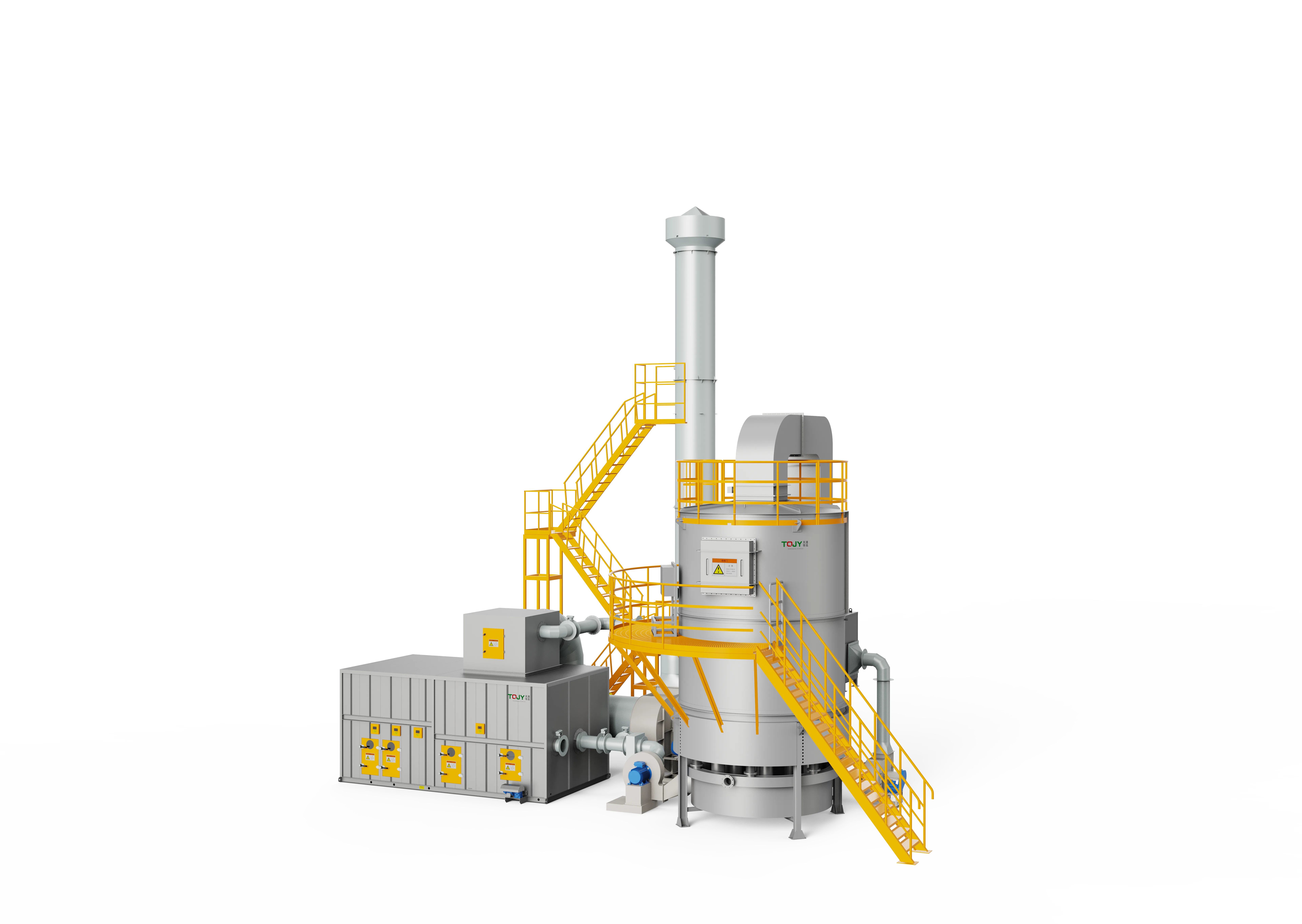
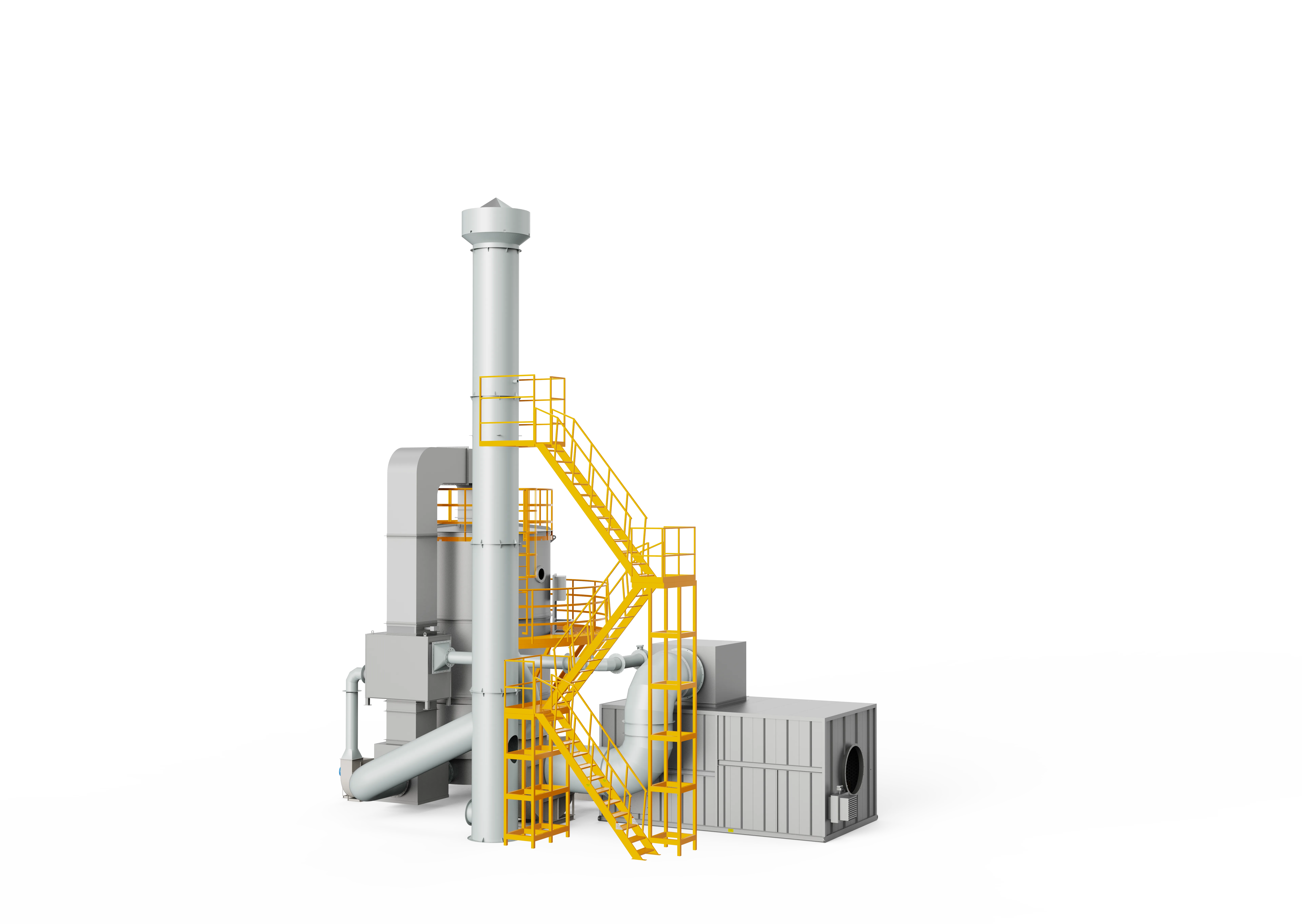
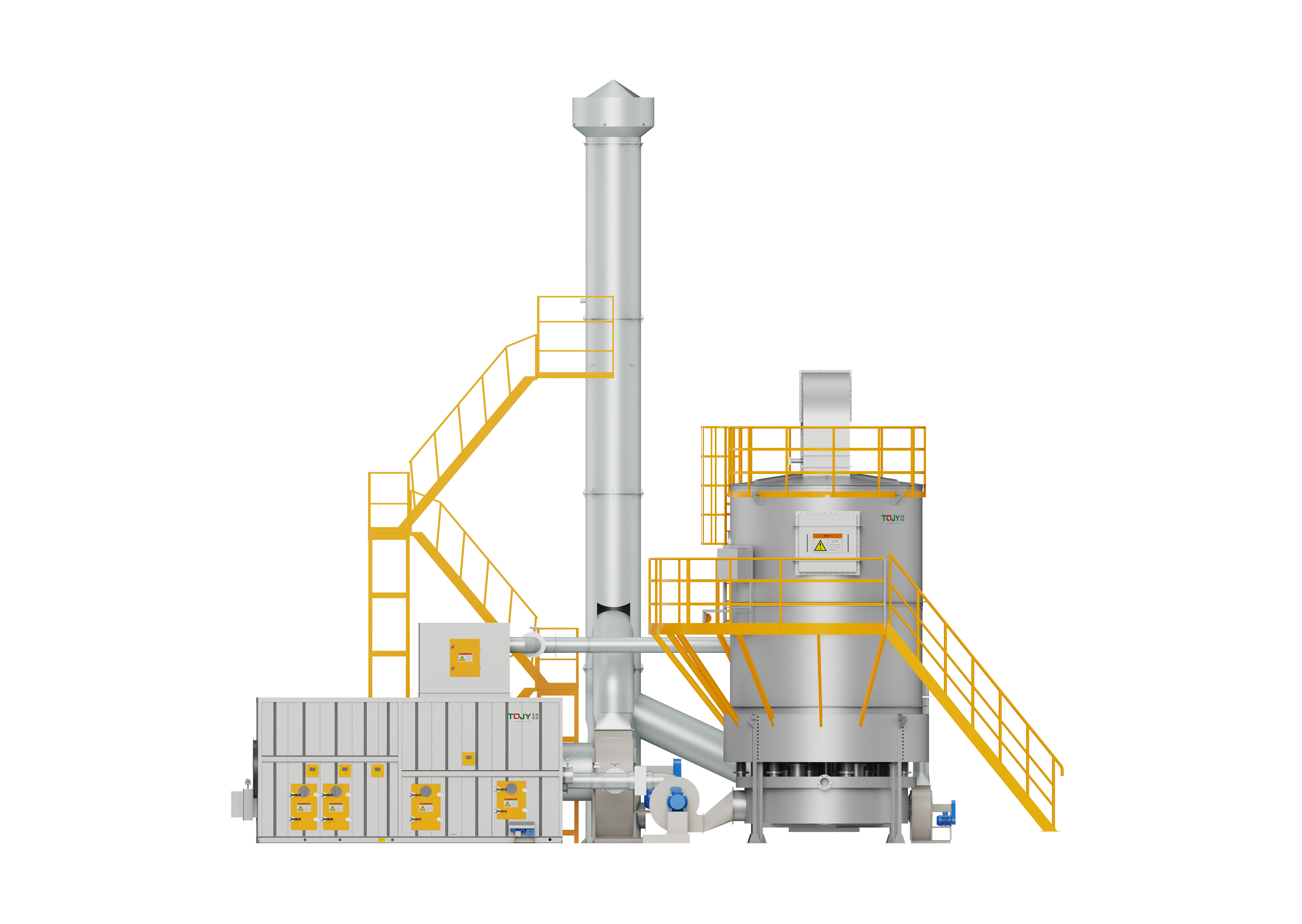
Product images show representative FluxFine configurations. Final dimensions, materials and interfaces follow the approved project design.
Proven Rotor + 3-Tower RTO installations
Review documented treatment trains featuring Rotor + 3-Tower RTO technology across various industrial processes.
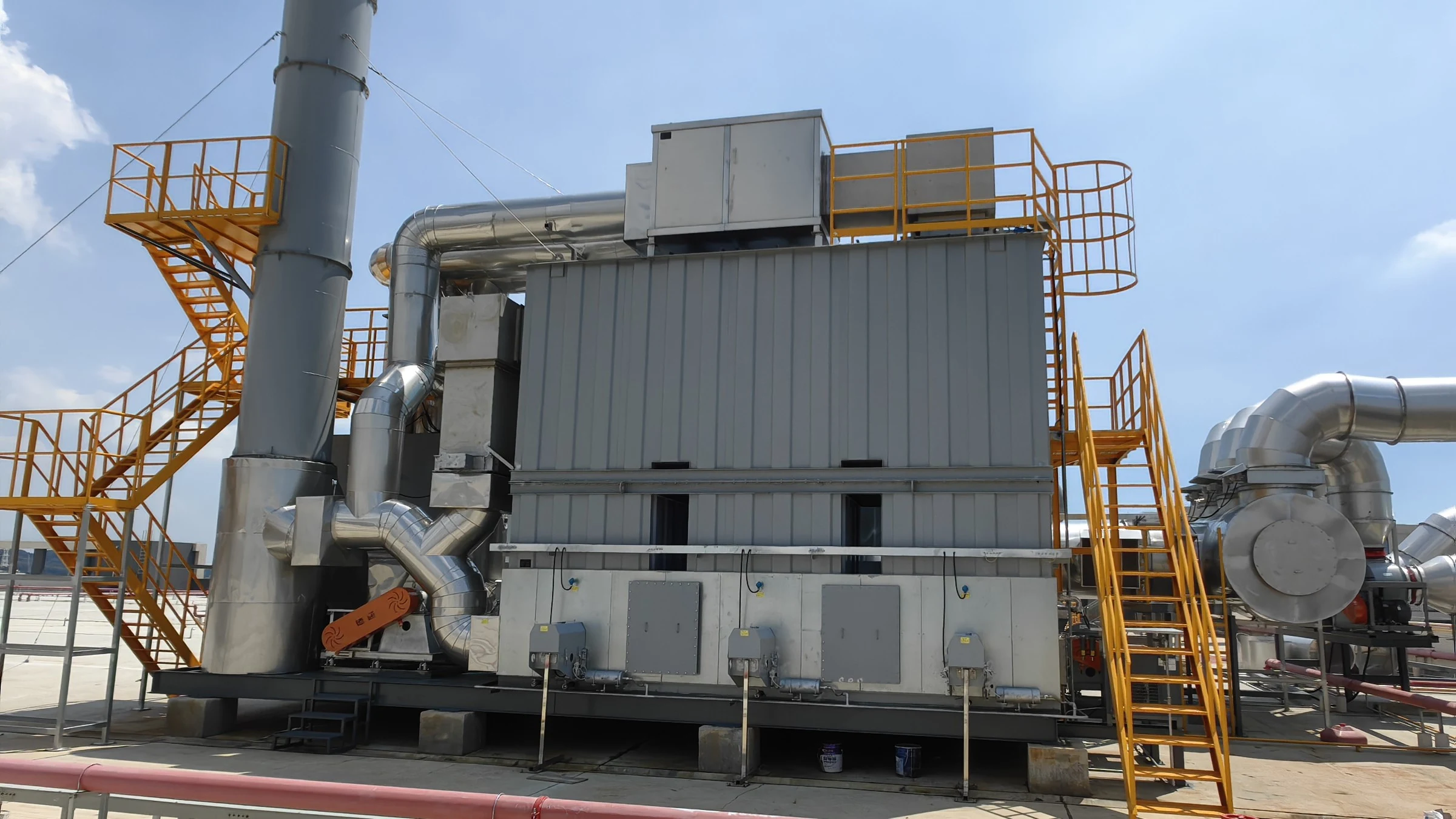
450,000 m³/h (265,000 CFM) · Architectural aluminum profile automated fluorocarbon (PVDF) spray coating and curing lines
450,000 m³/h Dual Zeolite Rotor & 3-Bed RTO System for JMA Aluminum Fluorocarbon Coating Lines
Dual-Train Zeolite Rotor (2×220k m³/h) + 3-Bed RTO (55k m³/h) + Dual Jet Scrubbers + 4-Stage Dry Filtration
Read project reference →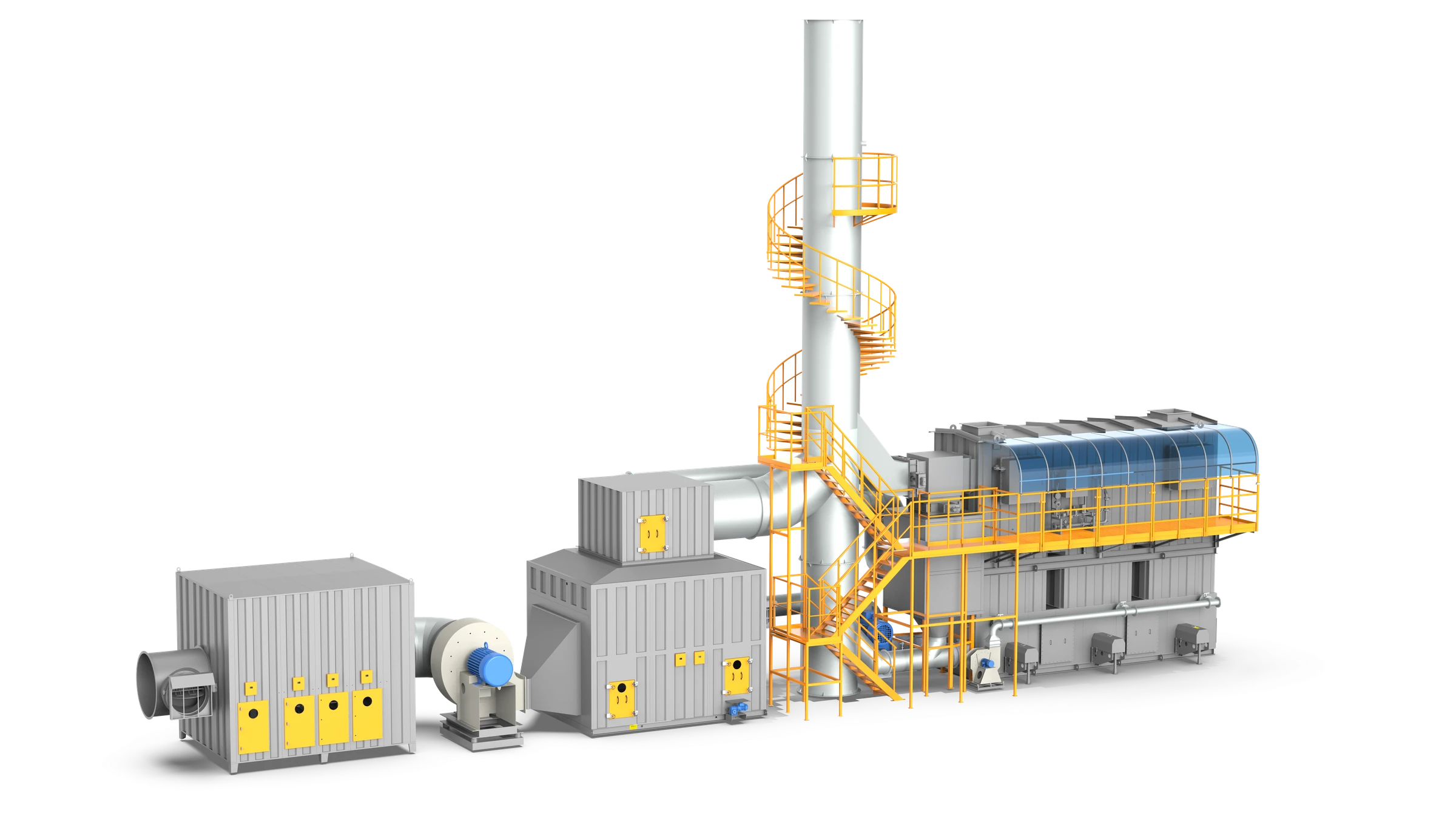
200,000 m³/h (117,600 CFM) · Commercial vehicle & tanker spray coating and curing
200,000 m³/h Zeolite Drum & 3-Bed RTO System for CIMC Vehicles
5-Stage HEPA Dry Filtration (G4-H11) + Cylindrical Zeolite Drum Concentrator + 3-Bed RTO
Read project reference →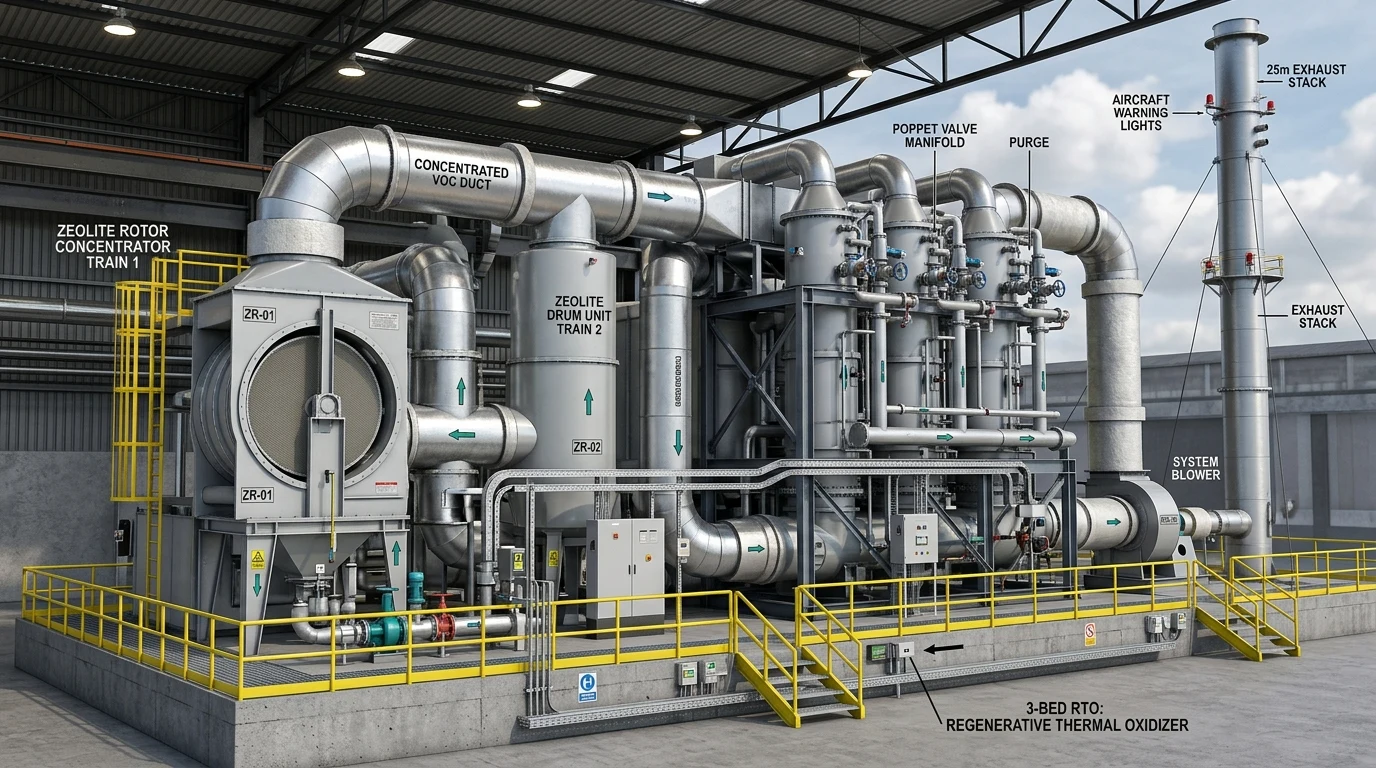
60,000 m³/h (35,300 CFM) Absorption + 8,000 m³/h (4,700 CFM) RTO Oxidation · Automotive interior and exterior trim robotic spray coating, UV/PU curing, water transfer printing & ovens
60,000 m³/h Dual Zeolite Rotor/Drum & 3-Bed RTO System for Wuhan Guangjia Automotive Interior Trim Coating
Dual Jet-Mixing Venturi Scrubbers + 4-Stage Dry Filtration Boxes + 40,000 m³/h Disk Zeolite Rotor + 20,000 m³/h Cylindrical Zeolite Drum + 8,000 m³/h 3-Bed RTO
Read project reference →Configure Rotor + 3-Tower RTO for your plant
Share measured process data so the engineering team can confirm suitability, pretreatment, equipment size and scope boundaries.
Source basis: Published values are selection references, not a project guarantee.