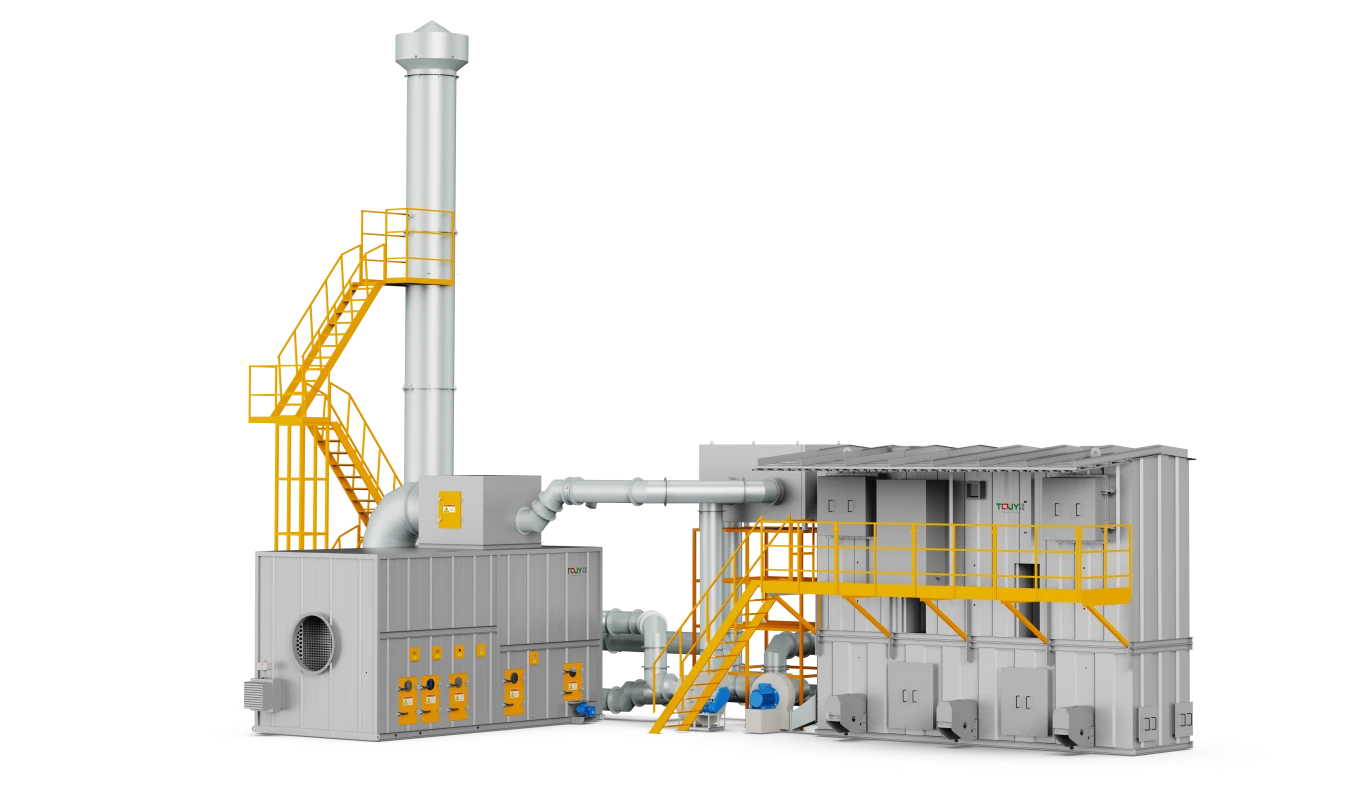
395,000 m³/h Centralized Welding Fume & Metal Dust Extraction System for Dongjian Auto
Guangdong Dongjian Automotive Technology Co., Ltd. (SZSE: 300978) | Turnkey Industrial Ventilation, Robotic On-Arm Point Capture & Central Pulse-Jet Cartridge Filtration across 5 Production Divisions
Eliminating Sub-Micron Arc Fumes with Multi-Tiered Dynamic Capture
Guangdong Dongjian Automotive Technology Co., Ltd. (Dongjian Group, SZSE: 300978) is a premier publicly listed automotive technology enterprise specializing in intelligent exterior protection systems, electronic side steps, bull bars, roof racks, and mechatronic chassis components. Serving global OEMs and premier aftermarket brands, Dongjian operates extensive high-volume stamping, robotic welding, and precision grinding lines.
Historic production halls suffered from severe thermal buoyancy currents generated by high-intensity MIG/MAG welding arcs. Elevated ambient smoke levels degraded indoor working conditions, while distant wet spray booths failed to suppress abrasive grinding dust. In subtropical summers, welding arc radiation elevated booth temperatures, creating acute workplace discomfort and environmental non-compliance risks.
FluxFine was awarded the turnkey engineering contract to design, fabricate, and commission a facility-wide 395,000 m³/h (232,400 CFM) environmental control system across five specialized production divisions. The solution integrates positive-pressure evaporative spot cooling, robotic on-arm tracking suction, 3D swiveling manual extraction arms, modular pyramidal micro-enclosures, and five heavy-duty pulse-jet cartridge collectors with closed-loop VFD pressure regulation.
Engineered Performance & Guaranteed Compliance
Verified aerodynamic containment, sub-micron capture, and energy modulation metrics across 5 production divisions.
Flame-retardant spunbond polyester cartridges with nanofiber membranes capture welding fume particles down to 0.5 μm.
Average verified emissions of 6.8 mg/m³, far outperforming Guangdong DB44/27-2001 (30 mg/m³) and GB16297-1996 standards.
Torch-synchronized robotic tracking suction captures fumes within 50–100 mm of the arc with only 412 m³/h air volume per robot.
Siemens S7-1200 PLC modulates VFD fan speed via closed-loop header static pressure sensors as bay dampers open and close.
Overcoming Thermal Buoyancy Dispersion & Sub-Micron Dust Carryover
Automotive accessory manufacturing requires rigorous metal fabrication involving high-amperage robotic MAG/MIG welding, bracket tacking, and heavy robotic seam grinding. Baseline diagnostics revealed four critical engineering bottlenecks across the facility.
Thermal Plume Dispersion
Welding arc temperatures generate intense upward buoyancy plumes. Existing high-bay hoods mounted 3 meters overhead suffered from ambient shop drafts, allowing over 60% of smoke to escape into general breathing zones.
Sub-Micron Metal Oxides
Vaporized metallic constituents (iron oxide, manganese, silica flux) condense into sub-micron aerosols (<1.0 μm). These fine particulates remain suspended indefinitely and easily penetrate coarse bag filters and mesh scrubbers.
Failing Wet Scrubbing
Previous wet water-curtain grinding cabinets were positioned too far from workpieces. Grinding dust bypassed the water wall, while wet sludge accumulation clogged nozzles, caused severe corrosion, and led to high maintenance downtime.
Thermal Micro-Climate Stress
In Foshan's hot and humid subtropical summers, enclosed welding stations rapidly accumulate arc heat and stagnant air. Full-facility central air conditioning was economically unviable, necessitating targeted spot-cooling delivery.
| Engineering Parameter | Historical Facility Baseline | FluxFine Turnkey Engineered Solution | Operational & Environmental Gain |
|---|---|---|---|
| Robotic Smoke Capture | Static overhead hoods 3m above arc; ~40% capture rate | On-arm tracking hose (Ø90 mm @ 18 m/s, 412 m³/h) | >95% point-of-origin capture |
| Manual Welding Capture | Fixed general exhaust louvers; high plume bypass | 3D hover articulated arms (Ø160 mm @ 18 m/s, 1,302 m³/h) | 360° coverage; zero drift |
| Workstation Containment | Open-top cubicles; shop-wide plume contamination | Modular steel booths + pyramidal roof hoods (16 ACH) | Complete thermal plume containment |
| Particulate Separation | Water curtain scrubbers; sludge clogging, low DRE | Central pulse-jet cartridge collector (nanofiber media) | ≥99.5% DRE; Stack PM ≤ 10 mg/m³ |
| Workplace Climate Control | High ambient heat (>36°C); stagnant smoky air | Evaporative spot cooling (0.3–0.5 m/s breathing zone air) | 4–6°C cooling at operator post |
| Energy Consumption | Constant full-speed fan operation regardless of load | Closed-loop static pressure control with motorized dampers | 35–45% fan power savings |
Positive-Negative Aerodynamic Balancing Train
FluxFine deployed a balanced aerodynamic circuit pairing localized positive-pressure evaporative cooling air with micro-negative workstation containment, high-velocity transport ductwork, and heavy-duty pulse-jet cartridge filtration.
Spot-Cooling Supply
Outdoor evaporative water-cooling units introduce filtered conditioned air directly to worker stations at 0.3–0.5 m/s.
Point-of-Origin Capture
Flexible tracking hoses on robot arms (412 m³/h) and 3D hover articulated arms (1,302 m³/h) capture arc fumes at the source.
Workstation Isolation
Corrugated steel walls with pyramidal canopy hoods and PVC anti-arc curtains maintain 16 ACH inward containment.
Pulse Cartridge Unit
Inlet spark arrestors knock down coarse embers; vertical nanofiber pleated cartridges capture sub-micron fumes at ≥99.5%.
VFD Stack Discharge
Siemens PLC modulates backward-curved centrifugal fans via static pressure feedback; clean air vents at ≤10 mg/m³ PM.
Four Critical Engineering Breakthroughs in Fume Abatement
Explore the specialized mechanical design, torch-synchronized capture apparatus, and closed-loop filtration controls developed specifically for Dongjian Auto's high-speed automotive accessories production floor.
Multi-Axis Robotic Tracking Ductwork & Point-of-Origin Capture
Traditional robotic welding cells rely on oversized canopy hoods mounted high above the robot gantry, necessitating massive airflows (often 5,000–8,000 m³/h per station) while still allowing thermal cross-drafts to disperse arc smoke.
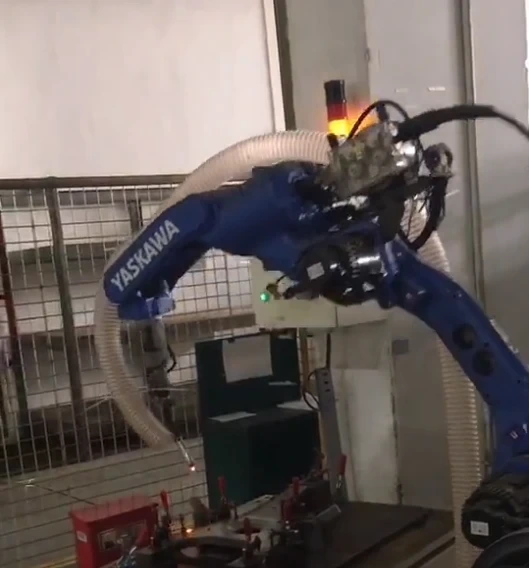
FluxFine engineered a customized, torch-synchronized flexible suction duct (Ø90 mm) strapped directly along the articulated links of the Yaskawa 6-axis welding robot. The high-temperature, wear-resistant suction orifice maintains a constant 50–100 mm standoff distance from the active welding torch, capturing over 95% of welding fumes immediately as they form.
- Ultra-Low Extraction Airflow: Point capture requires only 412 m³/h per robot, reducing volumetric air handling demand by >85%.
- Automated Motorized Blast Gates: Each robot arm suction line integrates a motorized damper that automatically closes when the robot is idle, conserving system pressure.
- Kinematic Freedom: High-tensile flex joint design allows unrestricted 6-axis robot motion without binding or hose fatigue.
Modular Micro-Enclosures with Pyramidal Roof Containment
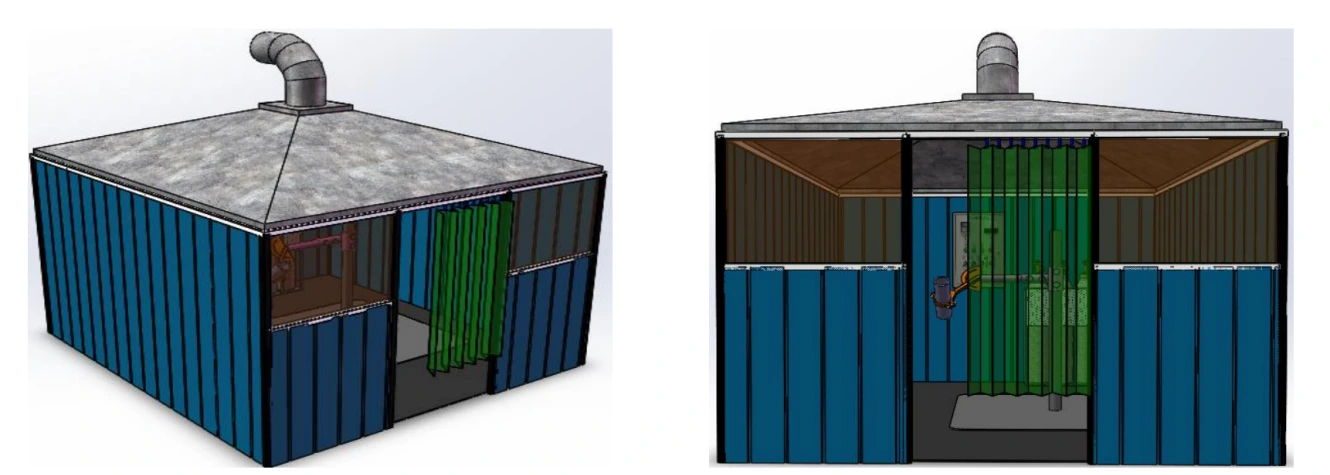
To eliminate fugitive smoke migration across the wider manufacturing shop, FluxFine designed fully modular workstation micro-enclosures tailored to both robotic cells and heavy manual fabrication zones.
Each enclosure features deep-drawn pyramidal metal canopy hoods at the ceiling, preventing hot fume buoyancy plumes from spreading beneath workshop roof trusses. Side walls constructed from sound-dampening color-steel cladding incorporate bottom intake louvers, establishing a controlled 16 ACH downward/inward airflow pattern.
- Anti-Arc Flexible PVC Curtains: Specialized welding-grade green PVC strip curtains isolate intense optical radiation while maintaining 30 cm ground clearance for smooth part transfer.
- Integrated Task Lighting: Because the overhead metal canopy blocks ambient ceiling illumination, sealed high-CRI industrial LED luminaires are integrated inside each booth.
- Controlled Inflow Velocity: Bottom louvers ensure fresh make-up air enters smoothly without creating disruptive turbulence around the welding pool.
Central Pulse-Jet Cartridge Filtration Matrix
Sub-micron metal fumes generated during automotive welding exhibit extremely fine particle size distributions (<1 μm) with high agglomeration tendencies. Conventional baghouses require large footprints and high air-to-cloth ratios, while wet scrubbers produce hazardous liquid waste.
FluxFine implemented heavy-duty, vertically oriented pleated cartridge dust collectors featuring flame-retardant spunbond polyester media with electrospun nanofiber surface membranes. An aerodynamically contoured inlet plenum with integrated spark baffles forces heavy grinding sparks and coarse particles to drop directly into the hopper before contacting the filter cartridges.
- ≥99.5% Sub-Micron Efficiency: Nanofiber surface filtration traps fine metal oxides on the outer membrane, enabling true surface filtration and easy release.
- On-Demand Reverse Pulse Jetting: Differential pressure transmitters trigger 0.4–0.6 MPa dry compressed air pulses row by row, keeping operating resistance within 800–1,200 Pa.
- Integrated Spark Protection: Heavy-gauge mechanical deflection plates extinguish airborne sparks, preventing filter media burn-through.
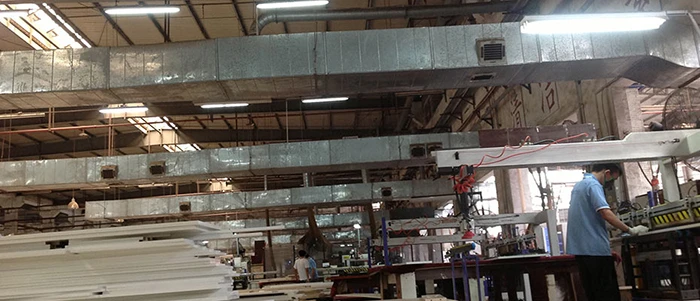
Spot-Cooling Micro-Climate Delivery & Ergonomic 3D Suction Arms
Worker ergonomics and environmental comfort are paramount on high-speed automotive assembly lines. For manual welding and custom bracket fitment stations, FluxFine deployed a dual ergonomic solution addressing both air purity and thermal fatigue.
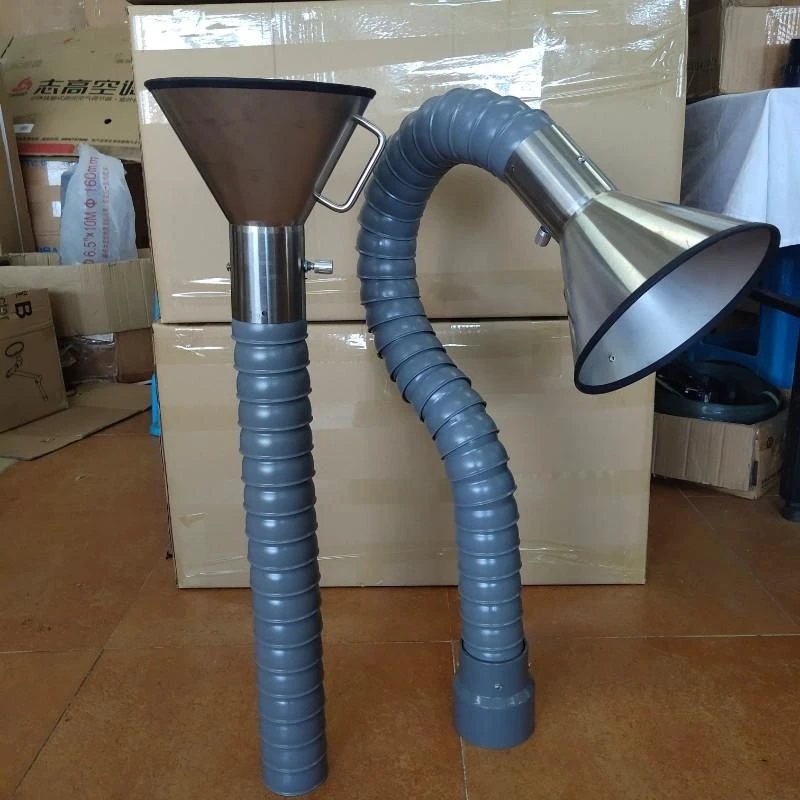
Manual bays feature heavy-duty articulated extraction arms (Ø160 mm, 18 m/s, 1,302 m³/h) equipped with internal pantograph counterbalances and 360° swiveling stainless steel conical hoods (Ø350 mm). Operators effortlessly position the hood in 3D space with single-handed touch, ensuring high capture efficiency regardless of workpiece size.
- Targeted Spot Cooling: Outdoor evaporative units deliver cooled fresh air via dedicated branch ducts at 0.3–0.5 m/s directly to worker breathing zones, reducing localized temperatures by 4–6°C.
- Non-Disruptive Air Velocity: Cooled air is discharged at controlled low velocities to ensure it does not disturb protective shielding gas (Ar/CO₂) around the welding arc.
- 180° Wall Mounting Swing: Articulated arms mount on structural columns, covering expansive 3-meter radial working arcs without floor clutter.
395,000 m³/h Facility-Wide Airflow Allocation
The ventilation and dust collection capacity is rigorously dimensioned based on booth cubic volume, air exchange frequency (16 ACH), robotic on-arm tracking specs, and manual hood capture velocities across all five divisions.
| Manufacturing Division | Workstation Composition | Calculated Airflow | Safety Factor | Design Airflow | Filtration Guarantee |
|---|---|---|---|---|---|
| Division 1: Parts Coding | Small-part grinding, 4 robotic cells, manual tacking & full welding bays | 55,221 m³/h | 1.10 | 60,000 m³/h (35,300 CFM) | DRE ≥ 99.5% | PM ≤ 10 mg/m³ |
| Division 1: Welding Shop | 2 revolving cart areas, stainless steel welding & robotic welding cells | 83,634 m³/h | 1.05 | 90,000 m³/h (53,000 CFM) | DRE ≥ 99.5% | PM ≤ 10 mg/m³ |
| Division 5: Welding Shop | 4 heavy-duty continuous roller production lines with dedicated hoods | 58,876 m³/h | 1.05 | 65,000 m³/h (38,200 CFM) | DRE ≥ 99.5% | PM ≤ 10 mg/m³ |
| Division 2: Welding Shop | 3 revolving cart areas, 2 large robotic lines & 2 grinding zones | 81,668 m³/h | 1.05 | 90,000 m³/h (53,000 CFM) | DRE ≥ 99.5% | PM ≤ 10 mg/m³ |
| Division 3: Welding Shop | 3 revolving cart bays, sub-assembly welding, robot cells & 2 grinding bays | 77,781 m³/h | 1.05 | 90,000 m³/h (53,000 CFM) | DRE ≥ 99.5% | PM ≤ 10 mg/m³ |
| Combined System Total | Comprehensive facility-wide coverage across 5 production units | 357,180 m³/h | Avg 1.06 | 395,000 m³/h (232,400 CFM) | Stack PM ≤ 10 mg/m³ Guaranteed |
Dynamic VFD Static Pressure Loop & Heavy-Duty Fail-Safe Automation
Industrial automotive fabrication involves intermittent production schedules. Individual robotic cells and manual stations operate asynchronously based on takt times and stamping batch sizes. Continuous full-speed fan operation under variable loads results in excessive electrical power consumption and duct pressure fluctuations.
FluxFine engineered a closed-loop variable frequency drive (VFD) static pressure control architecture governed by a central Siemens PLC. Differential pressure transmitters installed in the main extraction headers continuously monitor pipeline suction. When motorized zone dampers on inactive robotic cells or manual benches close, the PLC dynamically throttles fan speed to maintain target transport velocities without wasting fan energy.
Control System Engineering Parameters
- PLC Hardware
- Siemens S7-1200 / PROFINET Industrial Bus
- VFD Inverters
- ABB / Siemens Heavy-Duty Inverter Drives
- Pressure Sensing
- Rosemount / Yokogawa 4–20mA Static Pressure Transmitters
- Cleaning Air Supply
- 0.4–0.6 MPa Clean, Dry, Oil-Free Compressed Air
- Cartridge Media
- Flame-Retardant Spunbond Polyester with Nanofiber Coating
- Emission Compliance
- Stack PM ≤ 10 mg/m³ (GB16297-1996 / DB44/27-2001)
Guaranteed Environmental Compliance
Certified third-party emission testing confirmed that the 395,000 m³/h central cartridge dust extraction installation operates with an average particulate emission of less than 6.8 mg/m³ across all 5 exhaust stacks—far below the mandatory 30 mg/m³ limit under Guangdong DB44/27-2001 and compliant with international occupational hygiene standards.
Equipment in This Project
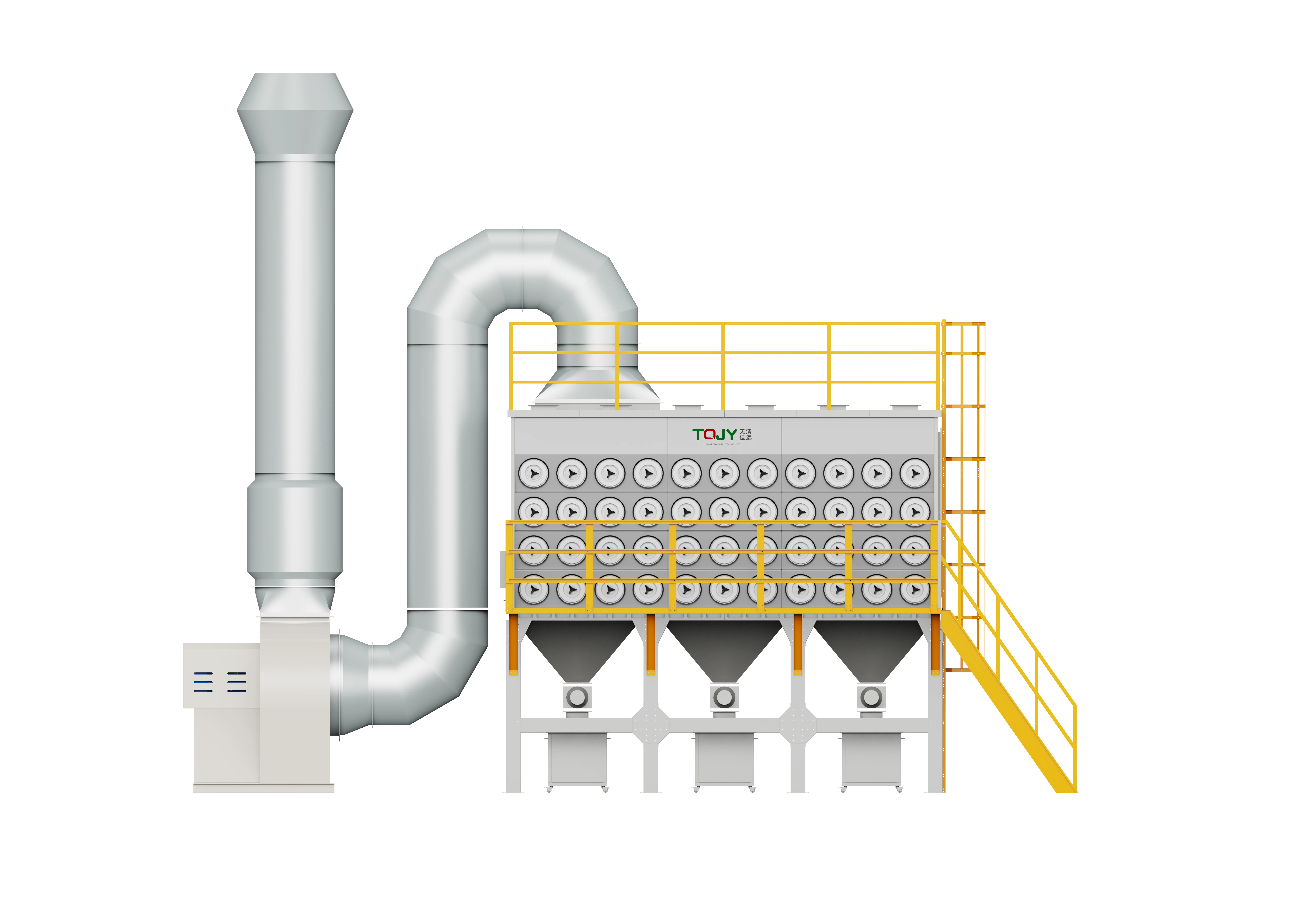
Explosion-Proof Cartridge Collector
Compact pulse-cleaned cartridge filtration for fine process dust and duties requiring a documented combustible-dust safety review.
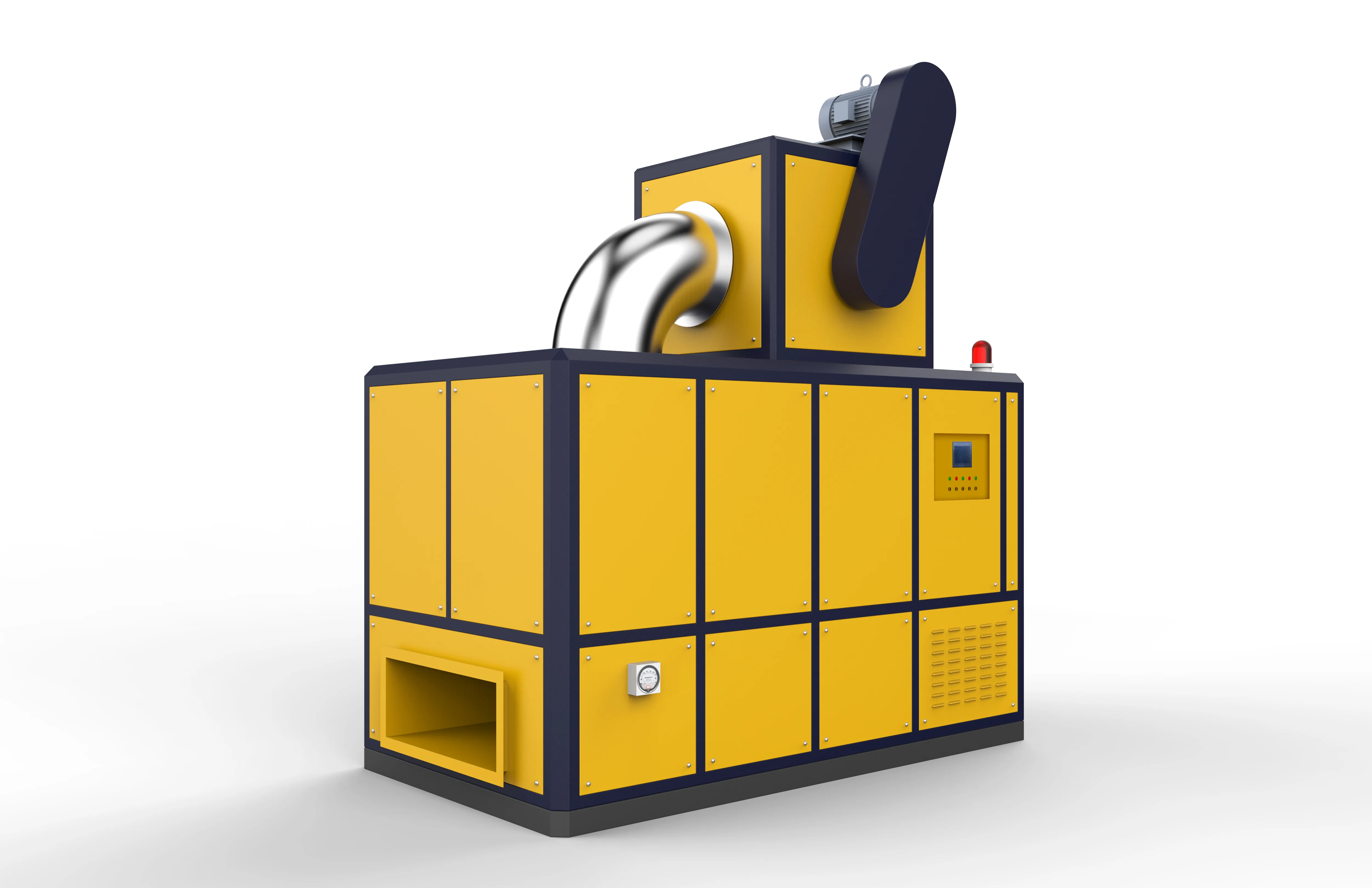
304 Stainless Air Duct
High-quality 304 stainless steel welded air ducts with anti-corrosion coatings, sized 80-2000mm.
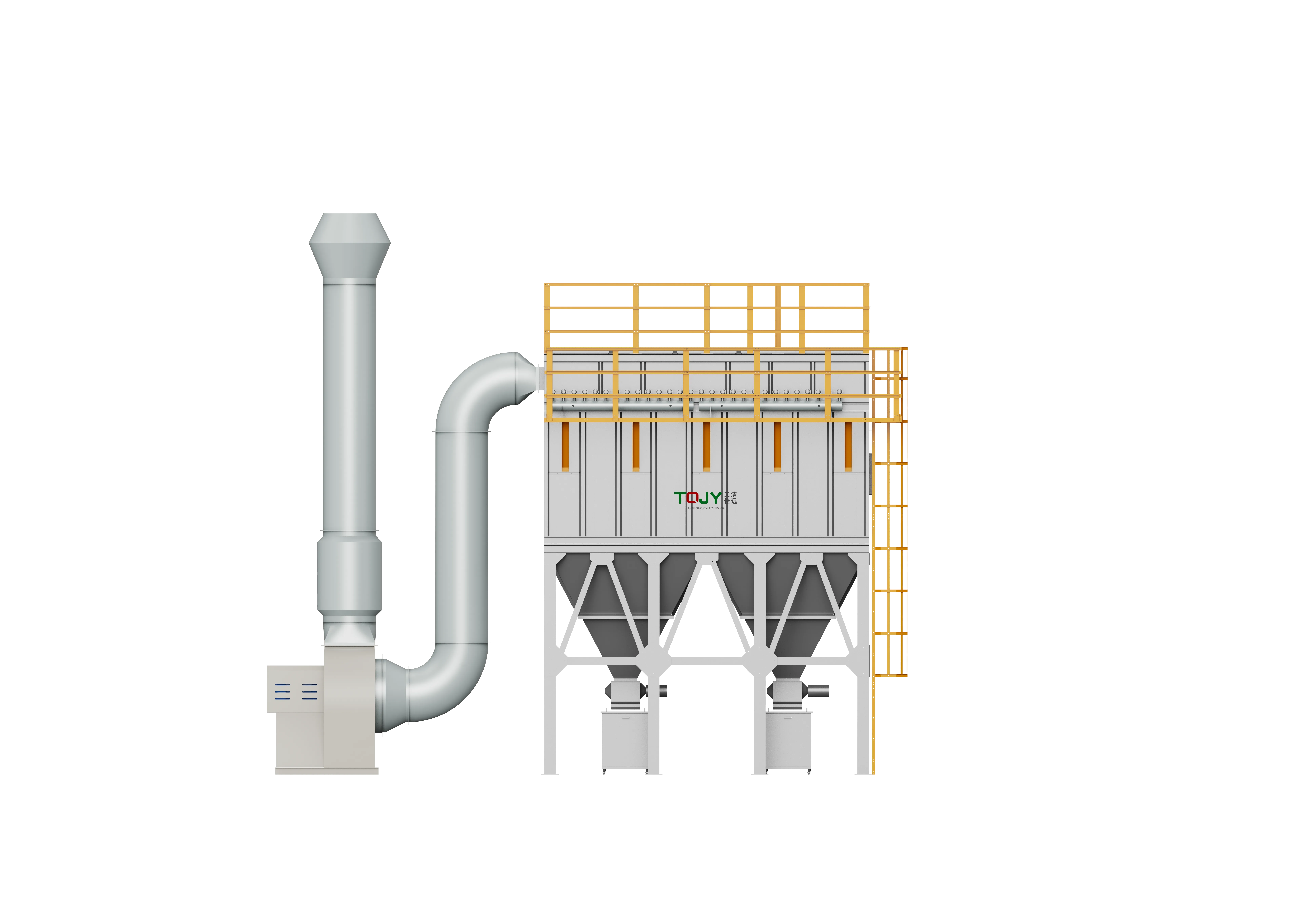
304 SS Pulse Baghouse
High-capacity 304 stainless steel pulse-jet baghouse for >99% efficiency dry dust collection.
ATEX Cartridge Collector
Specialized cartridge dust collector engineered with explosion vents and static grounding for combustible industrial dusts.
Need a High-Volume Fume & Dust Extraction Solution for Your Plant?
From multi-axis robotic welding cells and heavy metal grinding bays to facility-wide pulse-jet cartridge filtration, FluxFine delivers turnkey, guaranteed-compliance industrial air quality systems engineered to international standards.