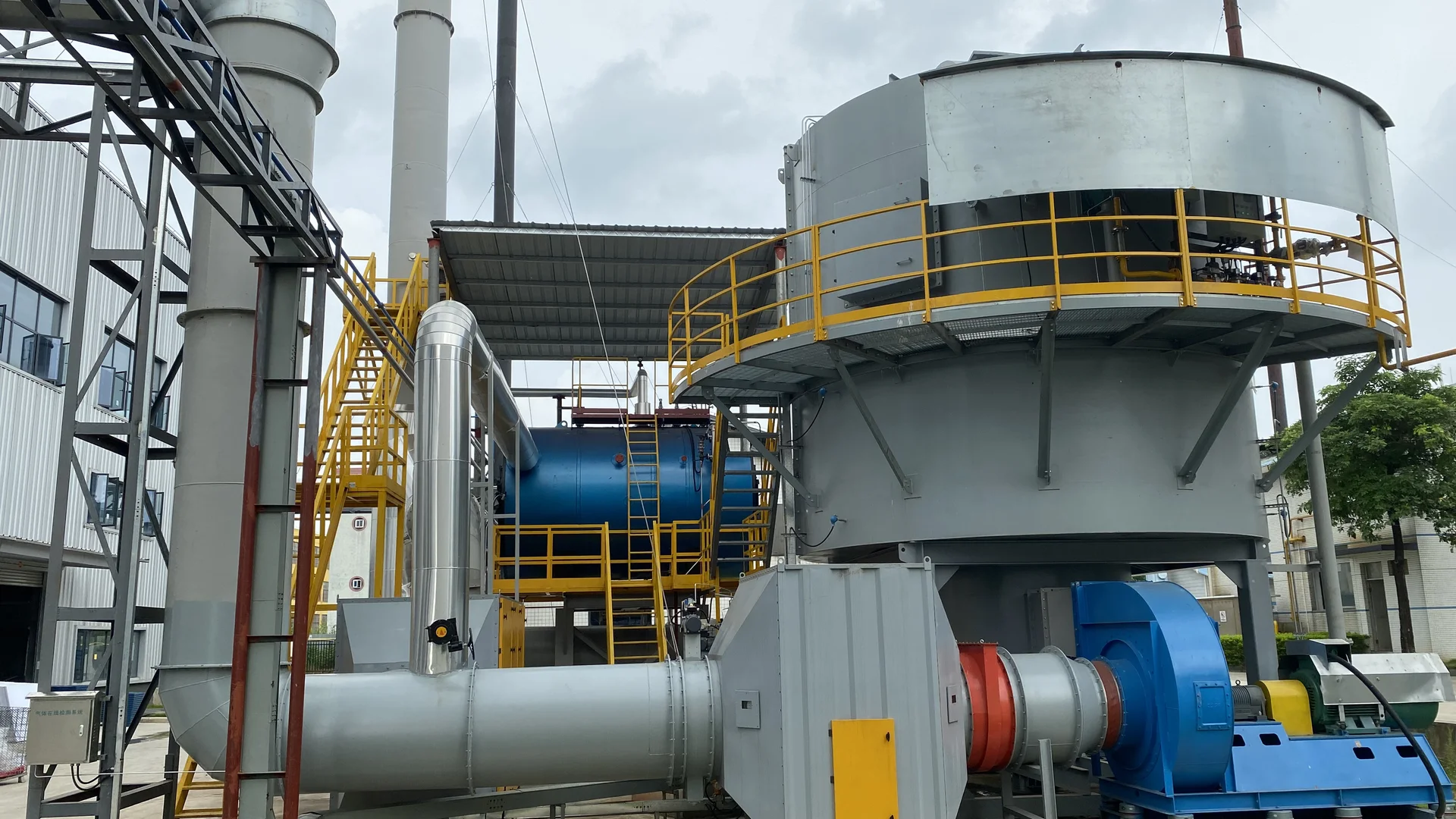
60,000 m³/h 3-Bed RTO Expansion for High-Speed Flexible Packaging Lines
Turnkey environmental EPC expansion delivered for Dongguan Qimiao Packaging Co., Ltd. (Amcor Group). Elevating total plant capacity to 150,000 m³/h with advanced 3-bed regenerative thermal oxidation, 100% autothermal operation, and DB 44/2367 compliance.
World Packaging Giant Amcor & High-Capacity Production Expansion
Dongguan Qimiao Packaging Co., Ltd., founded in 2003 in Dalang Town, Dongguan, is a premier manufacturing affiliate of Amcor plc (NYSE: AMCR), the world's leading consumer packaging enterprise. The company specializes in high-barrier flexible packaging films, retort pouches, and lidding laminates for global food, beverage, and healthcare leaders.
To support surging market demand, Qimiao initiated a major production expansion adding multiple high-speed gravure presses, solvent composite laminators, and high-barrier extrusion laminating lines. The existing environmental plant (which operated a 100,000 m³/h zeolite rotor and three 30,000 m³/h rotary RTOs totaling 90,000 m³/h RTO capacity) could not accommodate the incremental 60,000 m³/h process drying hood exhaust.
The challenge required integrating a new 60,000 m³/h Three-Bed RTO without disrupting existing continuous manufacturing lines. The new system had to seamlessly tie into existing solvent headers carrying high concentrations of ethyl acetate (58%), n-propyl acetate (32%), and isopropanol (10%), while capturing and utilizing surplus combustion heat to supply clean drying air back to the production floor.

Critical Engineering Constraints
- Zero-Downtime Facility Expansion: Tying a new 60,000 m³/h RTO into active multi-line exhaust headers without halting ongoing production.
- Total Thermal Self-Sufficiency: Operating at 1,335 mg/m³ design concentration with 100% autothermal balance and hot gas bypass protection.
- High-Efficiency Pre-Filtration Upgrade: Upgrading legacy filters to F7/F9 units to eliminate aerosolized ink mist and protect ceramic packing.
- Stringent Environmental Compliance: Final stack exhaust strictly meeting DB 44/2367-2022 limits of NMHC ≤ 60 mg/m³ and Benzene ≤ 1 mg/m³.
Operating Baseline & Thermodynamic Balance Matrix
Rigorous engineering mass and energy balances established during commissioning of the 60,000 m³/h RTO expansion.
| Parameter / Operational Metric | Design Baseline | Measured Operating Range | Engineering Significance |
|---|---|---|---|
| New RTO System Capacity | 60,000 m³/h | 52,000 – 60,000 m³/h | Dedicated to high-speed gravure dryer hoods, expanding plant total to 150,000 m³/h. |
| Inlet VOCs Concentration | 1,335 mg/m³ (Avg) / 3,300 mg/m³ (Peak) | 1,150 – 1,420 mg/m³ | Solvent mass rate of ~80.1 kg/h entering the 3-Bed RTO. |
| Composite Solvent Calorific Value | 27,258 kJ/kg | 26,800 – 27,600 kJ/kg | Weighted enthalpy: Ethyl Acetate (58%), n-Propyl Acetate (32%), Isopropanol (10%). |
| Combustion Heat Release | ~550 kW | 510 – 585 kW | Far exceeds thermal dissipation (~120 kW), guaranteeing 100% autothermal operation. |
| Thermal Energy Recovery (TER) | ≥ 95.0% | 95.3% – 96.1% | High-purity cordierite ceramic packing minimizes flue gas thermal dissipation. |
| Chamber Operating Temperature | 760°C – 850°C | 805°C – 830°C | Residence time ≥ 1.0 s ensuring complete oxidation into CO₂ and H₂O. |
| Stack NMHC Emission | ≤ 60 mg/m³ (DB Limit) | ≤ 15 mg/m³ | 75% compliance safety margin under continuous FID telemetry. |
Technological Architecture & Key Engineering Solutions
Integrated P&ID process flow, high-capacity dual-stage dry filtration, and heavy-duty 60,000 m³/h 3-Bed RTO oxidation train.
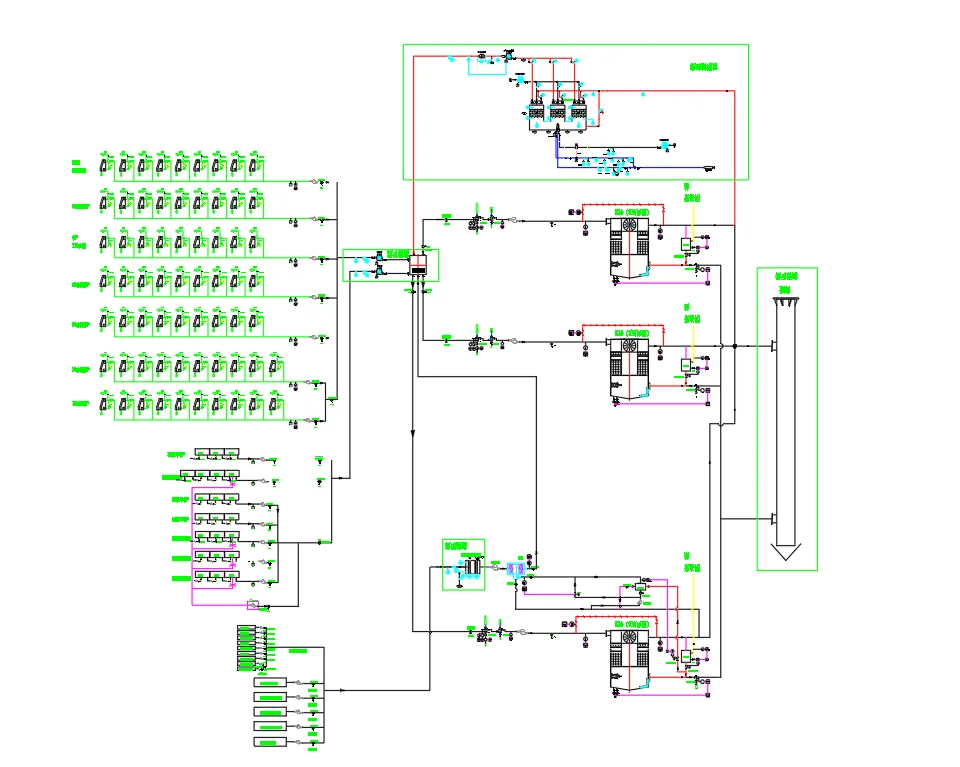
Integrated Multi-Line Process Balance & RTO Flow
The expansion engineering integrates the new 60,000 m³/h 3-Bed RTO into the plant's centralized air management grid. Solvent exhaust from high-speed gravure dryers and dry lamination tunnels is drawn through dedicated VFD draft fans into the new RTO, while fugitive room air continues through the existing zeolite rotor battery.
A triple-branch pneumatic poppet valve manifold cycles the 60,000 m³/h stream sequentially through Bed 1 (preheating), Bed 2 (purging of residual organics), and Bed 3 (heat absorption). An automated hot-gas bypass damper discharges excess thermal energy directly to the stack during high-concentration solvent surges, preventing bed overheating.
- Seamless tie-in to plant central header with zero interference to active production schedules.
- Automated hot gas bypass protecting ceramic packing from thermal shock during SKU color changeovers.
High-Capacity Dual-Stage F7/F9 Aerosol Interception
Prior to the expansion, the plant experienced minor clogging in the zeolite rotor due to insufficient particulate interception in legacy medium-efficiency filters. Fine ink mist droplets and paper dust penetrated deep into the molecular sieve channels.
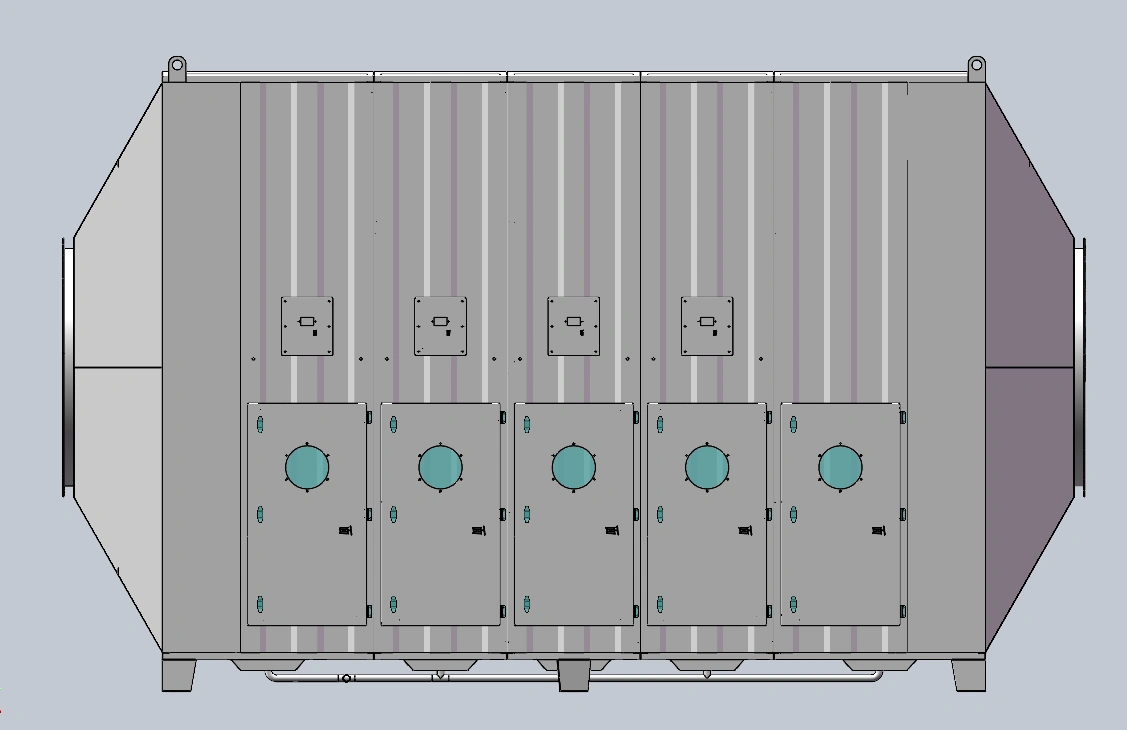
FluxFine redesigned the pre-treatment filtration battery, implementing high-capacity F7 pocket filters backed by F9 fine synthetic micro-fiber cassettes. Differential pressure transmitters across each filter module continuously feed pressure data to the SCADA system, ensuring filter change-outs occur well before resistance rises.
- Interception efficiency ≥ 95% for aerosolized ink particles and polymer droplets down to 1.0 µm.
- Modular slide-in filter cells enable rapid tool-free replacement during scheduled shift intervals.
60,000 m³/h 3-Bed RTO with High-Speed Pneumatic Poppet Valves
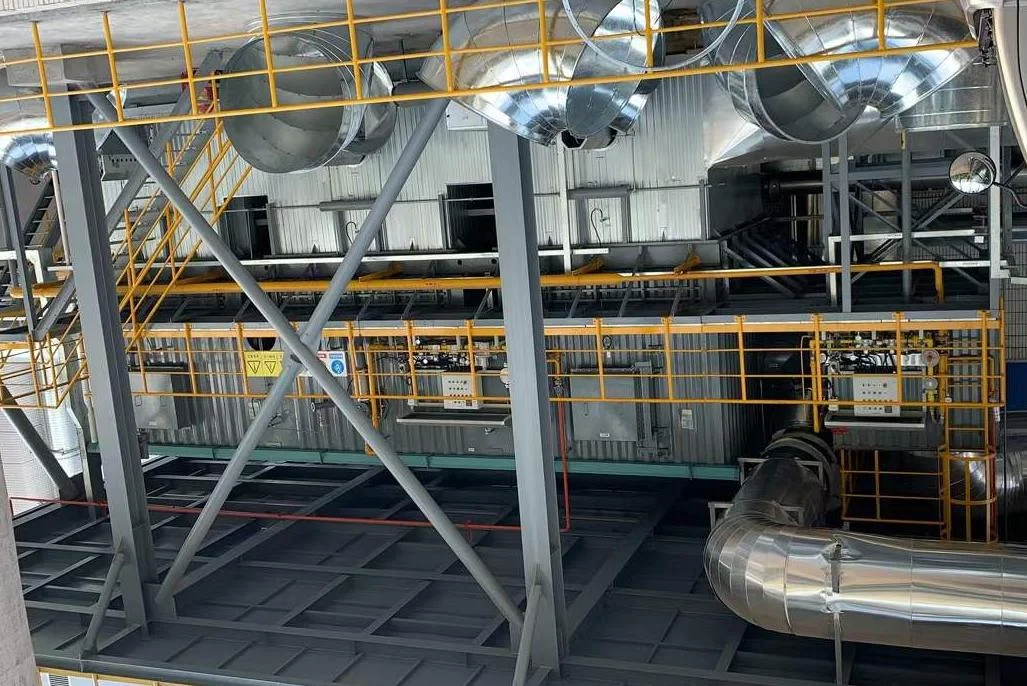
The oxidation powerhouse consists of three vertical heat recovery regenerator towers crowned by a common combustion chamber lined with 1260°C mullite ceramic fiber blankets. High-purity cordierite ceramic honeycomb monoliths achieve a verified thermal recovery efficiency (TER) of 95.3%.
Flow switching is orchestrated by heavy-duty pneumatic poppet valves with double-acting cylinders and dual limit switches. The dedicated purge cycle draws clean air through the bed that just concluded its inlet cycle, transferring residual solvent fumes into the combustion chamber before discharging to the stack and preventing valve-switch slip.
- High-speed pneumatic poppet valves (< 0.8s) with resilient metallic seals ensure zero VOC slip.
- Combustion dwell time ≥ 1.0 s at 800°C guarantees ≥ 99.2% DRE across all ethyl acetate and propyl acetate isomers.
Third-Party Environmental Testing & Verified Stack Results
Third-party environmental audit confirms strict compliance with Guangdong DB 44/2367-2022 and national GB 41616-2022.
| Target Pollutant | Raw Inlet Concentration | Measured Stack Emission | Regulatory Limit (DB 44/2367-2022) | Compliance Status |
|---|---|---|---|---|
| Non-Methane Hydrocarbons (NMHC) | 1,150 – 1,420 mg/m³ | ≤ 15 mg/m³ | ≤ 60 mg/m³ | Verified Pass (75% Margin) |
| Total Benzene Series | 10 – 16 mg/m³ | ≤ 1.8 mg/m³ | ≤ 15 mg/m³ | Verified Pass |
| Benzene (Individual) | Trace (< 0.5 mg/m³) | Non-Detected (< 0.1 mg/m³) | ≤ 1 mg/m³ | Verified Pass |
| Particulate Matter (PM) | 30 – 50 mg/m³ | ≤ 5 mg/m³ | ≤ 30 mg/m³ | Verified Pass |
| Overall VOC Destruction Removal (DRE) | Baseline 100% | ≥ 99.2% DRE | ≥ 90.0% | Exceeds Standard |
Equipment Integrated in This Project
Standard environmental engineering products fabricated, delivered, and integrated into the turnkey expansion.
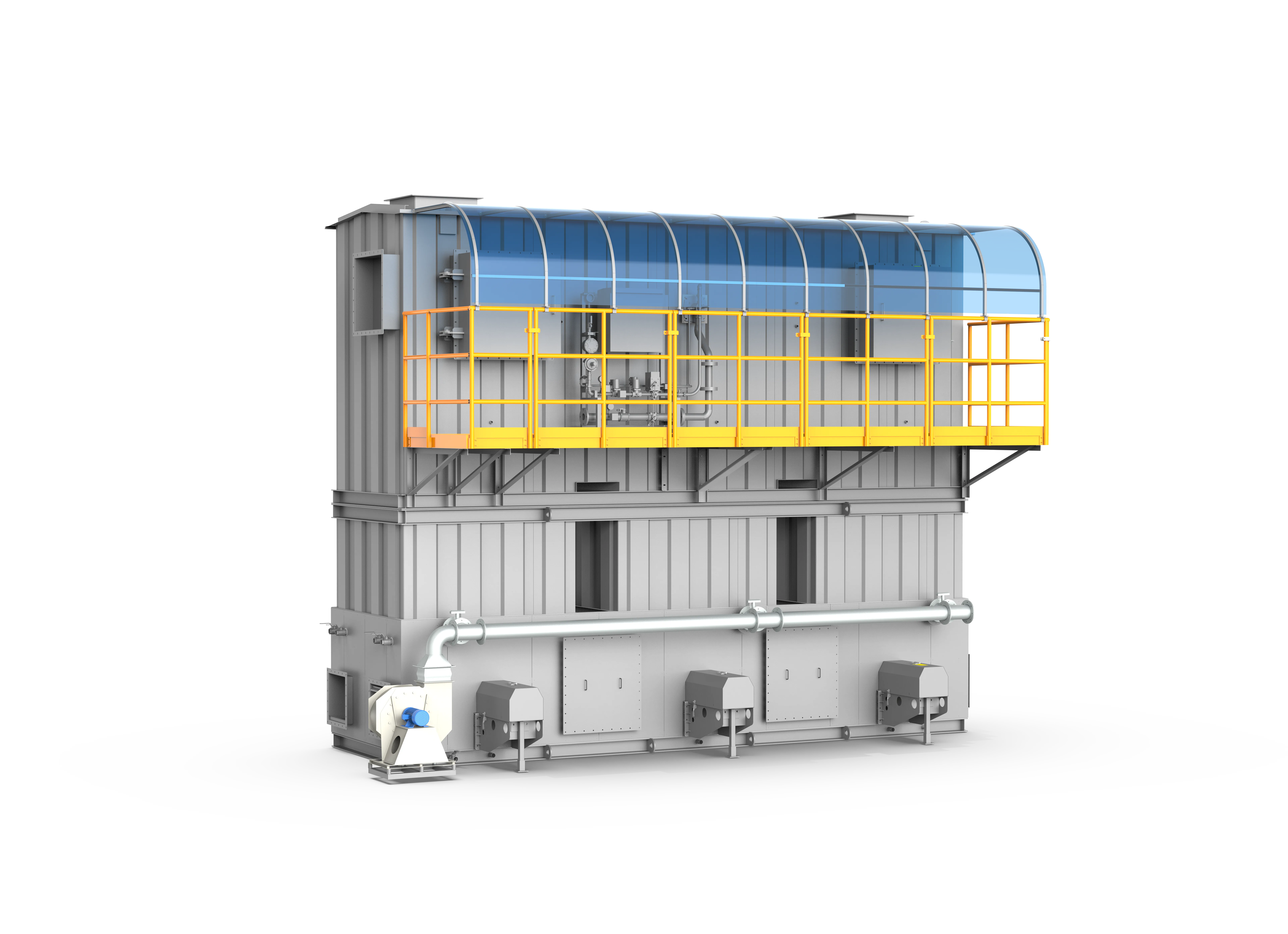
Three-Tower RTO
A premier-grade industrial VOC thermal abatement system that achieves >=99% VOC destruction efficiency and >=95% thermal energy recovery through a classic three-bed alternating heat-exchange and purge process.
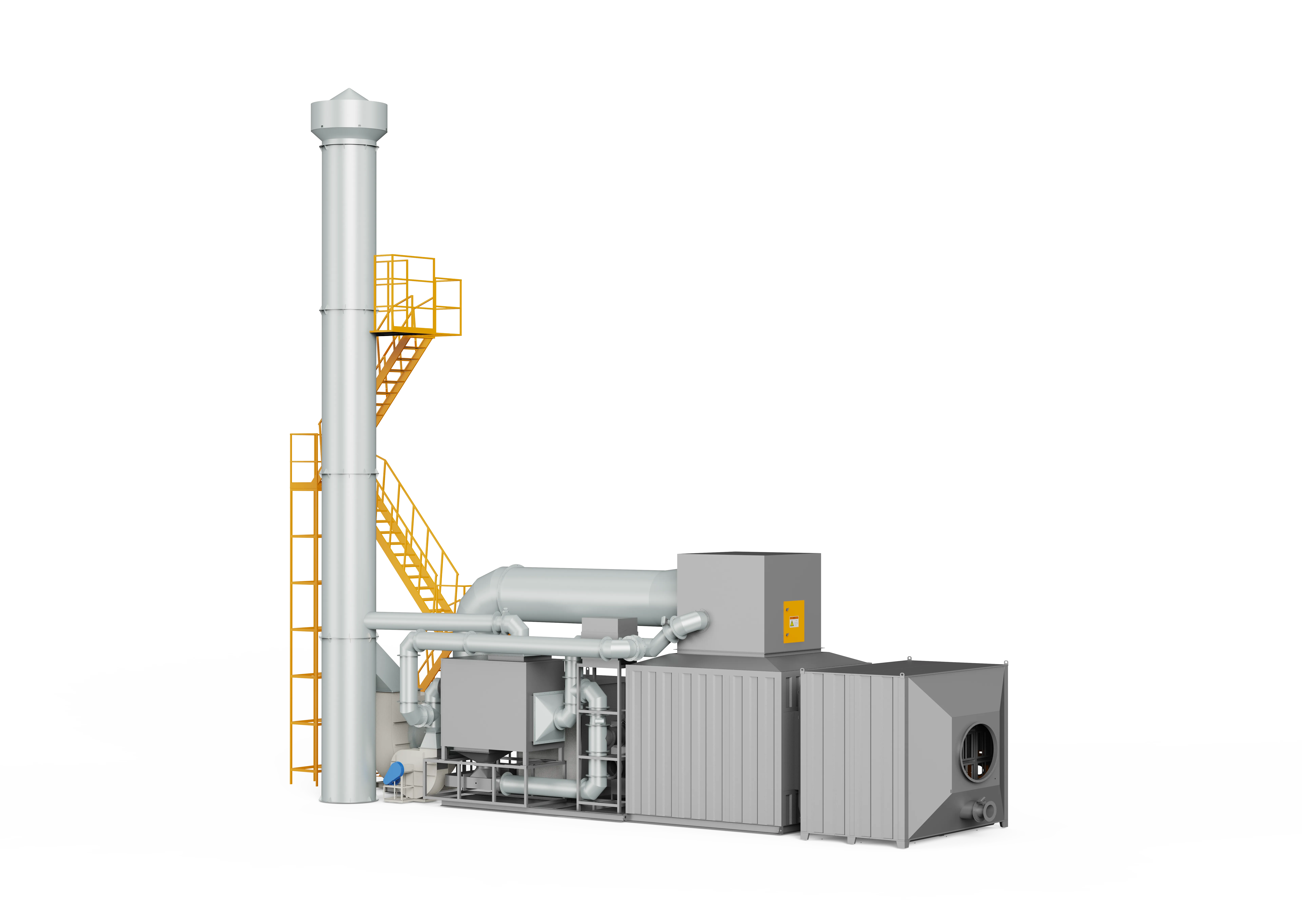
Zeolite Rotor
A high-efficiency VOC pre-treatment and concentration system utilizing advanced hydrophobic zeolite molecular sieves to continuously adsorb, desorb, and enrich large-airflow, low-concentration organic exhaust gases, reducing downstream thermal destruction energy consumption by 40% to over 50%.
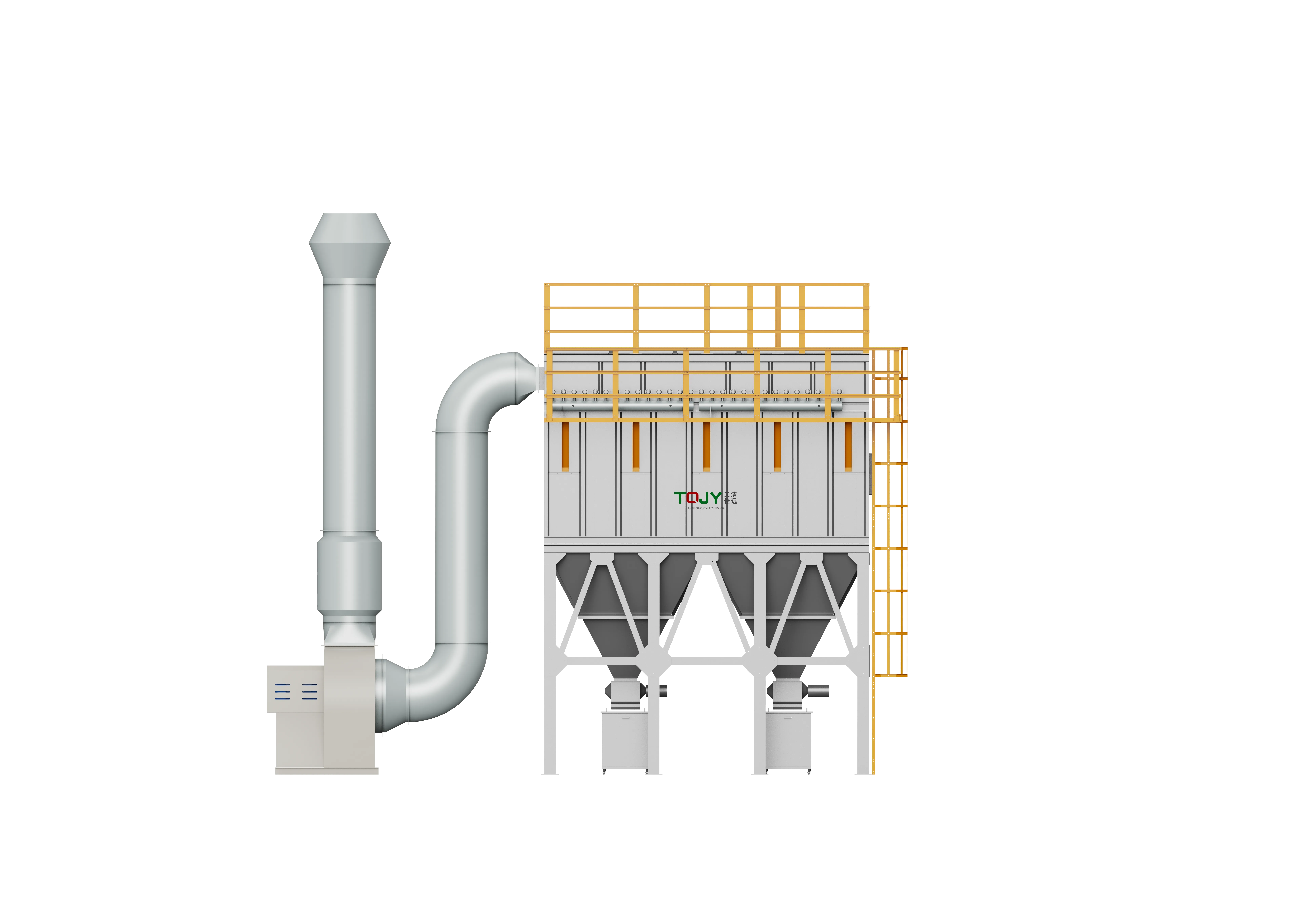
304 SS Pulse Baghouse
High-capacity 304 stainless steel pulse-jet baghouse for >99% efficiency dry dust collection.
Planning a Plant Expansion or Upgrading Large-Capacity RTO Systems?
FluxFine provides turnkey facility expansion engineering, zero-downtime header tie-ins, custom 3-bed and rotary RTO installations, and waste heat recovery systems engineered for multinational manufacturing facilities.