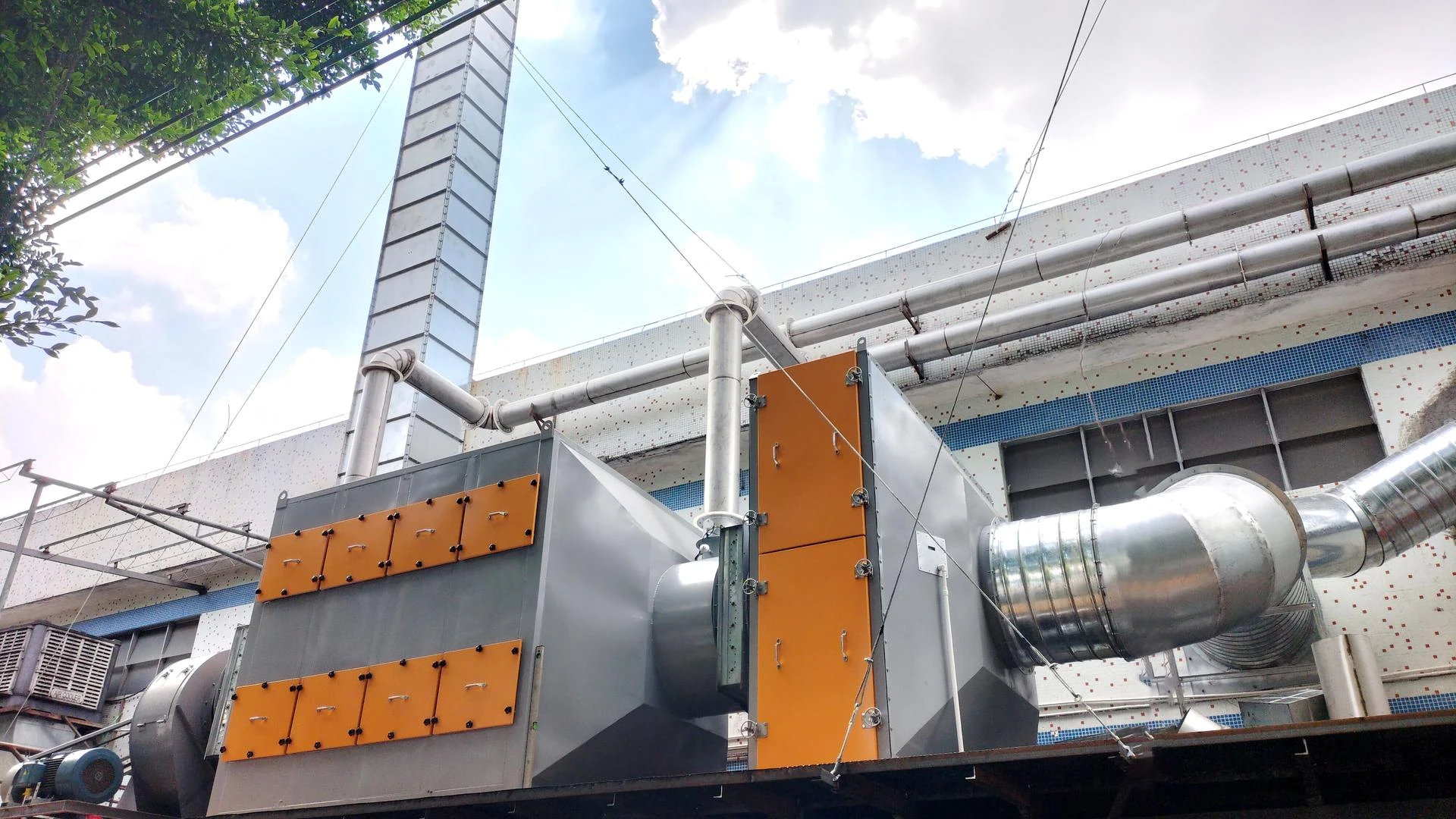
60,000 m³/h Gravure Printing VOCs Abatement Train
Yongda (Zhongshan) Co., Ltd. | High-Speed Gravure Printing Presses, Dry Laminators & Solvent Curing Hoods
High-Efficiency Concentration & Catalytic Abatement for High-Speed Web Printing
Yongda (Zhongshan) Co., Ltd. (永大(中山)有限公司 / 永大印刷) is a leading manufacturer of high-definition gravure packaging films, flexible barrier pouches, and composite laminates. Operating multiple high-speed gravure presses with solvent drying hoods and laminating lines, the plant generates 60,000 m³/h (35,300 CFM) of solvent-laden exhaust.
The solvent blend consists primarily of fast-evaporating esters and alcohols: Ethyl Acetate (34.8%), n-Propyl Acetate (35.1%), Isopropanol (16.0%), and Ethanol (14.1%) with a high total organic load averaging 378.6–577 mg/m³ and peaking at 692 mg/m³. Fluctuating web speeds and job changeovers caused erratic airflow surges that challenged older fixed-frequency collection fans.
FluxFine engineered a dynamic, turnkey abatement solution: motorized branch dampers with closed-loop pressure modulation, a 3-stage dry particulate filter box (G4/F7/F9), a 60,000 m³/h Zeolite Rotor Concentrator (10:1 to 14:1 ratio), and a 6,000 m³/h Catalytic Oxidizer (CO) featuring dual-stage internal heat exchangers. Operating at 280°C–350°C, the system achieves ≥97.0% catalytic DRE and ≥95.0% zeolite adsorption efficiency, reducing stack emissions to NMHC ≤ 25 mg/m³, well below national GB 41616-2022 and regional Guangdong DB44/2367-2022 standards.
Four Engineering Dilemmas in Gravure Packaging Printing
Capturing and destroying flexible packaging printing emissions requires balancing volatile ester loading, web line pressure surges, and continuous energy recovery.
Frequent Press Changeovers
Rapid job order changes across printing decks caused severe fluctuations in exhaust volume and dryer hood static pressure, risking room fugitive leaks.
Ink Oil & Paper Particulates
Drying air contains fine ink aerosols, plasticizer vapors, and airborne film dust that cause pore plugging on zeolite wheels without high-efficiency pre-filtration.
Volatile Ester Surge Loads
Solvents comprise 70% Ethyl and n-Propyl Acetates. Peak concentration spikes up to 692 mg/m³ (41.5 kg/h VOC) required adaptive concentration and LEL monitoring.
Desorption Energy Integration
Operating a 6,000 m³/h catalytic oxidizer without waste heat recycling would require continuous natural gas firing, escalating operational expenditure.
Engineering Evaluation: Carbon Adsorption vs. Zeolite Rotor + Catalytic Oxidizer
FluxFine evaluated conventional carbon bed canisters against an automated zeolite concentration and low-temperature catalytic oxidation architecture.
| Engineering Dimension | Disposable Activated Carbon Bed | FluxFine Zeolite Rotor + Catalytic Oxidizer (CO) | Engineering Advantage |
|---|---|---|---|
| Adsorption Media Durability | Rapid saturation requiring monthly carbon replacement | Continuous rotary drum with >5-year molecular sieve life | Zero hazardous media replacement |
| Thermal Destruction Reaction | None (pollutants simply transferred onto solid carbon) | Precious metal Pt/Pd catalytic oxidation at 280°C - 350°C | ≥97.0% verified destruction |
| Thermal Heat Recapture | Zero energy recovery | Dual heat exchangers preheating desorption and inlet air | >85% enthalpy recovered |
| Automated Line Tracking | Fixed-speed manual dampers causing hood spillage | PLC pressure feedback with variable-speed VFD loop | Zero fugitive hood leaks |
| Stack Emission (NMHC) | Spikes above 120 mg/m³ as bed reaches saturation | Stable discharge ≤ 25 mg/m³ (guaranteed ≤ 50 mg/m³) | Guaranteed GB 41616 compliance |
High-performance Pt/Pd catalyst oxidizes esters and alcohols at low 300°C temperatures.
Substantially outperforming GB 41616-2022 national standards (≤ 50 mg/m³).
Combustion enthalpy recycles directly to provide 100% of zeolite rotor desorption heat.
Shrinks 60,000 m³/h dilute press room exhaust into a compact 4,200 m³/h stream for catalytic oxidation.
Subsystem Architecture & Hardware Execution
Explore the four synchronized engineering subsystems delivering continuous compliance, aerosol protection, and energy balance.
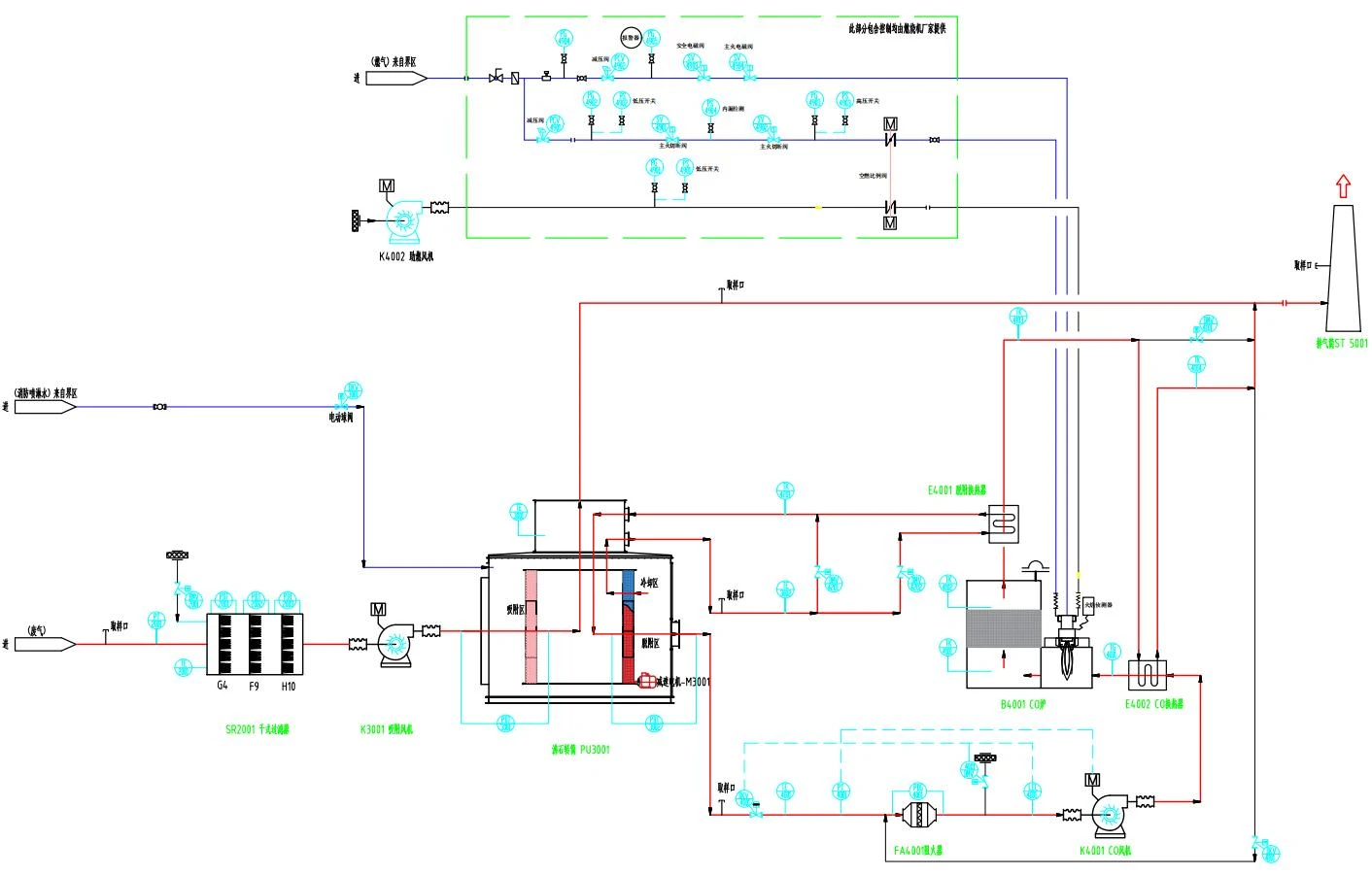
Complete P&ID Process Topology & Automated Balancing
The system collects exhaust from gravure press drying hoods and dry laminators across 60,000 m³/h manifold ductwork. Each press branch incorporates motorized modulating dampers.
Exhaust flows through the 3-stage dry filter unit into the zeolite rotor. Desorption air heated to 180°C–220°C generates a concentrated 4,200–6,000 m³/h stream feeding the Catalytic Oxidizer (CO), where dual heat exchangers maximize thermal efficiency.
Parameters: 60,000 m³/h adsorption flow; 10:1 to 14:1 concentration ratio; 6,000 m³/h CO capacity; 280°C–350°C catalytic oxidation.
Rotary Zeolite Molecular Sieve Adsorption Core
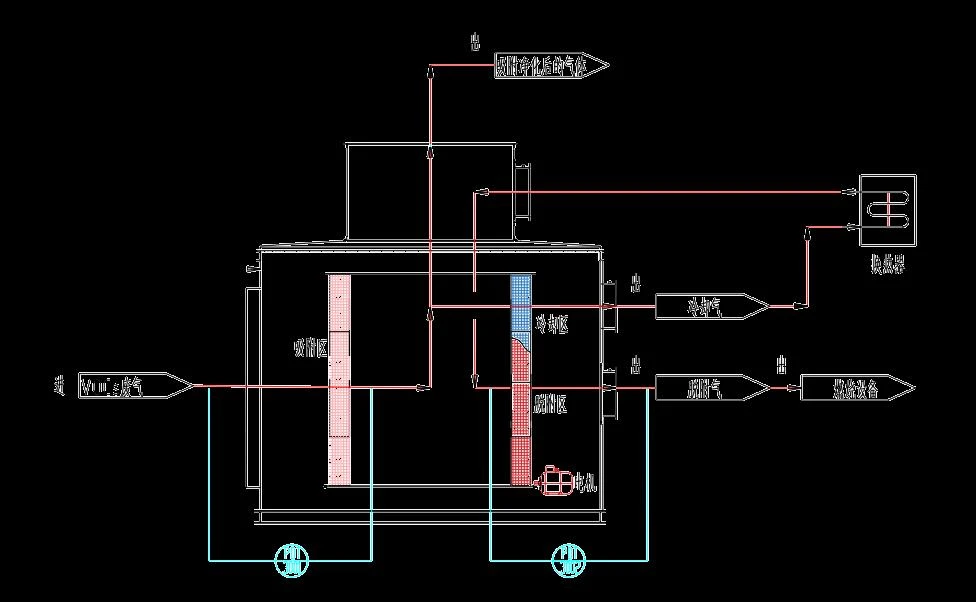
The concentration subsystem employs a continuous rotary molecular sieve drum packed with inorganic hydrophobic zeolite. Operating at an adsorption face velocity ≤2.5 m/s with ≤0.2s retention time, it achieves ≥95% VOC removal.
The drum features automated rotational speed control (2–6 rph) linked to exhaust temperature sensors. When line concentrations drop, drum speed is reduced to ensure thorough desorption without wasting thermal enthalpy.
Parameters: 60,000 m³/h capacity; 250 mm bed thickness; 180°C–220°C desorption; ΔP ~600 Pa; incombustible Class A1 substrate.
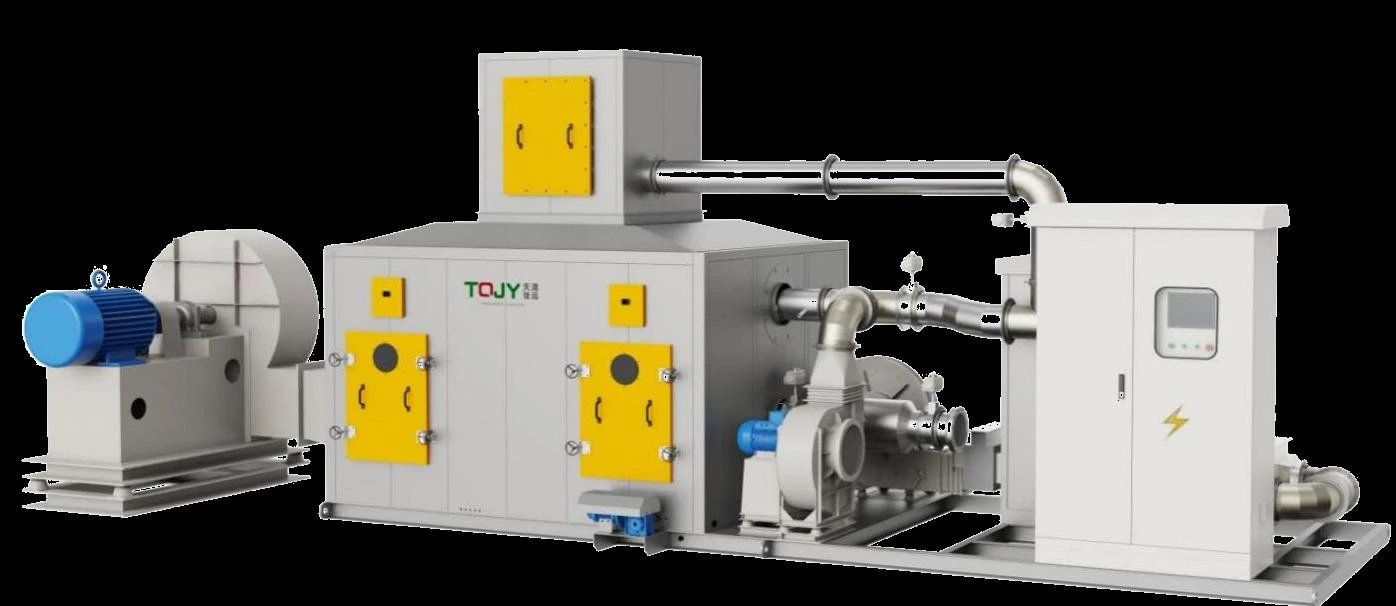
Catalytic Oxidation Core with Dual Flue Heat Recovery
The Catalytic Oxidizer core operates at space velocity 12,500 h⁻¹ across precious metal (Pt/Pd) honeycomb ceramic catalyst blocks, oxidising ethyl acetate and isopropanol at just 280°C–350°C.
Treated clean gas first enters primary heat exchanger 1 to supply 180°C desorption air to the zeolite rotor (124 kW transfer), then enters secondary heat exchanger 2 to preheat incoming VOC feed air, eliminating auxiliary fuel burner usage during regular production.
Parameters: 6,000 m³/h capacity; ≥97% DRE; 12,500 h⁻¹ space velocity; dual heat exchangers; automated temperature modulating bypass.
System Operational & Thermodynamic Data Matrix
Verified operational thresholds, airflow capacities, and destruction metrics for the Yongda Printing facility.
| Subsystem | Design Specification | Operating Metric | Compliance Standard |
|---|---|---|---|
| Zeolite Rotor Concentrator | 60,000 m³/h monolithic hydrophobic molecular sieve drum | 10:1 to 14:1 concentration ratio | ≥95.0% adsorption efficiency |
| Pre-filtration Unit | 3-stage dry filtration box (G4 pleated + F7 pocket + F9 fine) | ΔP: 500 Pa clean to 900 Pa terminal | PM ≥ 1 μm capture > 90% |
| Catalytic Oxidizer (CO) | 6,000 m³/h capacity with precious metal Pt/Pd honeycomb catalyst | 280°C - 350°C reaction temperature | ≥97.0% catalytic DRE |
| Dual-Stage Heat Exchangers | Flue heat exchange delivering 180°C–220°C desorption air + preheat | 124 kW desorption heat supplied | >85% enthalpy recapture |
| Automated Pressure Balancing | Motorized branch dampers with closed-loop static pressure VFD | Dynamic speed modulation (20–50 Hz) | Stable negative pressure on hoods |
| Stack Emissions (NMHC) | Combined exhaust stack monitored via continuous FID | Measured ≤ 25 mg/m³ | Guaranteed ≤ 50 mg/m³ (GB 41616) |
Equipment in This Project
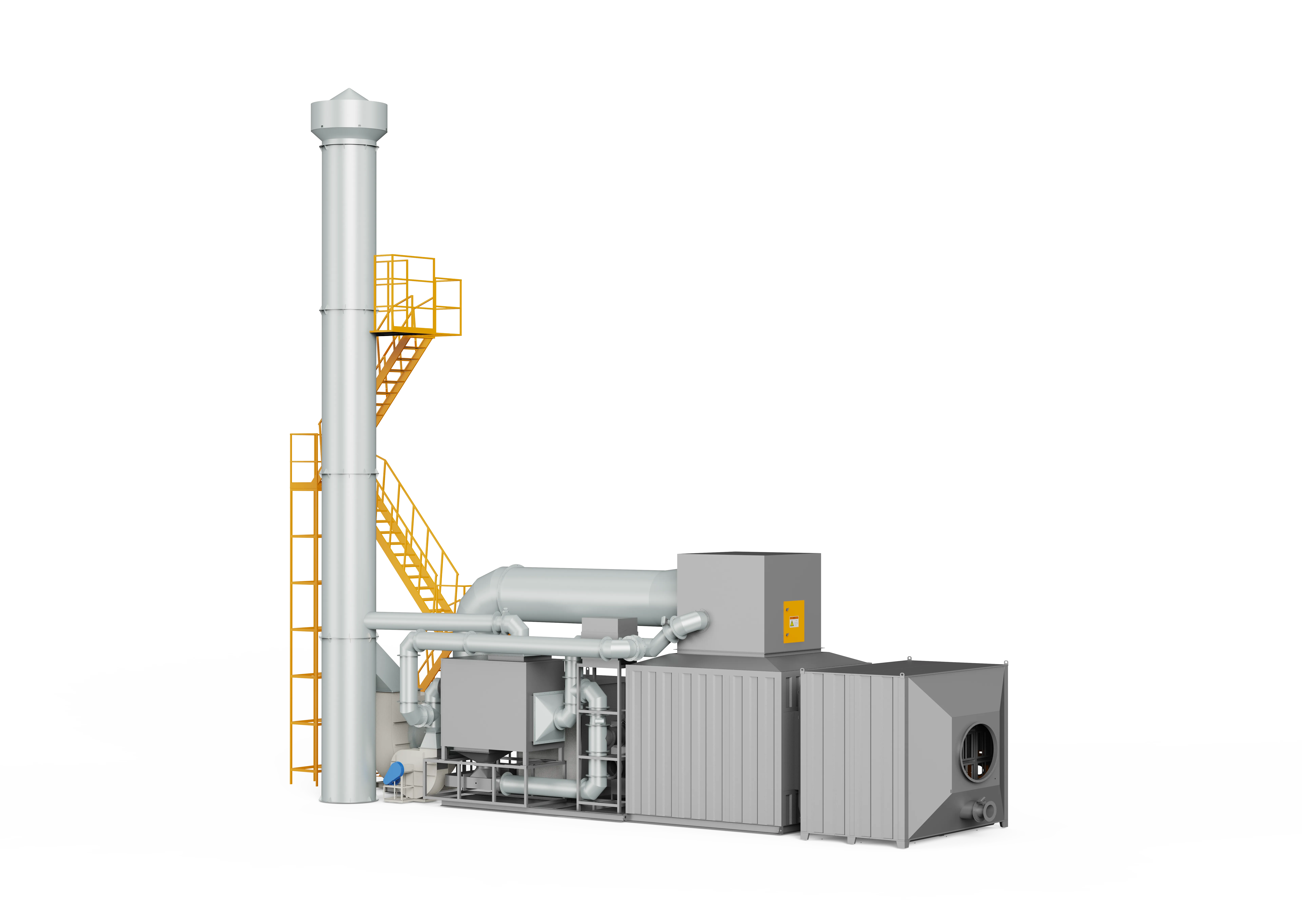
Zeolite Rotor
A high-efficiency VOC pre-treatment and concentration system utilizing advanced hydrophobic zeolite molecular sieves to continuously adsorb, desorb, and enrich large-airflow, low-concentration organic exhaust gases, reducing downstream thermal destruction energy consumption by 40% to over 50%.
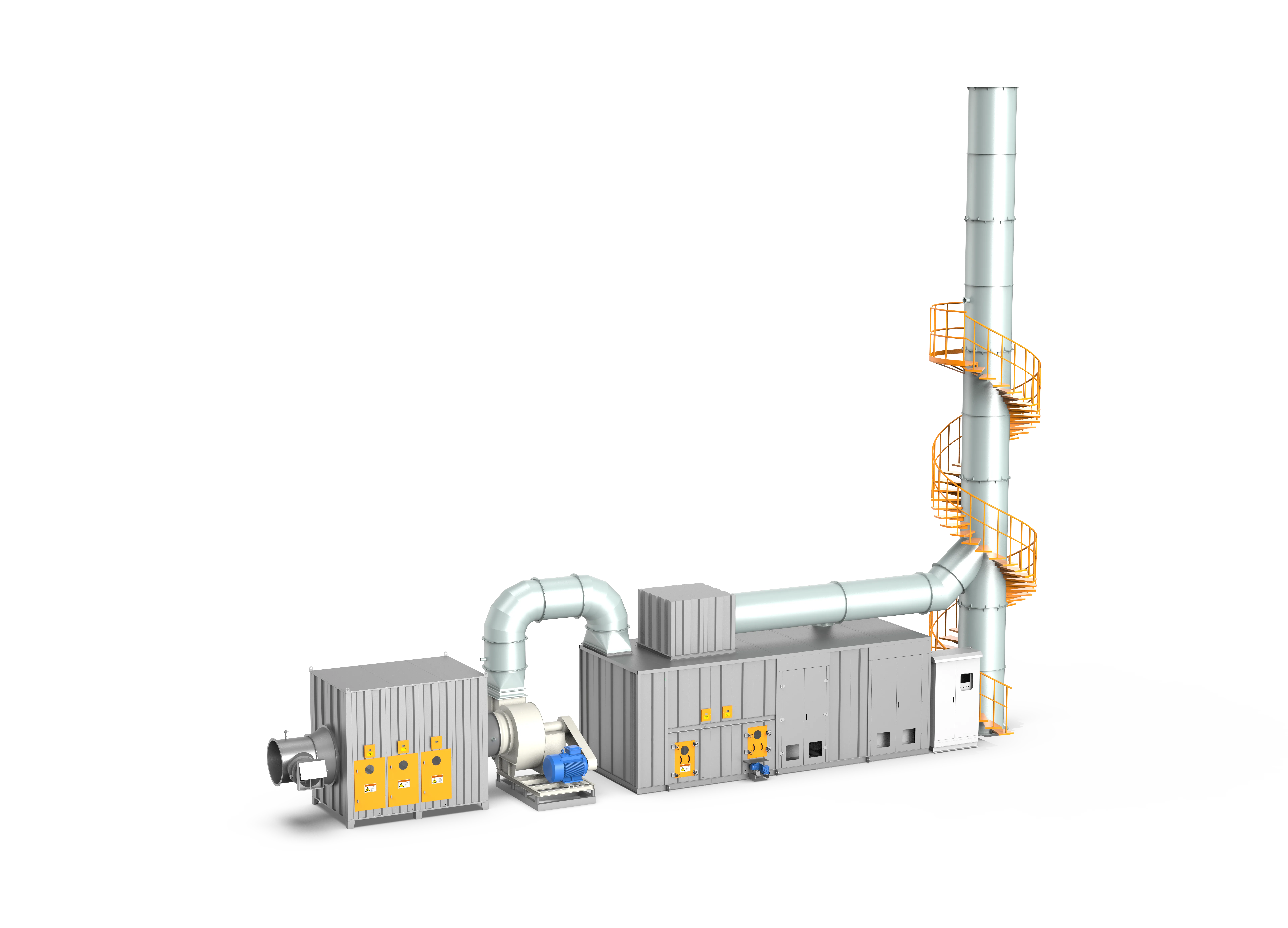
Zeolite Rotor + CO
A modular, highly compact VOC abatement system integrating zeolite molecular sieve concentration with low-temperature catalytic oxidation (CO) at 250-350°C, delivering energy savings of up to 20%+ and zero fire risk for small-to-medium airflow setups.
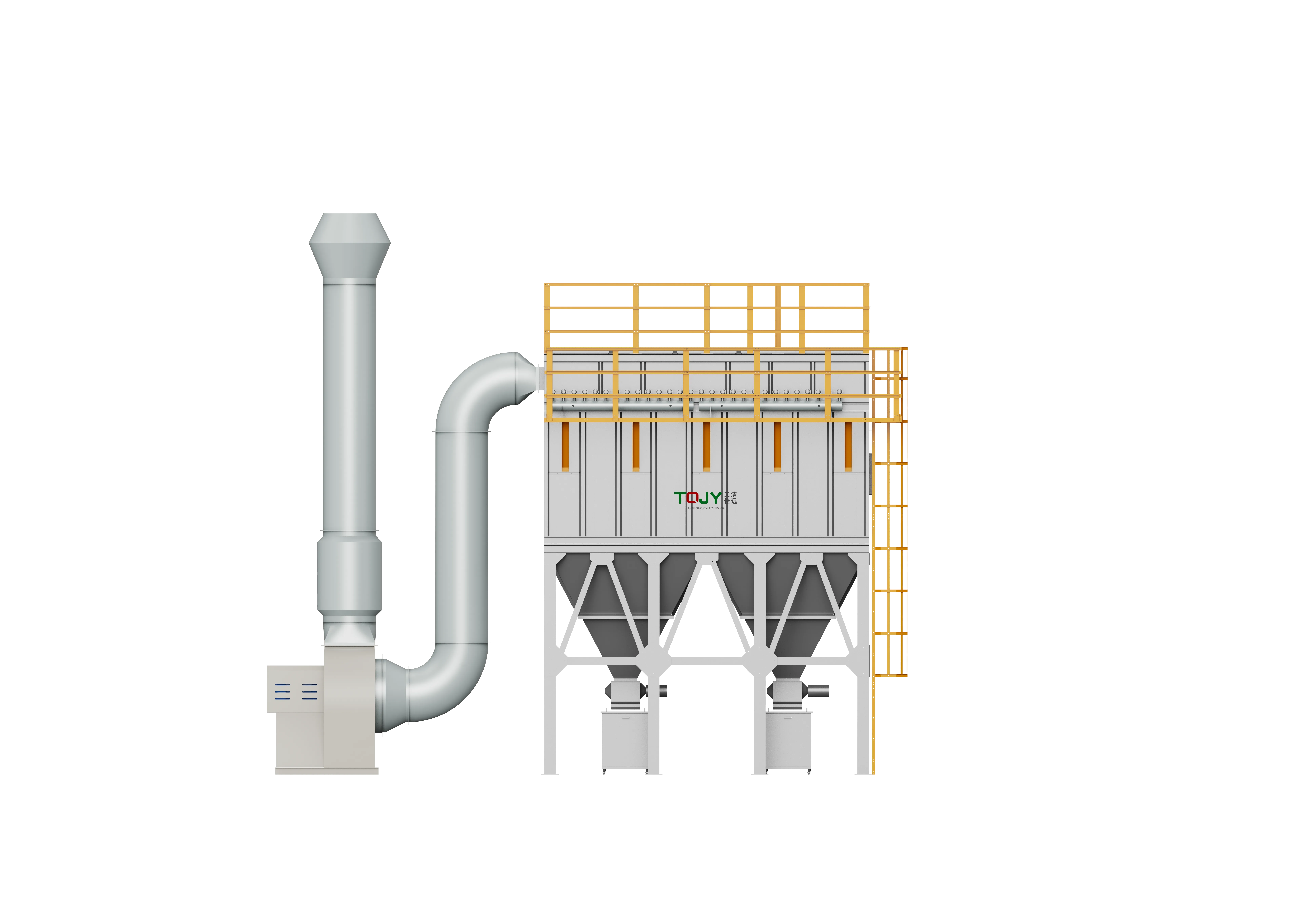
304 SS Pulse Baghouse
High-capacity 304 stainless steel pulse-jet baghouse for >99% efficiency dry dust collection.
Guaranteed VOC Compliance & Heat Recovery for High-Speed Printing Lines
FluxFine designs, engineers, manufactures, and commissions integrated zeolite rotor concentration and catalytic oxidizer systems engineered for flexible packaging and gravure printing operations.