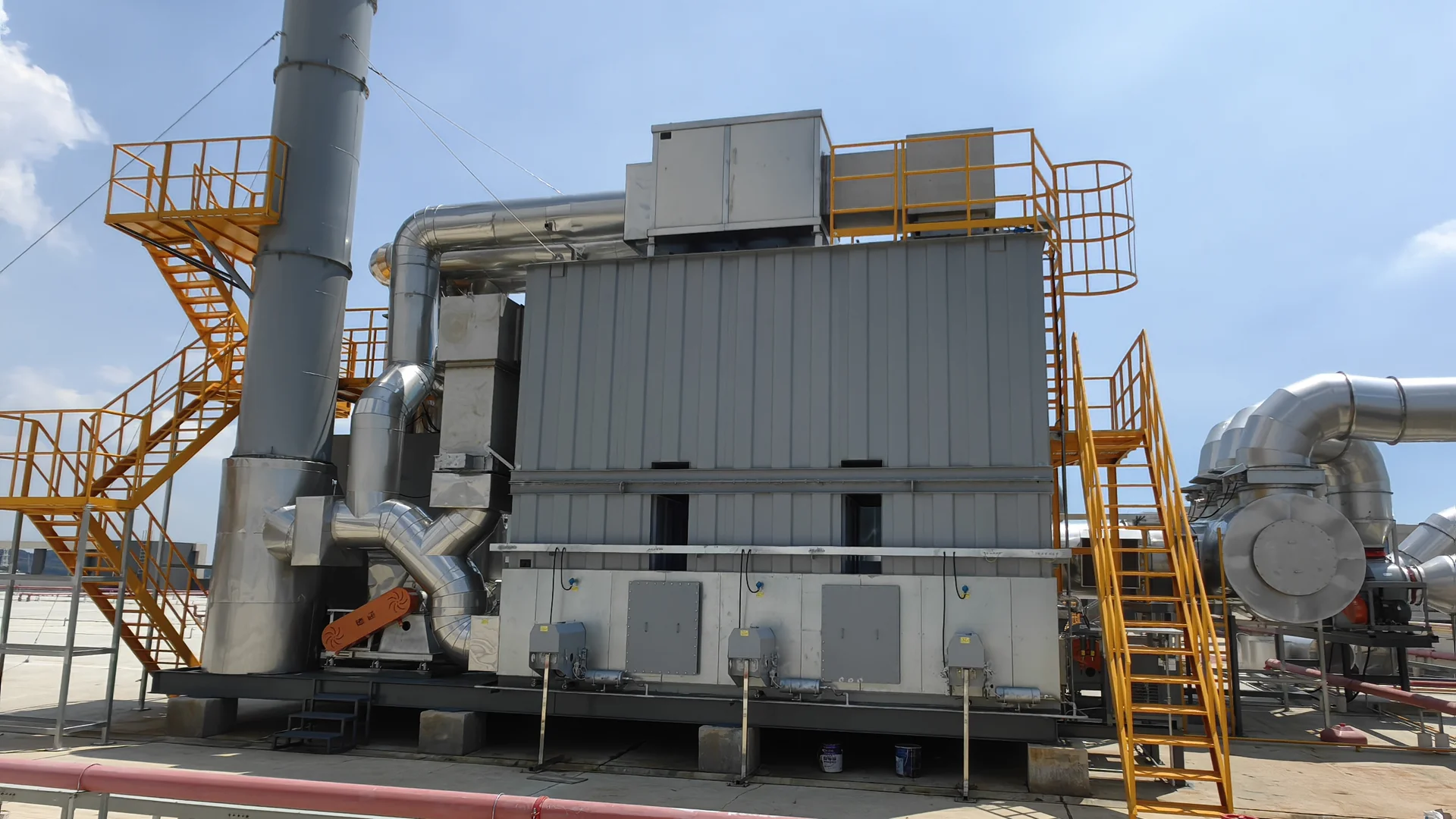
Battery Hard Carbon Pyrolysis & Heavy Tar High-Temperature RTO Train
Turnkey heavy-duty environmental EPC engineered for Dayuan Hard Carbon (Huizhou) New Materials Co., Ltd. Conquering extreme 500°C pitch cracking off-gas with rapid caustic thermal quenching, jet mixing scrubbing, 850°C 3-bed thermal oxidation, and tail WESP polishing to achieve ≥99.5% DRE.
Sodium & Lithium Battery Hard Carbon Synthesis & Severe Pyrolysis Off-Gas
Dayuan Hard Carbon (Huizhou) New Materials Technology Co., Ltd., located in the Zhongkai High-Tech Industrial Development Zone in Huizhou, Guangdong, is an advanced materials enterprise specializing in hard carbon anode precursors for sodium-ion and high-rate lithium-ion energy storage batteries.
Manufacturing hard carbon requires high-temperature carbonization of synthetic resins and biomass/petroleum pitch precursors inside rotary kilns operating at up to 1,200°C. The process off-gas discharges at ≤500°C laden with dense, cracked pitch vapors, heavy tar aerosols, polycyclic aromatic hydrocarbons (PAHs), and combustible syngas (, H_2, CH_4$).
Heavy pitch tar presents a catastrophic operational hazard: as gas cools between 150°C and 350°C, tar vapors condense into a tenacious, glassy resin that rapidly glazes ductwork, clogs switching valves, and cements ceramic heat exchanger beds. Furthermore, high concentrations of carbon monoxide and hydrogen introduce severe deflagration risks, demanding specialized thermal quenching, high-shear jet scrubbing, and explosion-proof RTO engineering.

Critical Engineering Constraints
- Tenacious Pitch Tar (150°C–350°C): Requires immediate sub-second quench below 80°C to freeze droplets before surface adhesion occurs.
- Combustible Syngas Hazard (CO, H₂): Precision process dilution header ensures total organic loading remains strictly < 25% LEL.
- Toxic Intermediates (HCN, NH₃, Phenols): Neutralized across high-shear Jet Mixing Two-Stage Scrubber with active oxidant dosing.
- GB 31572 & DB 44/2367 Compliance: Guarantees NMHC ≤ 15 mg/m³, PM ≤ 5 mg/m³, and zero white plume via tail WESP.
Operating Baseline & Thermodynamic Balance Matrix
Mass, energy, and phase transition boundaries verified during commissioning of the hard carbon off-gas train.
| Parameter / Operational Metric | Design Baseline | Measured Operating Range | Engineering Significance |
|---|---|---|---|
| High-Temperature Pyrolysis Vent Gas | ≤ 50 m³/h @ ≤ 500°C | 35 – 45 m³/h @ 420°C – 480°C | Extremely concentrated cracked pitch vapors, syngas (CO, H₂), and tar mist. |
| Total Diluted RTO Flow Capacity | 3,000 – 5,000 Nm³/h | 3,000 – 3,500 Nm³/h | Conditioned dilution header guaranteeing organic loading < 25% LEL. |
| Quench Tower Exit Temperature | ≤ 80°C | 65°C – 75°C | Sub-second rapid quench skips tar condensation zone (150°C–350°C) completely. |
| Jet Mixing Scrubber Liquid-to-Gas Ratio | 2.0 – 3.0 L/m³ | 2.2 – 2.5 L/m³ | 25 m/s tangential jetting strips > 98% of tar aerosols and hydrogen cyanide. |
| RTO Combustion Chamber Temperature | ≥ 850°C | 850°C – 880°C | Residence time ≥ 1.5 s ensuring 100% conversion of CO, PAHs, and syngas. |
| Thermal Energy Recovery (TER) | ≥ 95.0% | 95.2% – 95.8% | High-purity cordierite ceramic packing recovers combustion heat. |
| Stack NMHC Emission | ≤ 50 mg/m³ (GB 31572) | ≤ 15 mg/m³ | 70% compliance safety margin under continuous FID telemetry. |
| Stack Particulate Matter (PM) | ≤ 20 mg/m³ | ≤ 5 mg/m³ | Polished via tail Wet Electrostatic Precipitator (WESP). |
Technological Architecture & Key Engineering Solutions
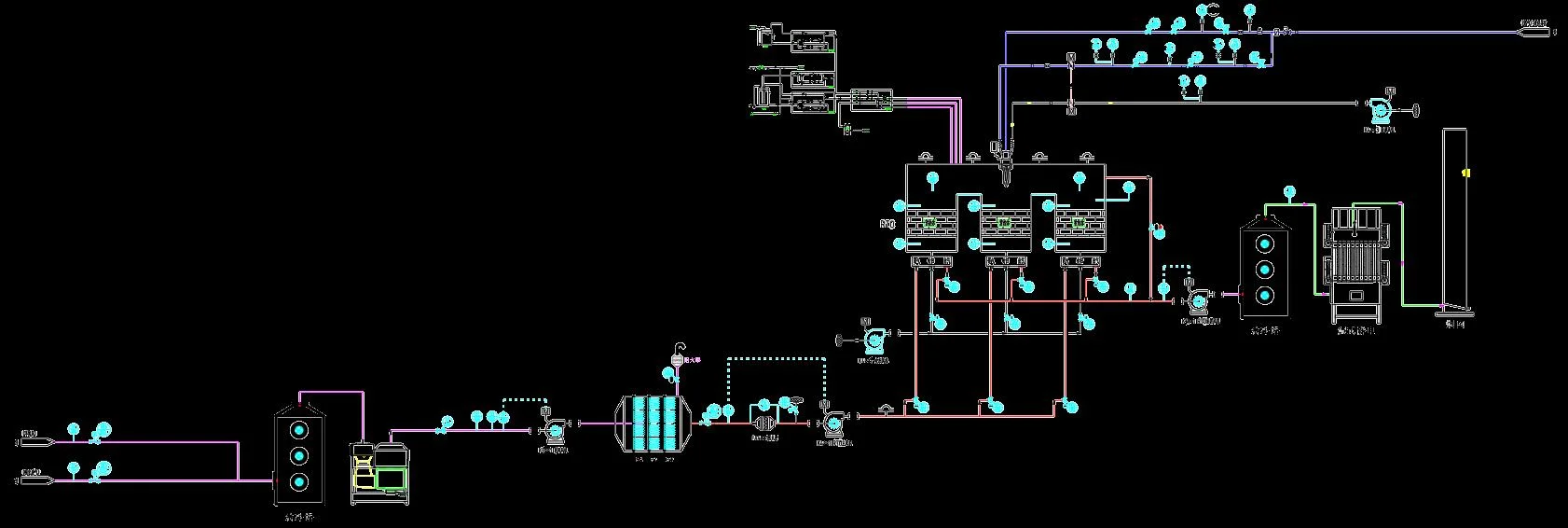
Integrated P&ID process flow, high-energy jet mixing scrubbing, and heavy-duty 3-Bed RTO oxidation core.
Complete Extreme-Duty Thermal Quench & RTO Loop
The treatment architecture is engineered for severe thermal and chemical conditions. The 500°C carbonization off-gas is injected into an immediate Caustic Quench Tower, where dual-fluid atomizing nozzles crash the gas temperature below 80°C in milliseconds to skip the tar condensation window.
The chilled gas passes through a Jet Mixing Two-Stage Tower and a 3-tier dry filtration box (G4/F7/F9) before joining dilution hall air to feed the 3-Bed RTO at 850°C. Clean flue gas exiting the RTO undergoes in-furnace SNCR De-NOx, post-combustion alkaline scrubbing, and final polishing in a Wet Electrostatic Precipitator (WESP) to eliminate trailing salt mist.
- Multi-stage barrier: Quench → Jet Mixing → Dry Filters → RTO → De-NOx → WESP.
- Continuous LEL interlocking dynamically modulates fresh air dilution dampers.
High-Velocity Tangential Jetting for Tar & Soot Stripping
Carbonization pyrolysis off-gas contains fine carbon soot (down to sub-micron diameters) and tar droplets that behave as viscous aerosols resistant to simple spray absorption.
FluxFine integrated a proprietary Jet Mixing Two-Stage Scrubber Tower. Flue gas enters tangential venturi nozzles at over 25 m/s, driving extreme liquid-gas shearing and intense micro-droplet collisions. An integrated chemical oxidation dosing loop (oxidizing agents converting $ and sulfurous odors) achieves > 98% capture of tar mist and soot, protecting the RTO ceramic beds from fouling.
- Heavy-duty 316L stainless steel internals resist corrosive tar condensates and organic acids.
- Automated continuous blowdown and sludge skimming loop prevents tar re-entrainment.
850°C High-Turbulence 3-Bed RTO with Refractory Mullite Lining
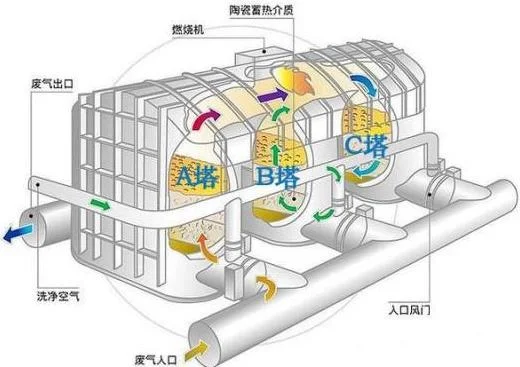
The oxidation powerhouse consists of three independent vertical heat recovery regenerators linked by a common high-temperature combustion chamber lined with 1260°C mullite ceramic fiber modules. High-grade cordierite ceramic honeycomb blocks pack each regenerator, achieving a thermal energy recovery (TER) of 95.2%.
The chamber maintains ≥850°C with residence time ≥1.5 seconds under positive-pressure turbulence, converting remaining combustible gases (CO, H₂, traces of methane, and aromatics) into clean water vapor and carbon dioxide. Pneumatic poppet valves with purge phase prevent unreacted fugitive bypass during switching.
- Pneumatic poppet switching valves with resilient seals guarantee leakage rates < 0.1%.
- Integrated SNCR ammonia injection nozzle ring destroys thermal NO_x within the combustion chamber.
Third-Party Environmental Testing & Verified Stack Results
Third-party environmental audit confirms strict compliance with GB 31572-2015 and Guangdong DB 44/2367-2022 standards.
| Target Pollutant | Raw Pyrolysis Vent Conc. | Measured Stack Emission | Regulatory Limit (GB 31572-2015) | Compliance Status |
|---|---|---|---|---|
| Non-Methane Hydrocarbons (NMHC) | High (> 10,000 mg/m³) | ≤ 15 mg/m³ | ≤ 50 mg/m³ | Verified Pass (70% Margin) |
| Particulate Matter (PM / Soot) | 200 – 800 mg/m³ | ≤ 5 mg/m³ | ≤ 20 mg/m³ | Verified Pass |
| Tar Aerosols & Heavy Pitch Mist | Viscous Mist | ≤ 2 mg/m³ | No Visual Plume | 99.8% Removal |
| Sulfur Dioxide (SO₂) | 40 – 120 mg/m³ | ≤ 10 mg/m³ | ≤ 50 mg/m³ | Verified Pass |
| Nitrogen Oxides (NO_x) | Thermal Combustion | ≤ 50 mg/m³ | ≤ 100 mg/m³ | SNCR De-NOx Pass |
| Overall VOC Destruction Removal (DRE) | Baseline 100% | ≥ 99.5% DRE | ≥ 95.0% | Exceeds Standard |
Equipment Integrated in This Project
Standard environmental engineering products fabricated, delivered, and integrated into the turnkey abatement installation.
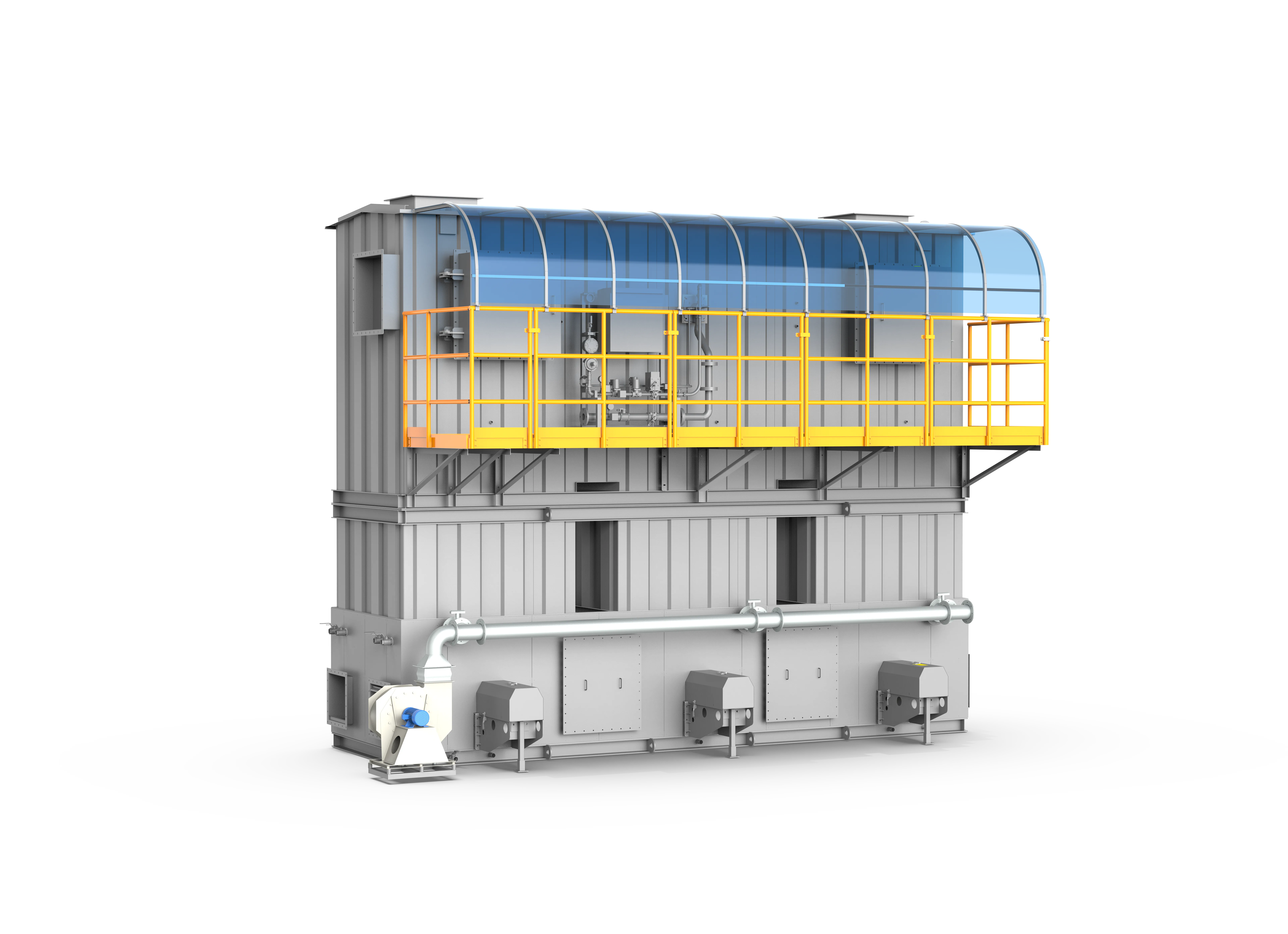
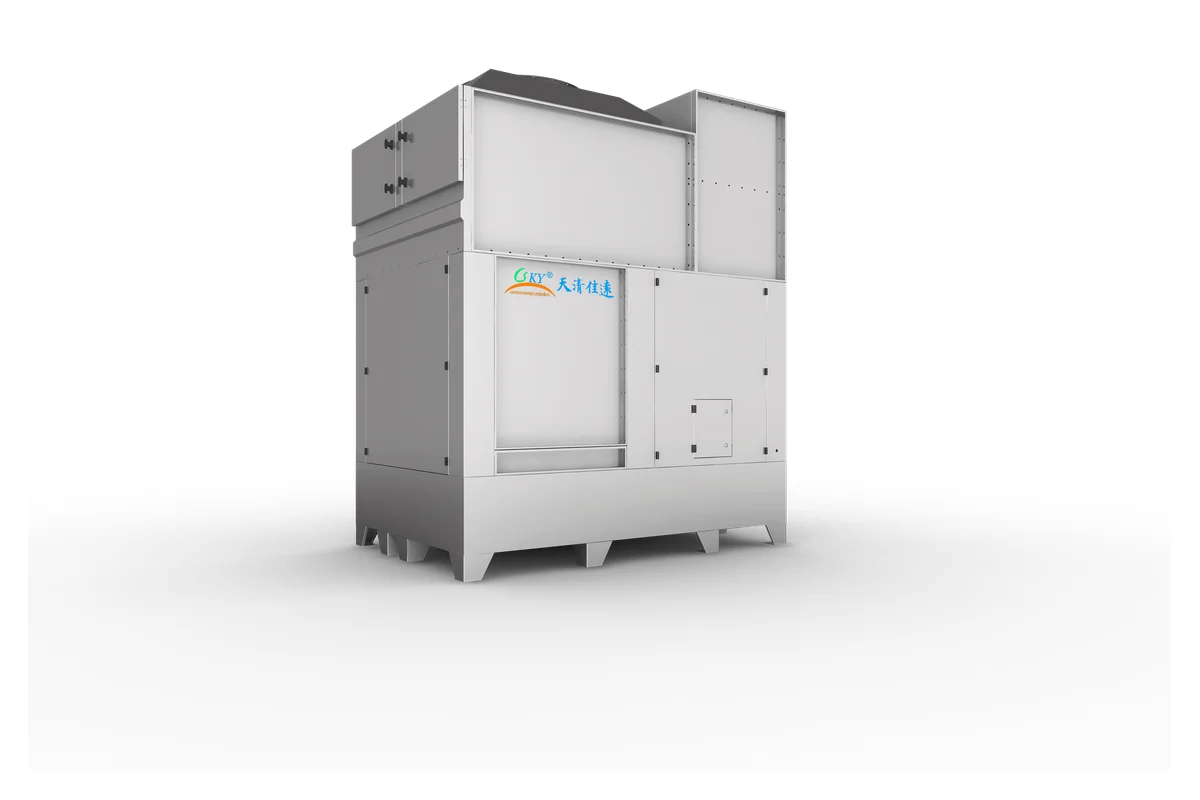
Three-Tower RTO
A premier-grade industrial VOC thermal abatement system that achieves >=99% VOC destruction efficiency and >=95% thermal energy recovery through a classic three-bed alternating heat-exchange and purge process.
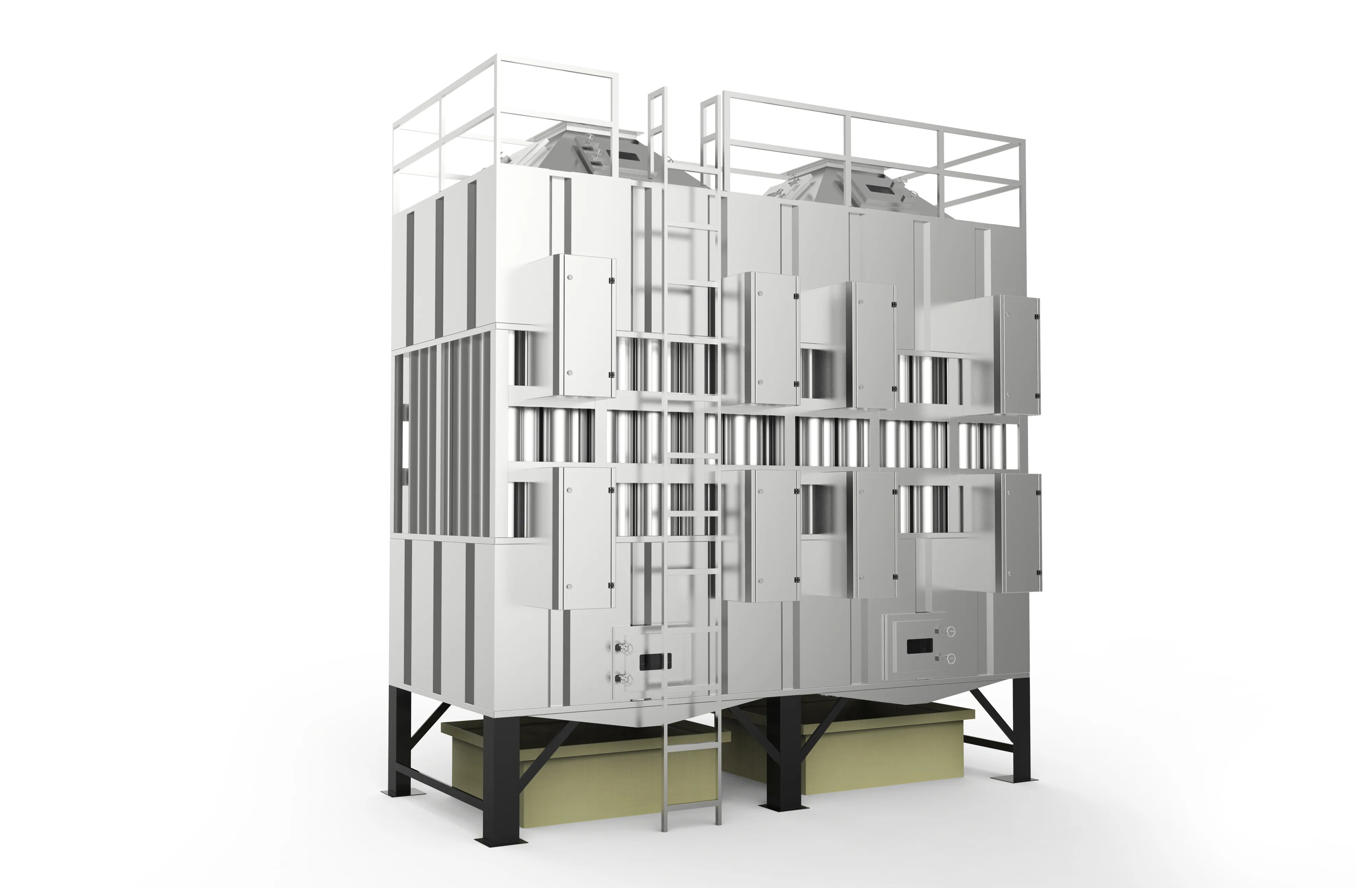
WESP
An elite wet-process electrostatic particulate removal system designed to capture sub-micron particles, PM2.5, acid mists, oil aerosols, and heavy metal condensates, achieving purification efficiencies of >=99% and emission concentrations of <30 mg/m³.
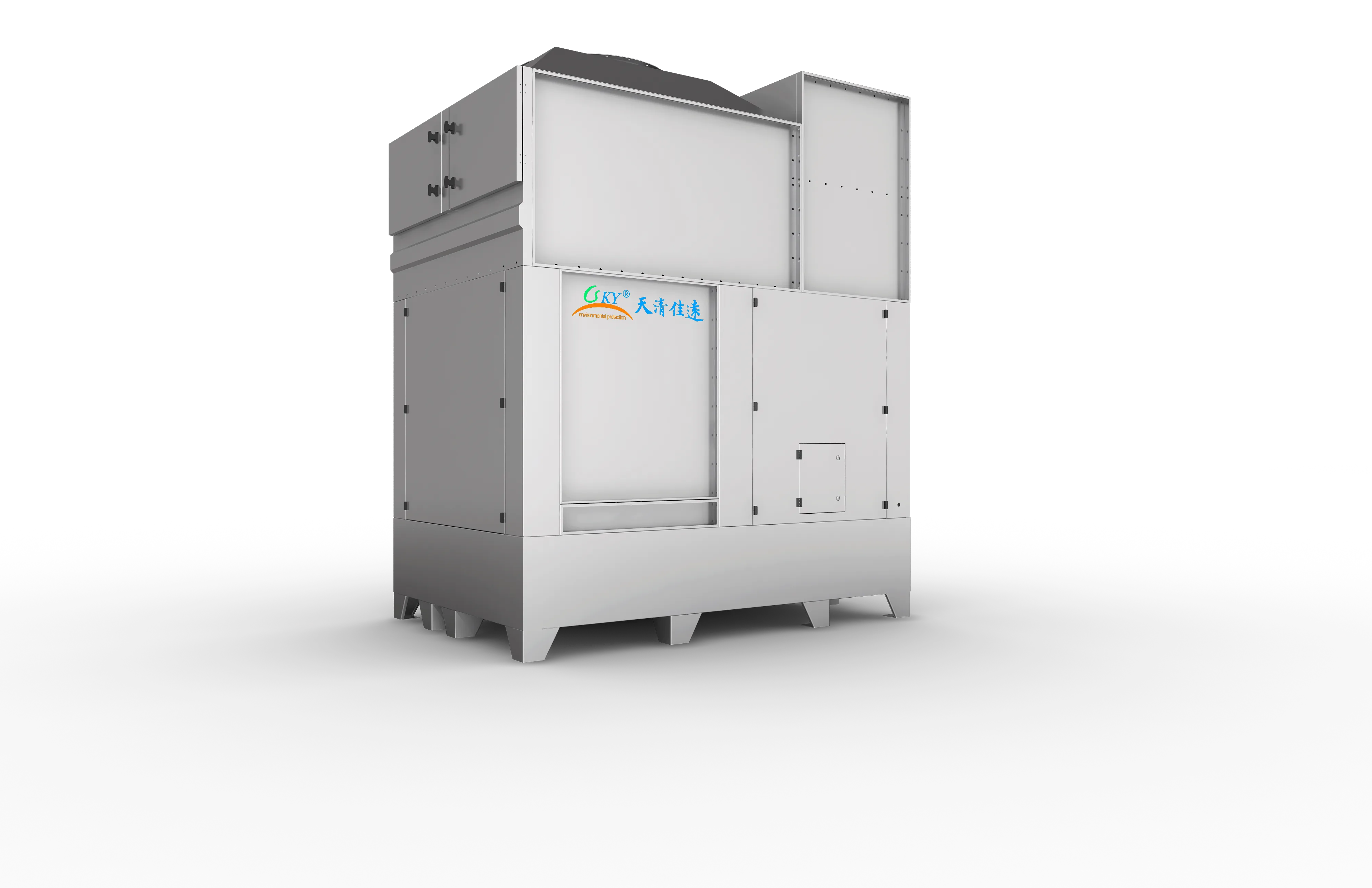
Jet-Mixing Tower
High-energy gas-liquid mixing front-end equipment for flammable, explosive, and dust-heavy pre-treatment.
Facing High-Temperature Pyrolysis, Pitch Tar, or Hazardous Syngas?
FluxFine engineers extreme-service abatement trains integrating sub-second thermal quenching, high-shear jet mixing scrubbers, heavy-duty RTOs, and tail WESP polishing for battery materials and advanced chemical synthesis.