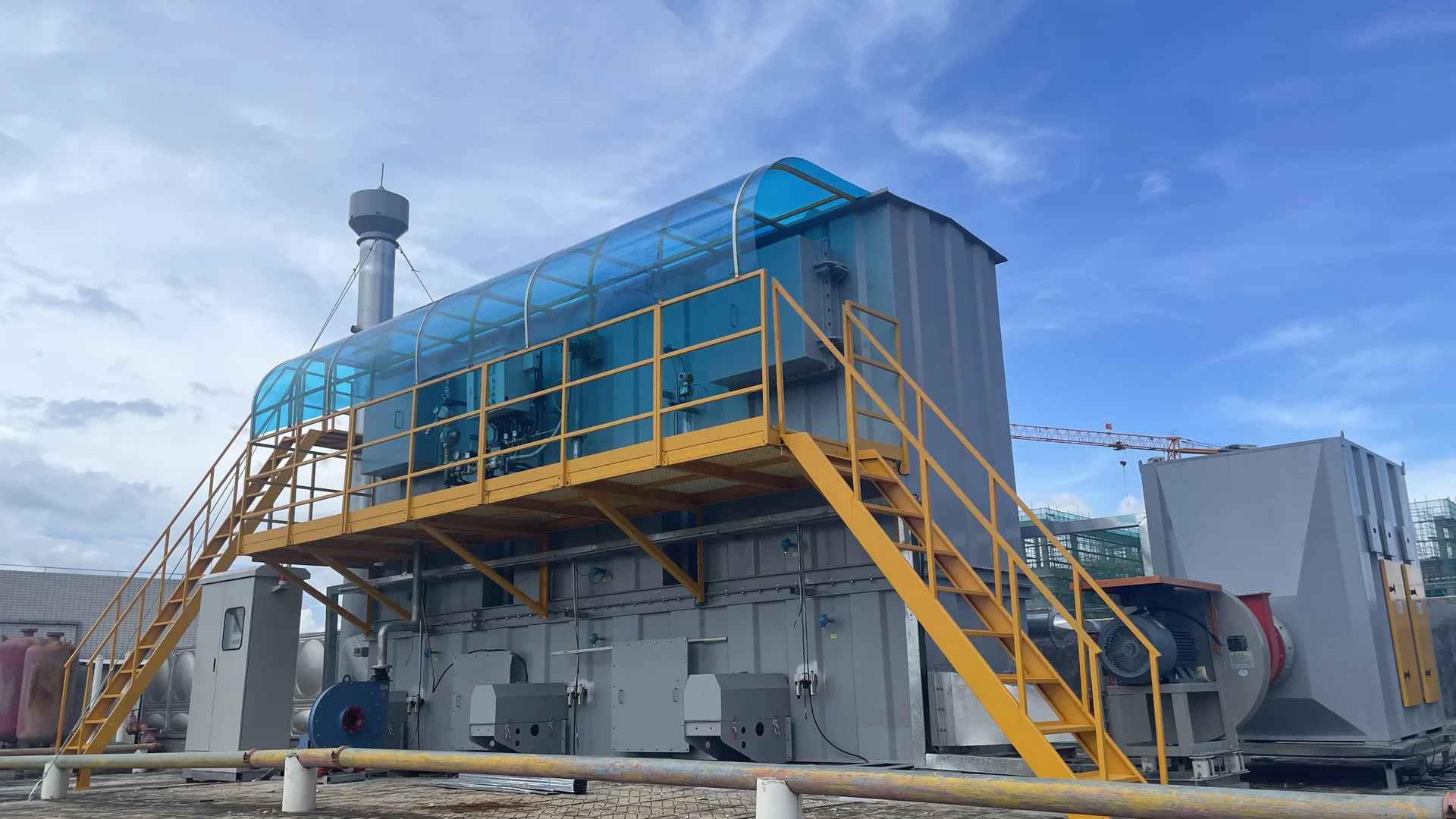
Direct 40,000 m³/h 3-Bed RTO for High-Methanol Printing Exhaust
Turnkey industrial thermal oxidation engineered for Foshan Hefu Xingda Decorative Materials Co., Ltd. Overcoming zeolite adsorption limitations on low-boiling polar alcohols to guarantee ≥99.2% destruction removal efficiency and 100% autothermal operation.
High-Speed Gravure Printing & The High-Methanol Adsorption Dilemma
Foshan Hefu Xingda Decorative Materials Co., Ltd., founded in 2012 in Sanshui District, Foshan, is a specialized manufacturer of high-grade architectural surface materials, decorative papers, and aluminum heat-transfer foils. The facility operates multiple high-speed 7-color gravure presses, automated melamine resin impregnation lines, and specialized ink compounding stations.
To maintain crisp ink resolution and rapid surface cure on high-density paper substrates, the printing inks utilize high ratios of fast-evaporating industrial alcohols and esters. Continuous solvent evaporation across the heated drying tunnels generates a massive volatile organic stream loaded with methanol (45.45% mass fraction), isobutanol (22.73%), and n-butyl acetate (31.82%), with total inlet organic loading reaching 53.7 kg/h.
While conventional VOC abatement for printing presses frequently deploys zeolite rotor concentration combined with catalytic oxidizers, that approach encounters an insurmountable chemical barrier here: methanol possesses a tiny molecular kinetic diameter (<0.38 nm), low boiling point (64.7°C), and strong polarity, yielding negligible adsorption affinity on hydrophobic aluminosilicate zeolite media. Under continuous rotor operation, methanol would immediately bypass unadsorbed into the clean stack, causing immediate regulatory violations under standard GB 41616-2022.

Critical Engineering Constraints
- Methanol Dominance (45.45%): Adsorption methods strictly eliminated; direct thermal oxidation mandatory.
- Thermal Self-Sufficiency: High inlet VOC concentration (1,246–1,343 mg/Nm³) requires precision thermodynamic control to prevent burner fuel burn and media overheating.
- Total Particulate Interception: Paper dust and ink aerosols must be intercepted before the ceramic beds to avoid heat exchanger fouling.
- Stringent Regulatory Standards: Final stack exhaust must strictly comply with national GB 41616-2022 standards.
Operating Baseline & Thermodynamic Balance Matrix
Rigorous engineering mass and energy balances verified during commissioning of the 40,000 Nm³/h RTO train.
| Parameter / Operational Metric | Design Baseline | Measured Operating Range | Engineering Significance |
|---|---|---|---|
| Total Exhaust Treatment Flow | 40,000 Nm³/h | 36,500 – 40,000 Nm³/h | Negative pressure envelope across 7-color gravure presses and ink room. |
| Inlet VOCs Concentration | 1,246 – 1,343 mg/Nm³ | 1,180 – 1,310 mg/Nm³ | Total inlet mass rate of ~53.7 kg/h solvent vapor. |
| Composite Solvent Heat Value | 27,937 kJ/kg | 27,500 – 28,200 kJ/kg | Weighted enthalpy: Methanol (22,566 kJ/kg), Isobutanol (36,043 kJ/kg), Butyl Acetate (29,836 kJ/kg). |
| Combustion Heat Release | 413 kW | 395 – 425 kW | Far exceeds thermal dissipation (98 kW), ensuring permanent autothermal operation. |
| Thermal Energy Recovery (TER) | ≥ 95.0% | 95.2% – 96.1% | High-purity cordierite ceramic honeycomb monoliths minimize stack heat loss. |
| Chamber Operating Temperature | 760°C – 850°C | 810°C – 835°C | Retention time ≥ 1.0 second guaranteeing thorough oxidation to CO₂ and H₂O. |
| Stack NMHC Emission | ≤ 70 mg/Nm³ (GB Limit) | ≤ 18 mg/Nm³ | Continuous online FID emission compliance with 74% regulatory safety margin. |
Technological Architecture & Key Engineering Solutions
Integrated P&ID process flow, multi-stage dry pre-filtration, and heavy-duty 3-Bed RTO oxidation train.
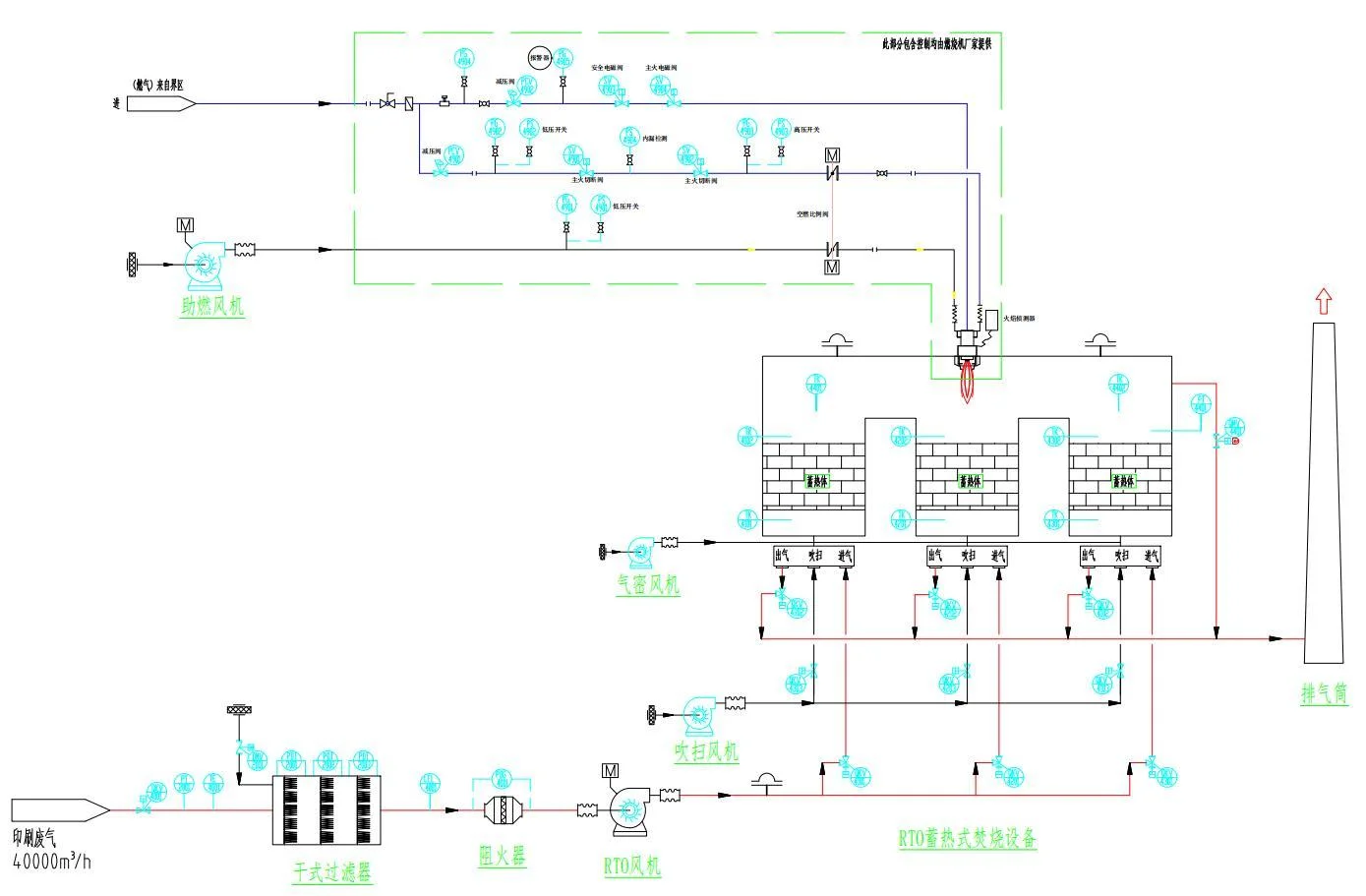
Integrated Continuous Exhaust Flow & Control Train
The entire process flow is engineered for continuous fail-safe automation. Solvent exhaust collected from the gravure drying hoods and ink formulation room passes through a multi-stage dry filter to strip out paper lint and ink mist before entering the main VFD induced-draft fan.
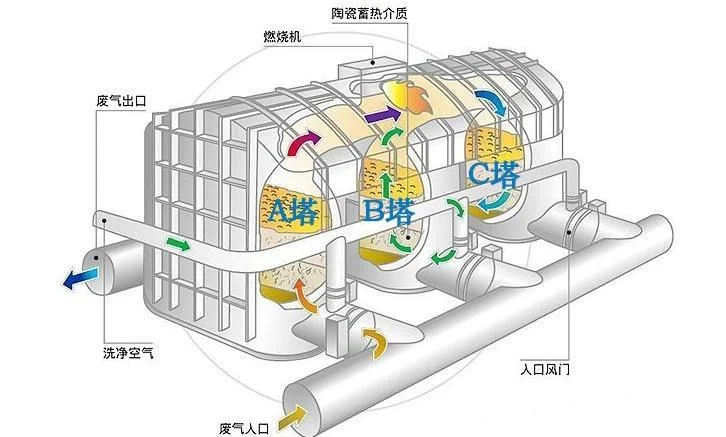
A triple-branch pneumatic poppet manifold cycles the 40,000 Nm³/h process air sequentially through Bed A (inlet preheating), Bed B (purging of residual organics), and Bed C (exhaust heat absorption). Automated hot-gas bypass dampers modulate excess heat directly to the stack when chamber temperatures climb above 850°C, maintaining thermal equilibrium under fluctuating factory batch runs.
- Zero-downtime 3-bed cycle with dedicated purge chamber to eliminate valve switch spikes.
- Automated hot gas bypass protecting ceramic packing from thermal shock and overheating.
Multi-Stage Particulate & Aerosol Interception
Decorative paper gravure printing exhaust contains both micro paper fibers released during continuous unwinding and fine aerosol droplets formed from evaporated solvent mist. Direct entry of these particulates into the 800°C ceramic honeycomb matrix would cause particulate sintering, channel clogging, and catastrophic pressure drops.
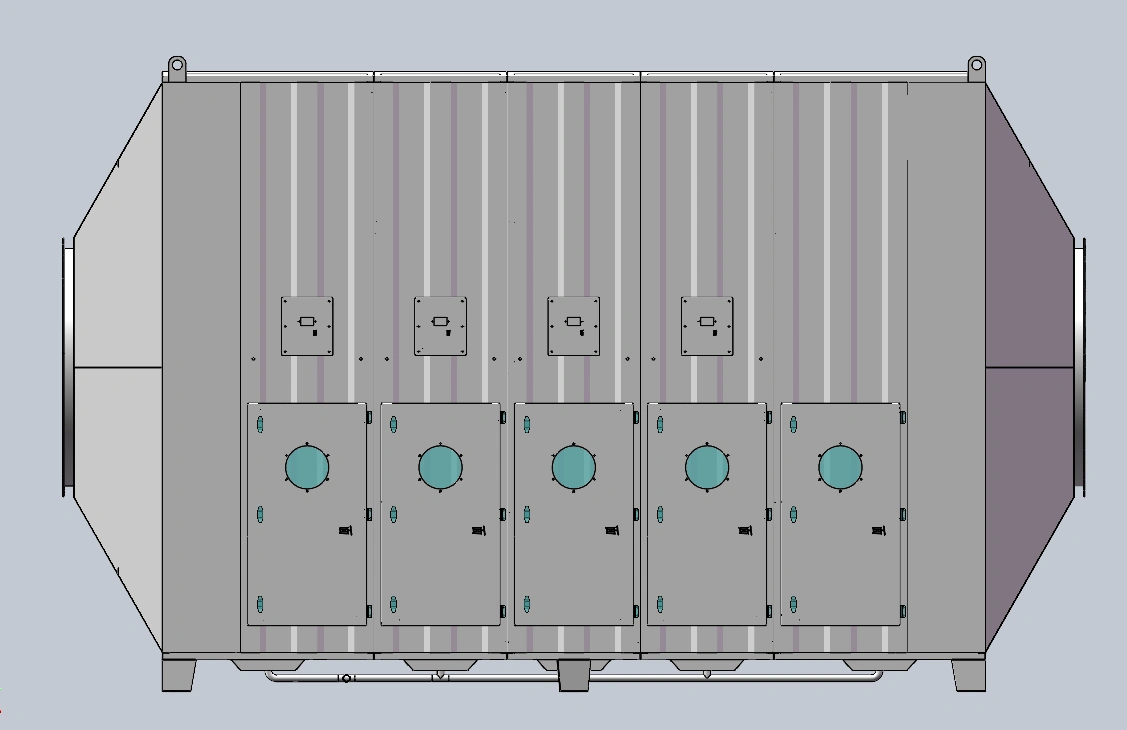
FluxFine integrated a heavy-duty modular dry filtration unit with G4 primary pleated panels followed by F7 high-capacity synthetic pocket filters. Dual differential pressure sensors across each bank continuously feed pressure telemetry to the master PLC, prompting timely filter maintenance before airflow restriction occurs.
- Clean filter initial resistance ≤ 250 Pa; terminal replacement threshold at 600 Pa.
- Modular quick-release clamping frames enable swift filter bag replacement during scheduled shift changeovers.
3-Bed High-Recovery RTO with Zero-Leakage Poppet Valves
The oxidation heart consists of three independent vertical heat recovery beds topped by a common combustion chamber lined with 1260°C mullite ceramic fiber modules. High-grade cordierite honeycomb monoliths pack each bed, achieving a thermal recovery efficiency of 95.0% by absorbing over 95% of thermal energy from the exiting clean stream.
Directional flow switching is actuated by heavy-duty pneumatic poppet valves with double-acting cylinders and precision limit switches. The triple-bed sequence incorporates a dedicated purge phase that exhausts raw unreacted solvent back into the inlet header prior to bed switching, preventing the periodic VOC release pulses inherent to 2-bed systems.
- Pneumatic poppet valves feature dual metallic-elastomer resilient seating with leakage rates < 0.1%.
- Chamber residence time > 1.0 s at 800°C ensures complete thermal oxidation of methanol to CO₂ and water vapor.
Third-Party Environmental Testing & Verified Stack Results
Third-party environmental monitoring confirms full compliance with GB 41616-2022 across all printing shifts.
| Target Pollutant | Inlet Raw Concentration | Measured Stack Emission | Regulatory Limit (GB 41616-2022) | Compliance Status |
|---|---|---|---|---|
| Non-Methane Hydrocarbons (NMHC) | 1,246 – 1,343 mg/Nm³ | ≤ 18 mg/Nm³ | ≤ 70 mg/Nm³ | Verified Pass (74% Margin) |
| Total Benzene Series | 12.5 – 18.0 mg/Nm³ | ≤ 2.2 mg/Nm³ | ≤ 15 mg/Nm³ | Verified Pass |
| Benzene (Individual) | Trace (< 0.5 mg/Nm³) | Non-Detected (< 0.1 mg/Nm³) | ≤ 1 mg/Nm³ | Verified Pass |
| Particulate Matter (PM) | 35 – 55 mg/Nm³ | ≤ 5 mg/Nm³ | ≤ 30 mg/Nm³ | Verified Pass |
| Overall VOC Destruction Removal (DRE) | Baseline 100% | ≥ 99.2% DRE | ≥ 90.0% | Exceeds Standard |
Equipment Integrated in This Project
Core engineering units fabricated, delivered, and integrated into the turnkey abatement installation.
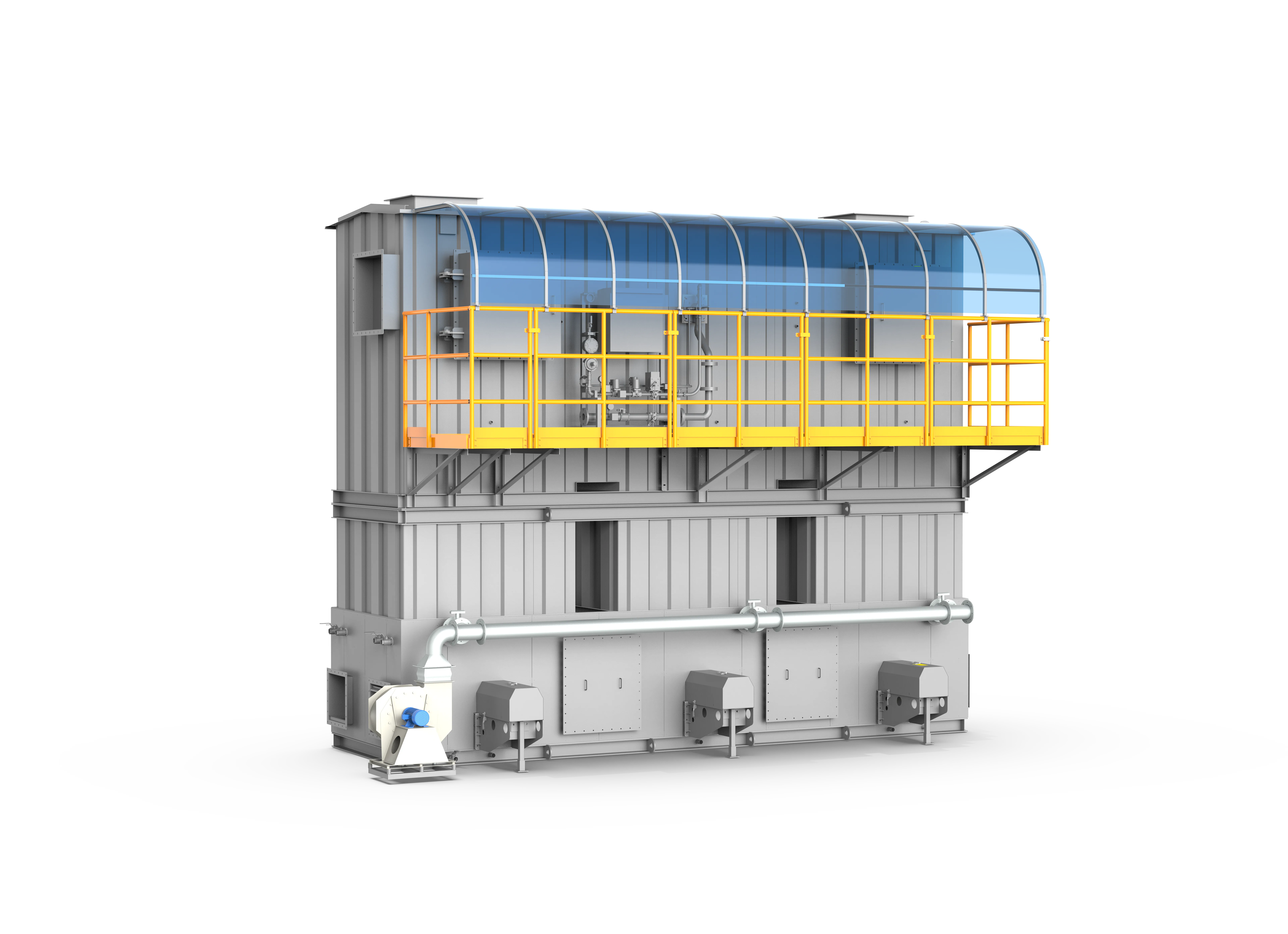
Three-Tower RTO
A premier-grade industrial VOC thermal abatement system that achieves >=99% VOC destruction efficiency and >=95% thermal energy recovery through a classic three-bed alternating heat-exchange and purge process.
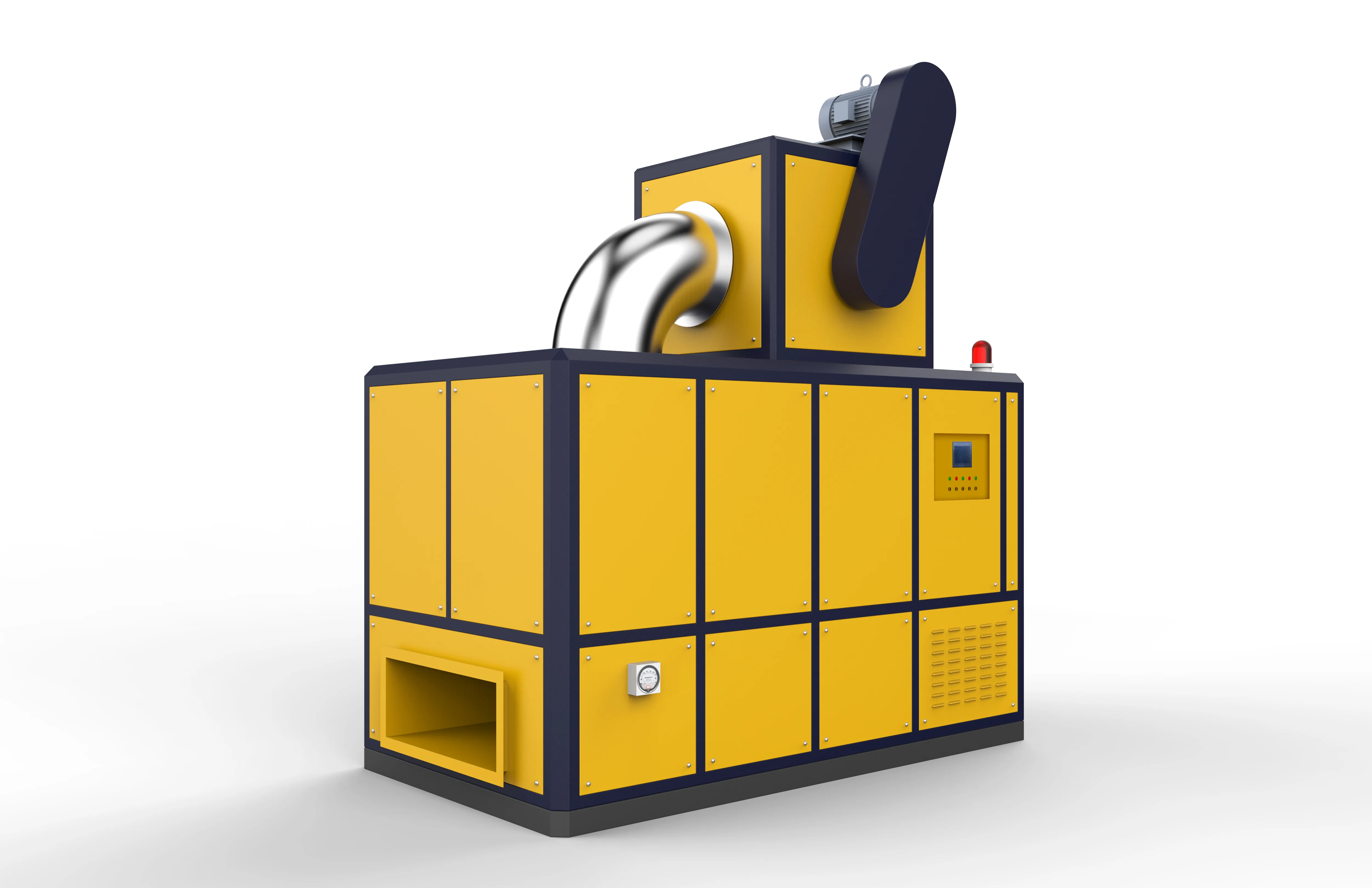
304 Stainless Air Duct
High-quality 304 stainless steel welded air ducts with anti-corrosion coatings, sized 80-2000mm.
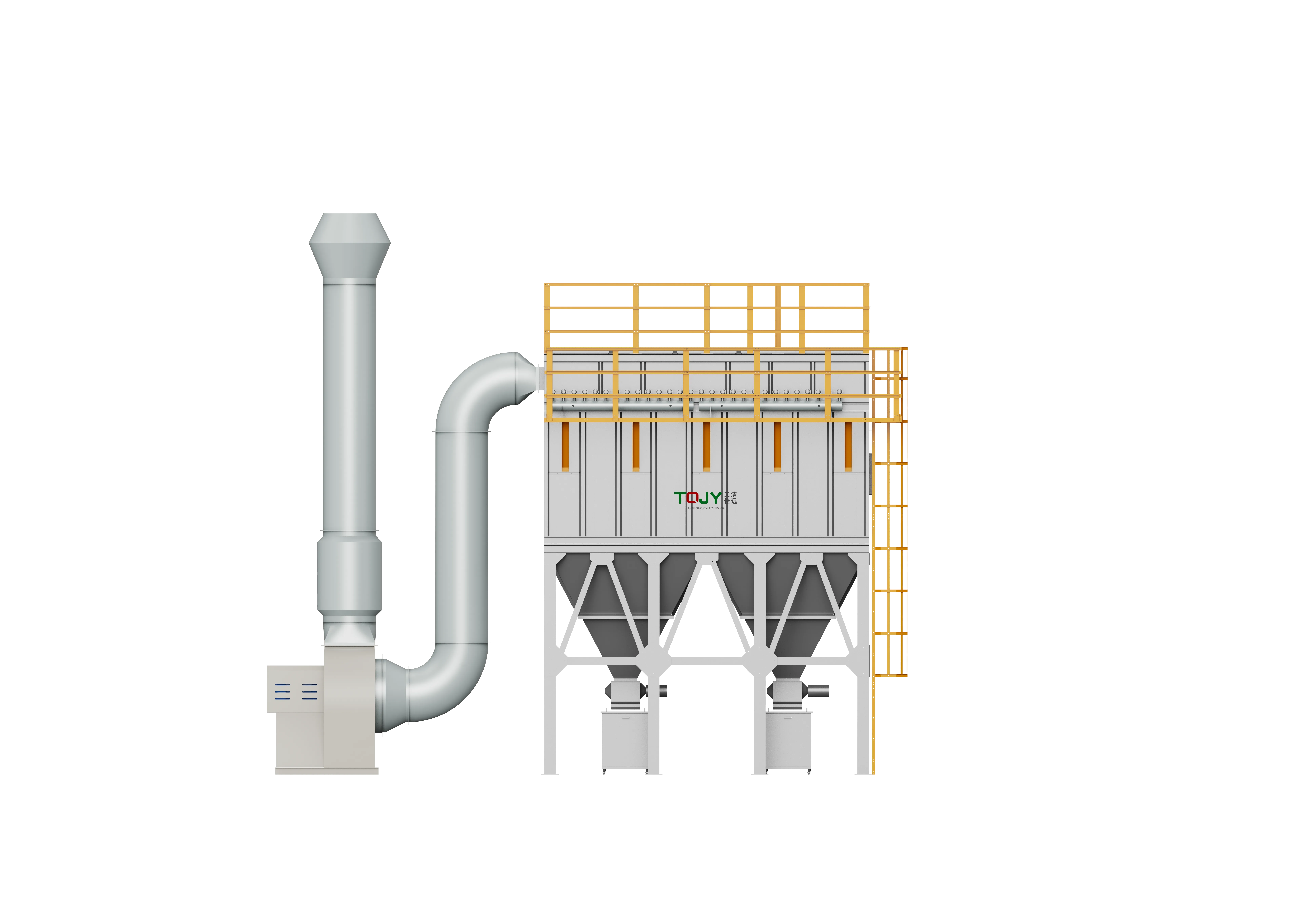
304 SS Pulse Baghouse
High-capacity 304 stainless steel pulse-jet baghouse for >99% efficiency dry dust collection.
Facing High-Solvent or Complex Printing Exhaust Challenges?
FluxFine provides complete process diagnostics, custom thermodynamic heat balance modeling, and turnkey 3-Bed RTO installations with guaranteed regulatory compliance and autothermal efficiency.