Engineering a 15,000 m³/h Multi-Stage VOC & Odor Control System
Shunde DJI Innovation Technology Co., Ltd. | UAV Testing & Drone Aging Facility
Corrosive Vapors, Drone Chemicals & Strict Odor Limits — Solved in One Train
When Shunde DJI Innovation Technology Co., Ltd. expanded its advanced testing facility in Beijiao Town, Foshan, five distinct emission zones — aging rooms, spray-testing workshops, an environment simulation zone, and a battery/pesticide soaking area — produced a complex mixture of low-concentration VOCs, acidic vapors, moisture-laden aerosols, and intense pesticide odors.
FluxFine designed and commissioned a hybrid physical-chemical treatment train rated at a continuous 15,000 m³/h. The system pairs anactive-dosing PP wet chemical scrubber with a two-stage coalescing dry filter box and dual-stage SUS304 granular activated carbon (GAC) adsorbers.
The result: >=90% odor removal at the scrubber stage, >=80% deep VOC polishing at the carbon beds, and an engineered carbon replacement cycle of 140 days — far exceeding Guangdong's 90-day regulatory mandate.
Five Emission Zones. Corrosive Aerosols. Ultra-Strict Odor Boundaries.
The Shunde DJI facility operates five distinct emission sources that discharge simultaneously during different testing shifts, creating a highly variable and chemically aggressive exhaust mixture.
- Multi-Source Collection Complexity: Five zones — Aging Room ① (3,402 m³/h), Aging Room ② (2,457 m³/h), Spray Testing Workshop (3,024 m³/h), Environment Zone (4,158 m³/h), and Battery/Pesticide Soaking Area (819 m³/h) — must be integrated into a single treatment train.
- High Humidity & Chemical Attack: Pesticide spraying and wet aging zones generate highly corrosive, moist aerosols. Unprotected activated carbon beds will rapidly lose adsorption capacity through pore-blocking by water vapor and sticky aerosols.
- Ultra-Strict Perimeter Odor Sensitivity & Limits: Beijiao Town is a dense corporate-residential tech hub. Odor concentration must be held to < 2,000 (dimensionless, GB14554-93), while NMHC outlet must stay below 80 mg/m³ (DB44/2367-2022).
- Complex Pollutant Spectrum: The gas stream simultaneously contains low-concentration VOCs from pesticide formulation (esters, ketones), ammonia, H₂S and sulfides from soaking operations, plus fine particulates from spray-testing equipment.
Rooftop duct collection network — integrating five emission zones into a single treatment train
Process Flow & Treatment Architecture
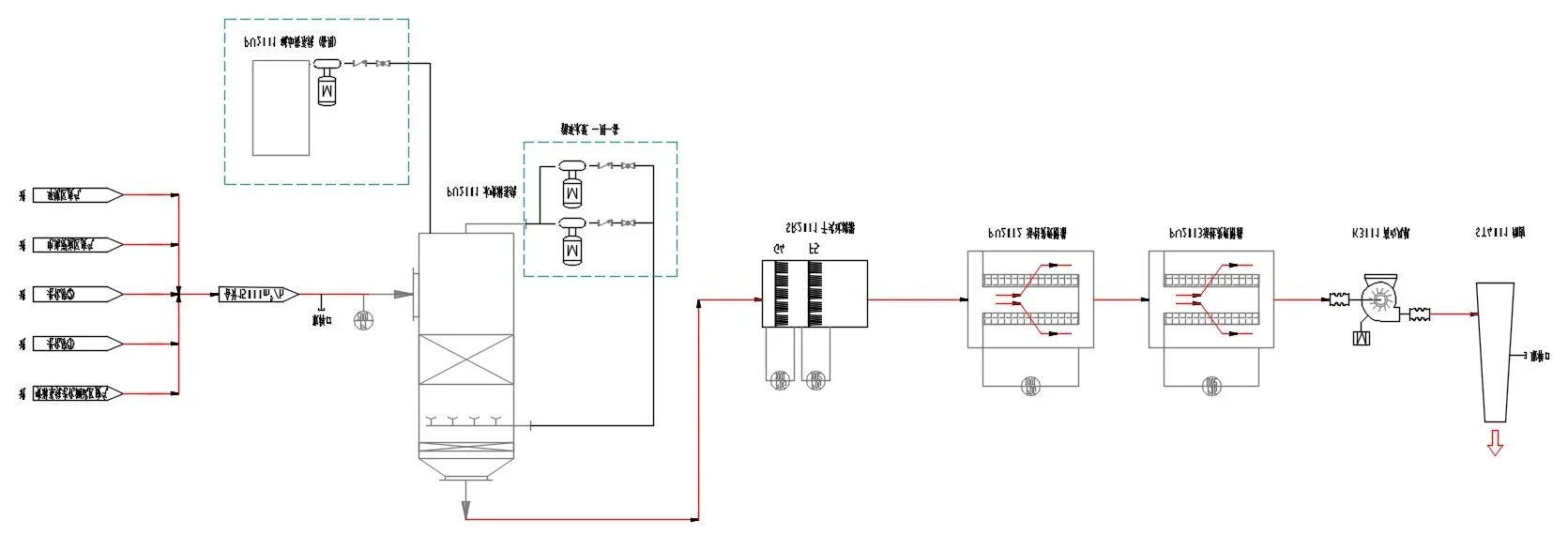
A hybrid Chemical Absorption + Pre-Coalescence + Deep Adsorption architecture engineered for maximum lifecycle cost efficiency and treatment reliability.
Gas Collection & Blending
High-efficiency exhaust hoods capture fumes at each of the five source zones. Airflows integrate via a PP main duct (DN600, 6.0 mm wall) running to the building rooftop.
Wet Chemical Scrubbing
Gas enters the FluxFine PP spray tower (Ø 1.8 m). Counter-current wash with active chemical dosing (oxidants/neutralizers) captures acid gases, ammonia, H₂S and dissolves pesticide odors at ≥90% efficiency.
Two-Stage Coalescing Filtration
Pre-treated gas passes through the FluxFine dry filter box (G4 pre-filter + F5 coalescing bag). Water droplets and sub-micron aerosols are removed, protecting carbon beds from liquid fouling.
Dual-Stage GAC Deep Adsorption
Clean gas enters twin FluxFine SUS304 carbon adsorbers (5.76 m³ total, iodine value ≥650 mg/g). Organic molecules are physically trapped, yielding NMHC < 80 mg/m³ at the exhaust stack.
Three Layers of Engineering Excellence
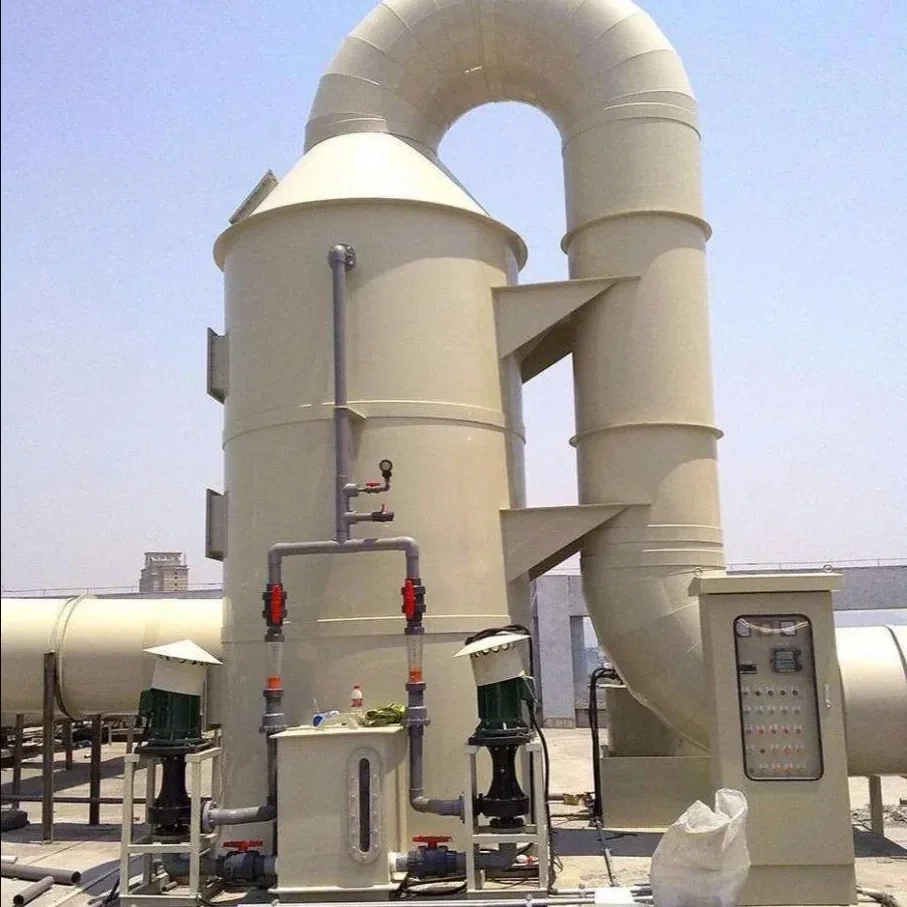
Counter-Current PP Spray Tower with Active Chemical Dosing
The FluxFine PP spray tower is sized at 1.8 m diameter with an empty-tower air velocity of1.6 m/s — providing extended gas-liquid residence time to ensure absorption of pesticide aerosols and acid vapor. PP hollow-ball packing maximizes contact area.
- Integrated Dosing Skid: pH-adjusted washing with chlorine dioxide or hydrogen peroxide converts ammonia and sulfides into water-soluble salts.
- Heavy-Duty FR-PP Build: 10 mm flame-retardant PP boards with >=3 internal structural columns for full outdoor wind-load rigidity.
- >=90% Odor Removal: Active dosing neutralizes agricultural odors at the first stage, protecting downstream carbon beds from rapid saturation.
Dual-Stage Coalescing Box with Dwyer Pressure Interlocks
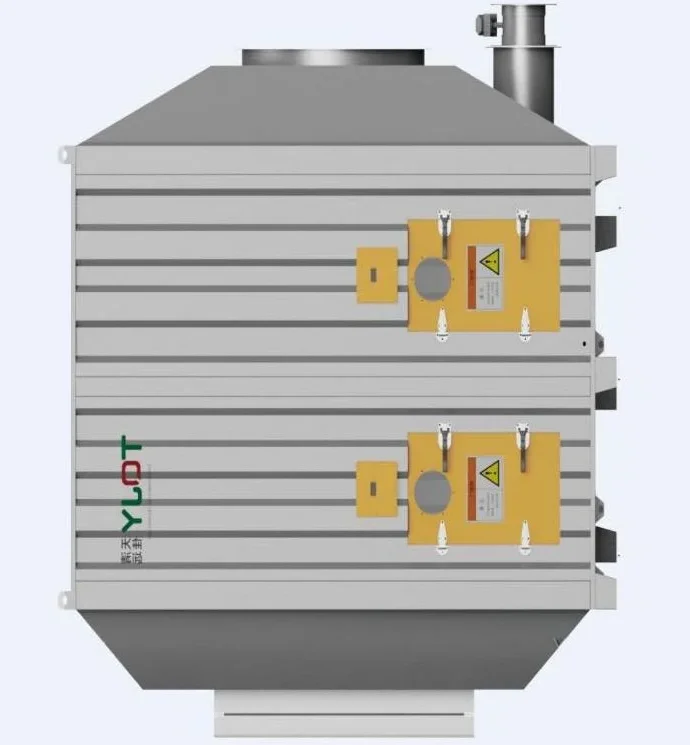
The FluxFine filter box creates a dual moisture barrier before the carbon beds, eliminating the primary cause of premature carbon deactivation in high-humidity environments.
| Stage | Media | Function |
|---|---|---|
| G4 Primary | Synthetic pocket bags | Capture dust fibers & coarse aerosols |
| F5 Coalescing | Synthetic bag filters | Coalesce moisture droplets & sticky aerosols |
Twin Dwyer SUS304 differential pressure transmitters (±1,000 Pa / ±4.0 in. w.g., 4–20 mA) alarm the Siemens PLC when filter resistance exceeds 350 Pa (1.4 in. w.g.) — triggering a filter-change alert before any breakthrough occurs.
SUS304 Drawer-Type GAC Adsorbers — Engineered for 140-Day Life
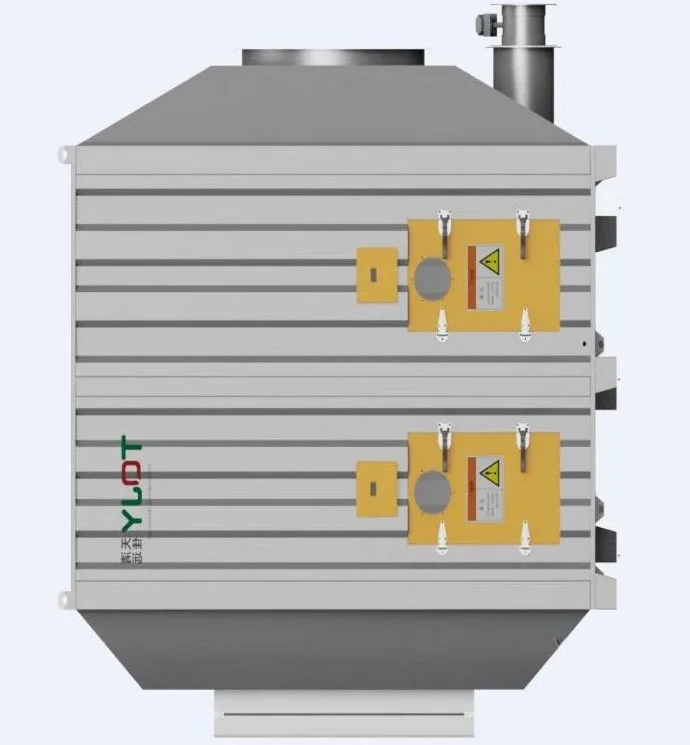
Two FluxFine SUS304 stainless steel adsorbers (1,600 × 2,250 × 2,280 mm each) are loaded with coal-based GAC at iodine value >=650 mg/g. The drawer-type internal structure enables carbon changeouts without heavy machinery or system downtime.
Carbon Lifespan Formula
T = (M × s × 10⁶) ÷ (c × Q × t)
M = 2,016 kg · s = 15% · c = 6.0 mg/m³ · Q = 15,000 m³/h · t = 24 h/d
T = 140 Days
Exceeds the Guangdong regulatory 90-day minimum by 56%, reducing annual carbon changeout labour from 4 cycles to just 2–3 — a significant OPEX saving for continuous 24/7 operations.
Mass Balance & Compliance Data
Calculated design parameters under full-load 15,000 m³/h continuous operation.
| Parameter | Unit | Value | Notes |
|---|---|---|---|
| Total System Design Airflow | m³/h | 15,000 | Rounded from 13,860 m³/h raw sum |
| Pesticide VOC Emission Rate | kg/h | 0.10 | Raw inlet from pesticide formulation zone |
| VOC Collection Efficiency (hoods) | % | 90.0 | Via localised exhaust hoods |
| Peak Inlet VOC Concentration | mg/m³ | 6.0 | Calculated peak mass flux at scrubber inlet |
| Scrubber Odor Removal Efficiency | % | ≥90.0 | PP wet chemical spray tower |
| GAC Deep Adsorption Efficiency | % | ≥80.0 | Dual-stage activated carbon beds |
| Exhaust NMHC Concentration | mg/m³ | <80.0 | Guangdong DB44/2367-2022 compliant |
| Exhaust Odor Concentration | — | <2,000 | GB14554-93 fully compliant |
| Engineered Carbon Replacement Cycle | days | 140 | Exceeds 90-day regulatory mandate by 56% |
Energy-Optimized Aerodynamic Performance
Based on 300 operating days per year at continuous 24-hour manufacturing operation. The system's Inovance VFD-controlled fan operates at 70% load (15.4 kW actual draw), dynamically modulating draft based on differential pressure across the adsorption beds. This active aerodynamic trim substantially reduces power demand compared to fixed-speed ventilation while guaranteeing positive containment at all pick-up hoods.
140-Day Continuous Service
Extended Breakthrough Cycle (+56% vs. 90-Day Regulatory Norm)
The upstream PP spray scrubber and two-stage G4/F5 dry demister box strip over 95% of particulates and aerosol droplets, eliminating surface blinding and moisture saturation on the activated carbon bed.
Multi-Stage Process Protection Architecture
Three-Layer Engineering Safety System
To safeguard DJI's high-value test equipment and comply with GMP-equivalent quality standards in an electronics manufacturing environment, the system incorporates three integrated safety layers.
- Siemens PLC Fully Interlocked Control
Centralised Siemens PLC cabinet with 14-inch Kunlun Tongtai HMI integrates fan VFD status, spray pump control, Dwyer differential pressure sensors, and real-time alarm logging.
- Anti-Corrosion & Anti-Static Grounding
PP and SUS304 construction eliminates rust and chemical corrosion. Heavy copper grounding straps (<4 Ω resistance) connect all ductwork and equipment frames to isolate electrostatic discharge hazards from solvent-laden airstreams.
- VFD Soft-Start & Dry-Running Protection
Inovance VFD soft-starts on the 22 kW fan prevent pressure shock in the PP ductwork. The spray tower pump is protected by liquid level switches that cut power on dry-running condition, preventing pump cavitation and thermal failure.
Equipment in This Project
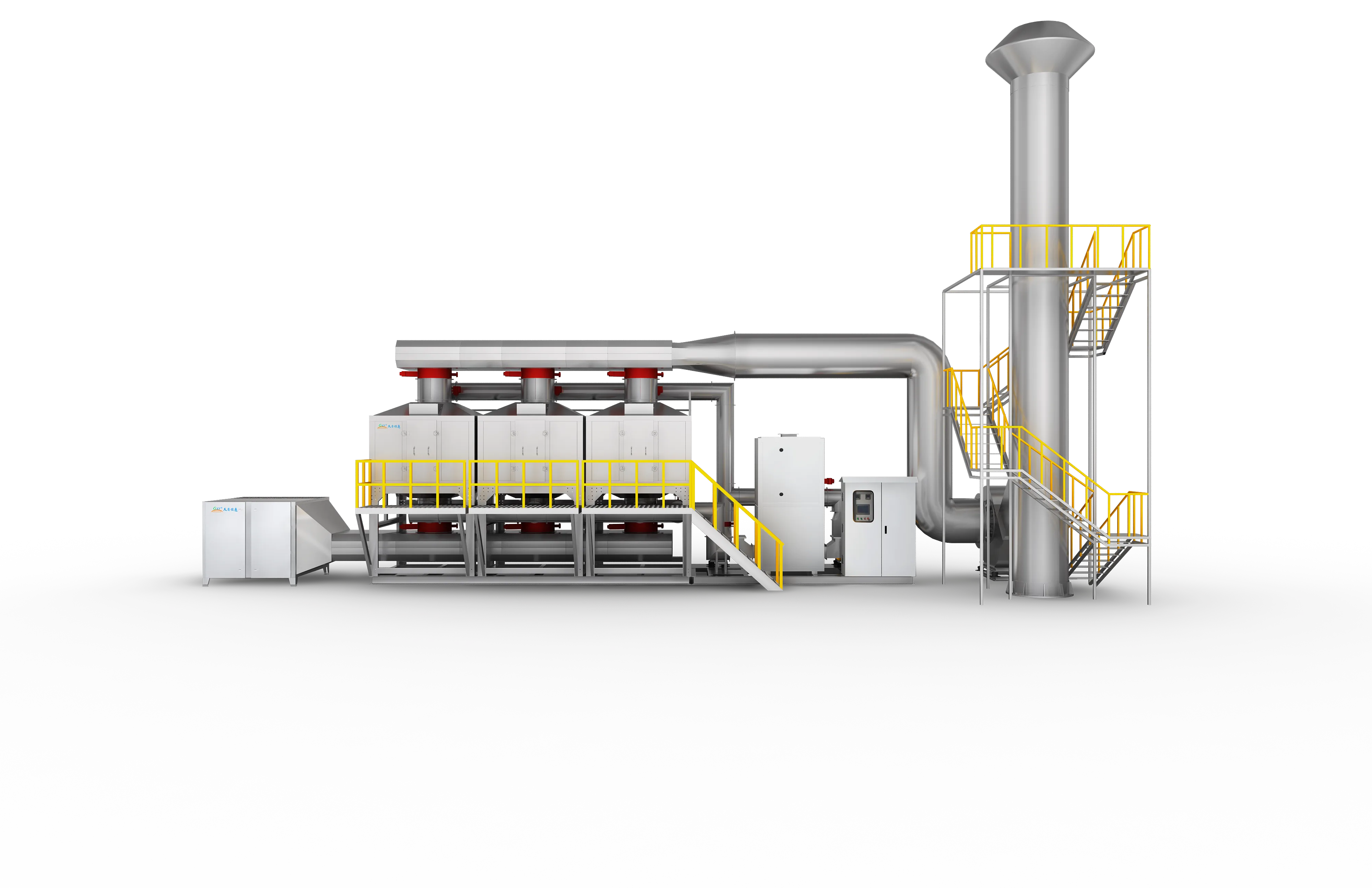
Carbon + CO
An exceptionally economical VOC abatement package integrating multi-bed activated carbon adsorption with hot-air thermal regeneration and low-temperature catalytic oxidation (CO) for small-scale, intermittent emissions.
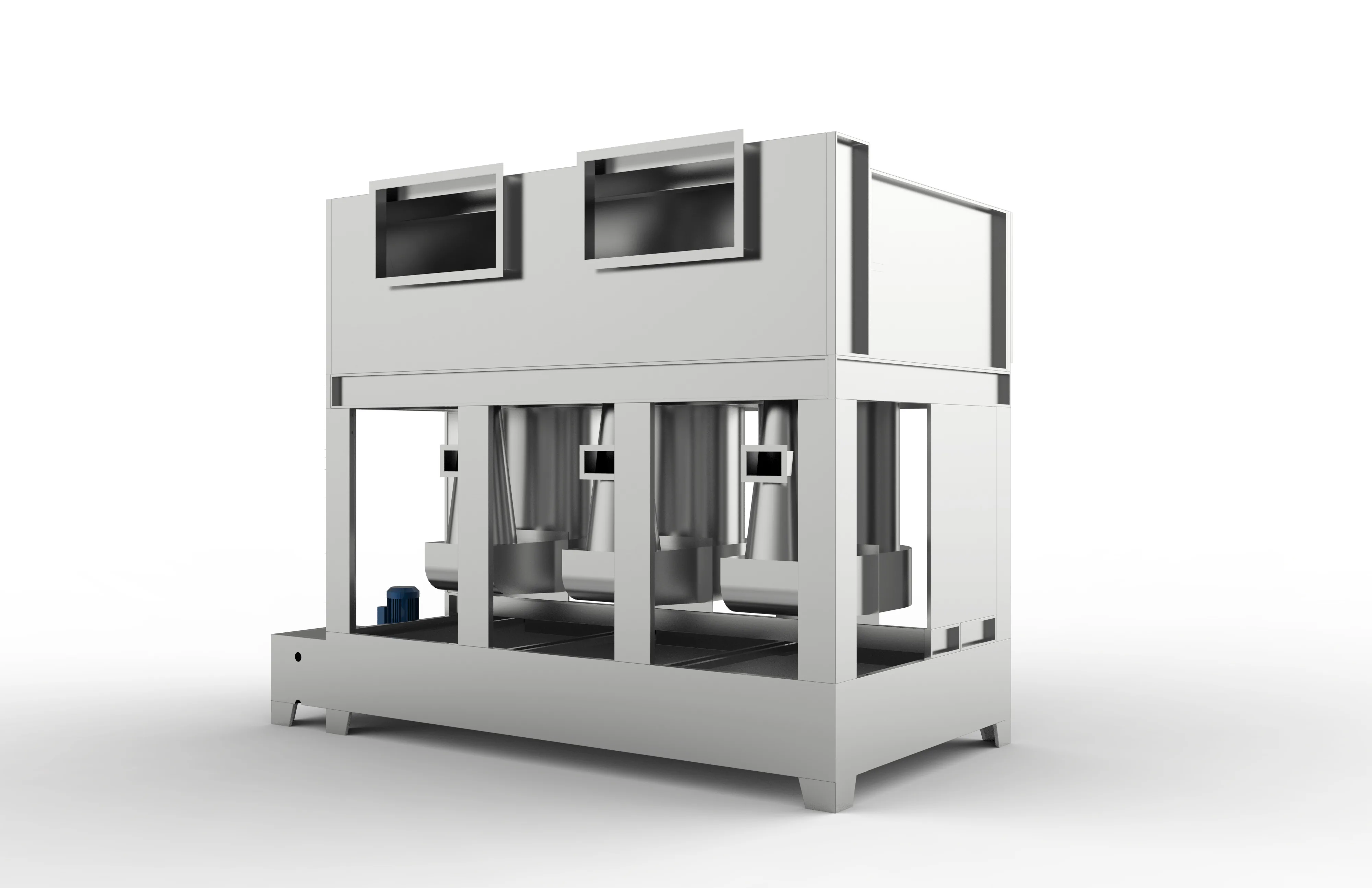
Spray Tower
Custom-built packed spray towers in PP or 304 SS for neutralizing acidic, alkaline, and water-soluble waste gases.
Multi-Source VOC & Odor Control for Your Facility
The Shunde DJI project is a reference case for managing diverse, low-concentration, chemically complex exhaust streams in high-tech manufacturing environments. Send your airflow volumes, pollutant species, and site constraints for an engineering review.