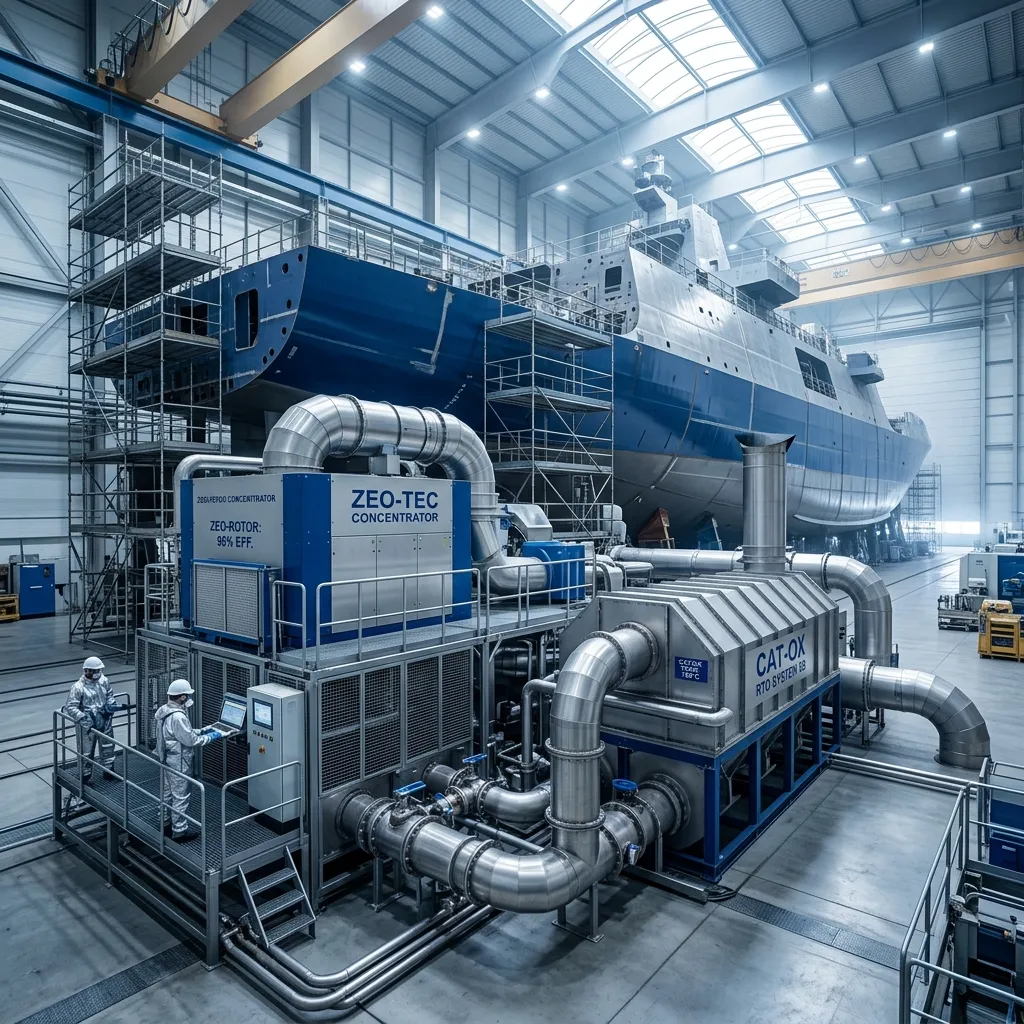
High-Efficiency VOC Abatement for Shipbuilding Paint Facilities
Vietnam Shipyard | Global EPC Delivery & International Compliance (CE/ISO)
Smart Volume Reduction for Heavy Industrial Painting Emissions
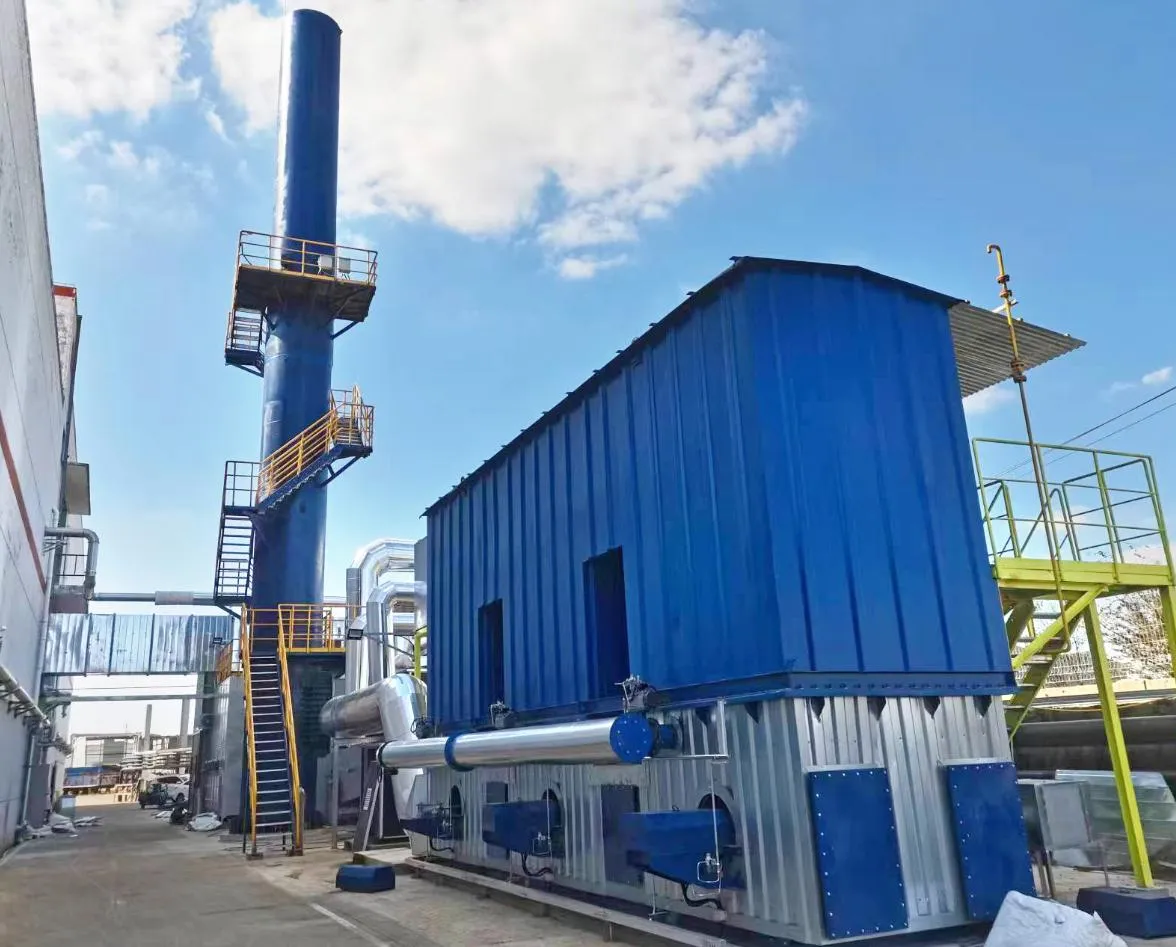
In the shipbuilding industry, large-scale block construction and painting processes generate massive amounts of Volatile Organic Compounds (VOCs) and sticky paint mist. To meet stringent international environmental regulations and ensure occupational safety, a major shipyard in Vietnam partnered with FluxFine for a turnkey VOC abatement solution.
By implementing an innovative 70% exhaust air recirculation strategy, the system reduces the effective treatment volume from 100,800 m³/h down to a highly concentrated 35,000 m³/h. This significantly lowers capital expenditure (CAPEX) and operating expenses (OPEX).
The integrated Cylindrical Zeolite Concentrator and Catalytic Oxidation (CO) system achieves a VOC destruction efficiency of over 99%, successfully bringing stack emissions down to 15.8 mg/m³ — well below the strict 20 mg/m³ limit.
High Volume, Variable Concentration, and Sticky Paint Mist
Shipyard painting facilities are incredibly challenging environments. Directly treating 100,800 m³/h of exhaust would incur prohibitive capital and operating expenses.
- Massive Air Exchange Rates: Painting large ship segments requires enormous ventilation to protect worker health, resulting in exhaust streams exceeding 100,000 m³/h.
- Complex and Sticky Pollutants: Exhaust from epoxy and polyurethane paints contains high levels of sticky paint mist (particulates) and complex organic solvents like toluene, xylene, and butanol.
- Variable Operating Conditions: The facility alternates between spraying phases (high airflow, moderate VOCs) and curing phases (lower airflow, different VOC profile), demanding an adaptable solution.
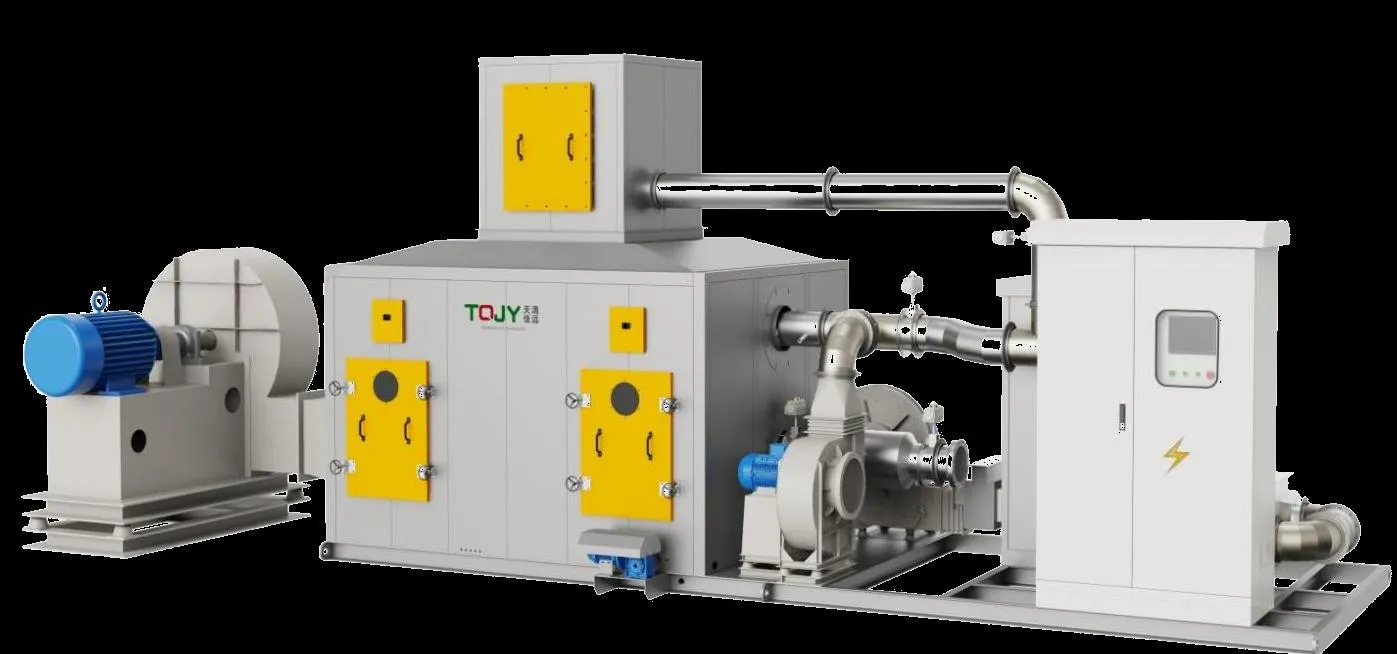
3D visualization of the integrated Zeolite Concentrator and Catalytic Oxidation train
Smart Volume Reduction & Multi-Stage Abatement
An intelligent 70% recirculation loop slashes treatment volume, feeding into a rigorous multi-stage filtration and concentration process.
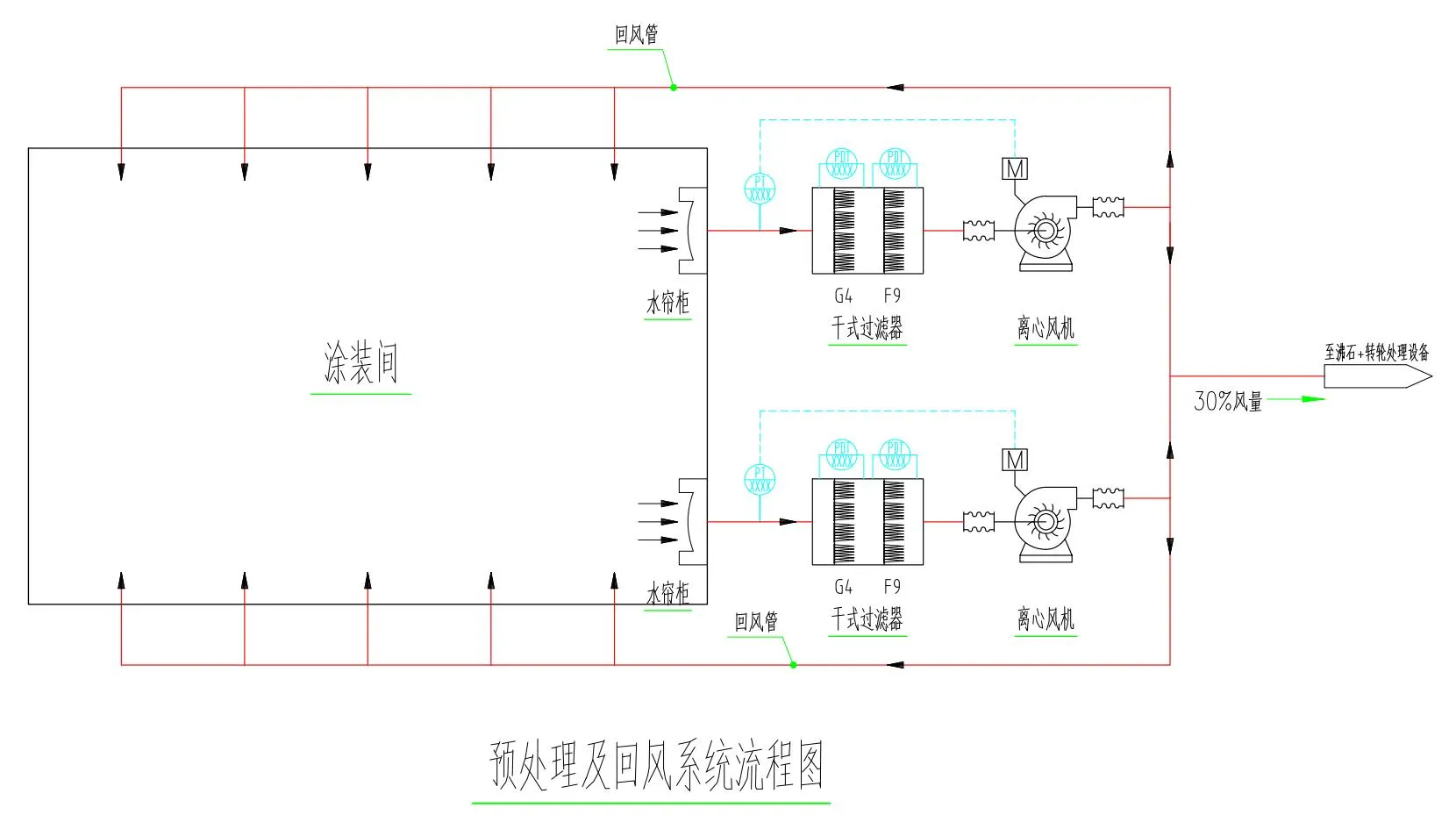
70% Recirculation Loop
Exhaust air (100,800 m³/h) passes through a water wash cabin and two-stage dry filter. 70% of this pre-treated air is recirculated, leaving only 35,000 m³/h of enriched exhaust for deep treatment.
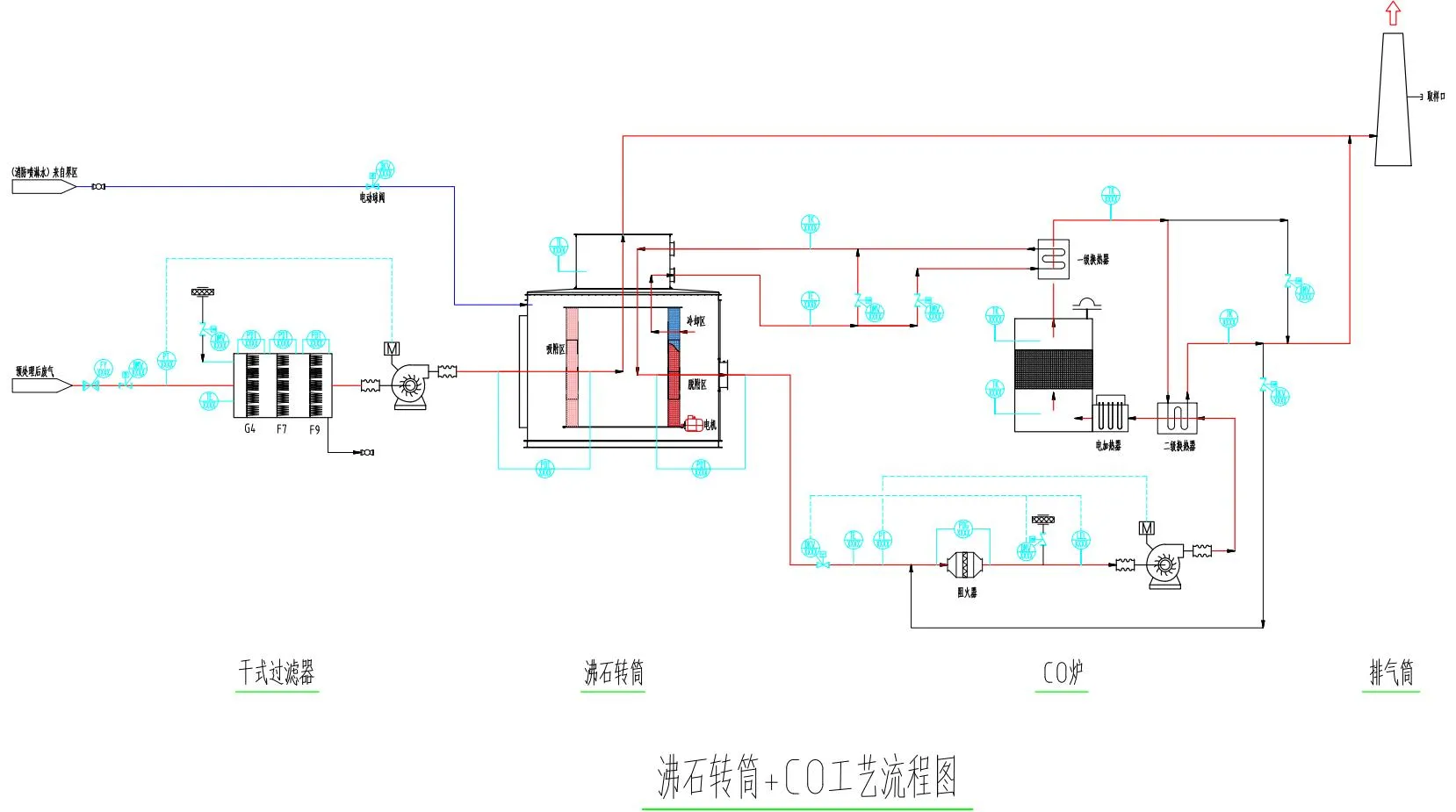
Multi-Stage Dry Filtration
The 35,000 m³/h stream passes through rigorous G4, F7, and F9 dry filters. This reduces fine particulate matter to ≤ 5 mg/m³, preventing sticky paint mist from blocking zeolite pores.
Cylindrical Zeolite Concentrator
Hydrophobic zeolite molecular sieves adsorb VOCs with ≥98% efficiency. A small hot air stream (220°C) continuously desorbs the VOCs, concentrating the volume down to 4,000 m³/h.
Catalytic Oxidation (CO)
The concentrated, 4,907 mg/m³ stream enters the CO reactor. Precious metal catalysts oxidize VOCs at 250-300°C into harmless CO₂ and H₂O with ≥99% destruction efficiency.
Built for Heavy-Duty Shipyard Operations
Modular Cylindrical Zeolite Rotor
Unlike traditional disc-type rotors that require entire unit replacement upon failure, FluxFine utilizes a modular cylindrical architecture.
- Targeted Maintenance: Individual zeolite modules can be replaced independently if degraded by high-boiling-point organics, drastically cutting long-term maintenance costs.
- Dynamic Seal Integrity: Seals are mounted on the rotating cylinder itself, experiencing high temperatures only during the brief desorption phase, thereby significantly extending seal lifespan.
Self-Sustaining Thermal Balance (Zero-Fuel Operation)
During the primary spraying phase, the concentrated VOC stream (4,907 mg/m³) generates approximately 216 kW of thermal energy upon oxidation.
This exothermic heat is captured by an integrated 304 stainless steel heat exchanger (≥70% efficiency). It sustains the catalytic oxidation reaction and provides the 220°C hot air required for continuous zeolite desorption. The system operates in complete thermal equilibrium without consuming external electrical heating, minimizing OPEX.
Mass Balance & Compliance Data
Calculated design parameters comparing Spraying vs. Curing phases.
| Parameter | Unit | Spraying Phase | Curing Phase |
|---|---|---|---|
| System Inlet Airflow | m³/h | 35,000 | 11,000 |
| Average Inlet VOC Concentration | mg/m³ | 571 | 292 |
| Zeolite Adsorption Efficiency | % | ≥ 98.0 | ≥ 98.0 |
| CO System Airflow (Concentrated) | m³/h | 4,000 | 1,500 |
| CO Inlet VOC Concentration | mg/m³ | 4,907 | 2,104 |
| CO Destruction Efficiency | % | ≥ 99.0 | ≥ 99.0 |
| Final Stack Emission Concentration | mg/m³ | 15.8 | 8.0 |
Equipment in This Project
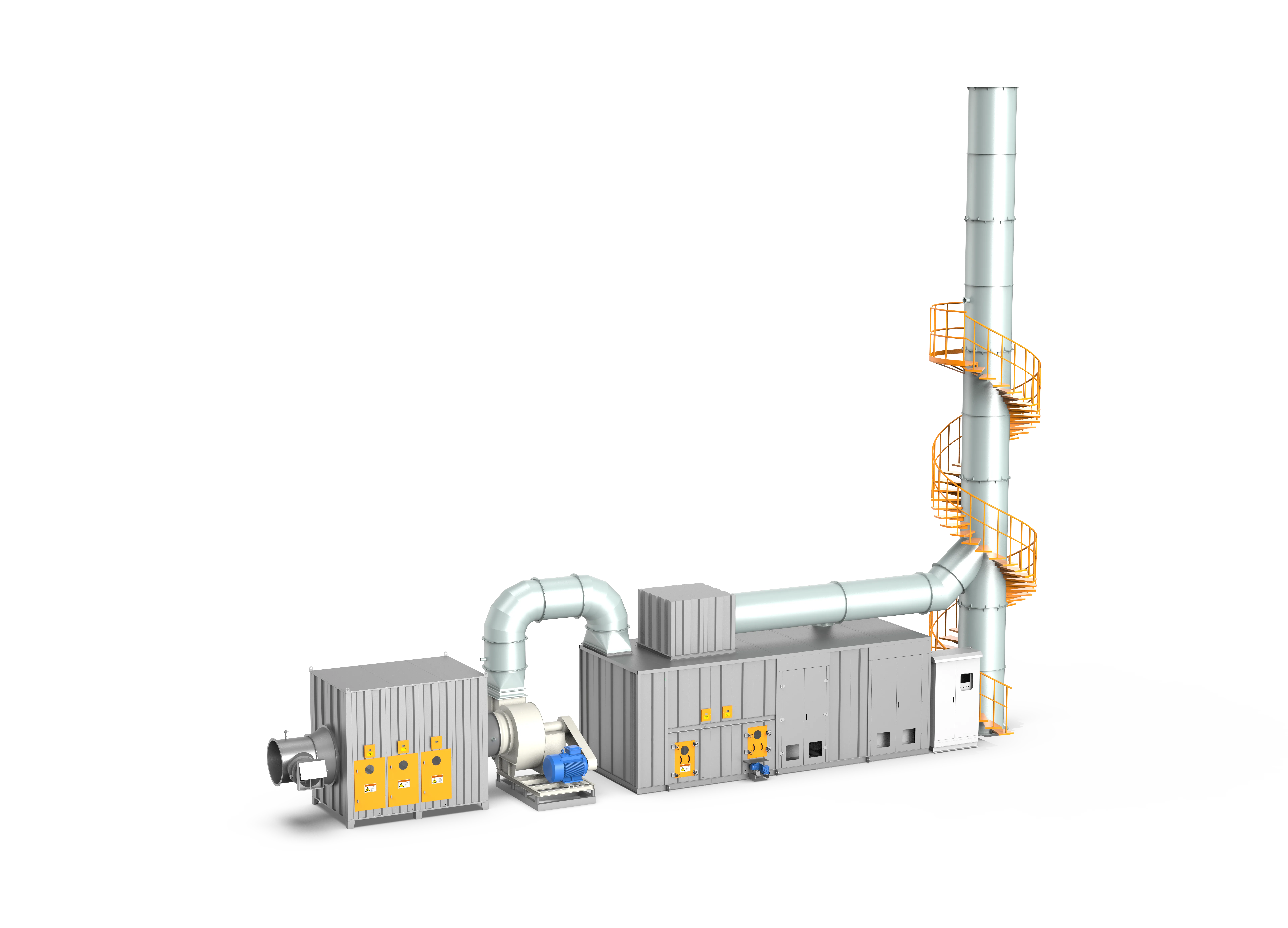
Zeolite Rotor + CO
A modular, highly compact VOC abatement system integrating zeolite molecular sieve concentration with low-temperature catalytic oxidation (CO) at 250-350°C, delivering energy savings of up to 20%+ and zero fire risk for small-to-medium airflow setups.
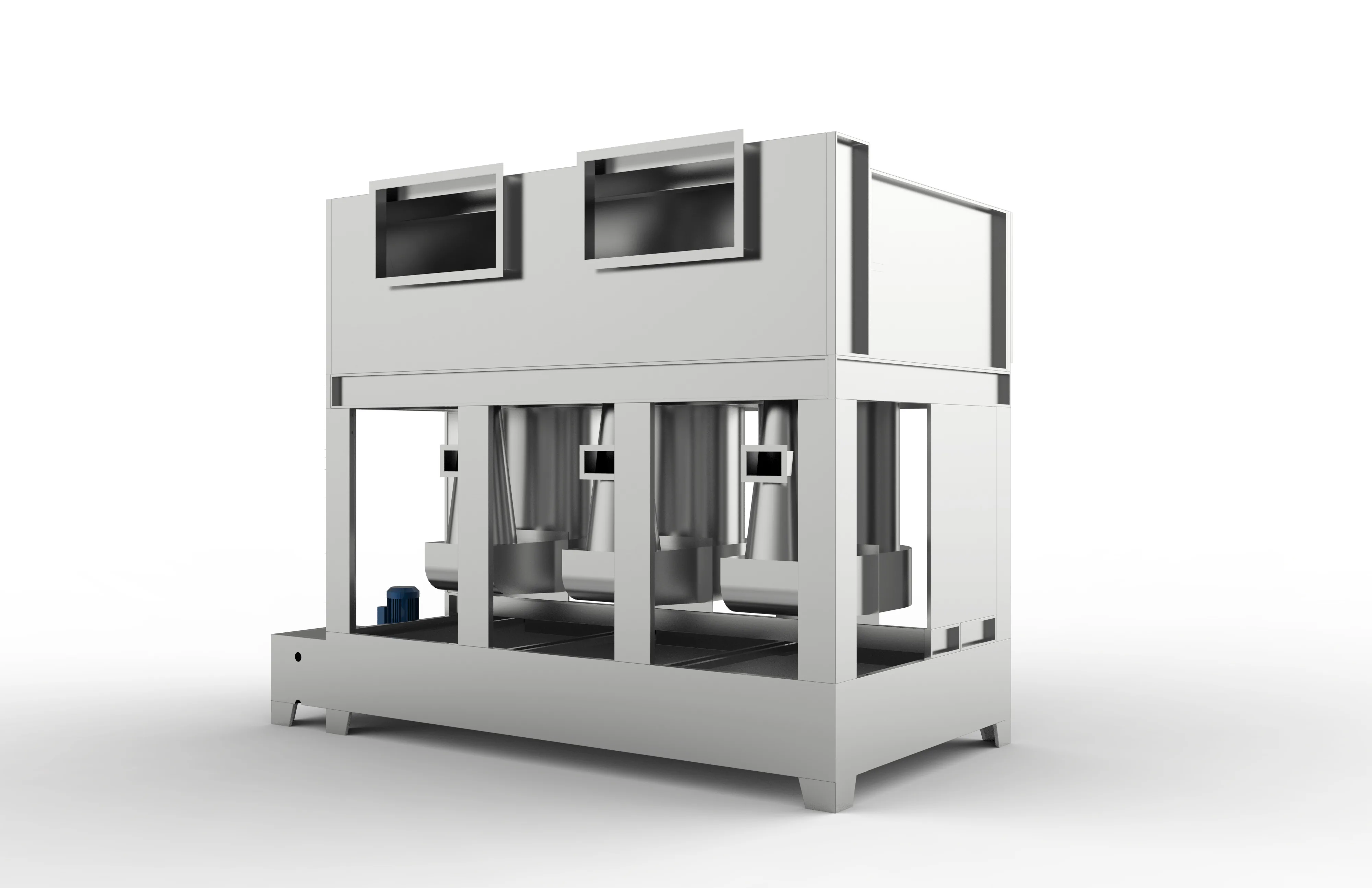
Spray Tower
Custom-built packed spray towers in PP or 304 SS for neutralizing acidic, alkaline, and water-soluble waste gases.
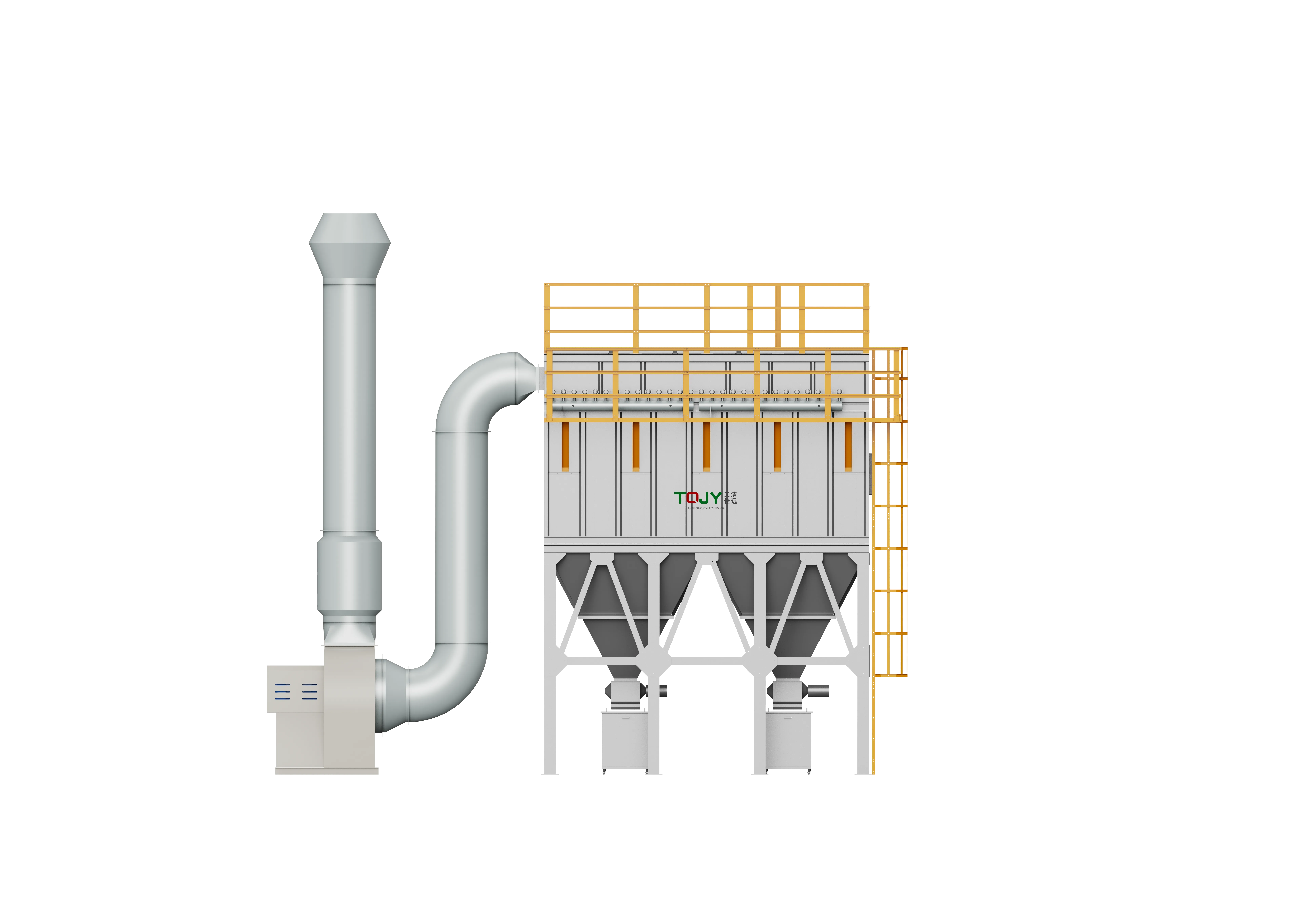
304 SS Pulse Baghouse
High-capacity 304 stainless steel pulse-jet baghouse for >99% efficiency dry dust collection.
Turnkey VOC Solutions for Global Marine & Offshore Shipyards
FluxFine specializes in ultra-large volume, low-concentration painting exhaust abatement. Speak with our technical director for a customized process evaluation and turnkey compliance proposal within 24 hours.