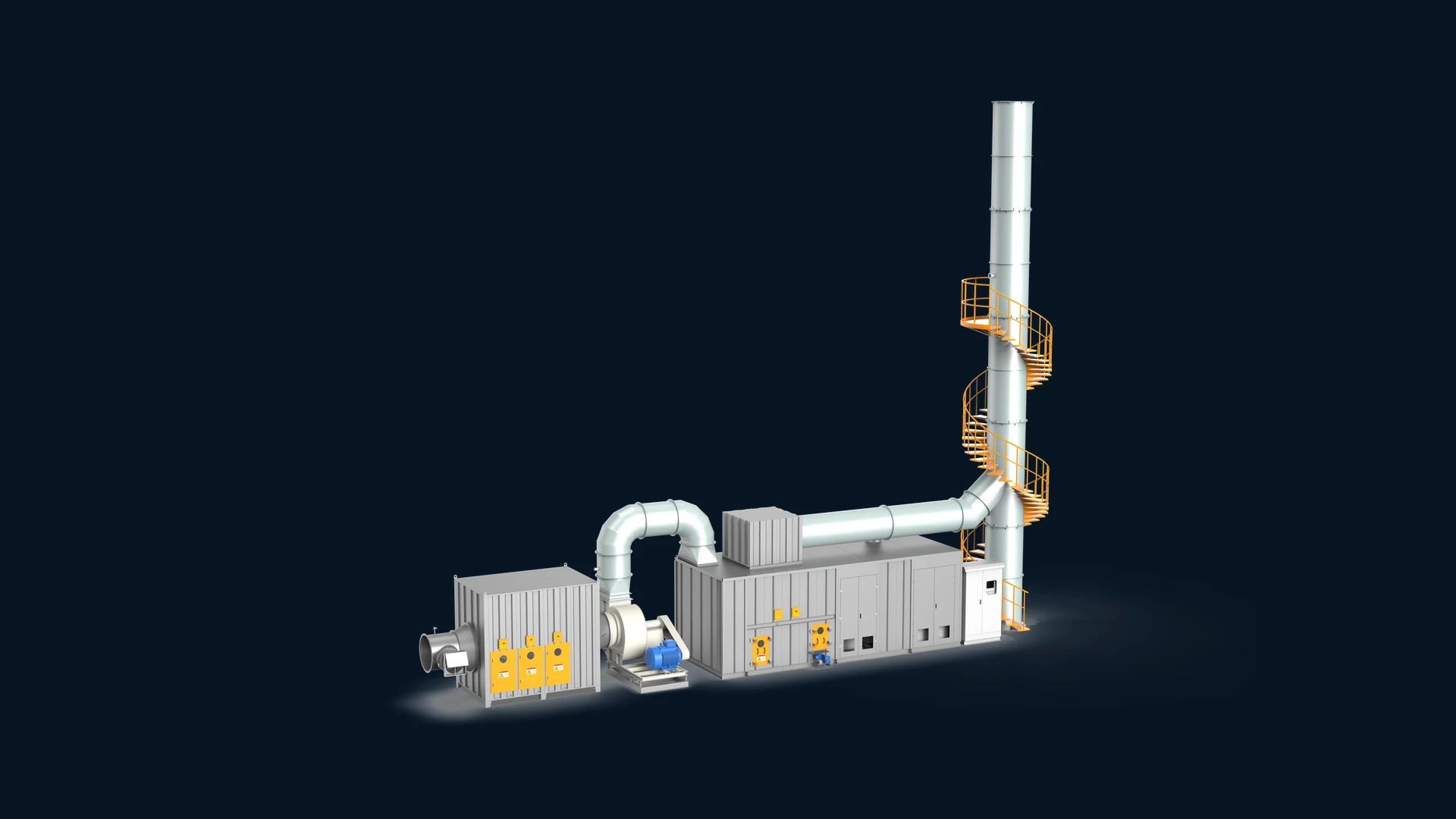
30,000 m³/h Zeolite Rotor & Catalytic Oxidizer System
Jiangmen Yaoke Electronic Technology Co., Ltd. | Precision PCB Screen Printing, Roll Coating & Curing Lines
Flameless Catalytic Destruction for High-Boiling Electronic Dibasic Ester Solvents
Jiangmen Yaoke Electronic Technology Co., Ltd. (江门市耀科电子有限公司) is a specialized manufacturer of precision printed circuit boards (PCB), electronic substrate coatings, and custom inductive modules. The facility operates automated silkscreen printing machines, roll coaters, dipping tanks, and conveyor curing ovens that generate 30,000 m³/h (17,650 CFM) of solvent-laden exhaust.
The exhaust chemistry is characterized by electronic-grade dibasic ester blends (DBE: Dimethyl Succinate b.p. 195°C, Dimethyl Glutarate b.p. 211°C, and Dimethyl Oxalate b.p. 163°C) alongside screen printing thinners and ketones. Because electronic plants operate under strict fire insurance regulations, deploying high-temperature open-flame incinerators or gas-fired thermal oxidizers was prohibited inside the clean manufacturing zone.
FluxFine engineered a safe, flameless solution: an integrated wet scrubber and 4-stage dry filtration box (G4/F5/F7/F9), a 30,000 m³/h Zeolite Rotor Concentrator (10:1 ratio), and a 3,000 m³/h Catalytic Oxidizer (CO) utilizing precious metal Pt/Pd monolithic honeycomb catalysts. Operating at moderate temperatures (350°C–500°C), the CO achieves ≥98.0% destruction removal efficiency (DRE) with zero thermal NOx generation, ensuring stack emissions of NMHC ≤ 20 mg/m³ and TVOC ≤ 30 mg/m³, fully satisfying Guangdong DB44/2367-2022 standards.
Four Engineering Dilemmas in Electronic Component Exhaust
Treating electronics printing exhaust requires eliminating open-flame risks while handling high-boiling dibasic esters and variable batch shifts.
No Open-Flame Policy
Due to cleanroom proximity and stringent insurance mandates, open-flame combustion systems (800°C RTO) and natural gas piping were prohibited on site.
High-Boiling Dibasic Esters
Exhaust carries Dimethyl Glutarate (211°C b.p.) and Dimethyl Succinate (195°C b.p.). Conventional carbon beds suffer rapid micropore fouling and desorption failure.
Aerosol & Mist Pre-filtration
Roll coating and screen printing generate fine ink aerosols and condensable vapors that threaten molecular sieve active sites without deep filtration.
Intermittent Production Shifts
Varying shifts between printing, dipping, and curing caused large swings in organic loading. The abatement system needed flexible multi-mode operation.
Engineering Evaluation: Carbon Canister Baseline vs. Zeolite Rotor + Catalytic Oxidizer
FluxFine evaluated throwaway carbon canisters and direct thermal oxidizers against a decoupled zeolite concentration plus flameless catalytic oxidizer.
| Engineering Dimension | Conventional Carbon Adsorption Baseline | FluxFine Zeolite Rotor + Catalytic Oxidizer (CO) | Engineering Advantage |
|---|---|---|---|
| Combustion Safety & Flame Policy | Open-flame RTO violates cleanroom fire policy | 100% flameless catalytic oxidation (350°C - 500°C) | Zero open flame; cleanroom safe |
| High-Boiler Desorption (DBE Solvents) | Carbon irreversibly fouls above 120°C; severe smoldering risk | Hydrophobic zeolite drum desorbing cleanly at 180°C–220°C | Continuous non-combustible media |
| Thermal NOx Formation | Thermal oxidation produces 40–80 mg/m³ NOx at 800°C+ | Low reaction temperature (350°C) yields zero thermal NOx | Zero secondary NOx generation |
| Operating Energy Cost | Continuous carbon replacement creates severe hazardous waste | 72 kW electric warm-up; auto-thermal balance in production | Zero hazardous carbon disposal |
| Destruction Efficiency (DRE) | Drops rapidly as carbon bed reaches breakthrough | ≥98.0% guaranteed across Pt/Pd catalyst bed | ≥98.0% stable DRE |
Precious metal Pt/Pd honeycomb catalyst completely destroys dibasic esters at 350°C.
Vastly outperforming Guangdong DB44/2367-2022 provincial benchmark (≤ 80 mg/m³).
Completely satisfies semiconductor and electronic manufacturing fire safety codes.
Eliminates natural gas supply infrastructure; self-sustaining once catalyst reaches light-off.
Subsystem Architecture & Hardware Execution
Explore the four synchronized engineering subsystems delivering flameless catalytic destruction, aerosol pre-treatment, and intelligent load modulation.
Integrated P&ID Process Topology & Concentration Loop
The system collects exhaust from silkscreen printing booths, roll coaters, and conveyor ovens across 30,000 m³/h ductwork under closed-loop negative pressure.
Exhaust enters the wet scrubber and 4-stage dry filter unit before passing through the hydrophobic zeolite rotor. The 10:1 concentration loop transfers concentrated VOCs (3,000 m³/h) into the Catalytic Oxidizer (CO), where internal heat exchangers preheat incoming gas with purified flue enthalpy.
Parameters: 30,000 m³/h adsorption flow; 10:1 concentration ratio; 3,000 m³/h CO flow; 350°C–500°C catalyst reaction temperature.
Four-Stage Modular Particulate & Aerosol Interception
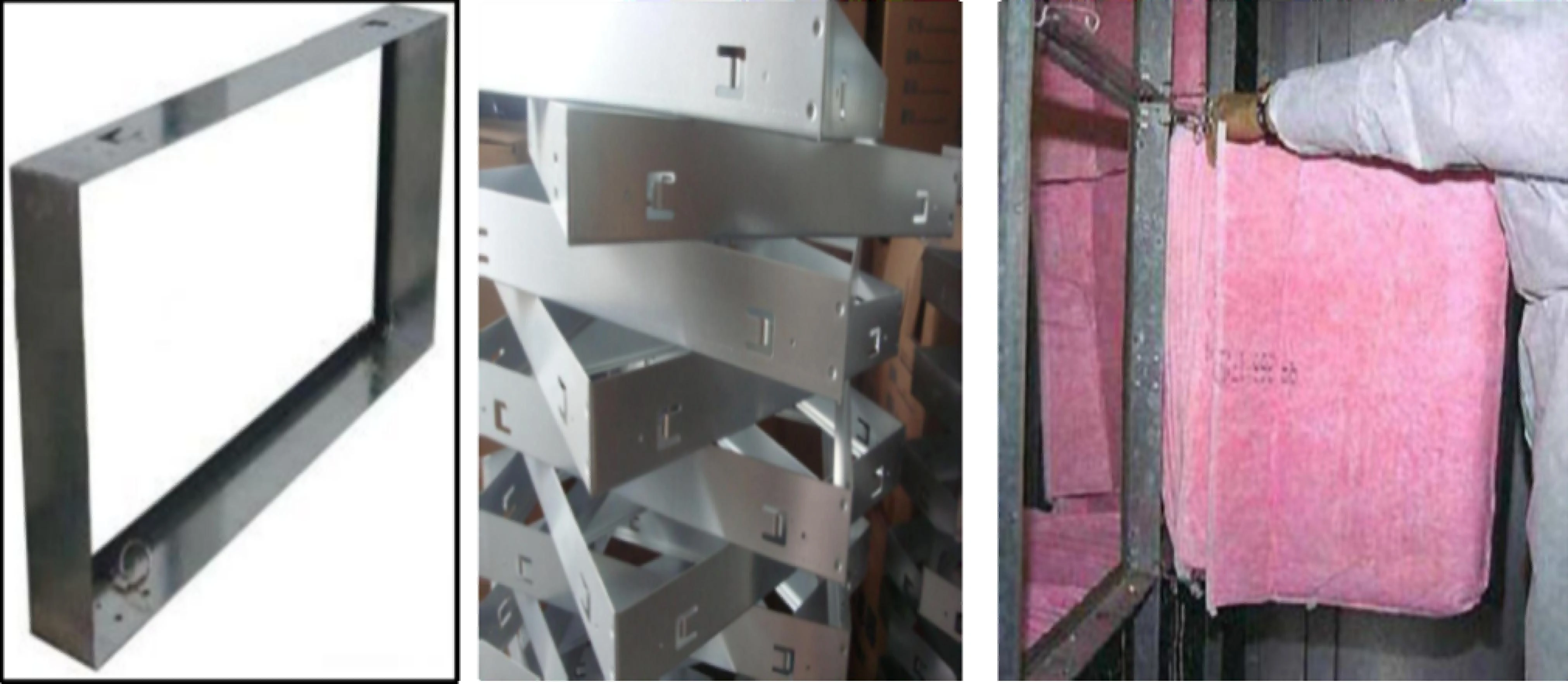
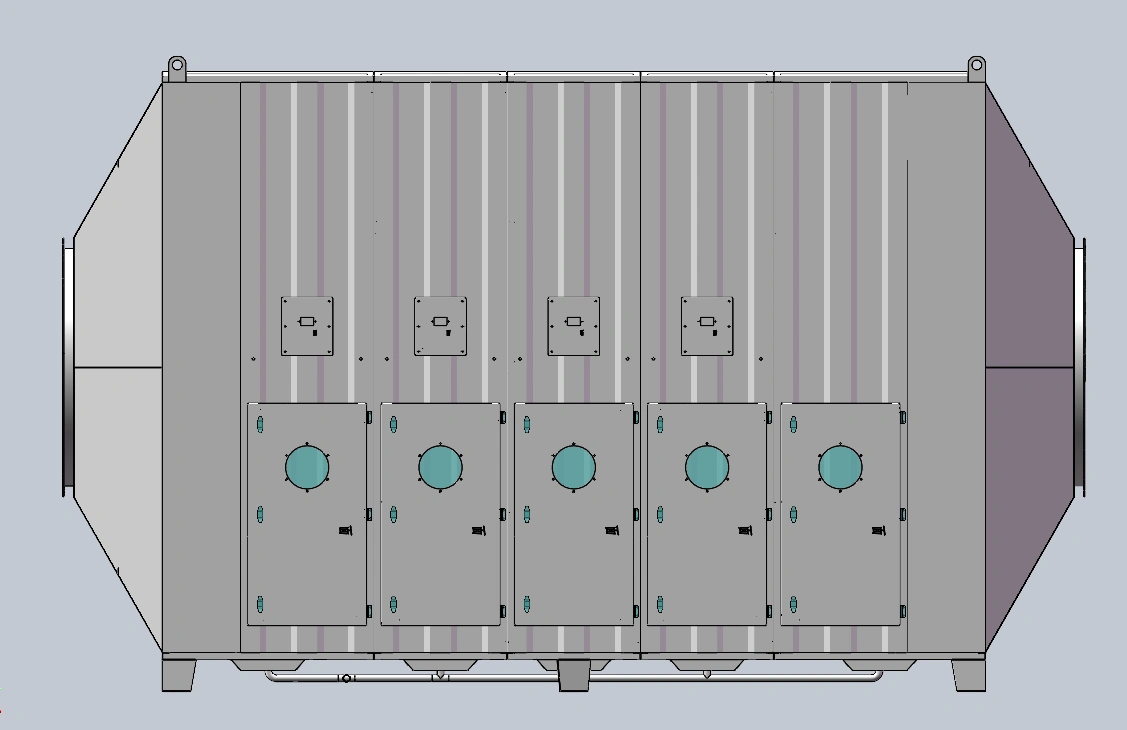
To protect the precious metal catalyst and zeolite molecular sieve from airborne overspray, the pre-treatment module deploys a high-efficiency 4-stage dry filter unit (G4 + F5 + F7 + F9).
Each filtration stage utilizes modular quick-change cassettes and differential pressure transmitters. When clean resistance rises from 300 Pa to the 800 Pa terminal threshold, automated PLC alarms prompt filter changeout.
Parameters: 30,000 m³/h capacity; filtration velocity ≤2.5 m/s; ≥95% particulate capture down to 1 μm; initial resistance 300 Pa.
Precious Metal Honeycomb Catalyst & Low-Temp Oxidation
The Catalytic Oxidizer core utilizes 0.21 m³ of high-performance monolithic cordierite honeycomb ceramic substrates coated with high-dispersion Platinum (Pt) and Palladium (Pd) catalysts.
The precious metal formulation promotes deep catalytic oxidation of high-boiling dibasic esters at just 250°C–300°C light-off temperature, fully destroying VOCs into CO₂ and H₂O at 350°C–500°C without producing thermal NOx or carbon monoxide slips.
Parameters: Catalyst volume: 0.21 m³; reaction temperature: 350°C–500°C; destruction efficiency ≥98.0%; catalyst design life >24,000 hours.
| Engineering Parameter | Design Specification | Unit |
|---|---|---|
| Substrate Material | Cordierite Honeycomb Ceramic (200 CPSI) | Cell/in² |
| Active Catalyst Loading | Precious Metal Platinum & Palladium (Pt / Pd) | 300 g/m³ |
| Module Cell Dimensions | 100 × 100 × 50 mm monolithic blocks | mm |
| Gas Hourly Space Velocity | 12,000 – 15,000 | h⁻¹ |
| Hydraulic Channel Aperture | 1.42 – 1.50 (Wall thickness: 0.28 – 0.32) | mm |
| Bulk Packing Density | 420 – 480 | kg/m³ |
| Operating Temperature | 280 – 400 (Thermal peak limit: 800) | °C |
| Catalytic DRE & Service Life | ≥ 98.0% (Design life: 2–3 years) | >24,000 h |
System Operational & Thermodynamic Data Matrix
Verified operational thresholds, airflow capacities, and destruction metrics for the Yaoke Electronic Technology facility.
| Subsystem | Design Specification | Operating Metric | Compliance Standard |
|---|---|---|---|
| Zeolite Rotor Concentrator | 30,000 m³/h monolithic hydrophobic molecular sieve drum | 10:1 concentration ratio (30,000 to 3,000 m³/h) | ≥90.0% adsorption efficiency |
| Four-Stage Dry Filtration Unit | G4 pleated + F5 pocket + F7 intermediate + F9 fine box | ΔP: 300 Pa clean to 800 Pa terminal | Particulate capture ≥95% (≥1 μm) |
| Catalytic Oxidizer (CO) Core | 3,000 m³/h flameless oxidation chamber with Pt/Pd catalyst | 350°C - 500°C catalyst reaction temperature | ≥98.0% catalytic DRE |
| Preheating & Thermal Balance | 72 kW electric heater bank for start-up only; auto-thermal in load | Zero electric heat at >1,500 mg/m³ load | Zero auxiliary fuel gas |
| Operational Modes | Tri-mode VFD: Single Adsorb, Single Desorb, Continuous | Automated negative pressure loop (-200 to -500 Pa) | Cleanroom pressure stability |
| Stack Emissions (NMHC) | Combined discharge stack monitored via continuous FID | Measured ≤ 20 mg/m³ | Guaranteed ≤ 80 mg/m³ (DB44/2367) |
Equipment in This Project
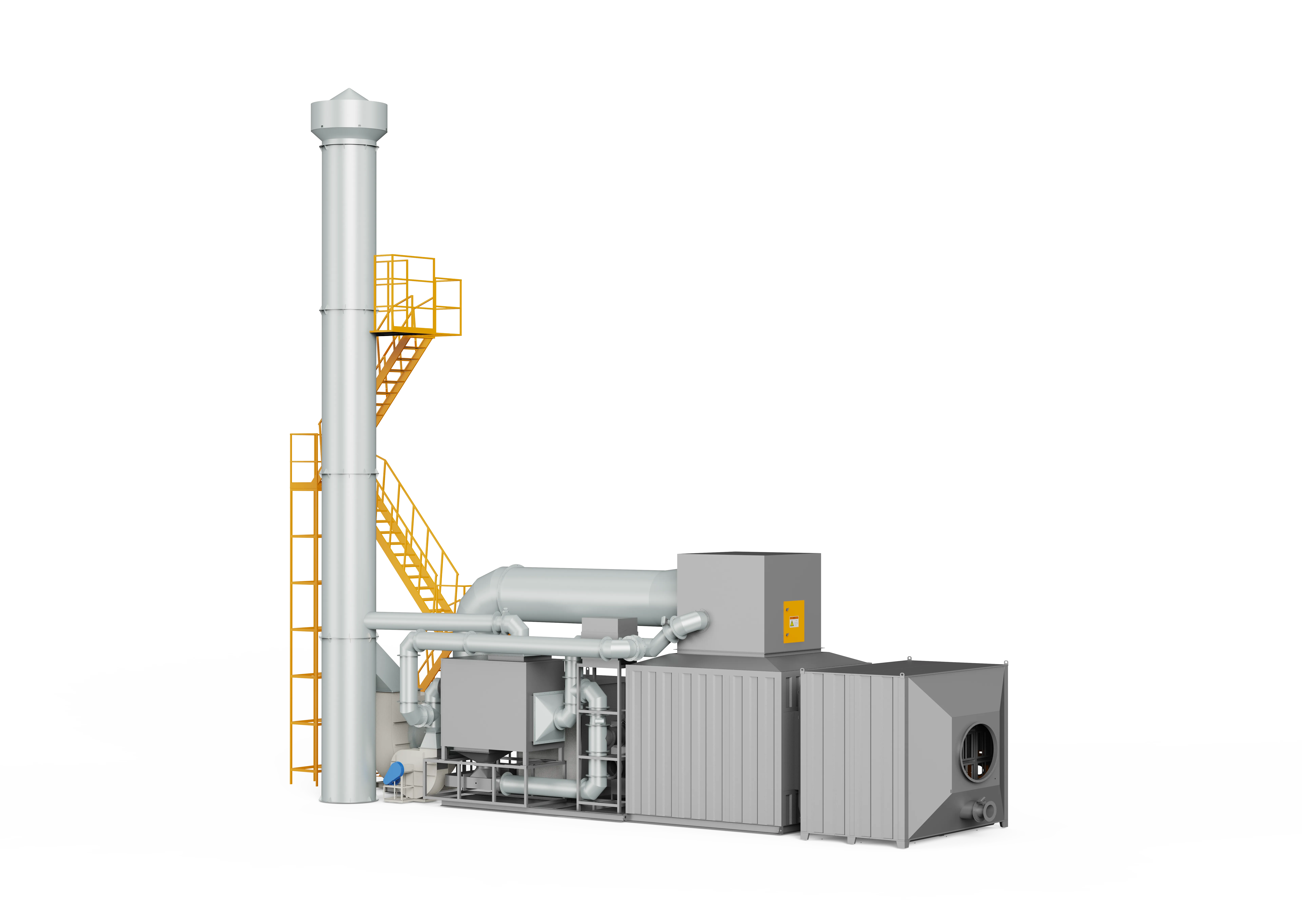
Zeolite Rotor
A high-efficiency VOC pre-treatment and concentration system utilizing advanced hydrophobic zeolite molecular sieves to continuously adsorb, desorb, and enrich large-airflow, low-concentration organic exhaust gases, reducing downstream thermal destruction energy consumption by 40% to over 50%.
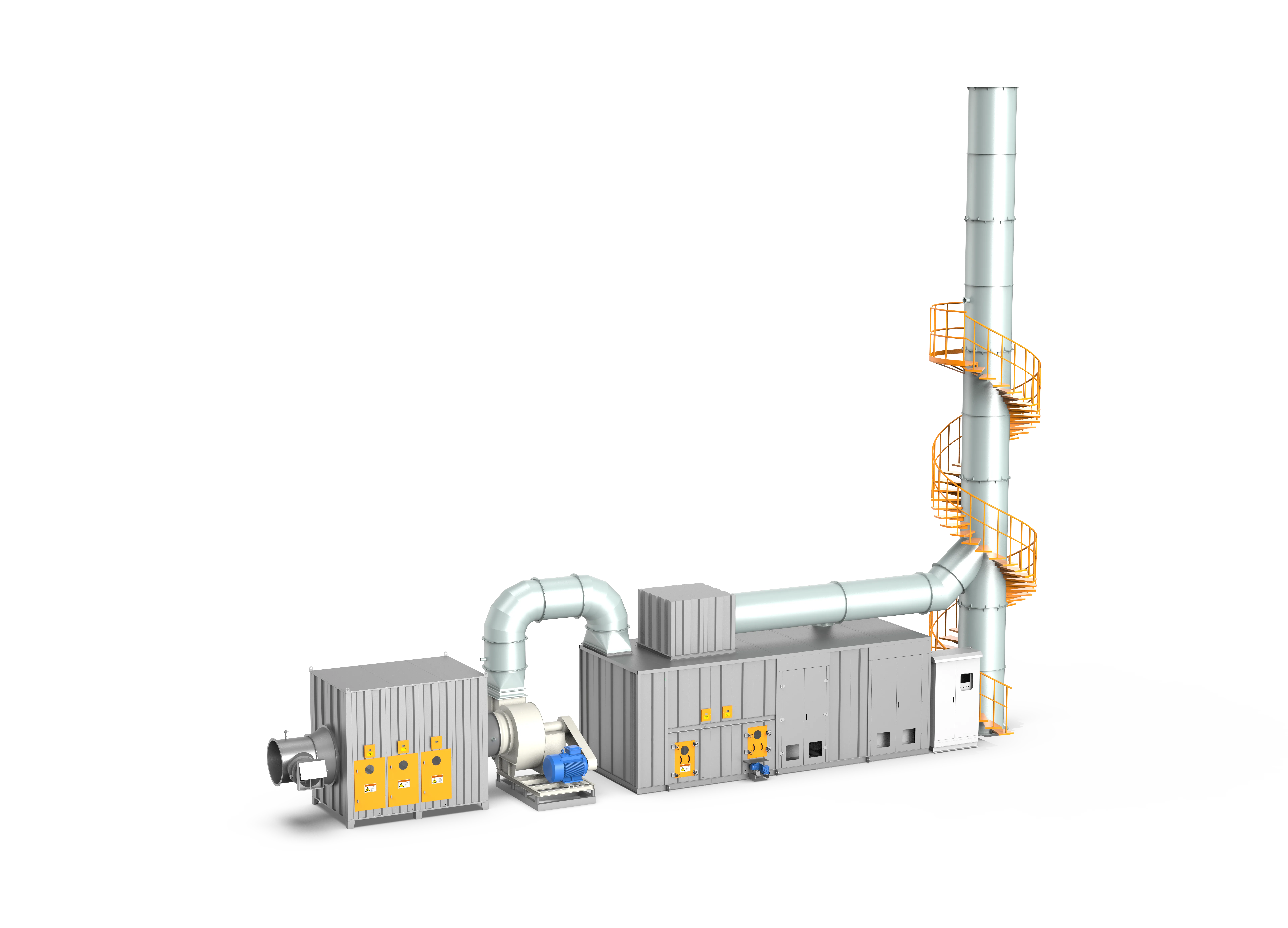
Zeolite Rotor + CO
A modular, highly compact VOC abatement system integrating zeolite molecular sieve concentration with low-temperature catalytic oxidation (CO) at 250-350°C, delivering energy savings of up to 20%+ and zero fire risk for small-to-medium airflow setups.
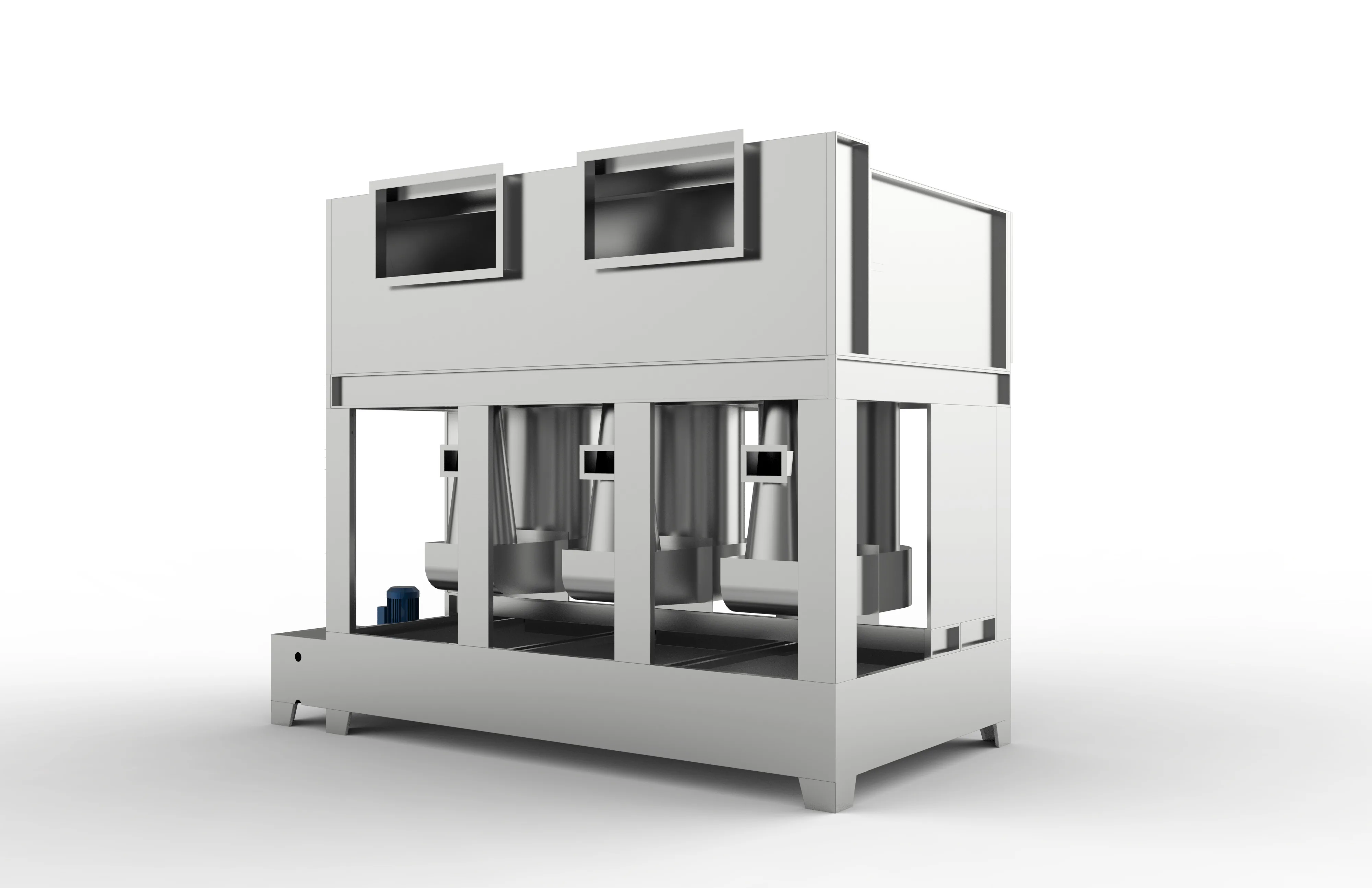
Spray Tower
Custom-built packed spray towers in PP or 304 SS for neutralizing acidic, alkaline, and water-soluble waste gases.
Flameless, High-Efficiency VOC Abatement for Clean Electronic Manufacturing
FluxFine designs, engineers, and delivers customized zeolite concentration and flameless catalytic oxidizer systems compliant with stringent semiconductor and cleanroom safety standards.