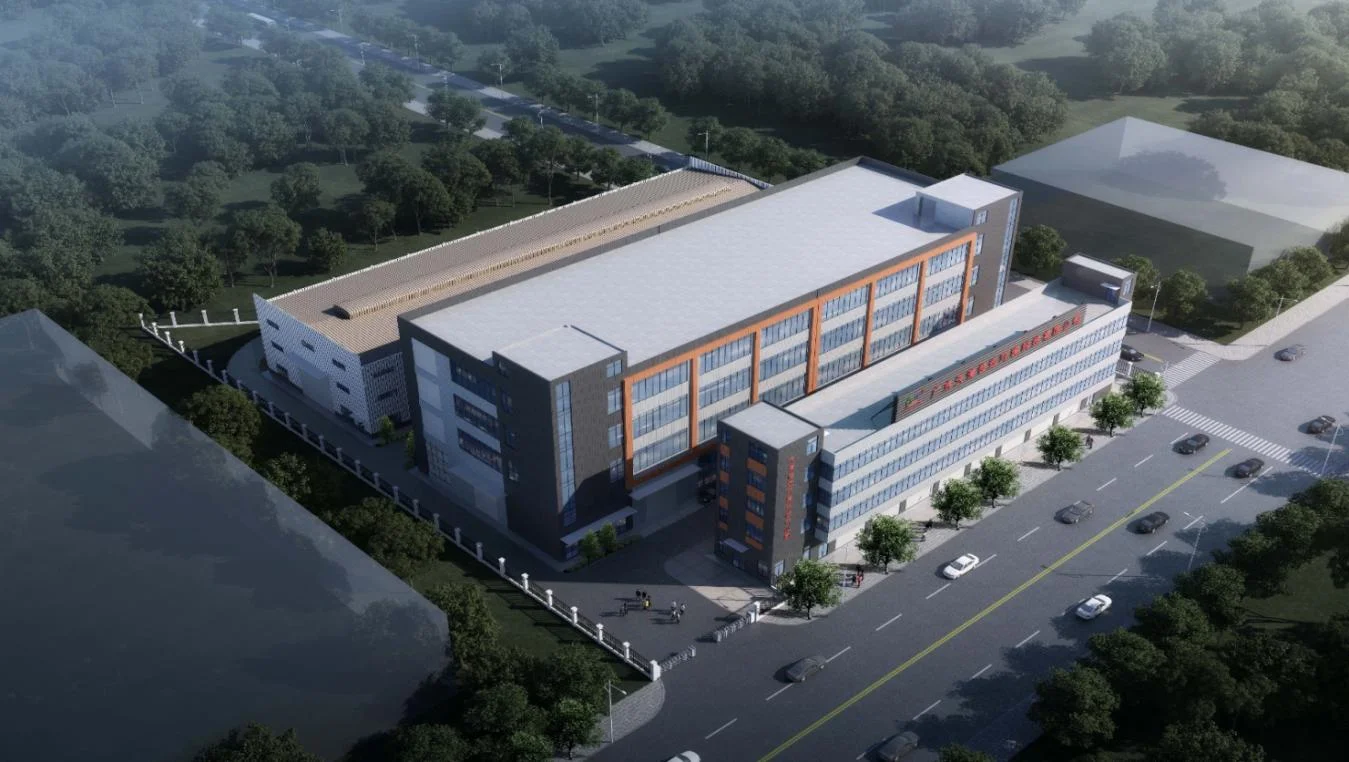
700,000 m³/h Multi-Train Battery VOCs & Fluoride Abatement Facility
Dongguan NVT Technology Co., Ltd. (ATL Group) | Automated Lithium-Ion Battery Pack Manufacturing
Neutralizing Acidic Fluorides & Eliminating 700,000 m³/h Battery Assembly VOCs via 14-Train Parallel Catalytic Oxidation
Dongguan NVT Technology Co., Ltd. (东莞新能德科技有限公司), founded in 2009 in the Songshan Lake Eco-Industrial Park, is a wholly owned subsidiary of Amperex Technology Limited (ATL / TDK Group) — the world's preeminent supplier of polymer lithium-ion battery cells. NVT specializes in high-precision battery pack assembly, testing, and system integration for global tier-one electronics brands spanning smartphones, laptops, wearables, drones, power banks, and electric mobility devices.
During automated pack manufacturing — involving structural adhesive dispensing, ultrasonic terminal welding, laser busbar jointing, cell sealing, and solvent wipe-down — continuous exhaust streams release volatile organic compounds (acetates, alcohols, ketones, and hydrocarbons). Concurrently, localized heating and trace cell venting release corrosive acidic fluorides (principally hydrogen fluoride, HF) and airborne aerosols. Left untreated, these corrosive vapors degrade ductwork, poison standard catalytic matrices, and trigger plant-boundary odor issues.
FluxFine designed, manufactured, and commissioned a turnkey 700,000 m³/h (412,000 CFM) air pollution control installation configured into 14 independent, parallel 50,000 m³/h treatment trains. Each modular train integrates a heavy-duty polypropylene (PP) alkali scrubbing tower (5% NaOH) for acidic gas neutralization, a two-stage chevron demister, three fixed-bed honeycomb activated carbon adsorbers (2 duty, 1 standby; 42 beds plant-wide), and an energy-efficient catalytic oxidizer (CO) with a 25:1 concentration ratio. The system delivers a verified ≥98.0% VOC Destruction and Removal Efficiency (DRE), curbs stack emissions to NMHC ≤ 20 mg/m³ (far exceeding GB30484-2013 standards), and provides full bay-by-bay operational independence.
Quantified Environmental Performance & Engineering Metrics
Engineered for round-the-clock reliability across 14 battery cleanroom lines with strict boundary odor elimination and high-integrity safety interlocks.
Distributed across 14 independent 50,000 m³/h parallel trains, allowing individual cleanrooms to cycle independently with zero cross-line interference.
Multi-bed cyclic honeycomb carbon adsorption coupled with high-dispersion Pt/Pd catalytic oxidation guarantees complete solvent vapor mineralization.
Reduces 50,000 m³/h process air down to 2,000 m³/h desorption stream, enabling sustained autothermal oxidation with near-zero auxiliary electric power draw.
Stack NMHC verified below 20 mg/m³ (vs. 50 mg/m³ limit in GB30484-2013) with particulate emissions suppressed below 5 mg/m³ across all 14 stacks.
Five-Stage Treatment Train Architecture (Single Train Schematic)
Each of the 14 parallel trains executes a sequential chemical-scrubbing, moisture-separation, dry-adsorption, and catalytic-oxidation process train.
PP Alkali Scrubber
Counter-current 5% NaOH spray column (Ø3.1m × H6.0m). Dual packing layers neutralize trace HF, fluorides & acid fumes.
Two-Stage Demister
230mm chevron baffle + 500mm structured packing. Eliminates alkaline liquid carryover and entrained moisture droplets.
Honeycomb Carbon Beds
3 parallel fixed beds (2 duty, 1 standby). High-capacity honeycomb blocks (Iodine ≥650 mg/g) capturing low-concentration VOCs.
Catalytic Oxidizer (CO)
Hot-gas desorption (90–110°C). Concentrated solvent vapors oxidize across Pt/Pd honeycomb catalyst at 270–350°C.
25m SUS304 Stack
Elevated high-velocity discharge (14.6 m/s). Equipped with permanent CEMS monitoring platforms compliant with HJ/T397-2007.
Engineered Hardware Architecture for Battery Cleanroom VOCs & Acid Neutralization
Overcoming corrosive acidic fluorides, high-volume dilute VOC streams, and strict cleanroom fire safety standards through custom-engineered process units.
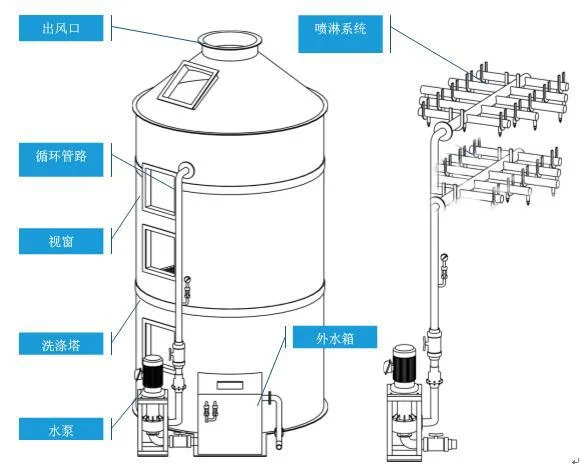
Counter-Current PP Alkali Neutralization Tower
In lithium-ion battery pack assembly, automated electrolyte sealing and structural potting release trace quantities of corrosive hydrofluoric acid (HF) and volatile fluorinated organics. Direct exposure to carbon beds causes irreversible pore degradation and severe casing corrosion.
FluxFine engineered a dedicated Ø3,100 mm × H 6,000 mm heavy-duty polypropylene (PP) scrubbing column. Utilizing non-clogging spiral nozzles, a 5% recirculating sodium hydroxide (NaOH) solution is atomized counter-currently across dual structured packing layers (700 mm depth). With a gas-liquid contact time of 2.4 seconds, acidic gases are fully neutralized before the air stream enters dry adsorption.
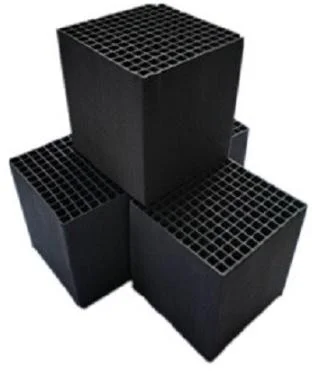
Cyclic Fixed-Bed Honeycomb Carbon Adsorption
Treating large-volume, low-concentration VOC streams (150–400 mg/m³) with continuous manufacturing uptime requires high dynamic capacity and minimal airflow resistance.
Each parallel train incorporates three dedicated fixed adsorption beds (2 duty, 1 standby / desorption), totaling 42 beds across the installation. Loaded with premium honeycomb activated carbon (iodine value ≥650 mg/g), the beds operate at an optimal face velocity of 1.2 m/s (236 FPM) with static resistance suppressed below 500 Pa (2.0 in. w.g.). Saturated beds undergo automated thermal desorption with hot air without interrupting factory exhaust.
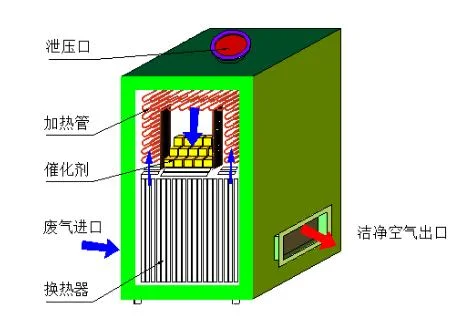
25:1 Volume Shrinkage & Flameless Catalysis (CO Unit)
Desorbing captured solvents with hot air concentrates the stream from 50,000 m³/h down to 2,000 m³/h (1,180 CFM) — achieving an exceptional 25:1 air volume reduction ratio that slashes thermal oxidizer sizing and fuel demands.
The rich stream enters an integrated Catalytic Oxidizer (CO unit) featuring an SUS304 shell-and-tube heat exchanger (≥70% thermal recovery) and a precious metal platinum-palladium (Pt/Pd) cordierite honeycomb catalyst bed. Operating at 270°C to 350°C, solvent vapors flamelessly combust into CO₂ and H₂O with ≥98.0% destruction efficiency. The exothermic reaction maintains continuous autothermal operation with near-zero auxiliary heating during steady-state cycles.
Triple-Tier Automation & Fail-Safe Safety Architecture
Continuous multi-parameter instrument feedback linked to high-speed PLC safety logic prevents thermal runaway and guarantees fail-safe plant isolation.
Field Sensing Inputs
Continuous real-time tracking across all 14 treatment trains and 42 carbon beds:
- •CO Reaction Temperature: Dual Pt100 RTDs monitoring catalyst inlet & bed core (0–600°C).
- •Desorption Loop Temp: In-duct temperature transmitters regulating hot gas to ≤100°C.
- •Carbon Bed Core Temp: Multi-point RTD grid tracking bed core temperatures with 120°C trigger.
- •Static Duct Pressure: Cleanroom header pressure sensors feeding main VFD loops.
PLC Logic & Emergency Decision
Industrial PLC system executing deterministic safety algorithms and sequential valve cycling:
- •Level 1 Dilution (450°C): Modulates fresh-air cooling damper and high-pressure dilution blower.
- •Level 2 Emergency Vent (500°C): Opens high-temperature bypass dump damper to chimney instantly.
- •Emergency Power-Off Trip: Heating cut within ≤1.0s on any interlock violation or line trip.
- •Sequential Bed Dispatch: Automatic pneumatic switching between duty and desorption beds.
Fail-Safe Emergency Actuators
Physical safety hardware engineered to protect operators, equipment, and production assets:
- •Inlet Flame Arresters: Crimped-ribbon stainless steel elements preventing flashback to ducts.
- •Bursting Disc Explosion Vents: Calibrated mechanical relief discs for zero-delay pressure relief.
- •Automatic Sprinkler Deluge: Carbon bed temperature >120°C triggers immediate water spray deluge.
- •Spring-Return Pneumatic Dampers: Fail-safe mechanical spring return to vent position on power loss.
Four-Dimensional Engineering Specification Matrix
Comprehensive verified engineering parameters for the NVT Technology 700,000 m³/h battery exhaust treatment facility.
| Design Parameter | Metric Engineering Value | US Imperial Equivalent | Engineering Context & Standards |
|---|---|---|---|
| Total System Airflow | 700,000 m³/h | 412,000 CFM | 14 parallel 50,000 m³/h (29,400 CFM) lines |
| Inlet Chemical Composition | Acetates, Alcohols, Ketones, HF | Solvents + Trace Hydrofluoric Acid | Derived from battery pack dispensing & laser sealing |
| Inlet VOC Concentration | 150 – 400 mg/m³ | 40 – 110 ppm equivalent | Cleanroom manufacturing ventilation baseline |
| Alkali Scrubber Column Dimensions | Ø3,100 mm × H 6,000 mm | Ø10.2 ft × H 19.7 ft | Polypropylene (PP), 2-stage spray + 1 demister layer |
| Scrubber Gas-Liquid Contact Time | 2.4 seconds (Gas velocity 1.8 m/s) | Gas velocity 354 FPM | Circulation rate 50 m³/h, 5.5 kW pump, 5% NaOH |
| Demister Droplet Separation | 230mm Baffle + 500mm Packing | 9.1 in. baffle + 19.7 in. packing | Pressure drop ≤500 Pa (2.0 in. w.g.), PP construction |
| Carbon Adsorber Sizing | 25,000 m³/h per bed (3.5 m³ carbon) | 14,700 CFM (124 ft³ carbon) | 3 beds/train (2 duty, 1 standby); 42 beds total |
| Carbon Bed Velocity & Resistance | 1.2 m/s face velocity, ≤500 Pa | 236 FPM velocity, ≤2.0 in. w.g. | High-surface-area honeycomb blocks, Iodine ≥650 mg/g |
| Catalytic Oxidizer Desorption Airflow | 2,000 m³/h per train | 1,180 CFM per train | 25:1 Concentration Ratio (vs. 50,000 m³/h raw inlet) |
| Catalytic Operating Temperature | 270°C – 350°C | 518°F – 662°F | SUS304 core & heat exchanger; 100mm insulation |
| Catalyst Type & Space Velocity | Pt/Pd Precious Metal Honeycomb | GHSV: 10,000 – 25,000 h⁻¹ | Cordierite substrate, thermal tolerance up to 600°C |
| VOC Destruction Efficiency (DRE) | ≥ 98.0% | ≥ 98.0% removal | Verified across continuous 24/7 industrial production |
| Stack NMHC Emission | ≤ 20 mg/m³ | < 5.5 ppm VOC | GB30484-2013 ceiling is 50 mg/m³ (60% compliance margin) |
| Exhaust Chimney Specifications | 14 × H 25m, Ø1,100 mm, SUS304 | Height 82 ft, Ø43.3 in. | Exit velocity 14.6 m/s; permanent CEMS platform (HJ/T397-2007) |
Equipment in This Project
Explore the standardized FluxFine industrial air pollution control systems integrated into the NVT Technology battery installation.
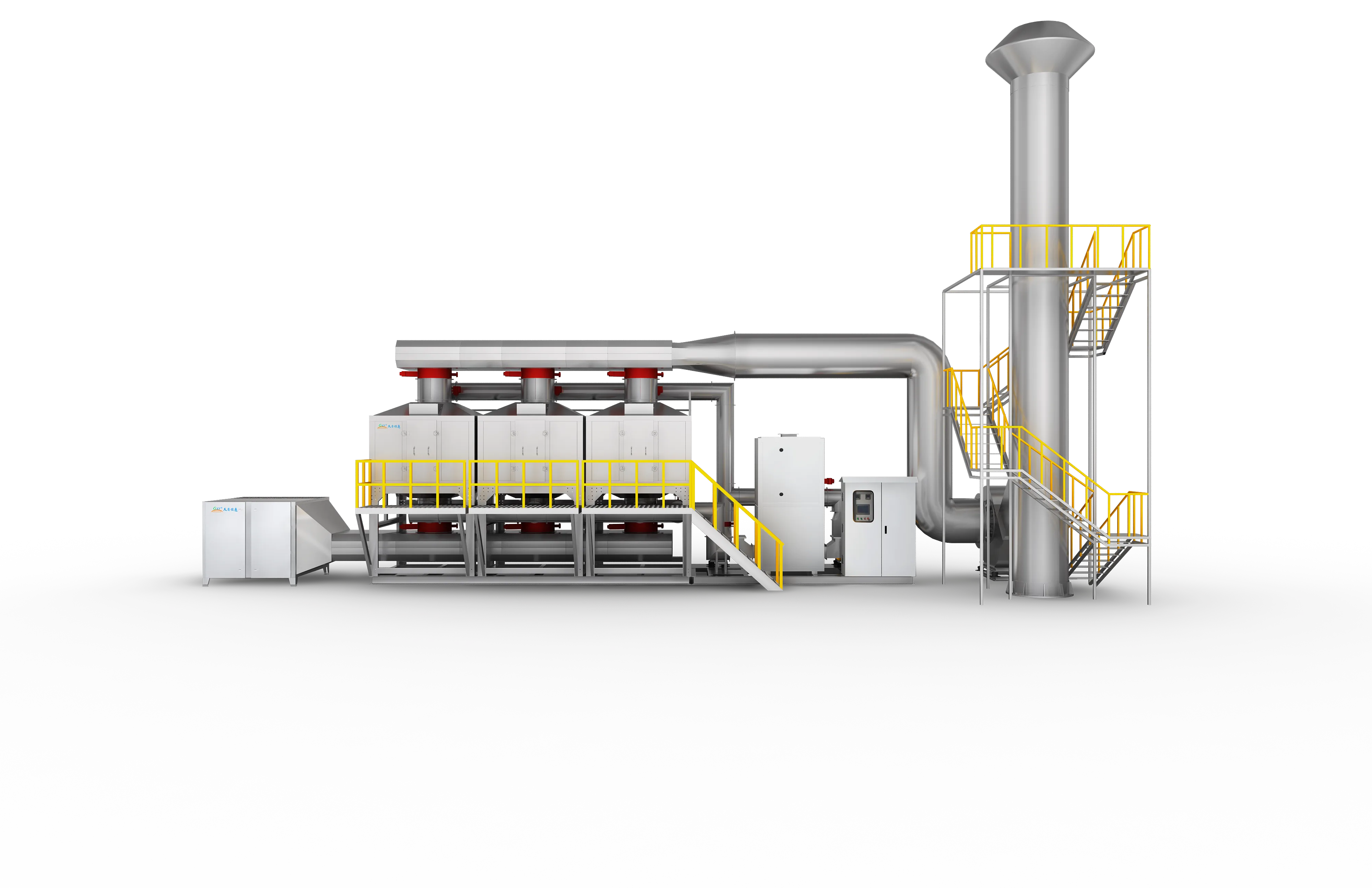
Carbon + CO
An exceptionally economical VOC abatement package integrating multi-bed activated carbon adsorption with hot-air thermal regeneration and low-temperature catalytic oxidation (CO) for small-scale, intermittent emissions.
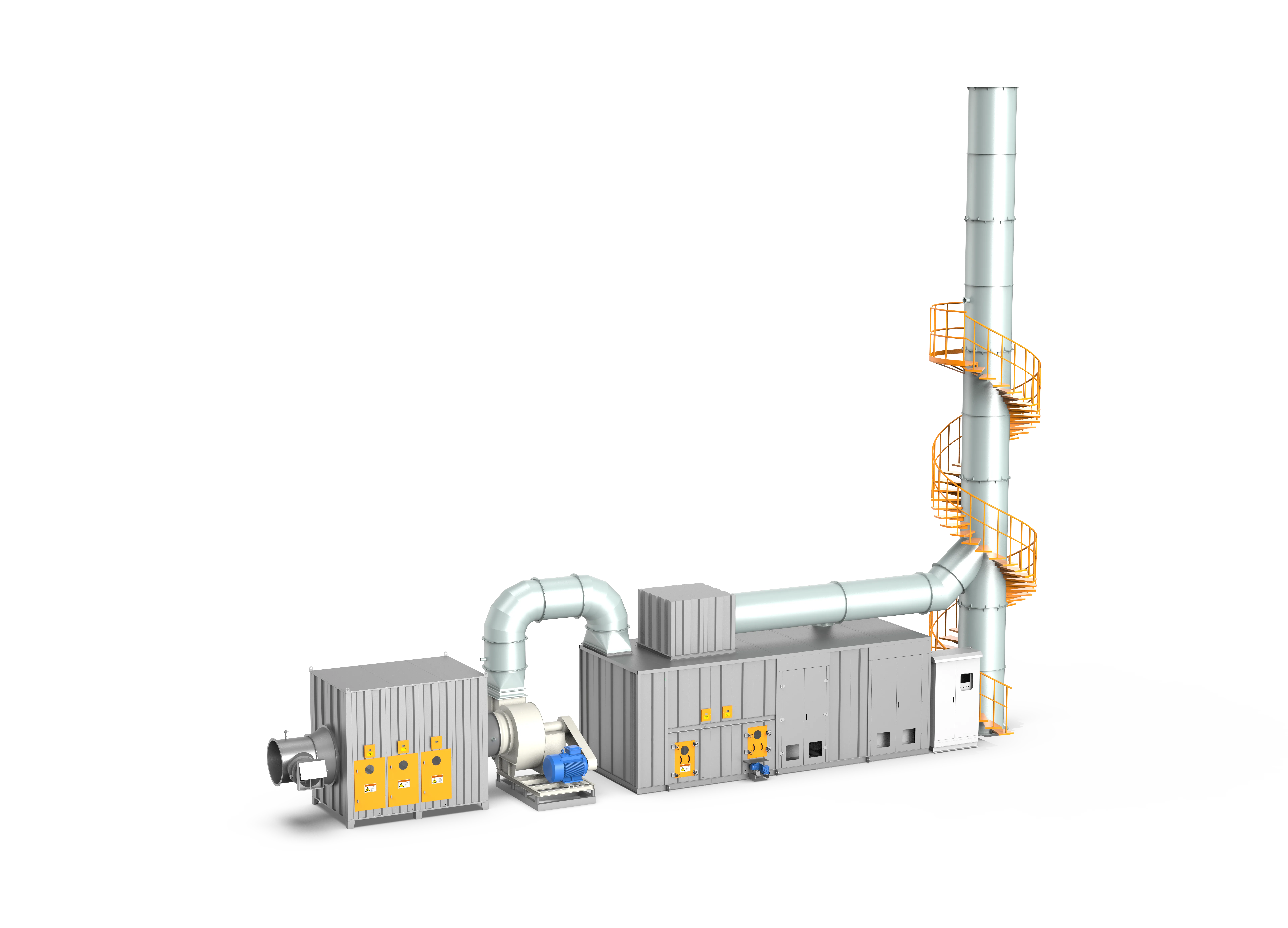
RCO
Ceramic heat regeneration combined with catalytic oxidation for compatible VOC streams requiring continuous, energy-conscious treatment.
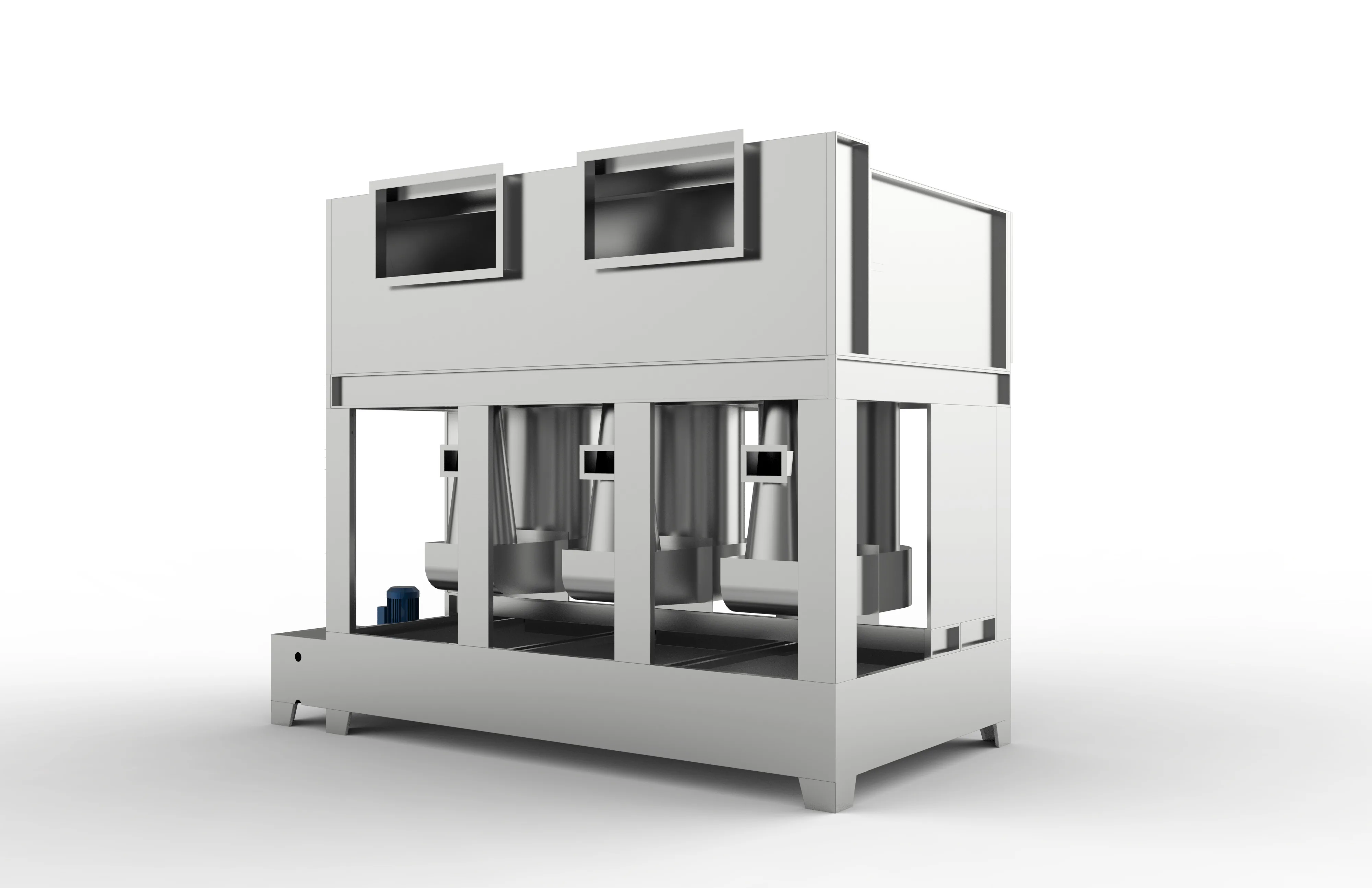
Spray Tower
Custom-built packed spray towers in PP or 304 SS for neutralizing acidic, alkaline, and water-soluble waste gases.
Designing a Large-Scale Lithium Battery or Cleanroom VOC System?
Consult with FluxFine senior environmental engineers for custom cleanroom pressure balancing, acidic fluoride scrubbing, honeycomb carbon sizing, and autothermal catalytic oxidation.