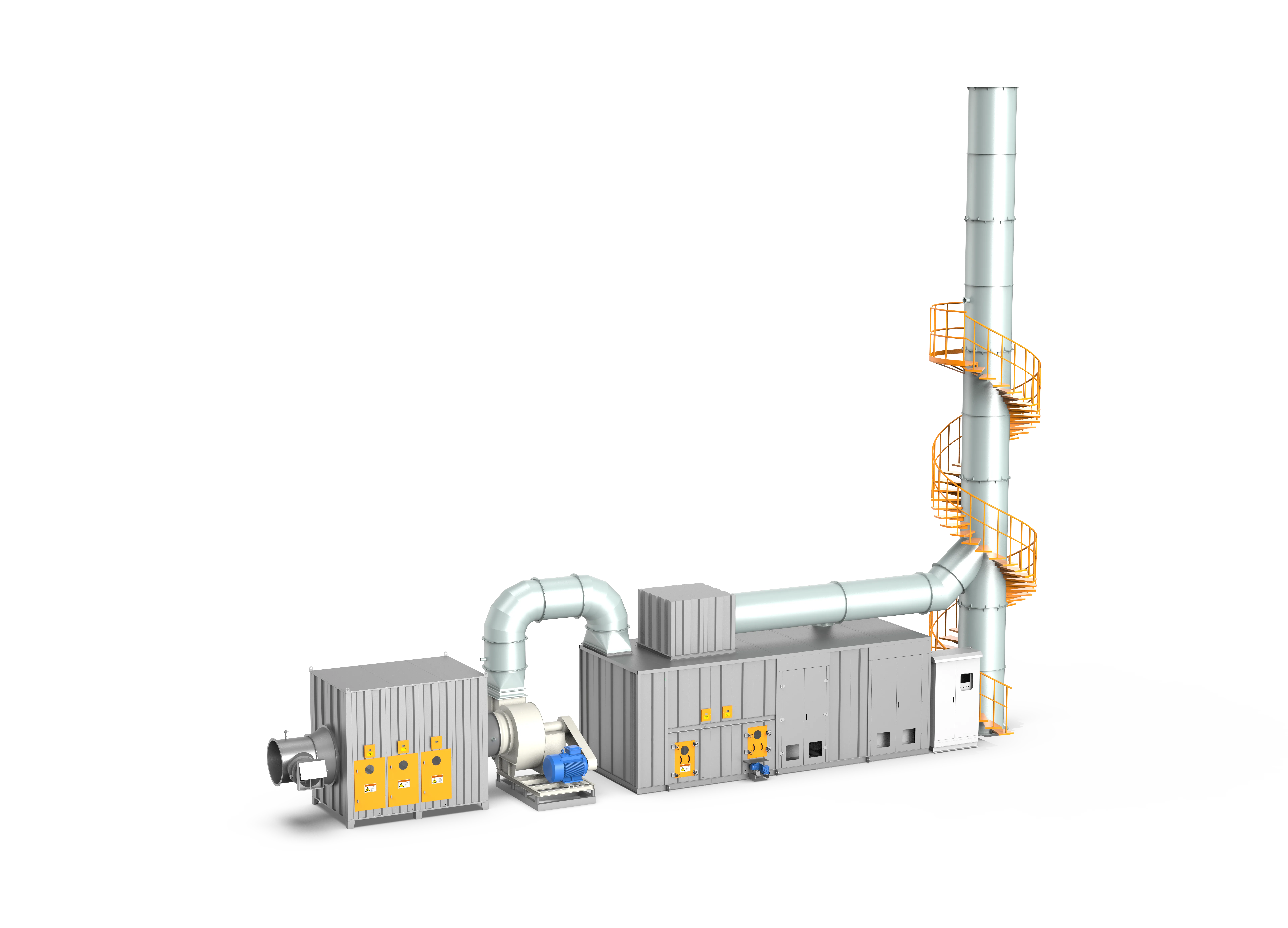
Regenerative Catalytic Oxidizer
Ceramic heat regeneration combined with catalytic oxidation for compatible VOC streams requiring continuous, energy-conscious treatment.
Designed around actual process conditions
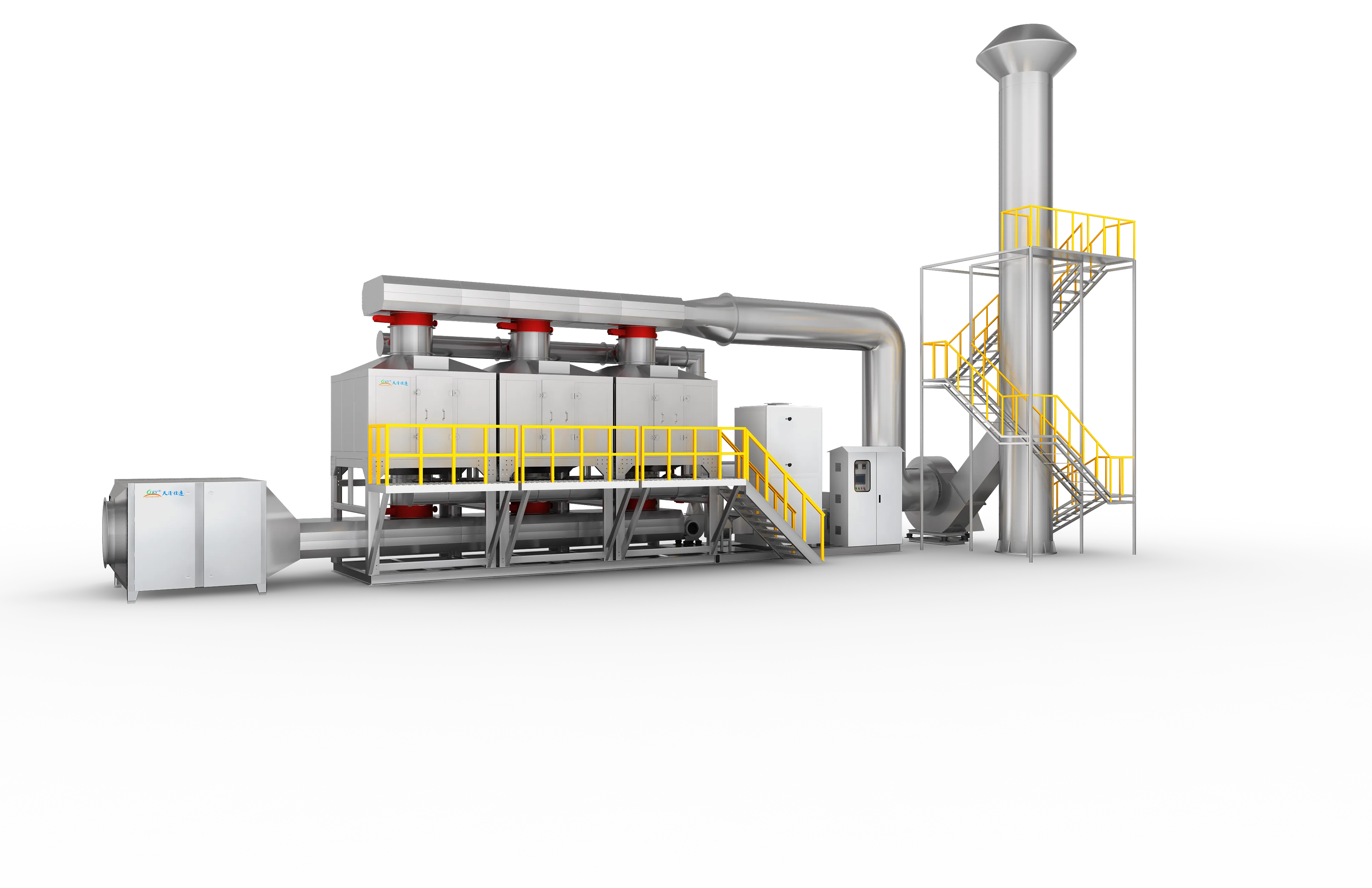
RCO combines regenerative heat storage with a catalyst bed to lower oxidation temperature while retaining heat recovery. It is configured only after catalyst compatibility and process stability are confirmed.
Regenerative Catalytic Oxidation System
Depending on catalyst volume
Significantly lower than RTO
Ceramic heat exchange
Operating references and configuration choices
These reference values and modules clarify the scope we evaluate. They are not a substitute for a process-data review or final proposal.
| Engineering reference | Value | How to read it |
|---|---|---|
| Application scope | Continuous, catalyst-compatible VOC treatment | A selection reference only; final capacity and materials follow the project design basis. |
| Configuration | Project-specific | Confirmed from process data, site constraints and the required treatment objective. |
| Performance basis | Process-dependent | No generic removal, safety or compliance promise is made without the stated pollutant and operating conditions. |
Typical modules considered
- Regenerative ceramic heat-recovery section
- Catalyst bed and temperature-control package
- Pretreatment selected for dust, aerosol and catalyst-poison risk
- PLC interlocks, temperature monitoring and access for catalyst inspection
Project-specific selection notes
- Screen sulfur, halogens, silicon, heavy metals and sticky aerosol before catalyst selection.
- Confirm reaction temperature, concentration range and concentration excursions against the final catalyst supplier/design basis.
- Treat catalyst service life and replacement access as part of the project scope.
How to use this product information
RCO is a regenerative catalytic configuration. It should be compared with RTO and conventional catalytic oxidation using gas chemistry, catalyst risk, duty cycle, heat recovery and maintenance requirements.
- The bilingual product source identifies regenerative catalytic oxidation as a project-engineered VOC configuration; it does not provide a universal web sizing schedule.
- The published description is a selection starting point. Process data, utilities, materials, safety requirements and acceptance criteria remain subject to engineering review.
What we review before specifying RCO
A product name is a starting point, not a final design. These inputs define pretreatment, materials, controls, equipment size and scope boundaries.
Project data to provide
- VOC species and catalyst-compatibility screening
- Airflow, concentration profile and desired operating cycle
- Sulfur, chlorine, silicon, phosphorus, heavy-metal and aerosol content
- Pretreatment condition and available utilities
- Required emission limit and installation footprint
Typical engineered scope
- Filtration and conditioning matched to catalyst protection
- Catalyst reactor, heater and heat-exchanger configuration
- Optional zeolite or carbon adsorption/concentration stage
- Temperature, pressure and fan controls with safety permissives
- Access for catalyst inspection and planned maintenance
Safety and controls
- Catalyst poison screening is a prerequisite, not an optional upgrade.
- Dust, oil and sticky aerosol must be controlled upstream to protect adsorption media and catalyst surfaces.
- Temperature management and interlocks are configured for the selected catalyst and fuel/heat source.
- No public page should promise a fixed removal rate without the actual gas composition and design basis.
How it works
Regenerative media recovers heat between flow cycles, while the catalyst promotes VOC oxidation at a lower temperature than conventional thermal oxidation.
- 01Characterize and pretreat exhaust
- 02Recover heat in regenerative media
- 03Oxidize VOCs across the catalyst
- 04Recover outlet heat before discharge
- Stable catalyst-compatible VOC streams
- Continuous industrial duty
- Projects prioritizing lower reaction temperature
- Energy-sensitive applications
- Catalyst poison screening is mandatory.
- Dust, aerosols, sulfur, silicon, halogens and heavy metals require pretreatment or another technology.
Typical pollutants
- Compatible hydrocarbons
- Alcohols
- Esters
- Selected ketones
Engineering features
- Regenerative heat storage
- Catalyst temperature monitoring
- PLC sequencing and alarms
- Project-specific catalyst selection
Available options
- Pretreatment package
- Catalyst formulation
- Heat-recovery interfaces
- Redundant temperature monitoring
Relevant industries
Coating & Surface Finishing
Industrial paint, UV coating, adhesive, metal finishing and multi-booth surface processes.
Chemical Industry
Resins, coatings, waterproofing, and specialty chemicals.
Pharmaceutical & Medical
Solvent exhaust from synthesis, coating, and finishing.
Electronics, PCB & Semiconductors
PCB, semiconductor, motor, and appliance process exhaust.
General technology selection
These answers explain the selection path. Final performance, safety scope and dimensions follow the approved project design.
Why choose catalytic oxidation?
Catalytic oxidation can operate at a lower reaction temperature than thermal-only oxidation for compatible, clean VOC streams. It is commonly considered where compact layout or lower-temperature operation is valuable.
What can damage a catalyst?
Sulfur, chlorine, silicon, heavy metals, dust, oil and some reactive compounds can reduce catalyst activity. The process chemistry and upstream controls must be reviewed first.
Source basis: VOCs equipment source. Catalyst performance and service interval depend on gas chemistry and pretreatment.
Specific product Q&A
What is the difference between an RTO and an RCO?
A Regenerative Thermal Oxidizer (RTO) destroys VOCs using pure thermal heat at extremely high temperatures (~800°C). A Regenerative Catalytic Oxidizer (RCO) uses a layer of precious metal catalyst (typically Platinum/Palladium) positioned above the ceramic heat exchange beds. This catalyst dramatically lowers the required activation energy, allowing the VOCs to oxidize at just 300-400°C. This significantly reduces burner fuel consumption while maintaining >=99% destruction efficiency.
When should I choose an RCO instead of an RTO?
An RCO is ideal when your exhaust contains medium-concentration VOCs (too low for an RTO to run auto-thermally without fuel, but too high for a standard CO unit) and your facility has strict fuel limitations. It is also excellent for destroying specific VOCs that produce high thermal NOx emissions at 800°C, because the RCO's 350°C operating temperature is far below the threshold for thermal NOx formation.
What can poison the catalyst in an RCO?
Catalysts are highly sensitive to 'poisons' and 'masking agents.' Heavy metals (Lead, Mercury), sulfur, halogens (Chlorine, Fluorine), and especially silicone-based compounds will permanently deactivate or coat the precious metal catalyst, destroying the RCO's efficiency. If your exhaust contains silicone (often found in sealants or release agents), an RCO cannot be used, and a standard RTO is required.
Equipment views
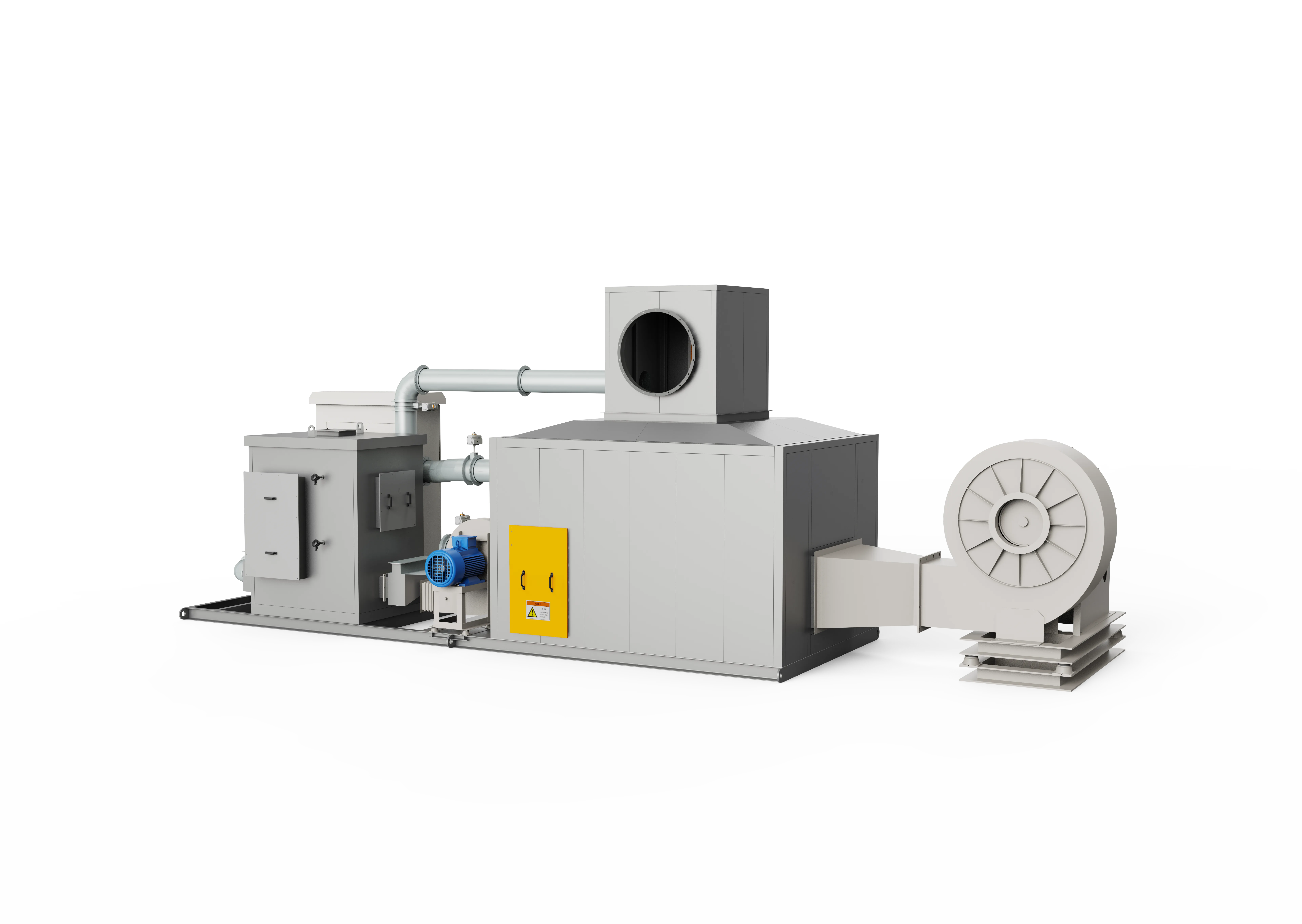
Product images show representative FluxFine configurations. Final dimensions, materials and interfaces follow the approved project design.
Proven RCO installations
Review documented treatment trains featuring RCO technology across various industrial processes.

700,000 m³/h (412,000 CFM) across 14 trains · Automated lithium-ion polymer battery pack assembly, adhesive dispensing & ultrasonic sealing
700,000 m³/h Multi-Train VOCs & Fluoride Treatment System for NVT Technology Lithium Battery Plants
14-Train PP Alkali Scrubbing (5% NaOH) + Two-Stage Demisting + Cyclic Honeycomb Carbon Adsorption + Catalytic Oxidation (CO, 25:1 Ratio)
Read project reference →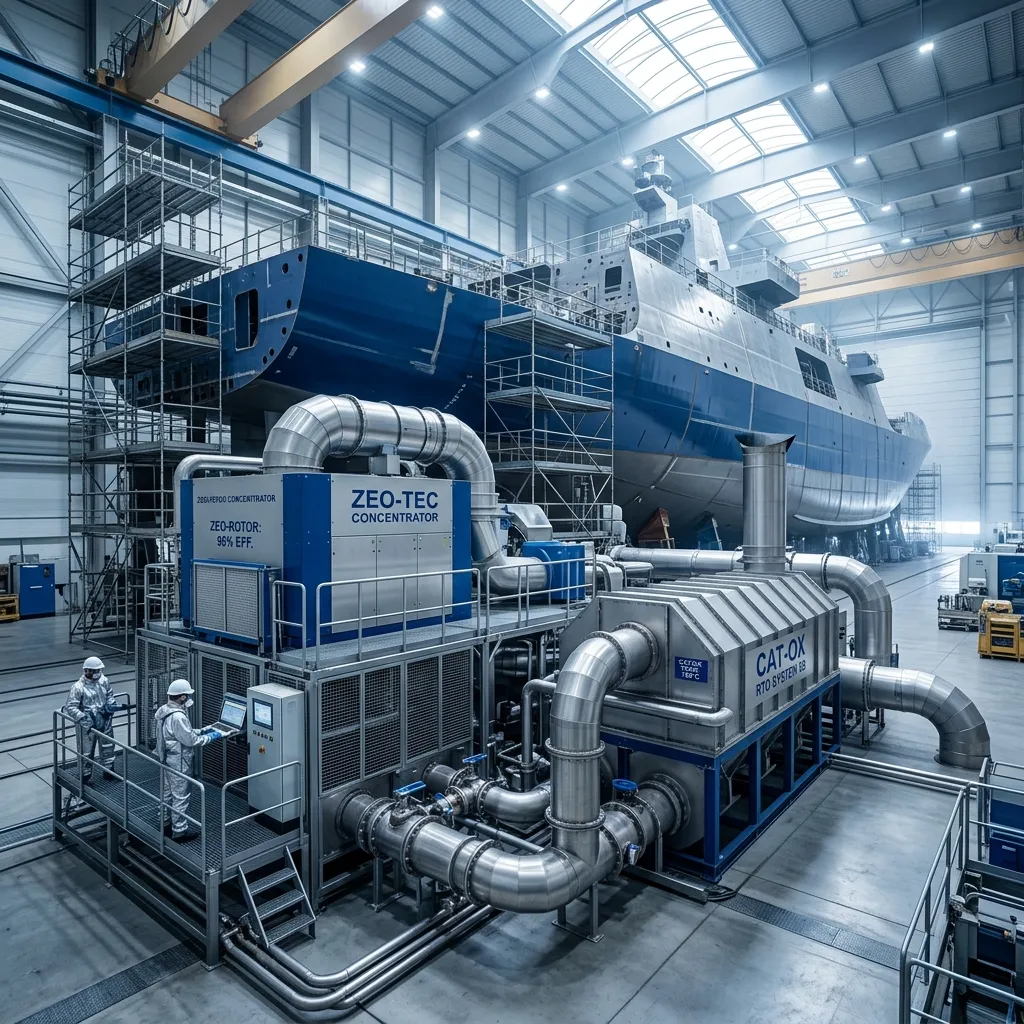
35,000 m³/h (20,600 CFM) · Shipbuilding (Painting & Curing Processes)
High-Efficiency VOC Abatement for Shipbuilding Paint Facilities
Multi-stage Dry Filtration + Cylindrical Zeolite Concentrator + Catalytic Oxidation (CO)
Read project reference →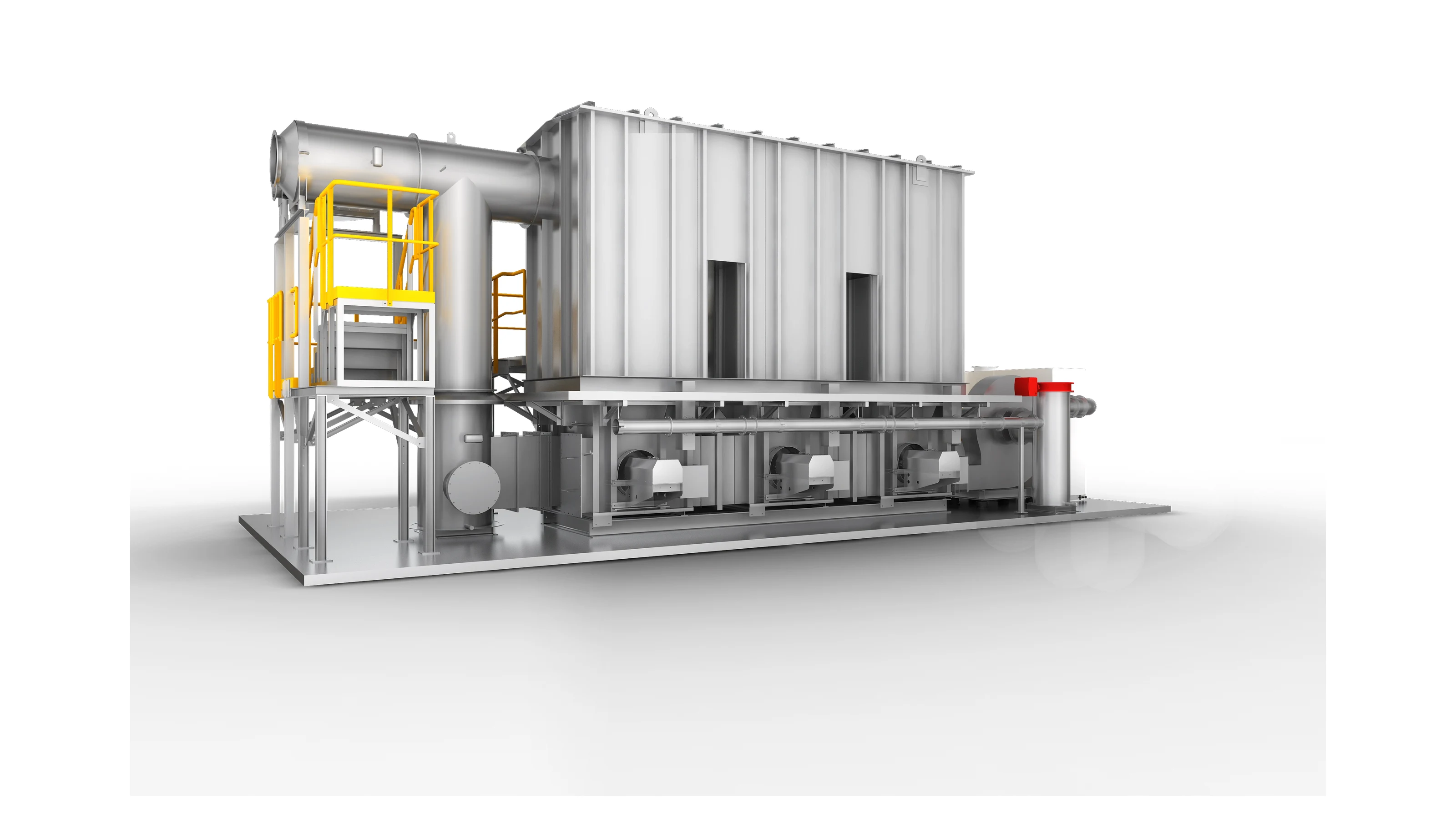
30,000 Nm³/h (17,650 CFM) · Automotive interior trim surface gravure printing, robotic decorative spray coating, water transfer printing & high-temperature curing ovens
30,000 Nm³/h Automotive Interior Trim Printing & Coating VOCs Abatement via Three-Bed RTO System
Equalization Mixing Chamber + SUS304 Wire-Mesh Demister + Three-Bed Regenerative Thermal Oxidizer (3-Bed RTO) + 65 kW Waste Heat Recovery
Read project reference →Configure RCO for your plant
Share measured process data so the engineering team can confirm suitability, pretreatment, equipment size and scope boundaries.
Source basis: 2026 catalog technology configuration; final specification requires process review. Published values are selection references, not a project guarantee.