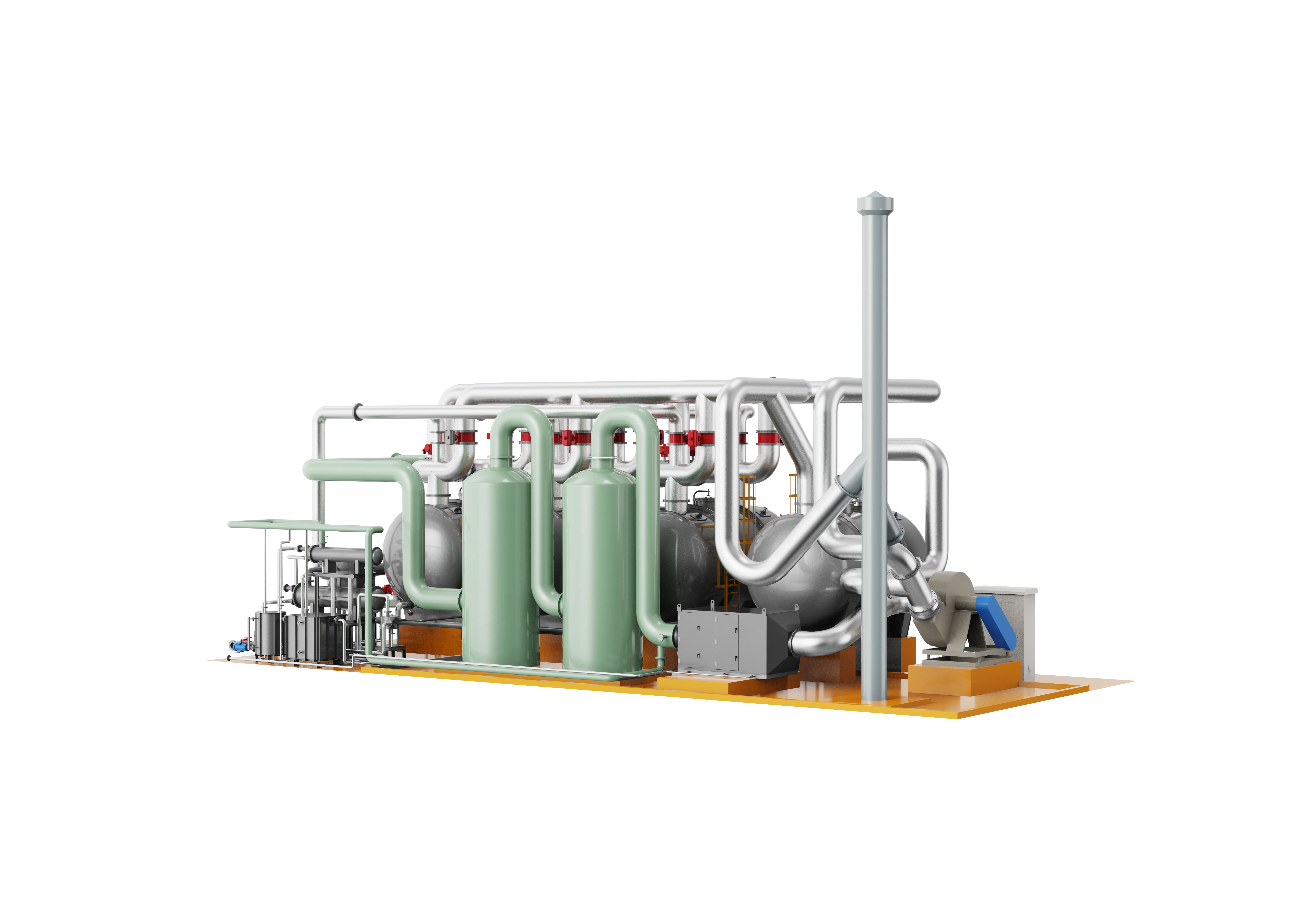
Activated Carbon Adsorption Steam Desorption Condensation Recovery System
An elite solvent recovery system designed to capture high-value organic vapors on premium activated carbon, desorb them with steam, and condense them into high-purity liquid chemicals, achieving purification and recovery rates of >=99%.
Designed around actual process conditions
For industrial plants emitting high concentrations of valuable solvents, destructive combustion is economically wasteful. The FluxFine Activated Carbon Adsorption Steam Desorption Condensation Recovery System provides a resource-recovery alternative. By capturing VOCs in heavy-duty activated carbon beds and using direct steam to regenerate the carbon, the system desorbs and condenses the solvents into high-purity liquid chemicals. This design achieves purification and recovery rates of >=99%, turning environmental compliance into a profitable circular resource loop.
Solvent Recovery System (SRS) / Steam Desorption Carbon System / Carbon Solvent Condenser
Maintained consistently under nominal VOC load and appropriate steam regeneration cycles.
Allows plants to recycle up to 99% of condensable VOCs directly back to production.
The value of recovered solvents frequently exceeds system electric and steam operating costs.
Operating references and configuration choices
These reference values and modules clarify the scope we evaluate. They are not a substitute for a process-data review or final proposal.
| Engineering reference | Value | How to read it |
|---|---|---|
| Process route | Adsorption → steam desorption → condensation | Applicable only where solvent recovery and handling are viable. |
| Source reference removal | ≥99% | Reference claim; not a recovery-yield guarantee. |
| Key utilities | Steam and cooling water | Final utility balance is project-specific. |
Typical modules considered
- Conditioning and carbon adsorption vessels
- Steam-desorption skid and condensers
- Phase separation and recovered-solvent tank interface
- Vent treatment/polishing as required
- Liquid transfer, safety instrumentation and fire protection
Project-specific selection notes
- Establish solvent composition, water miscibility and a reuse/disposal route before evaluating recovery.
- Account for solvent value, purity requirement and utility demand in the project economics.
- Review hazardous-area classification, liquid storage and safe handling as a single package.
Recovery vs. destruction
Recovery is justified by solvent value and a practical route to reuse or safe handling. Thermal or catalytic destruction can be more appropriate for mixed, low-value or difficult-to-separate solvent streams.
- The 2026 catalogue shows carbon adsorption, steam desorption and condensation recovery as a dedicated product family.
- Recovery rate, purity and economics must be confirmed from laboratory/process data.
What we review before specifying Carbon + Steam Recovery
A product name is a starting point, not a final design. These inputs define pretreatment, materials, controls, equipment size and scope boundaries.
Project data to provide
- Solvent identity, concentration, recovery value and water miscibility
- Airflow, production schedule and adsorption/desorption cycle
- Temperature, humidity, dust and oil content
- Steam, cooling water, inerting and recovered-solvent handling
- Hazardous-area classification and fire-protection requirements
Typical engineered scope
- Conditioning and filtration before adsorption
- Activated-carbon vessels and saturation/cycle controls
- Hot-air or steam desorption package
- Catalytic destruction or condensation/phase separation downstream
- Fire monitoring, isolation and safe solvent handling
Safety and controls
- Carbon systems require a specific fire, static-control and temperature-monitoring design.
- Hot, humid, dusty or oil-bearing gas needs pretreatment or a different technology.
- Solvent recovery needs a defined recovered-liquid quality, storage and disposal/reuse route.
- Cycle time and media replacement are based on actual mass loading, not just airflow.
How it works
Raw solvent-laden gas undergoes particulate and temperature conditioning, then enters one of several parallel activated carbon recovery vessels. The high-surface-area carbon adsorbs the solvent molecules, letting clean air vent to the stack. Upon reaching saturation, the process stream is automatically diverted to a secondary vessel. Low-pressure direct steam is introduced into the saturated vessel, heating the carbon to strip the solvents. The resulting steam-solvent vapor mixture is routed to a condenser, where it cooling-condenses into a liquid mixture. This liquid enters a gravity separator or distillation column to partition the water from the pure organic solvent, which is collected in storage tanks for direct manufacturing reuse.
- 01Inlet conditioning to cool the gas and filter any fine particulates.
- 02Organic solvent adsorption on highly porous granular or fibrous activated carbon.
- 03Compliance venting of purified air to the atmosphere.
- 04Vessel switching to coordinate continuous adsorption on alternative beds during regeneration.
- 05Low-pressure steam injection to heat the saturated carbon and desorb solvent vapors.
- 06Condensation of the steam-solvent vapor mixture in a shell-and-tube or plate heat exchanger.
- 07Gravity or distillation separation to isolate water from the liquid organic solvents.
- 08Collection of high-purity recovered solvents in dedicated chemical storage tanks for reuse.
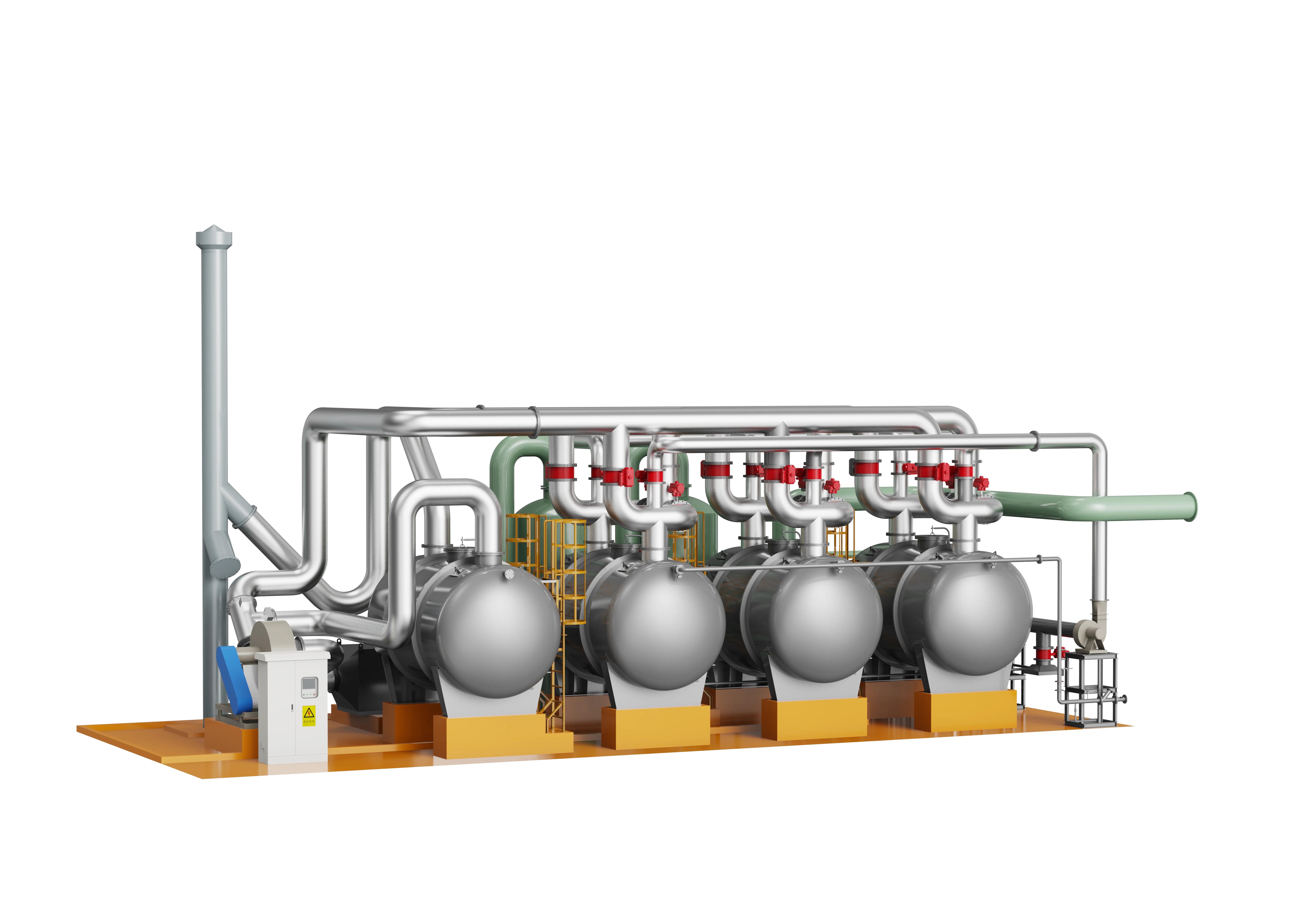
- Recovery of high-value solvents from rotogravure printing, adhesive coating, rubber vulcanization, pharmaceutical synthesis, and petrochemical processing.
- Exhaust streams containing high concentrations (>1,000 mg/m³) of condensable solvents.
- Plants with ready access to utility steam and seeking to optimize raw material costs through solvent recycling.
- Not suitable for water-miscible solvents (like methanol or ethanol) without downstream distillation columns; simple gravity decanting only works for non-polar solvents (like toluene or hexane).
- Steam quality must be managed; boiler carryover or high-pressure steam can damage the carbon structure or cause localized thermal sintering.
- Avoid introducing polymerizable monomers (such as styrene or acrylic monomers) which will polymerize under steam heat, permanently clogging the carbon pores.
Typical pollutants
- Toluene
- Xylene
- Hexane
- Heptane
- Benzene
- Trichloroethylene
- Perchloroethylene
- Ethyl Acetate
- Butyl Acetate
- MEK (Methyl Ethyl Ketone)
- Cyclohexanone
Engineering features
- Highly Profitable Recovery: Recovers valuable organic solvents with a purity matching fresh chemical feed stocks, offering an excellent return on investment.
- Top-Tier VOC Abatement: Delivers outstanding overall system purification efficiencies of >=99%.
- On-Demand Carbon Regeneration: Low-pressure steam sweeps the carbon pores, restoring high-affinity adsorption capacities.
- Explosion-Proof Engineering: Nitrogen purging, steam blanketing, and wet condensing loops eliminate solvent ignition risks.
- Fully Automated Separation: Integrated instrumentation automatically separator water from non-polar solvents for direct, continuous chemical collection.
Available options
- Granular activated carbon (GAC) or activated carbon fiber (ACF) media beds.
- Dual-vessel or three-vessel systems for continuous continuous manufacturing operations.
- Integrated distillation or dehydration columns to purify water-miscible solvents up to >99.5% purity.
Relevant industries
Printing & Laminating
Gravure, flexible packaging, lamination, optical film and continuous web processes.
Coating & Surface Finishing
Industrial paint, UV coating, adhesive, metal finishing and multi-booth surface processes.
Chemical Industry
Resins, coatings, waterproofing, and specialty chemicals.
Pharmaceutical & Medical
Solvent exhaust from synthesis, coating, and finishing.
New Materials & New Energy
Battery materials, functional films, composites and advanced material production.
General technology selection
These answers explain the selection path. Final performance, safety scope and dimensions follow the approved project design.
When is solvent recovery worth considering?
Recovery can be evaluated when the solvent mix is recoverable, its value supports the added equipment, and steam/cooling-water and liquid-handling routes are available.
Can activated carbon treat any exhaust stream?
No. High humidity, oil, dust, excessive temperature and incompatible chemistry can quickly reduce performance or create a safety concern.
Source basis: VOCs equipment source and 2026 catalogue. Recovery and removal outcomes are project-specific.
Specific product Q&A
How does steam desorption of activated carbon recover organic solvents?
When the activated carbon beds become saturated with VOCs, superheated steam (typically 110-140°C) is introduced. The high thermal energy breaks the weak Van der Waals forces holding the organic molecules, sweeping the highly concentrated VOC vapors out of the carbon bed. This mixed steam/vapor stream is then directed into a shell-and-tube heat exchanger (condenser) where chilling water forces phase change, recovering the solvents in liquid form.
What is the ROI of an industrial solvent recovery plant in rotogravure printing?
For industries using high volumes of valuable, single-species solvents like toluene or ethyl acetate (common in rotogravure printing and flexible packaging), an Activated Carbon Steam Desorption system often achieves Return on Investment (ROI) within 12 to 24 months. Rather than destroying the solvent and incurring utility costs, the recovered high-purity liquid solvent is directly reused in the production process, drastically reducing raw material purchasing costs.
How to separate water from condensable organic solvents after steam desorption?
After the steam and VOC vapor mixture is condensed into a liquid state, it flows into a stratified gravity separator (decanting tank). Because most targeted organic solvents (like toluene or hexane) are immiscible with water and have different specific gravities, the liquids naturally separate into distinct layers. The water is drained for wastewater treatment or stripped, while the purified organic solvent is pumped back to production storage.
Equipment views
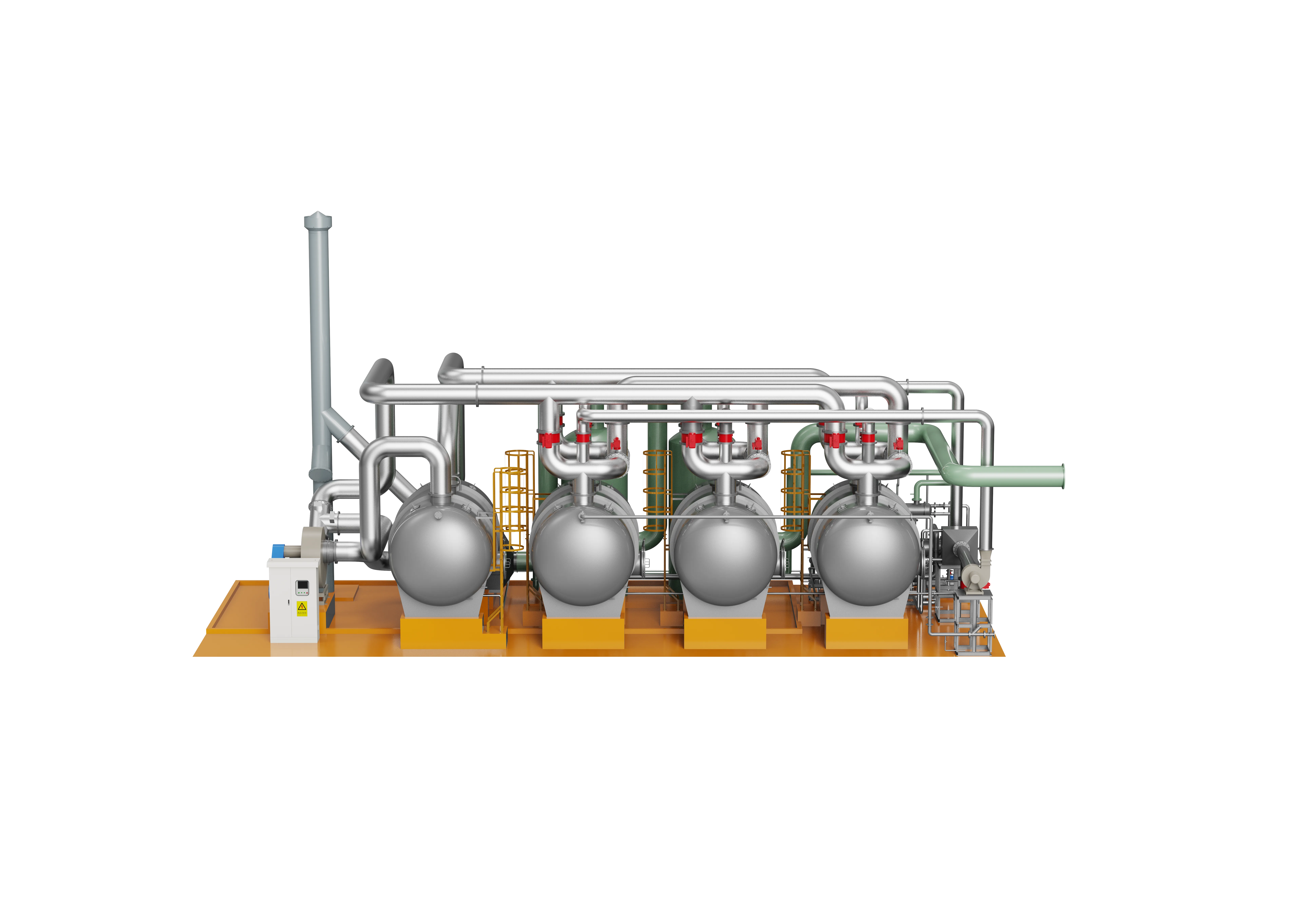
Product images show representative FluxFine configurations. Final dimensions, materials and interfaces follow the approved project design.
Configure Carbon + Steam Recovery for your plant
Share measured process data so the engineering team can confirm suitability, pretreatment, equipment size and scope boundaries.
Source basis: Published values are selection references, not a project guarantee.