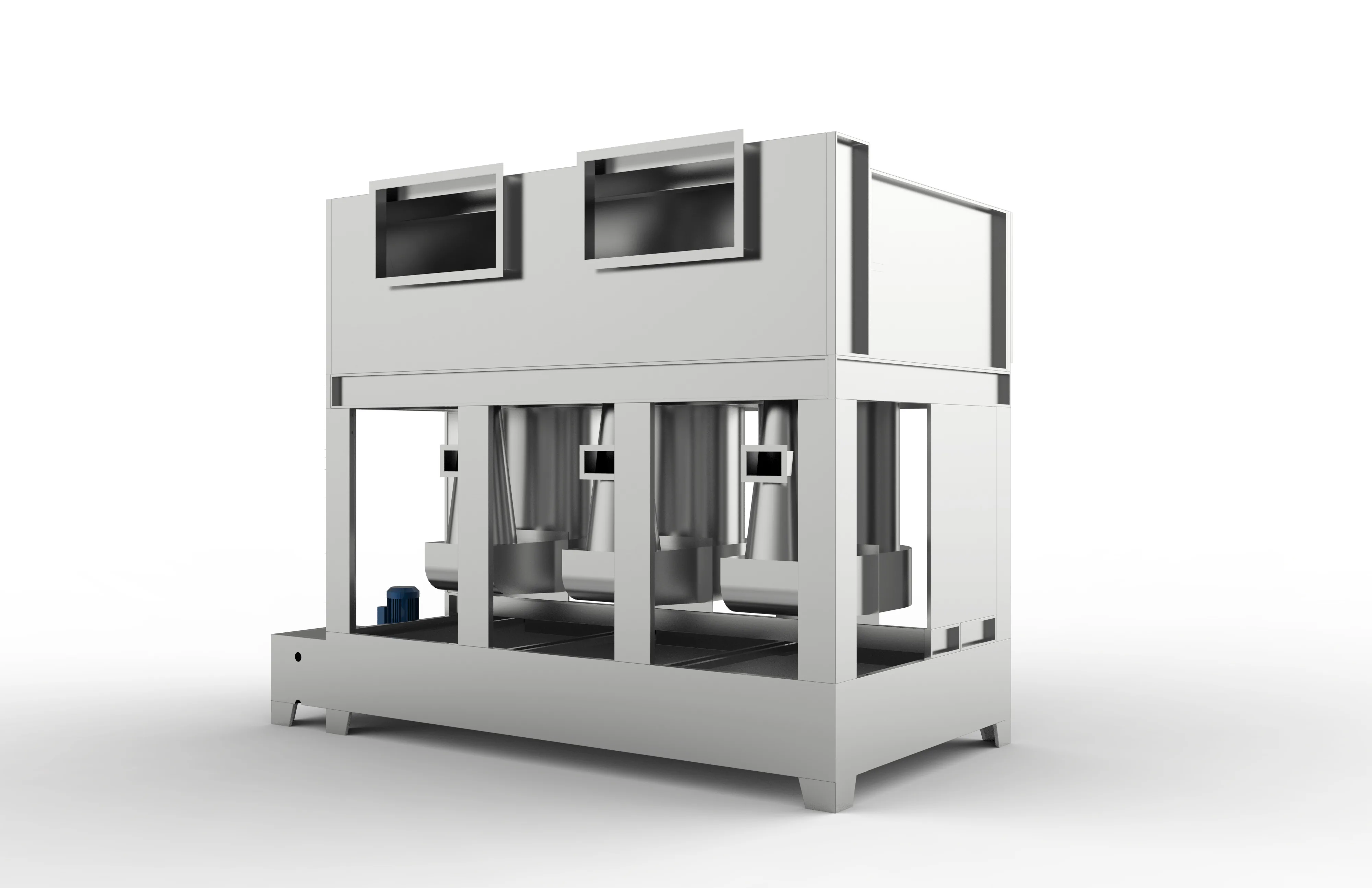
Cyclone Hybrid Scrubber Tower
An elite wet-cyclonic pre-treatment system designed to capture highly sticky, fibrous, and abrasive dusts from industrial grinding, polishing, and spray painting, delivering dust capture efficiencies of 95%-98.5%.
Designed around actual process conditions
Handling fibrous, sticky, or highly abrasive dusts in dry baghouses leads to fast bag blinding, high filter replacement costs, and potential fire hazards. The FluxFine Cyclone Hybrid Scrubber Tower delivers a safe, heavy-duty alternative by combining tangential cyclonic forces with high-velocity gas-liquid emulsion. By forcing the exhaust gas into a horizontal circular pathway through guided slots, it maintains continuous turbulent scrubbing on a recirculating liquid film. This packing-free design achieves superior dust capture efficiencies (95%-98.5%) and completely eliminates the risk of fibrous dust clogging.
Cyclone Wet Scrubber / Rotary Wet Dust Collector / Cyclone Hybrid Tower
Highly effective for grinding grits, fibrous dusts, and heavier particulates.
Acts as an exceptional front-end protection barrier for downstream adsorption beds.
Wet processing eliminates dust-cloud explosion hazards for reactive metals.
Operating references and configuration choices
These reference values and modules clarify the scope we evaluate. They are not a substitute for a process-data review or final proposal.
| Engineering reference | Value | How to read it |
|---|---|---|
| Application scope | Coarse, fibrous or sticky front-end particulate loading | A selection reference only; final capacity and materials follow the project design basis. |
| Configuration | Project-specific | Confirmed from process data, site constraints and the required treatment objective. |
| Performance basis | Process-dependent | No generic removal, safety or compliance promise is made without the stated pollutant and operating conditions. |
Typical modules considered
- Tangential/cyclonic inlet and wet-contact section
- Recirculation sump, pump and solids-management interface
- Mist elimination before downstream equipment
- Access for inspection, flushing and planned cleanout
Project-specific selection notes
- Size the fan from the complete system pressure drop, including mist elimination and downstream treatment.
- Define solids removal, blowdown and wastewater responsibilities before installation.
- Review abrasion, corrosion and temperature against the selected construction material.
How to use this product information
Cyclone hybrid wet scrubbing is a conditioning stage for difficult particulate; it is not presented as standalone high-efficiency gaseous VOC destruction.
- The supplied product descriptions identify cyclone-plus-wet treatment for sticky, fibrous and heavy particulate pretreatment.
- The published description is a selection starting point. Process data, utilities, materials, safety requirements and acceptance criteria remain subject to engineering review.
What we review before specifying Cyclone Scrubber
A product name is a starting point, not a final design. These inputs define pretreatment, materials, controls, equipment size and scope boundaries.
Project data to provide
- Gas chemistry and required absorption/reaction
- Airflow, inlet temperature, dust and mist loading
- Liquid chemistry, pH/ORP control and make-up water
- Wastewater treatment route and discharge constraints
- Corrosion requirements, footprint and pressure-drop allowance
Typical engineered scope
- Inlet quench, jet or packed contact stage as required
- Recirculation tank, pump, chemical dosing and instrumentation
- Mist eliminator and duct/fan interface
- Materials selected for temperature and chemistry
- Wastewater, sludge and maintenance access provisions
Safety and controls
- The treatment liquid is selected from the gas chemistry and operating target.
- pH, ORP, liquid level, pressure drop and pump status are typical monitored points.
- Scrubbers may be pretreatment, primary acid/alkali control or a polishing stage; the role must be defined.
- Do not quote generic efficiency without the gas species, reagent and contact design.
How it works
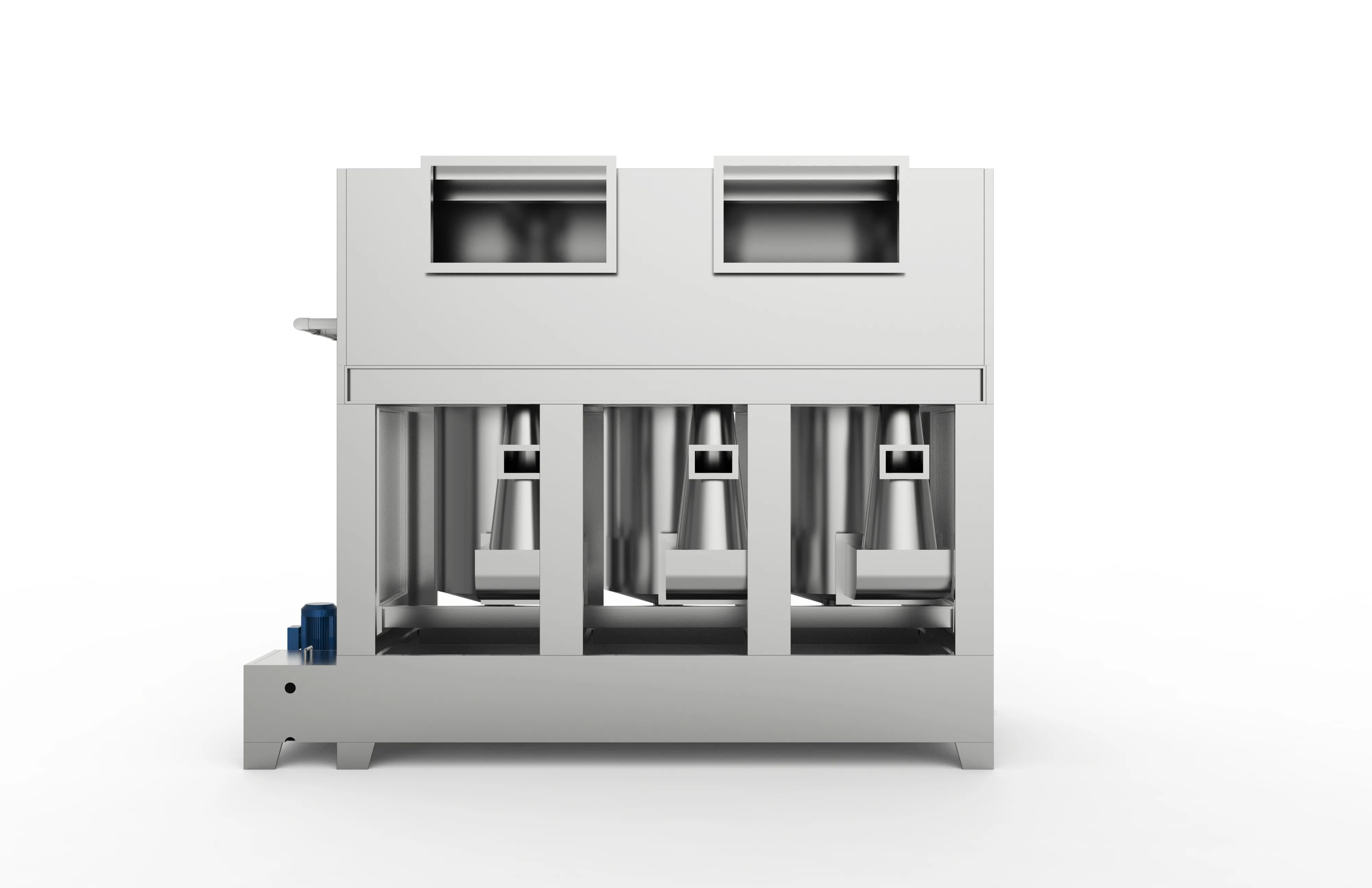
Raw, dust-laden exhaust is pulled tangentially into the lower guide vanes of the cyclone tower. Under cyclonic forces, the gas creates a high-velocity vortex, forcing dust particles outward against the wet inner walls. Scrubbing water is introduced into these guided slots, causing intense gas-liquid emulsification and wetting the dust. The wetted dust particles increase in mass and drop into the lower slurry basin. The wortex rises into a secondary packing chamber, where a counter-current spray wash captures any remaining sub-micron particles. The gas then passes through a multi-blade cyclonic demister to remove water droplets before discharge.
- 01Tangential introduction of dusty process gas to generate a high-velocity cyclonic vortex.
- 02Gas-liquid emulsification within the guided slots, wetting dusts and fibers.
- 03Centrifugal separation of wetted heavy dusts, directing them down to the lower basin.
- 04Passage of the wortex through a secondary packing wash zone for deep polishing.
- 05Counter-current spraying of fresh or recirculating liquid over structured packing.
- 06Vane-type demisting to strip water mist from the clean effluent.
- 07Sump draining of slurry for sludge extraction and water reuse.
- Capture of highly sticky, fibrous, or flammable dusts from grinding, metal polishing, rubber mixing, and wood sanding.
- Front-end paint mist conditioning in industrial spray coating operations.
- Processes demanding explosive dust mitigation (e.g., aluminum or magnesium dusts) with wet spark suppression.
- Slurry summing basins must be regularly cleared; excessive sediment will damage recirculation pumps.
- Water level controls must be closely maintained to prevent pump dry-running or demister flooding.
- Chemical dosing (e.g., paint coagulants for spray booths) must be scheduled to prevent sticky paint mist from bonding to tower walls.
Typical pollutants
- Polishing and Grinding Dust
- Fibrous Dust
- Sticky Paint Mist
- Wood and Plastic Particulates
- Metal Sparks and Shavings
Engineering features
- Tangential Guided Vortex: Uses high centrifugal force to separate heavy wetted dusts rapidly.
- Superior Mist Capture: Achieving dust removal rates of 95%-98.5%, acid mist removal of 94%-98%, and paint mist capture of ~96%.
- Spark Suppression: Wet vortex design extinguishes sparks from grinding and metal-working, eliminating fire risks.
- Dual-Stage Cleansing: Combines wet cyclonic slot emulsification with a secondary packed-bed polishing spray.
- Heavy-Duty Construction: Available in reinforced polypropylene (PP) or thick 304/316L stainless steel.
Available options
- Automatic scraper conveyor for continuous sump sludge removal.
- Stainless steel wear-liners in the inlet vortex zone for abrasive dusts.
- Explosion-proof structural vents and anti-static grounding packages.
Relevant industries
Coating & Surface Finishing
Industrial paint, UV coating, adhesive, metal finishing and multi-booth surface processes.
Chemical Industry
Resins, coatings, waterproofing, and specialty chemicals.
Rubber & Plastics
PVC, compounding, injection, and polymer processing fumes.
Food Industry
Frying, roasting, and process oil-fume control.
General technology selection
These answers explain the selection path. Final performance, safety scope and dimensions follow the approved project design.
When is a wet scrubber used before VOC treatment?
It can cool or remove acid/alkali gas, soluble contaminants and certain mist/particulate so that the downstream adsorption or oxidation equipment is protected.
What happens to the scrubber liquid?
It is recirculated with controlled make-up and blowdown. The project must define chemical dosing, wastewater treatment and disposal responsibilities.
Source basis: VOCs equipment source. Materials, reagent and performance are selected from the gas chemistry.
Specific product Q&A
How to handle heavy dust and VOCs in the same exhaust stream?
Heavy dust must be removed before VOC treatment to prevent fouling downstream carbon beds, zeolite rotors, or RTO heat exchangers. A Cyclone Hybrid Scrubber handles both in a single stage: the cyclonic action separates large abrasive particulate via centrifugal force, while the integrated wet scrubbing section captures fine dust and absorbs water-soluble VOCs or acid/alkaline gases simultaneously.
Why use a cyclone scrubber instead of a baghouse and standard wet scrubber?
When the exhaust stream contains sticky, wet, or hot particulate (such as boiler flue gas or foundry exhaust), a traditional dry baghouse will quickly blind and fail. A cyclone scrubber combines the dry centrifugal separation of a standard cyclone with wet washing, preventing sticky build-up and handling high temperatures while requiring significantly less physical footprint than two separate standalone units.
How does cyclone centrifugal force improve wet scrubbing efficiency?
In a standard wet scrubber, gas moves vertically against a spray. In a cyclone scrubber, the gas enters tangentially at high velocity, creating a strong centrifugal vortex. This forces the heavier dust particles and the injected water droplets to the outer walls where they violently mix. This high-intensity mixing zone dramatically increases the gas-liquid contact area, leading to higher absorption efficiency for soluble gases and superior collection of fine particulate compared to low-velocity packed towers.
Equipment views
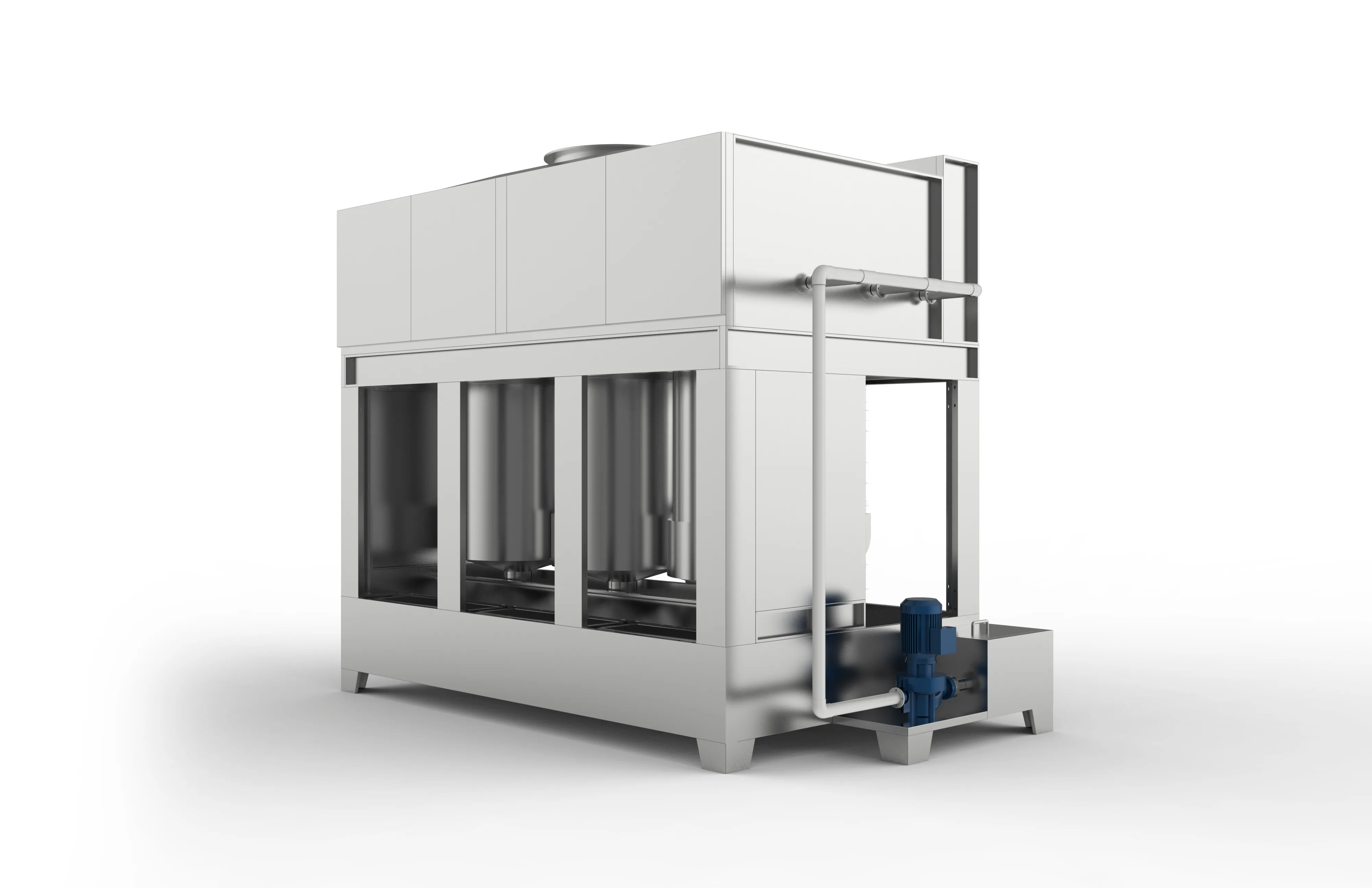
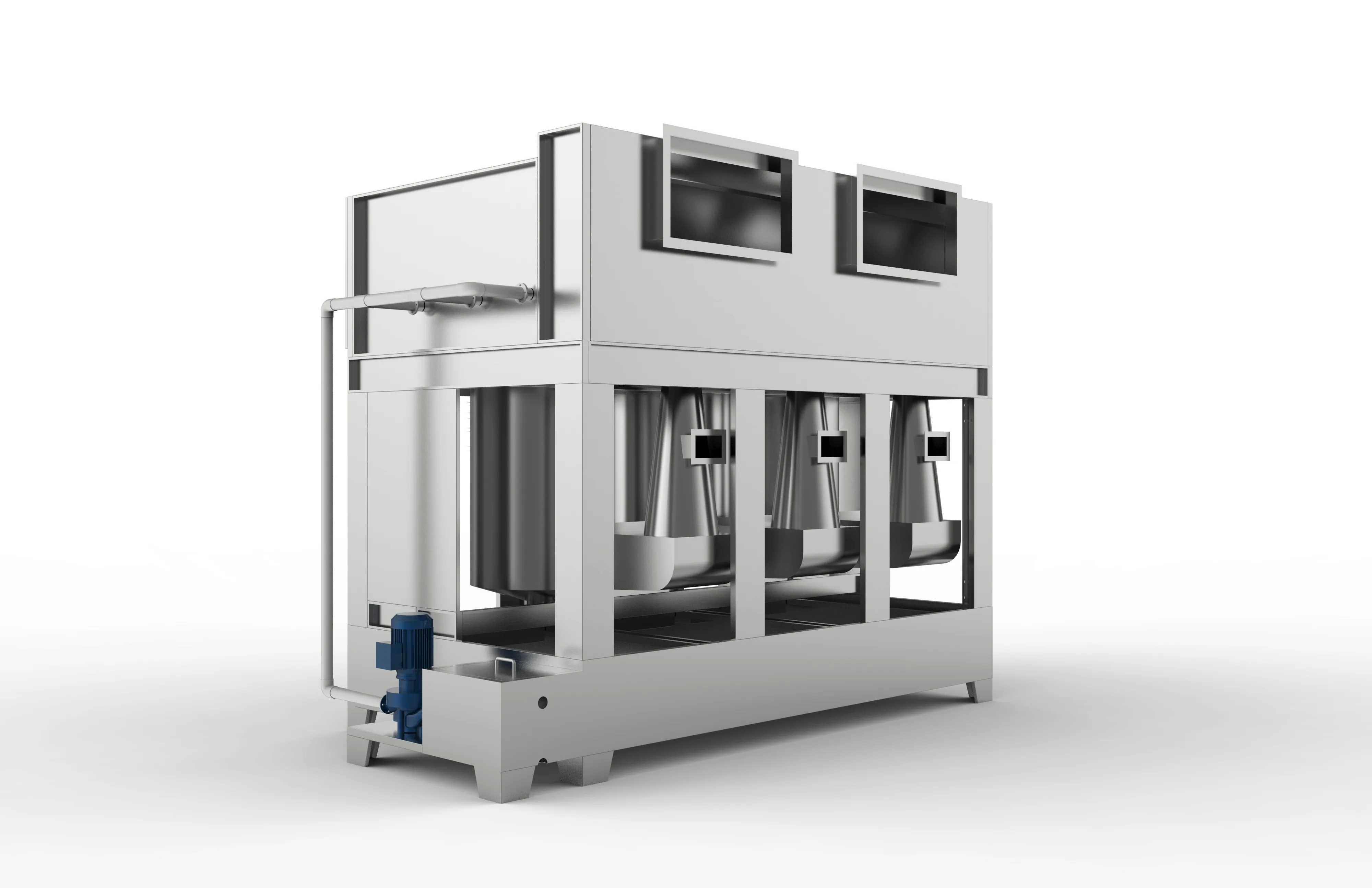
Product images show representative FluxFine configurations. Final dimensions, materials and interfaces follow the approved project design.
Configure Cyclone Scrubber for your plant
Share measured process data so the engineering team can confirm suitability, pretreatment, equipment size and scope boundaries.
Source basis: Published values are selection references, not a project guarantee.