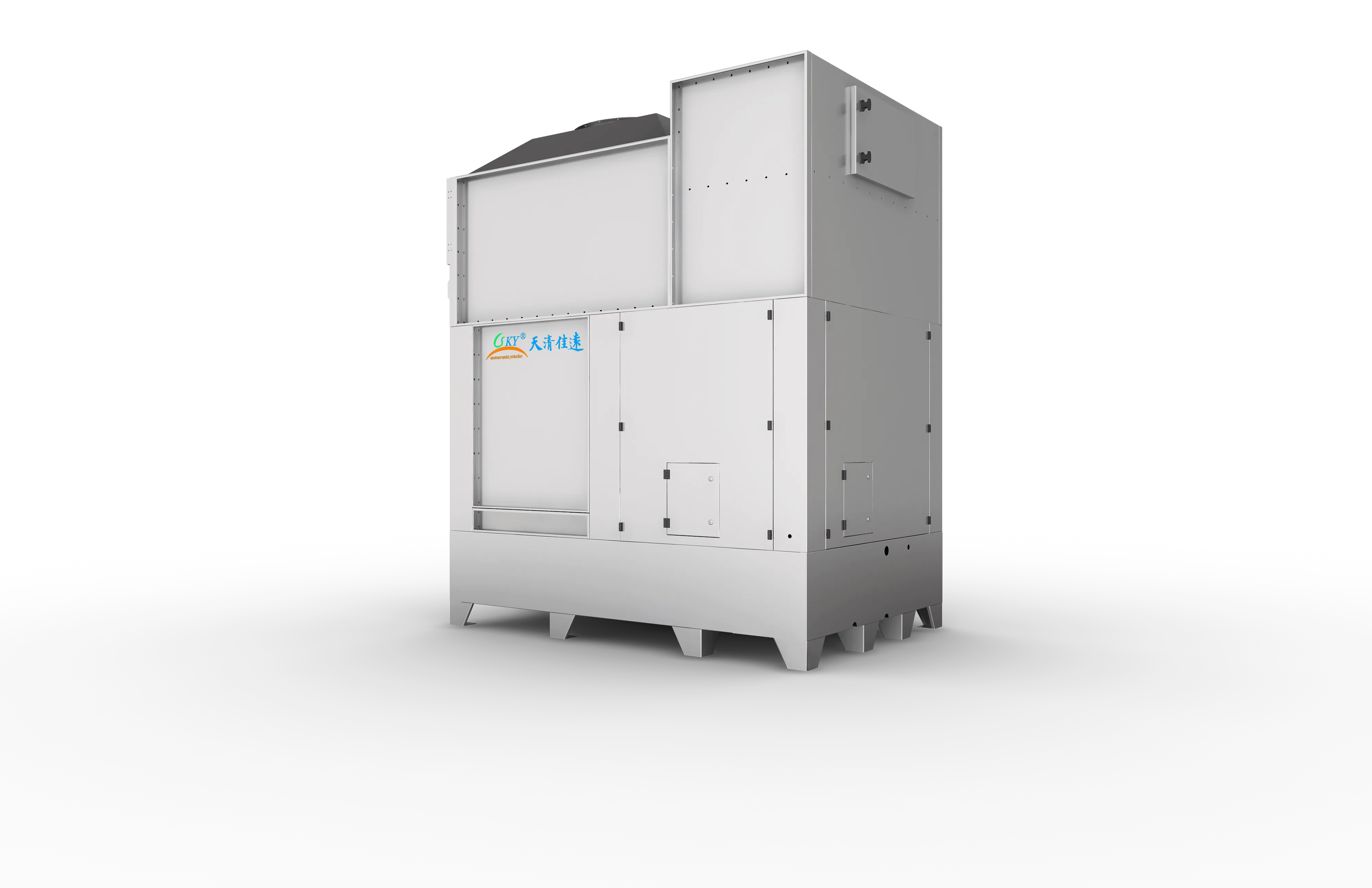
Cyclone Hybrid Two-Stage Tower (Waste Gas Pre-Treatment)
Front-end treatment tower specifically engineered for sticky dust, fibrous dust, and heavy polishing particulate.
Designed around actual process conditions
This hybrid cyclone tower uses centrifugal force combined with liquid scrubbing to capture sticky, fibrous, and polishing dusts that would typically clog standard packed scrubbers or dry filters.
Cyclone Scrubber
For >5-micron particulate
Dual-stage integrated design
Compared to separate standalone units
Operating references and configuration choices
These reference values and modules clarify the scope we evaluate. They are not a substitute for a process-data review or final proposal.
| Engineering reference | Value | How to read it |
|---|---|---|
| Application scope | Sticky, fibrous and heavy particulate pretreatment | A selection reference only; final capacity and materials follow the project design basis. |
| Configuration | Project-specific | Confirmed from process data, site constraints and the required treatment objective. |
| Performance basis | Process-dependent | No generic removal, safety or compliance promise is made without the stated pollutant and operating conditions. |
Typical modules considered
- Tangential cyclonic separation section
- Wet-wall/sump and purge arrangement
- Fan, mist-elimination and downstream interface
- Inspection access for solids removal
Project-specific selection notes
- Validate solids behavior and sump cleanout frequency with actual process samples where possible.
- Plan abrasion, corrosion and drainage details around the selected construction.
- Do not route untreated heavy dust into adsorption media, catalyst or regenerative ceramic equipment.
How to use this product information
This configuration is selected to condition difficult particulate streams before main treatment; it is not a standalone VOC removal claim.
- The bilingual source explicitly describes sticky, fibrous and polishing dust pretreatment for this tower configuration.
- The published description is a selection starting point. Process data, utilities, materials, safety requirements and acceptance criteria remain subject to engineering review.
What we review before specifying Cyclone Hybrid Tower
A product name is a starting point, not a final design. These inputs define pretreatment, materials, controls, equipment size and scope boundaries.
Project data to provide
- Gas chemistry and required absorption/reaction
- Airflow, inlet temperature, dust and mist loading
- Liquid chemistry, pH/ORP control and make-up water
- Wastewater treatment route and discharge constraints
- Corrosion requirements, footprint and pressure-drop allowance
Typical engineered scope
- Inlet quench, jet or packed contact stage as required
- Recirculation tank, pump, chemical dosing and instrumentation
- Mist eliminator and duct/fan interface
- Materials selected for temperature and chemistry
- Wastewater, sludge and maintenance access provisions
Safety and controls
- The treatment liquid is selected from the gas chemistry and operating target.
- pH, ORP, liquid level, pressure drop and pump status are typical monitored points.
- Scrubbers may be pretreatment, primary acid/alkali control or a polishing stage; the role must be defined.
- Do not quote generic efficiency without the gas species, reagent and contact design.
How it works
Inertial cyclonic separation flings heavy and sticky particulate to the wetted walls, washing them down into a sump without relying on internal packing media that could foul.
- 01Dust-laden air enters tangentially
- 02Centrifugal force drives dust to wetted walls
- 03Liquid washes particulate to sump
- 04Conditioned air exits to main abatement
- Sticky dust
- Fibrous dust
- Grinding & polishing dust
- Heavy particulate pre-treatment
- Not designed for high-efficiency gaseous VOC removal; it is a pre-treatment stage.
- Sump requires regular cleanout or automated purging.
Typical pollutants
- Sticky aerosols
- Fibers
- Heavy dust
- Coarse grinding particles
Engineering features
- No internal packing to clog
- High particulate tolerance
- Heavy-duty construction
- Low pressure drop
Available options
- Abrasion-resistant coatings
- High-capacity sump
- Continuous purge
General technology selection
These answers explain the selection path. Final performance, safety scope and dimensions follow the approved project design.
When is a wet scrubber used before VOC treatment?
It can cool or remove acid/alkali gas, soluble contaminants and certain mist/particulate so that the downstream adsorption or oxidation equipment is protected.
What happens to the scrubber liquid?
It is recirculated with controlled make-up and blowdown. The project must define chemical dosing, wastewater treatment and disposal responsibilities.
Source basis: VOCs equipment source. Materials, reagent and performance are selected from the gas chemistry.
Specific product Q&A
How does a cyclone hybrid tower handle heavy abrasive dust?
The cyclone hybrid tower forces incoming exhaust gas into a high-velocity spiral. Centrifugal force pushes the largest, most abrasive particulate to the outer walls where they fall into the hopper dry, preventing them from entering the wet scrubbing section. This dramatically reduces the sludge load in the scrubber water, extending pump life and minimizing maintenance.
Why combine a cyclone with a wet spray tower in one unit?
Installing a standalone cyclone and a separate wet scrubber requires significant ductwork, dual support structures, and a large footprint. Integrating them into a single hybrid tower saves up to 40% in floor space, reduces static pressure drop (saving fan energy), and eliminates the cost of interconnecting ductwork while achieving superior multi-stage particulate removal.
Can a cyclone hybrid tower remove acid gases?
Yes. While the cyclonic section handles heavy particulate, the upper wet scrubbing section can be dosed with alkaline reagents (like NaOH) to neutralize acid gases (SO2, HCl, HF). The pre-removal of heavy dust in the cyclone prevents the alkaline spray nozzles from clogging, ensuring continuous and efficient chemical absorption.
Proven Cyclone Hybrid Tower installations
Review documented treatment trains featuring Cyclone Hybrid Tower technology across various industrial processes.
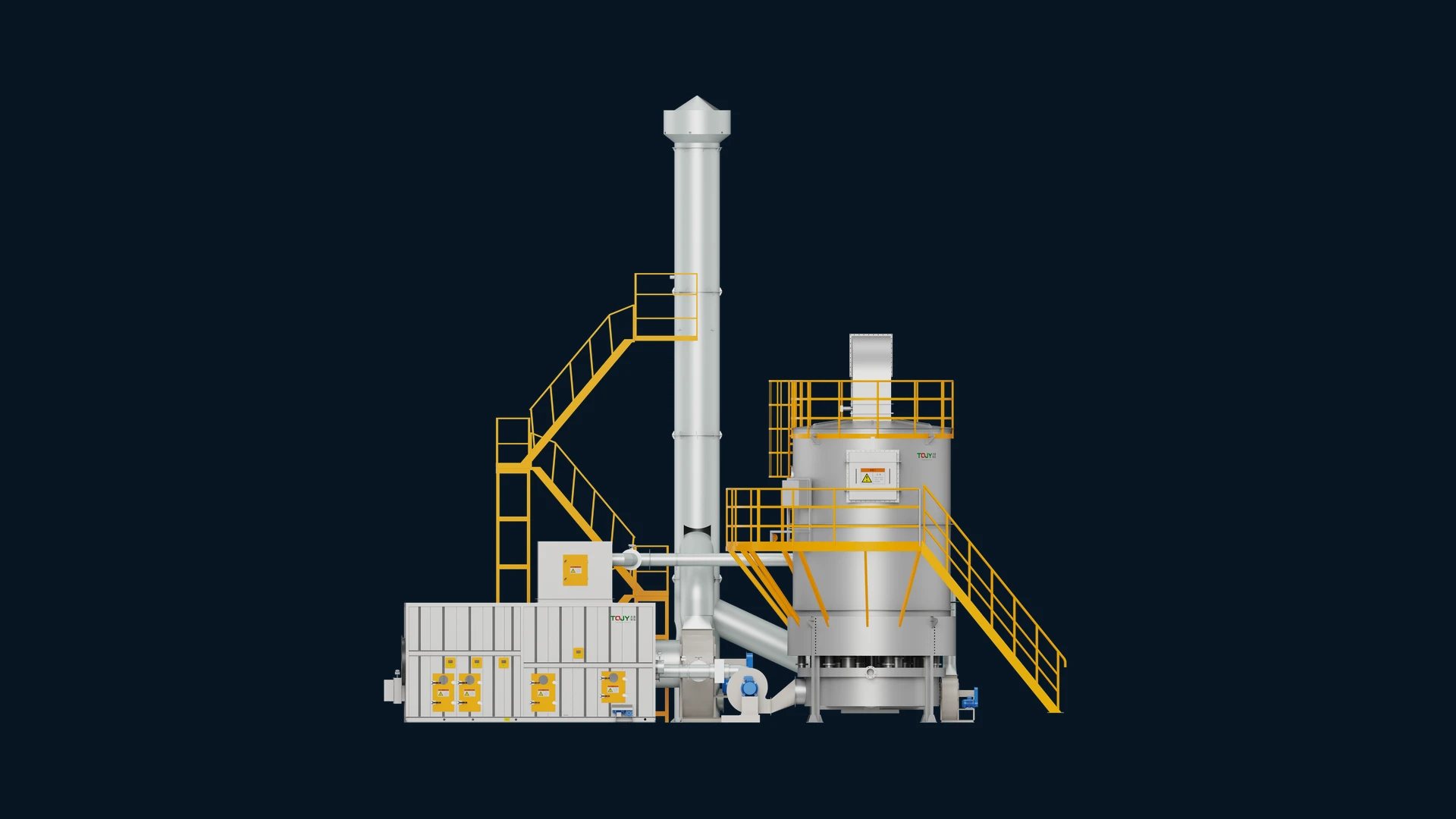
Configure Cyclone Hybrid Tower for your plant
Share measured process data so the engineering team can confirm suitability, pretreatment, equipment size and scope boundaries.
Source basis: Extracted from bilingual catalog for SEO. Published values are selection references, not a project guarantee.