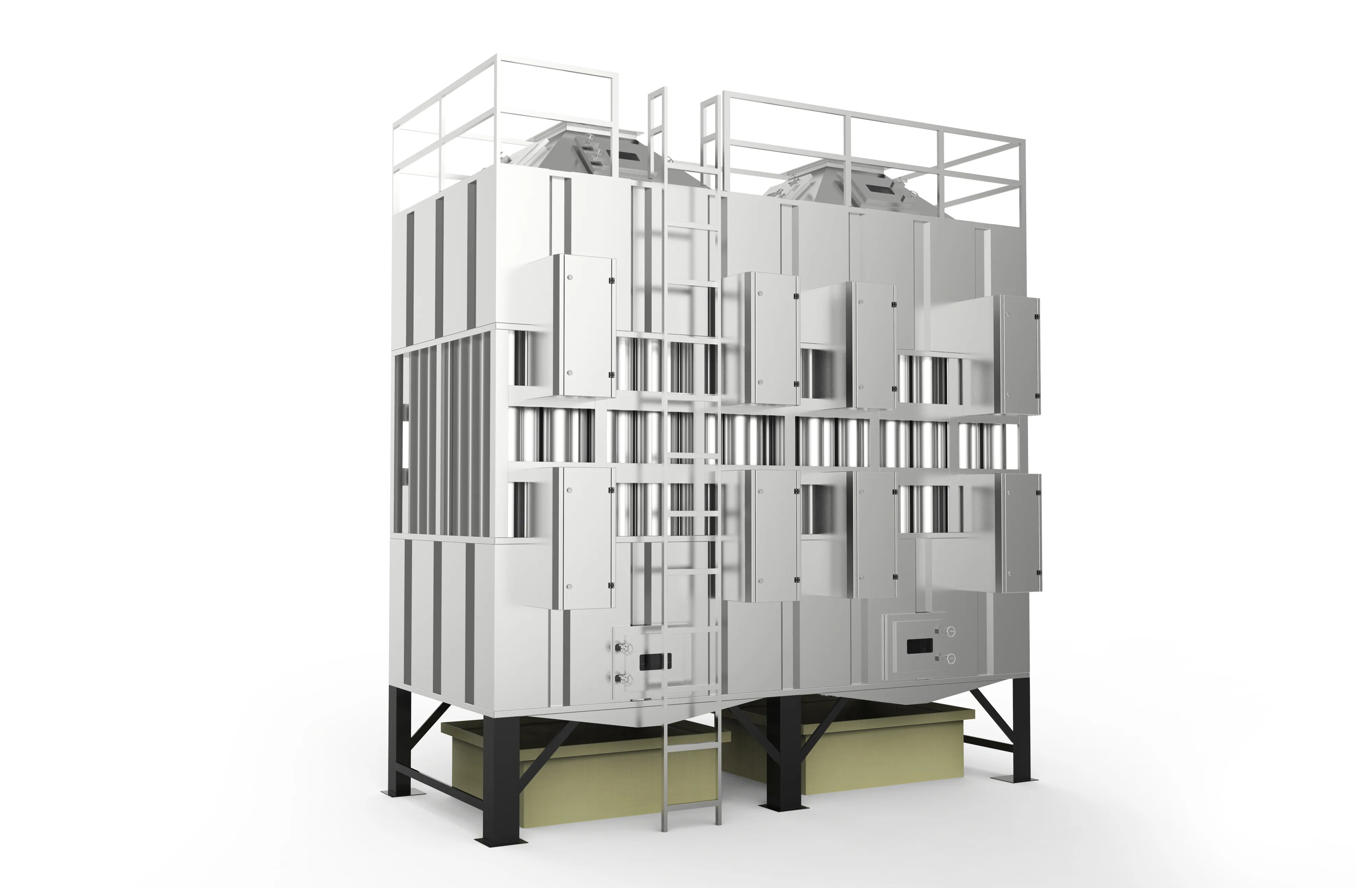
Wet Electrostatic Precipitator (WESP) Flue Gas Treatment Unit
High-tech patented WESP for sub-micron particulate, oil fumes, and complex industrial flue gas purification.
Designed around actual process conditions
Independently developed by FluxFine, this Wet Electrostatic Precipitator applies high-tech patented technology to eliminate fine aerosols, sticky fumes, and sub-micron dust from demanding industrial processes like PVC granulation, textile setting, and waste incineration.
Wet ESP Dust Removal Equipment
For sub-micron aerosols
Automated flushing
Safety interlocked
Operating references and configuration choices
These reference values and modules clarify the scope we evaluate. They are not a substitute for a process-data review or final proposal.
| Engineering reference | Value | How to read it |
|---|---|---|
| Application scope | Fine flue-gas aerosol, oil mist and sticky particulate polishing | A selection reference only; final capacity and materials follow the project design basis. |
| Configuration | Project-specific | Confirmed from process data, site constraints and the required treatment objective. |
| Performance basis | Process-dependent | No generic removal, safety or compliance promise is made without the stated pollutant and operating conditions. |
Typical modules considered
- Gas cooling/conditioning stage where required
- Wet electrostatic collection field and high-voltage controls
- Washdown, drainage and recirculation interface
- Mist management and maintenance access
Project-specific selection notes
- Confirm inlet temperature, aerosol loading, corrosive chemistry and water-management requirements.
- Review whether upstream quenching, scrubbing or coarse separation is necessary.
- Treat collection performance as pollutant- and project-specific rather than a generic guarantee.
How to use this product information
This WESP configuration is evaluated for fine aerosol and flue-gas polishing. It does not replace chemistry-specific gas treatment or VOC destruction where required.
- The bilingual product material provides the source context for a WESP flue-gas treatment configuration; no unverified patent or universal-efficiency claim is added here.
- The published description is a selection starting point. Process data, utilities, materials, safety requirements and acceptance criteria remain subject to engineering review.
What we review before specifying WESP Flue Gas Unit
A product name is a starting point, not a final design. These inputs define pretreatment, materials, controls, equipment size and scope boundaries.
Project data to provide
- Aerosol type and particle-size distribution
- Inlet loading, gas temperature and moisture content
- Acid mist, SO₃/corrosion potential and upstream scrubbing
- Water supply, wastewater route and site materials requirements
- Maintenance access and electrical safety requirements
Typical engineered scope
- Collection duct and inlet conditioning
- Electrostatic collection section and high-voltage power supply
- Washdown/spray system and mist separation
- Drainage, recirculation and wastewater interface
- Local controls, interlocks and inspection access
Safety and controls
- High-voltage isolation, power-supply protection and safe access are part of the engineered scope.
- Acid-dew-point and corrosion assessment determines materials and upstream conditioning.
- WESP is selected around particle/aerosol characteristics; it does not replace VOC oxidation for high organic gas loads.
- Outlet targets must cite the pollutant, inlet condition and applicable test/design basis.
How it works
Flue gas passes through a high-voltage electrostatic field where fine droplets and particles are charged and collected on irrigated surfaces. Continuous or intermittent washing prevents sticky buildup.
- 01Pre-quenching and scrubbing
- 02High-voltage ionization
- 03Electrostatic collection on wet surfaces
- 04Automatic flushing of collected waste
- Dyeing, setting & printing
- Rubber, PVC & plastic granulation
- Waste plastic recycling
- Asphalt & waste incineration flue gas
- Gas must be cooled and quenched before entering the WESP.
- High-voltage components require safety interlocks and regular inspection.
- Oil-mist applications (e.g., PVC/textile) require automated fire suppression and spark detection to mitigate high-voltage fire risks.
Typical pollutants
- Oil mist
- Sub-micron dust
- Sticky aerosols
- Condensable organics
Engineering features
- Patented high-voltage technology
- Corrosion-resistant alloys
- Automatic flushing system
- Continuous high-efficiency operation
- Engineered to support compliance with stringent particulate emission limits, including US EPA MACT.
Available options
- Tubular or plate design
- 201, 304, or specialty alloys (e.g., 2205 Duplex/Titanium for high-sulfur/chlorine)
- Multi-field configurations
Relevant industries
Rubber & Plastics
PVC, compounding, injection, and polymer processing fumes.
Chemical Industry
Resins, coatings, waterproofing, and specialty chemicals.
Heavy Machinery & Shipbuilding
Large booth coating and high-airflow paint shops.
New Materials & New Energy
Battery materials, functional films, composites and advanced material production.
General technology selection
These answers explain the selection path. Final performance, safety scope and dimensions follow the approved project design.
What does a WESP capture well?
It is commonly evaluated for fine, sticky or oily aerosols, acid mist, tar and other particulate that is difficult to polish with mechanical filtration alone.
Does a WESP require water management?
Yes. Spray/washdown water, drainage, recirculation and wastewater treatment need to be included in the project scope.
Source basis: VOCs equipment source and 2026 catalogue. Any outlet concentration or collection-efficiency value is project-specific.
Specific product Q&A
What makes a Wet Electrostatic Precipitator (WESP) different from a dry ESP?
A dry ESP relies on mechanical rappers (hammers) to vibrate the dry dust off the collection plates. If the exhaust contains sticky aerosols, tar, or oil (like PVC granulation or waste incineration), the plates will foul and the rappers will fail. A WESP utilizes a continuous or intermittent water film flowing down the collection tubes. This liquid film instantly washes away the collected sticky particulate into the sump below, maintaining pristine high-voltage fields and guaranteeing >=99% sub-micron capture efficiency.
Why is a WESP usually placed at the very end of an abatement system?
A WESP is the ultimate 'polishing' device. It is designed to capture the ultra-fine, sub-micron (PM2.5 / PM1.0) mist and heavy metals that bypass primary scrubbers and baghouses. By placing it last, the heavy particulate and acid gases have already been removed by upstream quenchers and packed towers, allowing the WESP to operate flawlessly on the remaining invisible, condensable aerosols, ensuring absolute zero-opacity stack emissions.
Does a WESP consume a lot of fresh water?
No. While a WESP relies on water to irrigate the collection tubes, FluxFine engineers the system with a closed-loop recirculation skid. The flushing water drains into a settling tank where the heavy sludge is separated. The clarified water is then pumped back to the top of the WESP. Fresh make-up water is only required to replace the small amount lost to evaporation and periodic sludge blowdown.
Configure WESP Flue Gas Unit for your plant
Share measured process data so the engineering team can confirm suitability, pretreatment, equipment size and scope boundaries.
Source basis: Extracted from bilingual catalog for SEO. Published values are selection references, not a project guarantee.