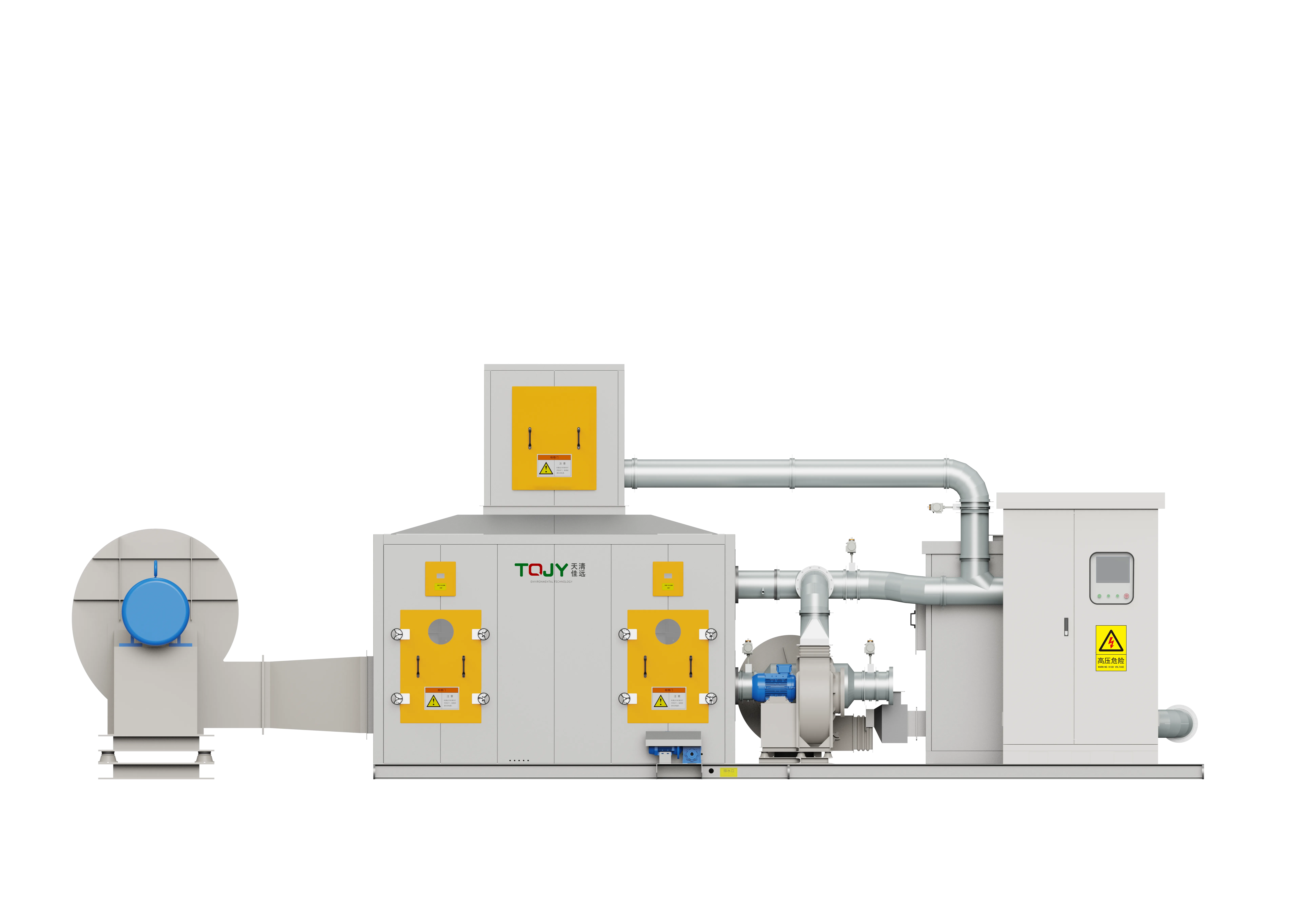
Zeolite Molecular Sieve Adsorption-Catalytic VOCs Integrated Unit (Low Air Volume)
Compact molecular adsorption-catalytic integrated unit designed for low-concentration, low-volume VOC sources.
Designed around actual process conditions
This all-in-one VOC treatment package is specifically engineered for facilities with smaller airflows but strict emission standards, such as automotive touch-up painting, flat printing, and enterprise R&D laboratories.
Low-Volume VOCs Treatment All-in-One Unit
For labs and small booths
Operating references and configuration choices
These reference values and modules clarify the scope we evaluate. They are not a substitute for a process-data review or final proposal.
| Engineering reference | Value | How to read it |
|---|---|---|
| Application scope | Low-volume, low-concentration compatible VOC exhaust | A selection reference only; final capacity and materials follow the project design basis. |
| Configuration | Project-specific | Confirmed from process data, site constraints and the required treatment objective. |
| Performance basis | Process-dependent | No generic removal, safety or compliance promise is made without the stated pollutant and operating conditions. |
Typical modules considered
- Pre-filtration and adsorption module
- Controlled thermal desorption package
- Integrated catalytic oxidation section
- Automatic controls and service access
Project-specific selection notes
- Confirm the real air volume and solvent mass loading before selecting a compact package.
- Screen for dust, oil, silicon, sulfur, halogens and other catalyst/media risks.
- Confirm utility supply and safe response to start-up, shutdown and concentration excursions.
How to use this product information
A low-volume adsorption-catalytic package is assessed separately from continuous high-airflow rotor systems; the process duty determines the appropriate scale.
- The original bilingual product record identifies compact VOC treatment for smaller coating, printing, laboratory and related sources.
- The published description is a selection starting point. Process data, utilities, materials, safety requirements and acceptance criteria remain subject to engineering review.
What we review before specifying Low-Volume Zeolite + CO
A product name is a starting point, not a final design. These inputs define pretreatment, materials, controls, equipment size and scope boundaries.
Project data to provide
- VOC species and catalyst-compatibility screening
- Airflow, concentration profile and desired operating cycle
- Sulfur, chlorine, silicon, phosphorus, heavy-metal and aerosol content
- Pretreatment condition and available utilities
- Required emission limit and installation footprint
Typical engineered scope
- Filtration and conditioning matched to catalyst protection
- Catalyst reactor, heater and heat-exchanger configuration
- Optional zeolite or carbon adsorption/concentration stage
- Temperature, pressure and fan controls with safety permissives
- Access for catalyst inspection and planned maintenance
Safety and controls
- Catalyst poison screening is a prerequisite, not an optional upgrade.
- Dust, oil and sticky aerosol must be controlled upstream to protect adsorption media and catalyst surfaces.
- Temperature management and interlocks are configured for the selected catalyst and fuel/heat source.
- No public page should promise a fixed removal rate without the actual gas composition and design basis.
How it works
Zeolite molecular sieves adsorb the dilute VOCs. During the desorption cycle, a small stream of hot air carries the concentrated organics to the integrated catalytic oxidizer for low-temperature destruction.
- 01Filtration of particulate
- 02Adsorption in zeolite beds
- 03Thermal desorption
- 04Catalytic oxidation
- Automotive spray painting
- Flat printing
- Enterprise laboratories
- Low-volume, low-concentration VOCs
- Not suitable for heavy dust or catalyst poisons (e.g., silicon, heavy metals).
- Requires stable utility power for catalytic preheating.
Typical pollutants
- Toluene, xylene
- Alcohols, acetates
- Laboratory solvents
Engineering features
- Compact skid-mounted design
- Fully automated PLC operation
- Low operating footprint
- Energy-efficient low-temp oxidation
Available options
- Indoor or outdoor enclosure
- Remote telemetry
- Custom filter stages
Relevant industries
Automotive & E-Mobility
OEM parts, e-bike, and industrial spray booth exhaust.
Printing & Laminating
Gravure, flexible packaging, lamination, optical film and continuous web processes.
Pharmaceutical & Medical
Solvent exhaust from synthesis, coating, and finishing.
Electronics, PCB & Semiconductors
PCB, semiconductor, motor, and appliance process exhaust.
General technology selection
These answers explain the selection path. Final performance, safety scope and dimensions follow the approved project design.
Why choose catalytic oxidation?
Catalytic oxidation can operate at a lower reaction temperature than thermal-only oxidation for compatible, clean VOC streams. It is commonly considered where compact layout or lower-temperature operation is valuable.
What can damage a catalyst?
Sulfur, chlorine, silicon, heavy metals, dust, oil and some reactive compounds can reduce catalyst activity. The process chemistry and upstream controls must be reviewed first.
Source basis: VOCs equipment source. Catalyst performance and service interval depend on gas chemistry and pretreatment.
Specific product Q&A
Why choose an integrated Zeolite + CO skid for low-volume exhaust?
For low-volume sources (under 10,000 m³/h) like R&D labs, automotive touch-up booths, or small printing presses, a full-scale RTO or large concentration wheel is oversized, capital-intensive, and takes up too much floor space. This compact skid integrates a fixed-bed zeolite adsorber with a low-temperature Catalytic Oxidizer in one small footprint. It provides the same >=99% compliance as a large-scale system but is scaled perfectly for low-flow, high-value manufacturing.
How does the fixed-bed zeolite differ from a rotary zeolite wheel?
Instead of a continuously rotating honeycomb wheel, this system uses stationary beds packed with granular hydrophobic zeolite. One bed actively adsorbs the incoming VOCs while the other is offline being desorbed by hot air from the CO unit. This valve-switched batch process eliminates the complex mechanical drive systems and seals of a rotary wheel, making the low-volume skid exceptionally reliable, easy to maintain, and highly cost-effective.
Can this compact skid be installed indoors?
Yes. Because the Catalytic Oxidizer operates at much lower temperatures (300°C) than an RTO (800°C) and utilizes heavy internal ceramic insulation, the outer skin temperature of the equipment remains cool and safe to the touch. Combined with its small footprint and zero-flame operation (electric heating), the FluxFine low-volume skid is frequently installed directly inside the factory next to the process line, saving expensive outdoor ductwork.
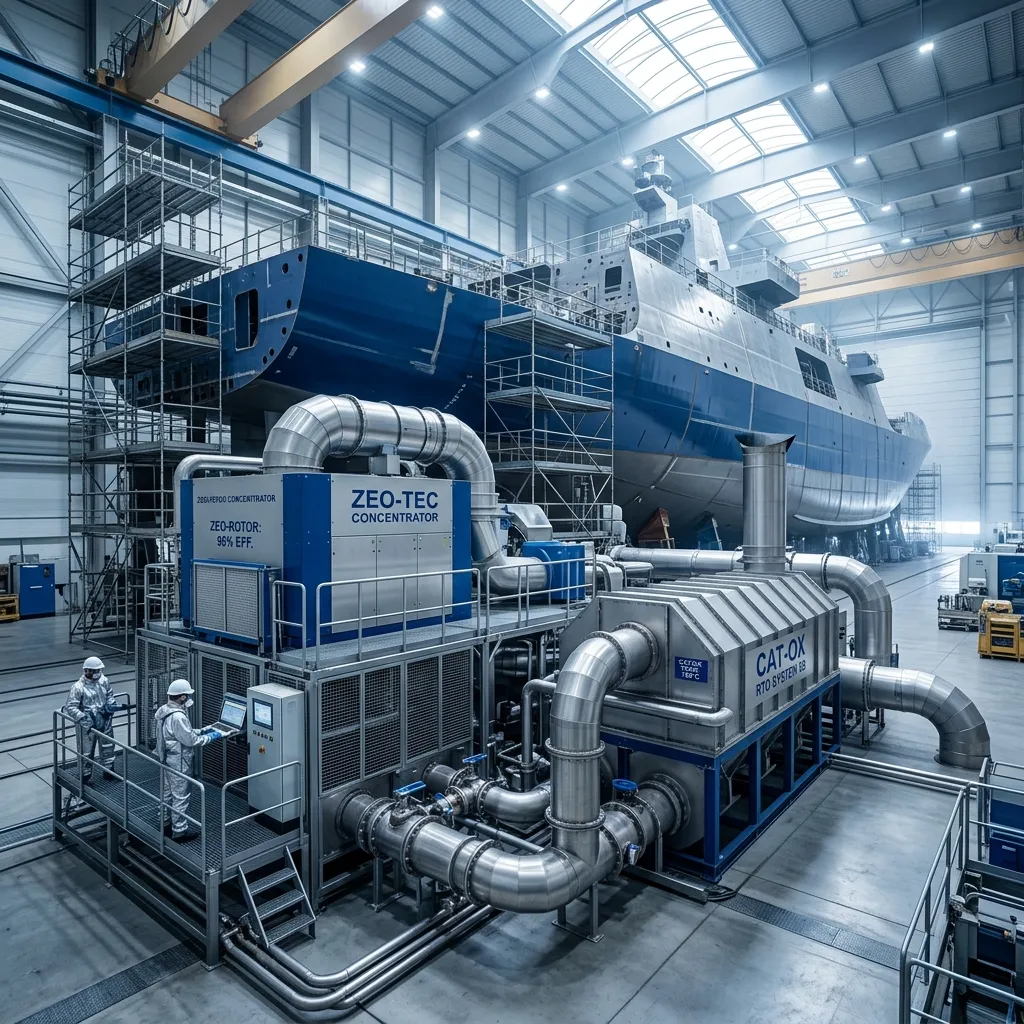
Proven Low-Volume Zeolite + CO installations
Review documented treatment trains featuring Low-Volume Zeolite + CO technology across various industrial processes.
Configure Low-Volume Zeolite + CO for your plant
Share measured process data so the engineering team can confirm suitability, pretreatment, equipment size and scope boundaries.
Source basis: Extracted from bilingual catalog for SEO. Published values are selection references, not a project guarantee.